

HCPCS code E0198: Water pressure pad billing guide
HCPCS code E0198 is a water pad for a standard mattress HCPCS code E0198 is the ...

Last Updated: Oct 13, 2026
Billable Code Specific Code
S82.016B is the billable ICD-10-CM code for nondisplaced osteochondral fracture of unspecified patella, initial encounter for open fracture type I or II.
Let Pabau's smart automation suggest the right codes, reduce claim denials, and keep your practice compliant—effortlessly.
Automate repetitive tasks and focus on what matters most—your patients.
Reduce coding errors and ensure compliance with the latest regulations.
Clean claims, fewer denials, and faster reimbursements.
Powerful insights and reporting to help your practice thrive.
HIPAA compliant SOC 2 certified GDPR-compliant Trusted by 4,000+ clinics worldwide

ICD-10 code S82.016B is billable for a nondisplaced osteochondral fracture of the unspecified patella.
It applies only at the initial encounter for an open fracture graded Gustilo type I or type II.
The 7th character B is what makes the code billable. Parent code S82.016 is not billable on its own.
Laterality is unspecified here. Use S82.014xB for the right patella or S82.015xB for the left when the record names a side.
Practice management software like Pabau keeps operative notes, consent, and encounter details on one patient record, so coders find the detail fast.
ICD-10 code S82.016B is a billable ICD-10-CM diagnosis code for a nondisplaced osteochondral fracture of the unspecified patella. Specifically, it applies at the initial encounter for an open fracture graded Gustilo type I or type II. As of fiscal year 2026, the code remains valid per the CMS ICD-10-CM code tables and guidelines.
The parent code S82.016 is non-billable on its own. Instead, a 7th character extension is what makes it billable. Specifically, S82.016 accepts the full 16-character extension set used across the S82 fracture category. Within that set, the B extension locks in both the open-wound encounter type and the Gustilo grade.
The most common billing error on this code is submitting the non-extended parent. In turn, recording the encounter type in the patient record at the point of care is what prevents it. The billing process starts at registration, not at the point the coder opens the note.
Understanding where S82.016B sits in the ICD-10-CM tabular hierarchy helps coders confirm they are at the correct level of specificity before billing.
The code falls under section S80-S89, which covers injuries to the knee and lower leg. As a result, physical therapy practices meet this code family often, in the documentation handed over from acute orthopedic settings.
An osteochondral fracture involves both the subchondral bone and the overlying articular cartilage of the patella (kneecap). In this context, the “nondisplaced” qualifier means the fracture fragments have not shifted out of their normal anatomical alignment.
These injuries are clinically associated with acute patellar dislocation and high-impact direct trauma to the front of the knee. When the kneecap dislocates laterally, shear forces can lift an osteochondral fragment off the medial patellar facet or the lateral femoral condyle.
As a result, documenting all three up front removes the need for an addendum once the claim goes out.
The 7th character B in ICD-10 code S82.016B carries two meanings, and both have to hold. Specifically, the encounter must be the initial one, and the open fracture must be graded Gustilo type I or type II.
The Gustilo-Anderson classification grades open fractures by wound size, contamination level, and soft-tissue involvement. It was first published in the Journal of Bone and Joint Surgery. Today, ICD-10-CM uses it to assign 7th characters B and C.
The treating physician or surgeon must document the Gustilo type in the operative or emergency note. Accordingly, coders cannot assign Gustilo grade independently based on wound description alone. If physician documentation does not specify the grade, query the provider before submitting the claim.
S82.016 requires a 7th character to be billable. Together, the complete set of valid extensions covers every encounter type from initial presentation through to sequela. For example.
The CDC/NCHS ICD-10-CM web tool carries the official FY2026 tabular list. Accordingly, use it to confirm the valid extensions for S82.016 and for neighboring S82 codes such as S82.121Q. Notably, the characters I and O are left out of ICD-10-CM fracture codes to avoid confusion with the numerals 1 and 0.
When you code a follow-up visit for a type I or II open patellar fracture, check the physician note for healing status first. That status decides the 7th character. Use E for routine healing, H for delayed healing, M for nonunion, and Q for malunion at that encounter. Defaulting to E without documented healing status is a common audit trigger.
S82.016B sits within a larger family of patellar fracture codes. Therefore, knowing the sibling and adjacent codes prevents miscoding when laterality is documented or when the fracture type differs.
The AAPC ICD-10-CM code lookup lists the full S82.0 family with billability indicators. From there, use it to cross-reference the right sibling when laterality or fracture type changes between encounters.
ICD-10-CM S82.016B is a diagnosis code only, and it carries no payment rate of its own. Instead, the treatment is billed separately with the CPT code that matches what was performed. Treat the crosswalk below as advisory. Accordingly, verify every pairing against current payer policy and the AAPC CPT-to-ICD-10 crosswalk tool before submission.
Verify CPT pairings for patellar fracture repair against the AMA CPT codebook before billing. Additionally, payer policies on bundling, modifiers, and medical necessity criteria vary. As a result, a claim that pairs an open-fracture diagnosis with a closed-treatment procedure code will not survive review.
Accurate documentation is what makes an S82.016B claim defensible. Specifically, the clinical record has to support every element of the code, from fracture type through to encounter type.
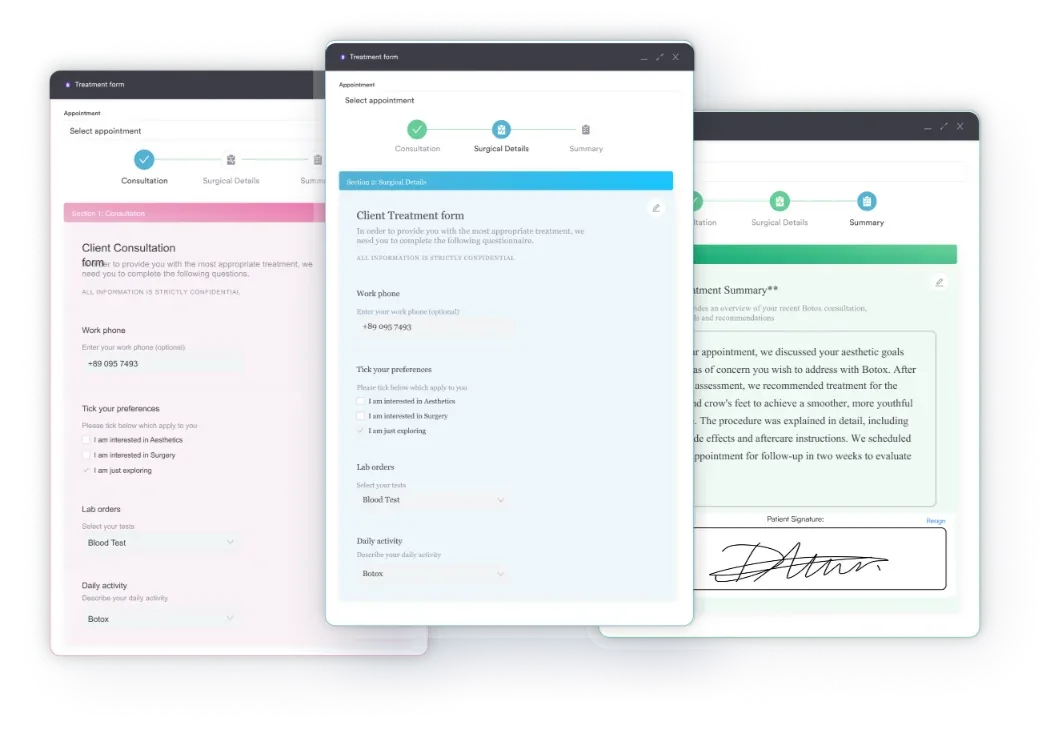
Practices using digital documentation forms can build these fields into standard intake and assessment templates. Each data point is then captured at the encounter rather than chased weeks later. In turn.
The ICD-10-CM Official Guidelines for Coding and Reporting govern how fracture codes in the S80-S89 range are assigned. Together, those guidelines are approved jointly by CMS, NCHS, AHA, and AHIMA. In practice, three patterns account for most S82.016B errors.
Submitting S82.016 (without any 7th character) as a standalone claim code is the most common error. Indeed, S82.016 is non-billable. Consequently, every claim must use the fully extended version (S82.016A through S82.016S). As a result, many clearinghouses will reject non-extended fracture codes outright.
Using 7th character B on a third or fourth follow-up visit is a sequencing error. Specifically, B applies only while the patient is in active treatment for the fracture. Once the patient is seen for aftercare or complication management, a subsequent encounter extension is required.
Using B on a Gustilo type IIIA, IIIB, or IIIC wound understates the severity of the injury. Those wounds take 7th character C instead. As a result, coding them as B can produce a medical necessity denial or an audit flag.
When documentation is ambiguous, query before coding. Similarly, type III wounds carry their own extension letters right across the S-chapter.
Query discipline is not limited to fracture codes. Assigning G90.A also depends on objective findings in the note, such as documented orthostatic vital signs, rather than a suspected diagnosis.
Build a four-point audit checklist for open patellar fractures. Check that the 7th character is present. Verify the Gustilo grade is physician-documented. Confirm laterality is unspecified before you reach for S82.016B. Confirm the encounter type matches the purpose of the visit. Running that check at submission catches the errors behind most S82.016B denials.
Most S82.016B claims are straightforward once the documentation is complete. However, a subset of cases benefit from escalation to a physician advisor or certified clinical documentation specialist (CCDS).
Consequently, practices with solid documentation workflows can support the changing 7th character through the full episode of care.
In most orthopedic practices the detail behind S82.016B lives in three places. Specifically, the operative note sits in one system, the consent and intake forms in another, and the wound photographs on somebody’s phone. As a result, pulling one claim together means chasing all three.
Practice management software like Pabau keeps them on the same patient record. Specifically, the operative note, the Gustilo grade captured on a custom form, and the wound photos all sit against the encounter. When a coder opens the record, the detail that supports the 7th character is already there.
Pabau then pulls what is already on that record into a pre-filled claim and submits it, so nobody retypes a diagnosis code. As a result, queries drop, and the practice stops losing days to addenda.

Pabau brings operative notes, consent forms, and encounter details onto one patient record, then pulls that detail into a pre-filled claim. Your coders stop chasing the Gustilo grade and laterality after the fact.

Three things sink patellar fracture claims. Namely, the 7th character is missing, the encounter type no longer matches the visit, or nobody wrote down the Gustilo grade. In short, S82.016B is billable only when the record confirms all three elements.
All three start in the note and only surface at the claim stage, weeks after the patient has left. By then the fix costs a provider query and a delayed payment. A resubmission does not restart the clock, so the original filing limit still governs.
So build the Gustilo grade, the displacement status, and the laterality into the assessment form your team fills in at the first visit. Book a demo to see how Pabau keeps that detail on the record and ready for the claim.

Coding a superficial lower-leg wound rather than a fracture? S80.812A covers the abrasion codes and the initial-encounter rules that sit alongside them.
Need the subsequent-encounter rules for a growth-plate fracture? S49.032D shows how the D extension works once routine healing is documented.
Coding an injury the patient was treated for years ago? S12.14XS walks through sequela coding and the X placeholder in the same S-chapter structure.
Working with an unspecified bone diagnosis instead of a named fracture? M89.9 explains when an unspecified bone disorder code is defensible.
Pairing a fracture diagnosis with a closed-treatment procedure code? CPT code 23605 sets out how closed treatment with manipulation is documented and billed.
ICD-10 code S82.016B is a billable ICD-10-CM diagnosis code for a nondisplaced osteochondral fracture of the unspecified patella. It applies at the initial encounter for an open fracture graded Gustilo type I or type II. It is the fully extended, billable form of parent code S82.016, which is non-billable on its own.
Yes, S82.016B is a billable ICD-10-CM code for fiscal year 2026. The parent code S82.016 without a 7th character is not billable. The 7th character B extends the parent into a fully specified code that payers recognize.
S82.016A covers the initial encounter for a closed fracture, with no open skin wound. S82.016B covers the initial encounter for an open fracture graded Gustilo type I or type II. The distinction is whether the fracture site communicates with an external wound, and how severe that wound is.
The clinical record must document nondisplaced fracture status and osteochondral involvement of both bone and cartilage. It also has to show an open wound communicating with the fracture site. A physician-assigned Gustilo type I or II classification is required. Laterality must be unspecified, otherwise use S82.014xB for the right patella or S82.015xB for the left.
ICD-10-CM fracture codes in the S-chapter need a 7th character to be billable. The character specifies the encounter type, whether the fracture is open or closed, and the Gustilo grade. It also specifies the healing outcome, which can be routine, delayed, nonunion, or malunion. A parent fracture code without a 7th character will draw a claim rejection or an edit flag at most clearinghouses.



