ICD-10 Code Y76.0: Diagnostic obstetric and gynecological devices
ICD-10 Code Y76.0: Definition and billable status ICD-10 Code Y76.0 is a valid, ...

Last Updated: Oct 23, 2026
Billable Code Specific Code
S62.172K is the billable ICD-10-CM code for displaced fracture of trapezium [larger multangular], left wrist, subsequent encounter for fracture with nonunion.
Each of the four subsequent-encounter characters (D, G, K, and P) reports a different healing outcome. The choice therefore changes how the payer reads the claim.
Let Pabau's smart automation suggest the right codes, reduce claim denials, and keep your practice compliant—effortlessly.
Automate repetitive tasks and focus on what matters most—your patients.
Reduce coding errors and ensure compliance with the latest regulations.
Clean claims, fewer denials, and faster reimbursements.
Powerful insights and reporting to help your practice thrive.
HIPAA compliant SOC 2 certified GDPR-compliant Trusted by 4,000+ clinics worldwide

ICD-10 Code S62.172K covers a displaced trapezium fracture in the left wrist, coded at a follow-up visit after the bone failed to unite.
The 7th character K separates nonunion from routine healing (D), delayed healing (G), and malunion (P). Pick the wrong one and the claim gets denied.
S62.172K needs documented nonunion confirmed on imaging, explicit left-side laterality, displacement status, and the encounter type.
Pabau’s ICD-10-CM catalog sits inside the patient record, so coders assign S62.172K without opening a separate lookup tool.
ICD-10 Code S62.172K is a billable, specific ICD-10-CM diagnosis code. Its full official description reads: Displaced fracture of trapezium [larger multangular], left wrist, subsequent encounter for fracture with nonunion. In fact, every word in it carries billing weight.
The 2026 edition of ICD-10-CM S62.172K became effective on October 1, 2025, per the CMS ICD-10-CM annual update schedule. The code falls within the S60-S69 block, which covers injuries to the wrist and hand. Its category, in turn, is S62, fractures of wrist and hand bones.
The parent code S62.172 is not billable on its own, because a 7th character must be appended. Instead, S62.172K is the billable form that reports follow-up care during confirmed nonunion. Orthopedic teams and physical therapy practices managing wrist fracture aftercare meet this code once imaging confirms the fracture has not bridged.
The table below summarizes the key attributes of S62.172K for a quick lookup during coding or documentation review.
For the official code definition and annual tabular updates, consult the CDC/NCHS ICD-10-CM web tool, which mirrors the authoritative CMS code files each fiscal year.
The trapezium, also called the larger multangular, sits at the base of the thumb in the distal row of carpal bones. It articulates with the first metacarpal, the trapezoid, the scaphoid, and the second metacarpal. Specifically, that first joint is the carpometacarpal joint of the thumb.
The carpometacarpal joint is a high-motion saddle joint. Forces travelling through the thumb during gripping, falling, or impact therefore concentrate directly on the trapezium.
Trapezium fractures most commonly follow axial loading along the thumb, direct blunt impact, or avulsion forces at ligament attachments. In practice, the classic mechanism is a fall on an outstretched hand with the thumb abducted. Displaced fractures, the group S62.172K sits in, occur when the fragments separate from their anatomical position.
Displacement status is a clinical determination made by the treating provider, not an assumption a coder can make from the claim alone. ICD-10-CM separates displaced and nondisplaced trapezium fractures into distinct code families, because the two carry different treatment pathways, healing timelines, and complication risks.
Specifically, the medical record must explicitly state “displaced” to support S62.172K. Where documentation says only “fracture”, the ICD-10-CM guidelines default to displaced, but a coder should query the provider rather than assume. Using the nondisplaced family instead, S62.182K, misreports the clinical picture and can affect payment for the associated surgical or casting work.
The 7th character turns S62.172 from a non-billable stub into a fully specific, billable code. It encodes the encounter type and the fracture’s healing status at the time of the visit. As a result, getting this character wrong is the most common coding error on fracture follow-up claims.
Each character is mutually exclusive for a given encounter, so a visit cannot be both routine healing (D) and nonunion (K). The provider’s assessment at that follow-up visit decides which character applies. That assessment has to be in the record before the claim is coded.
The AAPC’s ICD-10-CM code lookup cross-references 7th character extensions across the fracture families, which helps when you are checking a neighboring code.
Nonunion means the fracture has failed to achieve bony union within the expected healing window. For most carpal bones that window runs 6-12 weeks for nondisplaced fractures, and longer for displaced ones. Imaging taken after that window, if it still shows a fracture gap, absent callus bridging, or sclerotic margins, then supports a diagnosis of nonunion.
Nonunion is not the same as delayed healing, which takes the 7th character G instead. With delayed healing the bone is still progressing toward union, only more slowly than typical. Nonunion means that progression has stopped, and it is that distinction auditors look for when they review S62.172K billing.
Where the character and the note disagree, the claim comes back with one of the common denial codes for a diagnosis the payer cannot reconcile. Practices working high volumes of fracture follow-ups therefore track how the 7th character moves across encounters.
Two decisions produce the code. Displacement and laterality choose the base code, then the 7th character records the encounter and the healing status.
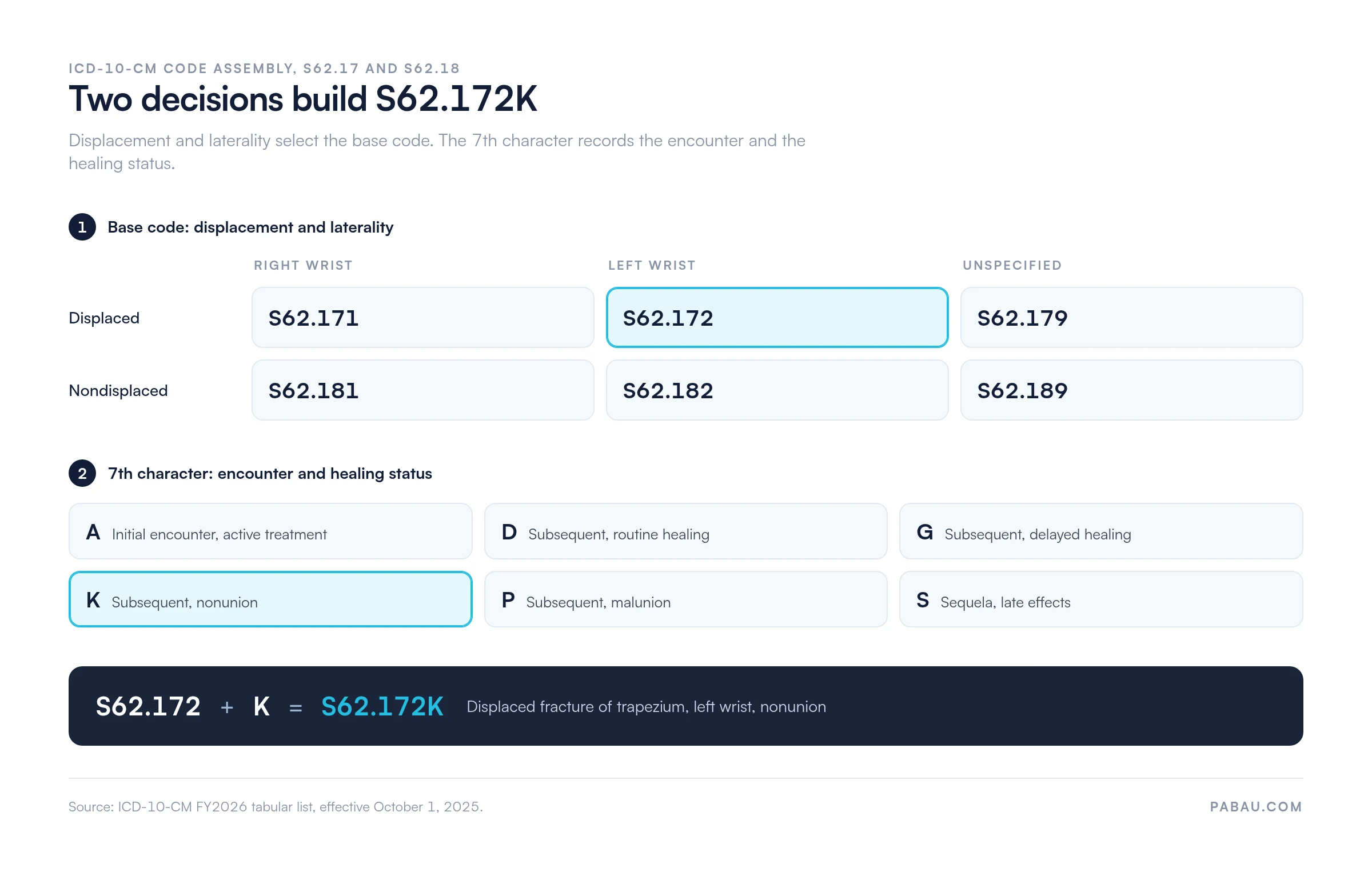
The table below lists every billable variant in the S62.172 family, alongside its immediate siblings in the S62.17 and S62.18 groups.
S62.179K, the unspecified-laterality option, belongs only in the rare case where the record genuinely does not say left or right. In practice, laterality is almost always determinable from a radiology report, a cast record, or an operative note. Defaulting to unspecified when it is determinable invites payer scrutiny on medical necessity review.
S62.172K applies when three conditions are all true at the encounter. First, the patient had a displaced trapezium fracture of the left wrist. Second, the visit is a follow-up rather than the acute presentation. Finally, the provider has determined, from clinical assessment and imaging, that the fracture has not healed.
The table below maps each clinical finding to the character it supports. Auditors work the same way when they review fracture aftercare claims, starting from what the note says about healing rather than from the code.
Four documentation elements support ICD-10 Code S62.172K. First, the provider states that the fracture is not healing. Second, imaging results, read by the radiologist or the provider, confirm nonunion. Third, the record documents left-wrist laterality. Finally, the note confirms this is a subsequent encounter rather than the original visit.
Missing any one of those elements creates an audit vulnerability and risks a denial. A clean claim submission starts in the note, not on the claim form. Structuring fracture follow-ups around encounter type, healing status, and laterality is the cheapest control available.
Ask one question at every fracture follow-up. Has the provider documented healing status? If the note reads only ‘fracture, left wrist, follow-up’, it cannot support S62.172K. Send it back for an addendum before you submit, because a documented addendum is cleaner than an appeal.
The ICD-10-CM Official Guidelines for Coding and Reporting, Section I.C.19, set the rules for fracture coding at initial and subsequent encounters. For a traumatic fracture such as a displaced trapezium fracture, the guidelines require the traumatic fracture code for every encounter, including aftercare. Pathologic fractures work differently, and may take an aftercare code from the M84 series.
The ResDAC guide to ICD codes in Medicare files explains how ICD-10-CM codes flow through Medicare claims data. Consequently, that matters for orthopedic practices carrying significant Medicare volume.
Track when each S62.172 patient moves from routine healing to delayed healing, and then to nonunion. Build follow-up intervals into your scheduling at six weeks and twelve weeks. Catching a healing failure at twelve weeks rather than months later means earlier surgery and a cleaner coding trail.
Submitting ICD-10 Code S62.172K cleanly needs three things to line up. The clinician documents the healing status, the coder assigns the matching 7th character, and the claim reaches the payer without technical errors. Otherwise, a breakdown at any stage costs more to appeal than it would have cost to prevent.
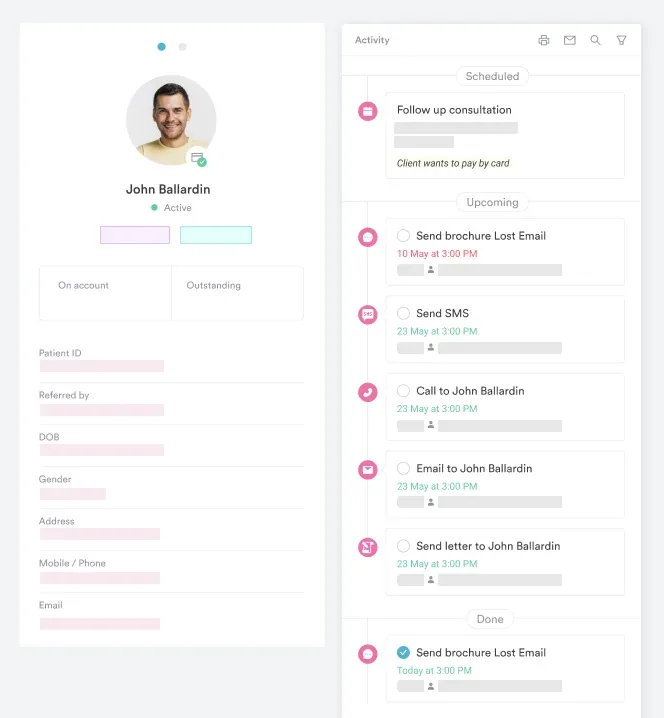
Practice management software like Pabau keeps those three steps on one record. Its ICD-10-CM catalog is built into the platform, so a coder searches and assigns S62.172K inside the patient chart. There is no switch to an external lookup tool and no retyping of the code.
Pabau’s claims tools for coders route claims electronically through Claim.MD, our US clearinghouse partner, to thousands of payers. Its clean-claim checks look for missing required fields before the claim leaves the practice, such as membership numbers and authorization codes.
When a S62.172K claim is denied, the electronic remittance advice returns through the same integration with CARC denial codes. Billing staff can see whether the problem was missing documentation, the wrong 7th character, or payer-specific nonunion criteria, then resubmit from the same screen. Orthopedic and musculoskeletal practices can book a demo to watch a nonunion claim move from note to payment.
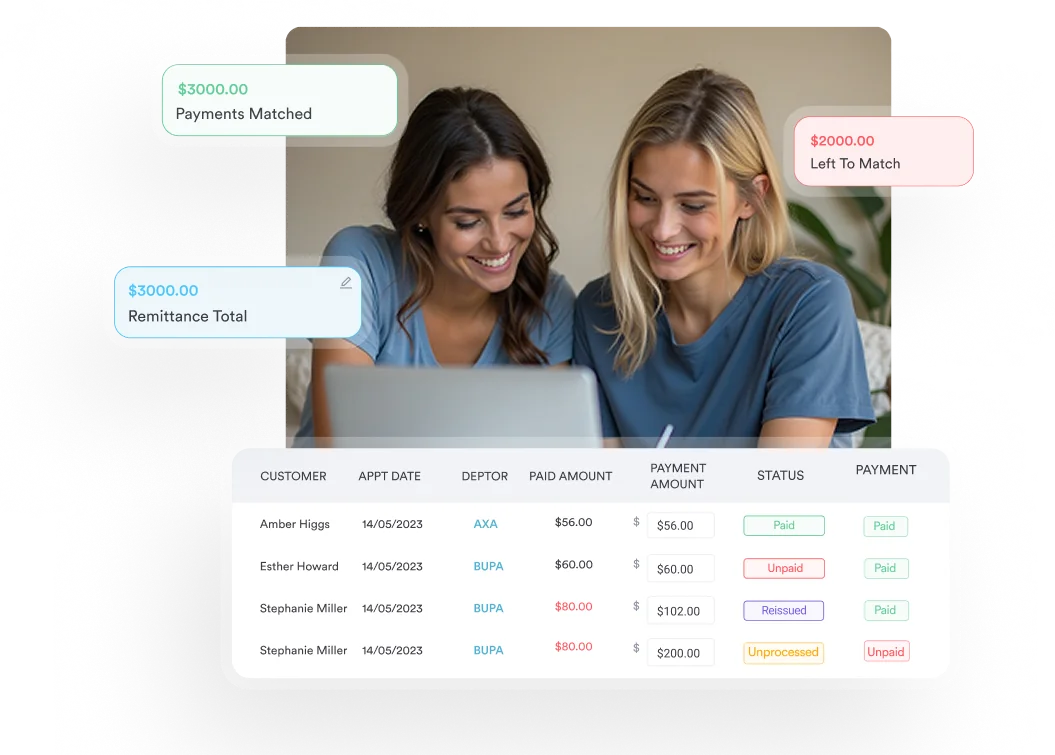

Pabau helps orthopedic and musculoskeletal practices assign codes like S62.172K inside the patient record, submit claims through Claim.MD, and work denials from the same screen. Book a demo to see the billing workflow end to end.

Fracture nonunion billing sits where clinical precision meets coding accuracy. In short, the K in S62.172K tells the payer that the bone stopped healing, that care has moved past routine aftercare, and that imaging confirms it.
Coding D when K applies, or billing K without documented imaging, turns a legitimate claim into a preventable denial. Instead, the fix sits upstream of the claim form: query the note before the encounter is coded.
Build the healing-status question into every fracture follow-up and the 7th character takes care of itself. Book a demo to see how Pabau keeps the note, the code, and the claim on one record.

Coding the neighboring carpal bone? ICD-10 code S62.185K covers a nondisplaced trapezoid fracture of the left wrist with nonunion.
Same wrist, different bone? ICD-10 code S62.032S shows how a displaced scaphoid fracture is reported once the case reaches sequela.
Need the malunion equivalent? ICD-10 code S62.163P walks the P character, for a fracture that healed in the wrong position.
Nonunion in a finger rather than the wrist? ICD-10 code S62.606K applies the same K character to a right little finger fracture.
Working denied fracture claims? Denial management in healthcare sets out how to triage, appeal, and track denials before they age out.
ICD-10 Code S62.172K is a billable ICD-10-CM diagnosis code for a displaced fracture of the trapezium in the left wrist. It is reported at a follow-up encounter where the fracture has failed to achieve bony union. The 7th character K is what designates that nonunion status, separating the code from its routine healing, delayed healing, and malunion siblings.
Four elements must be in the medical record. The provider states a diagnosis of fracture nonunion, not just ‘fracture, follow-up’. Imaging (X-ray or CT) confirms nonunion, with a radiologist or provider interpretation. The record documents left-wrist laterality. The note confirms a subsequent encounter rather than the initial active treatment visit.
Nonunion, the 7th character K, means the fracture failed to heal, so the bone gap persists and no bridging callus formed. Malunion, the 7th character P, means the fracture healed in an incorrect or misaligned position. Both are complications of displaced fractures, and both usually require surgical intervention. They are coded and documented differently, because they describe distinct clinical outcomes.
The S62.172 family covers every encounter type and healing status for a displaced left-wrist trapezium fracture. The variants are S62.172A for the initial encounter, S62.172D for routine healing, and S62.172G for delayed healing. S62.172K covers nonunion, S62.172P covers malunion, and S62.172S covers sequela. The right-wrist family uses S62.171, and nondisplaced equivalents begin at S62.182.