

ICD-10 Code S42.444P: Medial epicondyle fracture, right humerus
ICD-10 Code S42.444P: full descriptor and code validity ICD-10 Code S42.444P car...

Last Updated: Oct 13, 2026
Billable Code Specific Code
S61.223A is the billable ICD-10-CM code for laceration with foreign body of left middle finger without damage to nail, initial encounter.
The full official description reads: Laceration with foreign body of left middle finger without damage to nail, initial encounter. Every word carries coding weight. Change the laterality to right, the finger to index, or add nail involvement, and you need a different code.
S61.223A is not a new code. According to the CDC/NCHS ICD-10-CM web tool, it has been in effect since the original ICD-10-CM release on October 1, 2015.
It carried forward unchanged into the FY2026 edition, which runs from October 1, 2025 through September 30, 2026. Lookup sites often print that October 2025 date as the effective date, which makes a ten-year-old code look brand new.
The code is specific enough to submit on its own, and it is accepted in HIPAA-covered transactions for outpatient and inpatient claims. Hand injuries need this level of anatomical detail, which is why sibling codes such as codes such as S61.238A exist for every wound type on every finger.
Let Pabau's smart automation suggest the right codes, reduce claim denials, and keep your practice compliant—effortlessly.
Automate repetitive tasks and focus on what matters most—your patients.
Reduce coding errors and ensure compliance with the latest regulations.
Clean claims, fewer denials, and faster reimbursements.
Powerful insights and reporting to help your practice thrive.
HIPAA compliant SOC 2 certified GDPR-compliant Trusted by 4,000+ clinics worldwide

ICD-10 code S61.223A describes a laceration with foreign body of the left middle finger without damage to the nail, at the initial encounter.
S61.223A is not a new code for 2026. It has been billable since October 1, 2015, and it stays valid in the FY2026 edition.
The 7th character ‘A’ means initial encounter. Switch to ‘D’ for follow-up care or ‘S’ for a late effect, or the claim will be denied.
Pabau’s claims management software checks claim details before submission, so fewer wound care claims come back over a fixable error.
The table below gives coders and clinicians a quick-reference snapshot of the code’s core attributes before the character-by-character breakdown.
Knowing the parent structure helps coders move to the right sibling when the laterality or the finger changes. According to CMS ICD-10 coding guidelines, codes must be selected to the highest level of specificity the documentation supports. That means working down every level of the hierarchy.
The S61.2 subcategory is reserved for fingers without nail involvement. If the provider documents nail bed disruption, matrix damage, or avulsion, you leave S61.2 and move to S61.3. Nail status decides the code right across the hand chapter, including contusion codes such as S60.159D.
Each position carries a distinct clinical meaning. The table below decodes every character, so coders can confirm the right code was selected before submission.
The 6th character is where coders most frequently err. Within the S61.22 sub-subcategory, that one digit encodes the laterality and the finger identity together. The digit 3 always means “left middle finger” in this series.
Selecting the wrong 7th character is one of the most common denial triggers for traumatic wound claims. Open wound codes give you three options and nothing else, so the choice is A, D, or S.
Key distinction: “Initial encounter” does not mean the first calendar visit to any provider. It means active treatment is being provided at this encounter. A patient sent to a specialist the day after the injury still takes the “A” suffix if active treatment continues.
The suffix switches to “D” once the provider is monitoring routine healing, which is how subsequent-encounter codes such as S01.111D are used. Reserve “S” for a late effect of a wound that has already healed, the same logic behind S33.8XXS.
Not every Chapter 19 code works on three options. Fracture codes carry a longer 7th-character list that also encodes open versus closed healing, as in S32.492B. Check the tabular list before you assume a suffix exists.
Run a weekly audit of open wound claims submitted with the ‘A’ suffix beyond 30 days from the incident date. Payers flag these as clinically inconsistent, and the encounter-type suffix is among the easiest errors to catch and correct before remittance.
Foreign body documentation is a hard requirement. Selecting S61.223A when the provider note only says “finger laceration” will be flagged on audit. ICD-10-CM Official Guidelines Section I.C.19 are explicit. Code to the degree of specificity the documentation supports, and no further.
Five documentation elements are required to justify S61.223A:
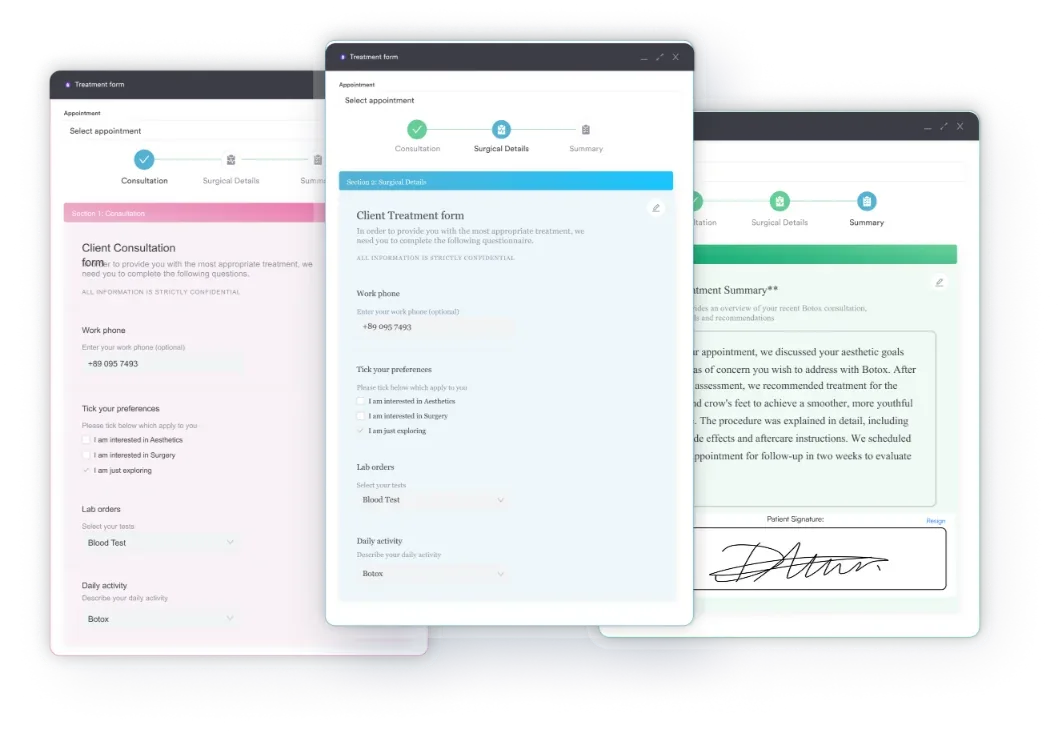
Digital intake forms in practice management software like Pabau can be built around these five elements. The answers are then on file before the note is written. That also keeps medical notes consistent from one provider to the next.
The S61.22x series covers lacerations with foreign body across all fingers, left and right, without nail involvement. The table below lists the siblings coders confuse most often. The AAPC ICD-10-CM lookup filters by code range if you want the full set.
Four decision points separate S61.223A from the codes it gets confused with. Getting them wrong results in undercoding, which loses revenue, or overcoding, which invites an audit.
The foreign body qualifier is the most consequential differentiator. S61.213A and S61.223A describe near-identical presentations at the bedside, but their documentation requirements are different. Assigning S61.223A without a documented foreign body is a compliance risk.
These alternate clinical terms all map to S61.223A in the ICD-10-CM alphabetical index. When one of them turns up in a provider note, confirm the laterality and the nail status before you assign the code.
S61.223A pairs with a procedural CPT code for the wound repair. Simple repair codes are chosen by the length of the wound that was closed:
Layered closure moves the repair into the intermediate range, 12031 through 12057. Suture removal at a later visit has its own rules, and CPT 15851 applies when the removal needs anesthesia other than local. Check length, depth, and closure type on every case rather than reusing a standard pairing. Patients paying up front and claiming later need a superbill, which itemizes the service, the code and the charge. Practices still filing on paper carry this code on the CMS-1500 form, in the service lines.
For HIPAA-compliant billing workflows, three operational points matter most:
Pabau’s claims management software checks the details on a claim before it goes out, including membership and authorization numbers. Catching a wrong number at that point saves the rework a rejection creates. The ICD-10 side still rests on the note, which is why the five elements above matter.
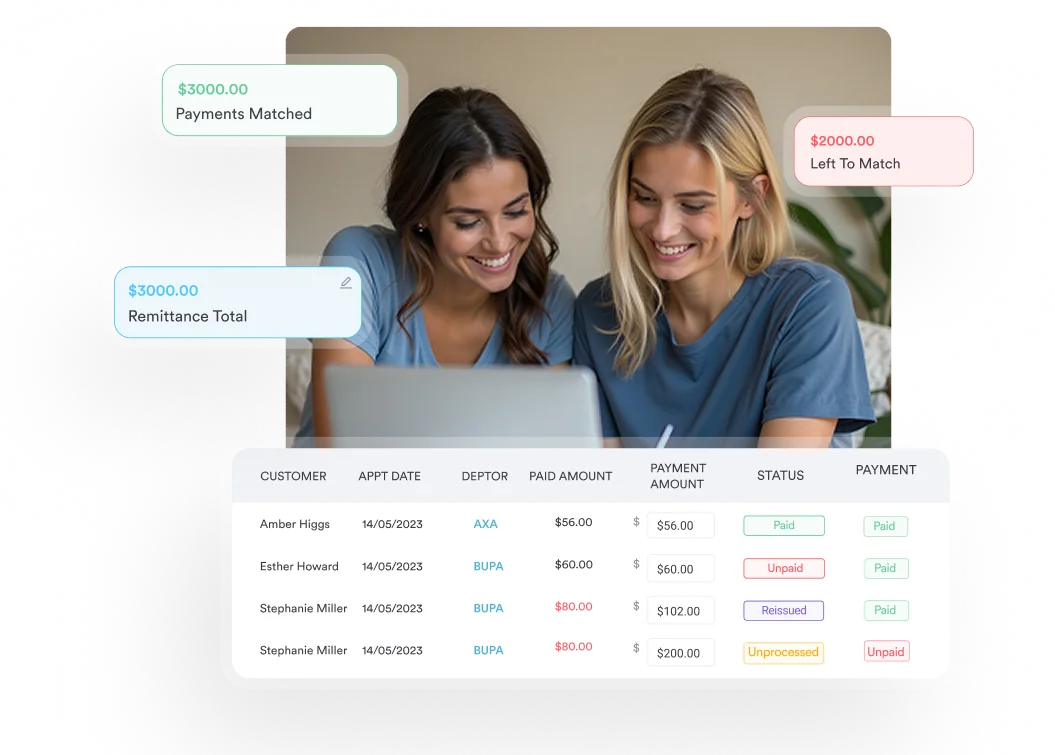
Coders working across disconnected systems retype the same details twice. The note lives in one place and the claim in another, so the code gets matched against ICD-10-CM tables by hand. An integrated practice management software platform holds all of it in one workflow.
In Pabau, the treatment note, the invoice, and the client record are the same file. A provider who documents “left middle finger laceration with retained splinter, nail intact” has already written the support for S61.223A. Nobody has to rebuild it from free text a week later.
That matters most where traumatic injury volume is high. Urgent care, sports medicine, and dermatology practices see the same wound codes week after week, across all three encounter suffixes. EHR integration between the note and the billing queue removes the transcription step.
Sports medicine software and physical therapy EMR setups handle the follow-up half of these injuries. A finger laceration usually comes back for a wound check, which is where the D suffix arrives. Structured fields carry the laterality, foreign body, and nail status forward from the first visit.
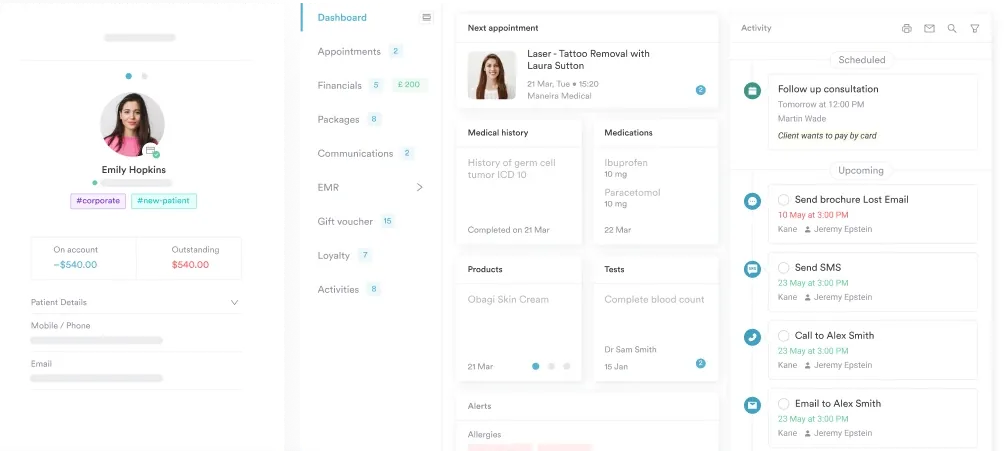
Build a documentation prompt into your intake workflow for every wound care encounter. Capture laterality, the specific finger, foreign body yes or no, and nail status intact or damaged. Five fields captured before the provider enters the room remove the most common reasons S61.22x claims come back denied.

Pabau brings treatment notes, client records, and billing into one system, and checks claim details before submission. Your coders work from what the provider documented, not from a rebuilt free-text summary.

S61.223A is an easy code to assign and an easy one to lose on audit. The code itself has been stable for a decade, so the risk sits entirely in the note behind it.
Set the five elements up as fields rather than habits, and the code stops being a judgment call. Then audit the “A” suffix on any wound claim still open after a month. That is the suffix that drifts.
Practices that stop seeing S61.22x denials usually fixed the documentation first. Book a demo to see how Pabau ties wound documentation to the claim your coders submit.

Coding a hand wound where nail status decides the code? S61.059A walks through an open bite of the thumb with the nail left intact.
Need the initial-encounter rules on another open wound? S31.157A shows how the ‘A’ suffix is applied outside the hand and wrist.
Working out when a follow-up visit takes the D suffix? S20.109D covers subsequent-encounter coding for a superficial injury.
Documenting a traumatic injury that took tissue with it? S58.022D sets out the documentation a partial traumatic amputation claim needs.
Wondering what a missing laterality looks like on a claim? S32.416A is the unspecified-side option, and it shows what you give up.
ICD-10 code S61.223A is a billable diagnosis code. It describes a laceration of the left middle finger with a retained or embedded foreign body, nail intact, at the first active treatment visit. The note must document laterality, the specific finger, the foreign body, the nail status, and the encounter type.
Yes, and it is not a new code for 2026. S61.223A has been billable since October 1, 2015, and it carried forward unchanged into the FY2026 edition. That edition runs from October 1, 2025 to September 30, 2026. The code is accepted for HIPAA-covered transactions in both outpatient and inpatient claims.
The 7th character ‘A’ designates initial encounter, meaning the patient is receiving active treatment for the injury at this visit. It does not mean the patient’s first-ever visit to any provider. Once the treatment phase shifts to routine healing and follow-up, the suffix changes to ‘D’ for subsequent encounter. Use ‘S’ only when the patient presents with a late effect or complication of the fully healed wound.
Use S61.223A when the provider documents a foreign body, such as a splinter, glass, or metal debris, in or around the laceration. Use S61.213A when the left middle finger laceration is documented without any foreign body and the nail remains intact. The foreign body qualifier is the only difference between these two codes.
The provider must document that a foreign body was present or removed. The specific type, such as a wood splinter, glass, or metal, does not need a separate code. That changes only if the foreign body is retained after the encounter. Per ICD-10-CM Official Guidelines Section I.C.19, code to the level of specificity the documentation supports.
Five elements must appear in the provider note. Left laterality has to be confirmed, and the middle finger has to be named specifically. The note must document the foreign body, and confirm the nail is intact with no avulsion or nail bed injury. It must also establish the encounter type as initial active treatment. Missing any one of these means the code cannot be supported on audit.




