ICD-10 Code Y76.0: Diagnostic obstetric and gynecological devices
ICD-10 Code Y76.0: Definition and billable status ICD-10 Code Y76.0 is a valid, ...

Last Updated: Oct 23, 2026
Billable Code Specific Code
S52.131R is the billable ICD-10-CM code for displaced fracture of neck of right radius, subsequent encounter for open fracture type IIIA, IIIB, or IIIC with malunion.
The code is valid for fiscal year 2026 under CMS ICD-10-CM guidance. It took effect on October 1, 2025, and every HIPAA-covered entity can submit it.
One letter decides whether the claim pays. S52.131Q describes the same fracture after an open type I or II injury, while R covers open type IIIA, IIIB, and IIIC.
Let Pabau's smart automation suggest the right codes, reduce claim denials, and keep your practice compliant—effortlessly.
Automate repetitive tasks and focus on what matters most—your patients.
Reduce coding errors and ensure compliance with the latest regulations.
Clean claims, fewer denials, and faster reimbursements.
Powerful insights and reporting to help your practice thrive.
HIPAA compliant SOC 2 certified GDPR-compliant Trusted by 4,000+ clinics worldwide

ICD-10 code S52.131R covers a displaced fracture of the neck of the right radius. The 7th character R marks a subsequent encounter for an open type IIIA, IIIB, or IIIC fracture with malunion.
R is the malunion character for open type III fractures. Q on the same base code means malunion after an open type I or II fracture.
P and N are the other two characters coders confuse with R. P is closed malunion, and N is open type III nonunion.
Laterality and displacement sit in the base code. S52.131 is the displaced right radial neck, and S52.132 is the left.
Practice management software like Pabau helps orthopedic practices document Gustilo grade, healing status, and encounter type at every follow-up.
S52.131R is a specific, billable ICD-10-CM code. The table below holds every detail a coder needs before working through the supporting sections.
Every character in S52.131R carries a billing consequence. Misreading one segment is enough to submit the wrong code.
Each phrase in the description maps to something the physician has to write down:
Laterality and displacement both live in the sixth character. S52.131 is the displaced right radial neck, S52.132 the left, and S52.133 the unspecified side. Nondisplaced fractures at the same site run from S52.134 to S52.136.
The 7th character is the most consequential element of any S52 fracture code. Without it the code is invalid and unpayable. S52.131 carries 16 valid options, covering initial encounters, subsequent encounters, and sequela. R sits at the far end of that list, and it encodes three facts at once.
Characters I, L, and O never appear in this range. ICD-10-CM avoids letters that look like the numerals 1 and 0. The same 16-character table runs across the whole S52 forearm category, and across S42, S62, S72, S82, and S92 as well.
That shared pattern is why the letters are worth memorizing once. Read the table in threes: closed, open type I or II, then open type III. Within each healing outcome, the third letter is always the type III option.
Flag any operative report that records an open fracture without a Gustilo grade. Without an explicit type IIIA, IIIB, or IIIC statement, the characters C, F, J, N, and R are all unsupportable. Request an addendum before the claim goes out.
The Gustilo-Anderson classification decides which open fracture characters are available. A coder cannot legitimately assign C, F, J, N, or R without a documented Gustilo grade in the physician notes. The CDC/NCHS ICD-10-CM tool confirms that these characters need explicit fracture-type documentation.
ICD-10-CM groups types IIIA, IIIB, and IIIC under the same characters, so the subtype never changes the code. It still has to appear in the physician documentation for medical necessity and audit purposes. A IIIC injury and a IIIA injury both bill as S52.131R at a malunion follow-up.
Malunion means the fracture healed in an abnormal position. The bone ends united, which is what separates it from nonunion. That single distinction moves the 7th character from R to N.
For S52.131R to hold, the record has to carry three things. The physician must state malunion in those words, not just angulation or malalignment. Imaging must support it, and the note must confirm the fracture has united.
Malunion of the radial neck often restricts forearm rotation and reduces grip strength. Those functional deficits may earn their own codes. The malunion itself is captured entirely by the R character. Corrective surgery later on carries its own procedure codes.
Encounter type is one of the most audit-sensitive decisions in fracture coding. Billing an initial encounter character for a follow-up visit is a frequent trigger. The same choice sits behind S43.303A and every other injury code. The character reflects what the provider is doing now, not how long ago the injury happened.
Not every chapter encodes the encounter phase this way. C11.3 has no 7th character, and coders swap it for status code Z85.818 once nasopharyngeal treatment ends and surveillance begins.
Assign S52.131R when all of the following are true:
Reach for a different code when any of these apply:
Walking the classification tree confirms that S52.131R is the most specific code available. It also gives an auditor a clean trail to follow. The 7th character only attaches once the base code is settled.
Only the last row is billable. S52.131 on its own is a non-billable parent, and a claim carrying six characters will reject.
Two separate decisions sit behind every code in this range. First pick the base code that matches the documented side and displacement. Then pick the 7th character that matches the encounter and healing status. Codes such as S02.600D follow the same two-step logic elsewhere in the injury chapter.
Once the side and displacement are settled, the 7th character does the rest. The table below lists the siblings most often confused with S52.131R.
An open type I or II wound that heals routinely takes the 7th character E, giving S52.131E for the subsequent encounter. The base code stays S52.131, so only the wound type and the healing outcome change.
Use S52.133R only when the record genuinely never states a side. Verify every code against the AAPC ICD-10-CM code lookup before submitting. Billability is set per fiscal year, so check the year you are billing.
Seven separate elements have to appear in the record before S52.131R is defensible.

Practices using patient record management tools that prompt for structured clinical fields capture all seven elements during the encounter. That beats chasing addenda after the visit.
S52.131R appears in several recurring errors that generate denials and compliance risk. Codes like S42.90XG share the same weak point. The 7th character is where coders get tripped up. A broader code lookup across CPT, ICD-10, and HCPCS catches the same kind of error before it reaches a claim.
These four scenarios show how the letter changes with the record. They track the documentation and encounter-type decisions that sports medicine software and physical therapy EMR software workflows have to support.
Scenario 1: Eight-week malunion review. A 34-year-old returns after surgical fixation of a Gustilo IIIB open fracture of the right radial neck. The operative report documented an open wound, type IIIB, right radius neck, displaced. At eight weeks, imaging shows union with 20 degrees of angulation. The physician records malunion confirmed radiographically. The correct code is S52.131R. Loop and segment rules in the EDI 837 format decide where a code and its modifiers are carried.
Scenario 2: The same visit, but nonunion. Imaging at 12 weeks shows a persistent fracture line and no callus. The physician documents nonunion. The correct code is S52.131N, not S52.131R. The fracture never united, so malunion cannot apply.
Scenario 3: A lower Gustilo grade. Same anatomy and same follow-up timing, but the operative note graded the open wound type II. Malunion is confirmed on X-ray. The correct code is S52.131Q, because Q carries malunion for open type I and II fractures.
Scenario 4: Wrong encounter type. A patient arrives in the emergency department with a fresh open right radial neck fracture graded IIIA. The correct code for that visit is S52.131C. S52.131R would be wrong twice over, since this is an initial encounter and no healing complication exists yet.
Check every code against the official S52.131R code listing before each submission. Practices running HIPAA-compliant clinical documentation can produce the audit trail these codes require.
Operative notes, discharge summaries, and referral letters rarely use code language. Treat any of these phrases as a signal to consider S52.131R, then verify each qualifying condition.
None of these phrases replaces a code lookup. They work as pattern-recognition triggers only. Once the S52.131 family is in view, the 7th character still needs a full documentation review.
Orthopedic and musculoskeletal practices hit the same problem at every fracture follow-up. The note has to carry laterality, displacement, Gustilo grade, and healing status, or the coder cannot defend the 7th character. Today that usually means a post-visit query and a delayed claim.
Practice management software like Pabau closes the loop inside the clinical record. Pabau ties each diagnosis code to the encounter behind it. Your billers open the supporting note before submission, so a thin operative report gets caught at the desk.
Paired with medical practice scheduling software, the record separates initial visits from follow-ups at the booking stage. Your team therefore settles the encounter type before the claim is generated, rather than correcting it after a denial.
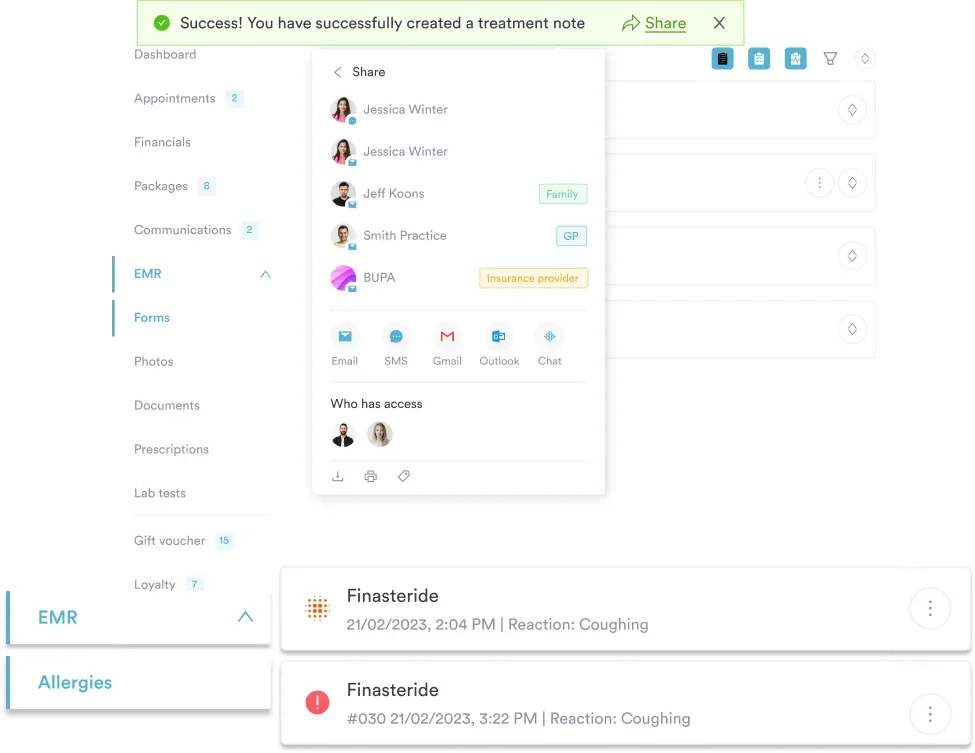

Pabau ties every diagnosis code to the encounter that supports it. Your team catches a missing Gustilo grade or healing status before the claim goes out, so open fracture follow-ups stop coming back as denials.

S52.131R is narrow by design, and that is what makes it defensible. Six facts have to line up in the record: displaced, neck of radius, right side, subsequent encounter, open Gustilo type III, and confirmed malunion. If one is missing, the answer is a provider query rather than a best guess.
The letter is where the money sits. P, Q, and R all describe malunion of the same broken bone at the same stage of care. Only the fracture type separates them, and N changes the healing outcome entirely.
A follow-up template that forces the clinician to name the Gustilo grade and the healing status turns a recurring denial into a routine claim. Book a demo to see how Pabau keeps those details on every fracture follow-up note.

Need the same malunion character on a different forearm code? S52.355R applies R to a nondisplaced comminuted fracture of the left radial shaft.
Coding a fracture that never united? S52.532N walks through the nonunion character on a left-sided Colles’ fracture.
Working on a closed fracture with nonunion instead? S52.253K covers the K character on an ulnar shaft fracture.
Need the delayed healing character rather than malunion? S52.033J shows how J works on a displaced olecranon fracture.
Coding the ulna side of the same forearm? S52.001E covers an unspecified fracture of the upper end of the right ulna.
S52.131R is a billable ICD-10-CM code for a displaced fracture of the neck of the right radius. It applies at a subsequent encounter, once an open Gustilo type IIIA, IIIB, or IIIC fracture has healed in an abnormal position. Coders assign it at follow-up visits after active treatment ends, when imaging and the physician note both confirm malunion.
Yes. S52.131R is a specific, billable ICD-10-CM code, valid for submission in the FY 2026 edition effective October 1, 2025. The parent code S52.131 is not billable on its own. A claim carrying six characters instead of seven will reject.
The two codes differ only in the Gustilo grade of the original open fracture. S52.131Q covers malunion after an open type I or II fracture. S52.131R covers malunion after an open type IIIA, IIIB, or IIIC fracture. Everything else about the two codes is identical.
That code is S52.131P, not S52.131R. P marks a subsequent encounter for a closed fracture with malunion. R applies only when the fracture was open and graded as Gustilo type IIIA, IIIB, or IIIC by the treating physician.
Malunion means the fracture united, but in a mechanically poor position. Nonunion means it never united, and imaging still shows a fracture line with no bridging callus. For an open type III injury, malunion takes R and nonunion takes N. Assigning R needs radiographic evidence that healing has occurred.
Seven elements have to appear in the record. The note must state right laterality, a displaced fracture, and the neck of the radius as the site. It must confirm the fracture was open, name the Gustilo grade as IIIA, IIIB, or IIIC, and state malunion with imaging support. The visit itself must be a subsequent encounter after active treatment has ended.
The CPT codes depend entirely on the services delivered at that visit. Follow-up evaluation and management codes such as 99213 and 99214 are common. Elbow and forearm radiograph codes such as 73070 and 73090 often accompany them. If corrective surgery follows, a malunion repair code such as 25400 or 25405 may apply.