ICD-10 code T87.52: Necrosis of amputation stump, left upper extremity
ICD-10 code T87.52 at a glance: Left arm, not left leg ICD-10 code T87.52 is the...

Last Updated: Oct 26, 2026
Billable Code Specific Code
S52.119S is the billable ICD-10-CM code for torus fracture of upper end of unspecified radius, sequela.
Two details decide whether the claim survives. The upper end of the radius is the proximal end, at the elbow, not the wrist. And S52.019S, one digit away, describes the same buckle pattern in the ulna.
The code took effect on October 1, 2025 under CMS ICD-10-CM guidance.
Let Pabau's smart automation suggest the right codes, reduce claim denials, and keep your practice compliant—effortlessly.
Automate repetitive tasks and focus on what matters most—your patients.
Reduce coding errors and ensure compliance with the latest regulations.
Clean claims, fewer denials, and faster reimbursements.
Powerful insights and reporting to help your practice thrive.
HIPAA compliant SOC 2 certified GDPR-compliant Trusted by 4,000+ clinics worldwide

ICD-10 code S52.119S covers the sequela of a torus (buckle) fracture of the upper end of an unspecified radius.
The upper end of the radius sits at the elbow, so this is not the code for a healed wrist buckle fracture.
S52.119S is a billable ICD-10-CM code, valid for FY 2026 and effective October 1, 2025.
The S character applies only once active fracture treatment has ended and a late effect still needs care.
Practice management software like Pabau helps orthopedic and therapy practices document laterality, healing status, and encounter type at every visit.
S52.119S is a specific, billable ICD-10-CM code that HIPAA-covered entities can submit. The table below holds every detail a coder needs before working through the sections that follow.
A torus fracture, also called a buckle fracture, is an incomplete fracture caused by axial or compressive force. The cortex crumples on one side without breaking through. Because the bone bends rather than snaps, the opposite cortex stays intact and the fracture line never crosses the full width of the bone.
The upper end of the radius is its proximal end: the radial head and the short neck below it. That segment articulates with the humerus and the ulna, so it forms part of the elbow joint. A buckle there presents as elbow pain rather than wrist pain.
The usual mechanism is a fall on an outstretched hand. Force travels up the forearm and drives the radial head into the capitellum, compressing the proximal cortex.
The word “unspecified” in S52.119S refers to laterality alone, not to the fracture site. It means the record never stated left or right. When the note does state a side, code S52.111S or S52.112S instead.
Most pediatric buckle fractures happen at the lower end of the radius, just above the wrist. That injury belongs to the S52.52- family, so its sequela is S52.529S. Coders who read “torus fracture of the radius” and stop there routinely land on S52.119S by mistake.
The second trap is the neighboring subcategory. S52.0- is the ulna, and S52.1- is the radius, which puts S52.019S and S52.119S one keystroke apart. Both describe a proximal forearm buckle fracture, but in different bones.
Settle the site question from the radiology report, not the referral letter. A report that names the radial head, the radial neck, or the proximal radius supports S52.119S. Anything describing the distal metaphysis or the wrist points to the S52.52- family instead.
In software built for occupational therapists, each S-code links to the functional goals guiding a patient’s recovery.
Reading the hierarchy top to bottom is the fastest way to catch a wrong-bone code before it ships. Each level narrows the anatomy by one step. S52.133S sits one branch over on the same chain, covering the sequela of a displaced radial neck fracture.
Note the sibling subcategory directly above it. S52.0- is “Fracture of upper end of ulna”. Radial head and radial neck fractures sit under S52.1- with S52.119S.
The 7th character is the defining element of every S52.119 code, and the wrong one is the most common cause of fracture coding denials. The AAPC entry for S52.119 lists all six extensions.
Torus fractures are closed by definition, so the open-fracture characters never apply here. The same six characters run through other fracture families. The right and left versions carry that set too, so a documented right side with delayed healing becomes S52.111G.
Audit fracture claims before submission rather than after denial. Reserve S for a visit that treats a documented late effect after the fracture has resolved. Active management should carry A, D, G, K, or P instead. One misassigned 7th character can pull every fracture encounter in the chart into an audit.
Sequela coding applies only once the fracture is no longer under active treatment. The ICD-10-CM Official Guidelines define a sequela as a residual effect that remains after the acute phase has ended. The same S character marks late effects elsewhere in the injury chapter.
Two conditions have to be met before S52.119S goes on a claim.
Sequencing runs the opposite way to most coders’ instinct. Section I.B.10 of the Official Guidelines puts the residual condition first and the sequela code second. So a child returning for therapy on a stiff elbow gets the stiffness code first, then S52.119S as the cause.
There is no time limit on a sequela code. Months or years can pass between the original buckle fracture and the visit that treats its late effect. What matters is the link in the record.
Three characters cause most of the confusion in this family: A for initial, D for subsequent routine healing, and S for sequela. Payers treat them differently for reimbursement and for audit. The comparison below shows what separates them at the point of care.
For inpatient billing, the S52.119 family groups to MS-DRGs 562 and 563 in MDC 08. The split is driven by a major complication or comorbidity: 562 covers cases with an MCC, and 563 covers cases without one. That grouping applies mainly to the A, D, G, K, and P variants.
Proximal radius torus fractures rarely lead to an inpatient stay. When they do, the driver is usually an associated injury or a surgical case, not the buckle itself. The sequela encounter almost always happens in an outpatient setting instead.
Verify assignments against the current CMS IPPS grouper tables, since DRG weights and mappings are updated every fiscal year. For a practice with orthopedic inpatient volume, that annual check belongs in the revenue cycle calendar rather than in a coder’s memory.
Torus fractures are overwhelmingly pediatric injuries. Growing bone holds more cartilage and a thicker periosteum than adult bone, so compressive load makes the cortex buckle instead of snapping it. The same fall in an adult usually produces a complete fracture.
That matters for coding because age and skeletal maturity support the torus classification itself. Record the child’s age in the note so a payer reviewing the claim can see why a buckle pattern is plausible. A structured pediatric physical examination captures that detail alongside the injury findings.
One caution specific to the proximal radius: a buckle at the radial neck can sit close to the growth plate. If imaging describes physeal involvement, the Salter-Harris codes for the upper end of the radius, S59.1-, apply instead of S52.11-.
Practices running sports medicine practice software can capture that detail in a structured injury note.
Clinical notes rarely use code language. Treat the phrases below as a signal to consider the S52.119 family, then confirm the site and the encounter type before assigning anything.
The “Applicable To” note in the ICD-10-CM tabular confirms buckle fracture as an accepted synonym for torus fracture. A note that says “buckle fracture of the proximal radius” still codes to S52.119 with the right 7th character.
Denials on S52.119S claims cluster around four problems: the wrong bone, the wrong end of the radius, the wrong 7th character, and missing laterality. Each one is preventable at the note, long before the claim is built.
The record then already holds the fields that justify the code, which is what an ICD-10 audit asks for.
Sequencing pairs like that is normal in ICD-10, but the procedure side of the claim often forbids it. Bundled imaging codes such as CPT code 75574 already include calcium scoring, so 75571 cannot go on the same session’s claim.
Templated notes that require a fracture site, a side, and a healing status prevent most of these errors on their own. For practices with high orthopedic volume, build 7th character selection into the clinical workflow rather than the billing workflow.
Add a three-line sequela checklist to your fracture discharge template. Confirm the fracture is radiologically healed, name the residual condition under treatment, and state that active management is complete. Those three lines support every later S-character claim and answer a payer query before it is raised.
Orthopedic and therapy practices hit the same wall at every late-effect visit. The coder needs the bone, the end of the bone, the side, and proof that active treatment ended. Today that usually means a post-visit query and a claim sitting in a work queue.
Practice management software like Pabau keeps that evidence inside the clinical record. Pabau ties each diagnosis code to the encounter behind it, so a biller can open the supporting note before submission. A thin note gets caught at the desk instead of at the payer.
The patient timeline also makes the healing history visible at a glance. Your team can see when immobilization ended and when rehab started, which is exactly the boundary that separates S52.119D from S52.119S. The result is fewer resubmissions and a shorter payment cycle.
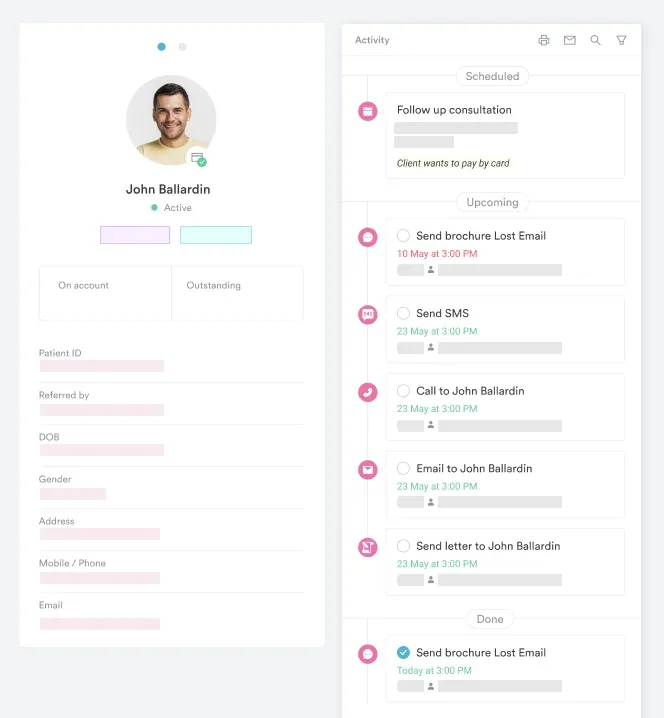

Pabau ties every diagnosis code to the encounter that supports it. Your team catches a missing side or healing status before the claim goes out, so late-effect visits stop coming back as denials.

S52.119S is a narrow code, and the narrowness is the point. Three facts have to line up. The bone is the radius rather than the ulna, and the site is the upper end rather than the lower. On top of that, the fracture must be healed with a late effect already under treatment.
Check the imaging report for the first two and the visit note for the third. If any of the three is missing from the record, query it now rather than after the denial arrives.
Pabau structures ICD-10 documentation at the point of care, so the right code leaves with the claim. Book a demo to see how it keeps fracture coding clean across your orthopedic and therapy caseload.

Coding a fracture that failed to unite? S02.651K walks through the nonunion 7th character and the documentation a payer expects.
Handling a subsequent encounter for an upper-limb injury? S43.139D shows how the D character works outside the fracture families.
Coding a small eyelid or lip repair? CPT code 14060 covers adjacent tissue transfer on the eyelids, nose, ears, or lips for defects of 10 square centimeters or less.
Need the code for a digit flap repair? CPT code 14350 covers the filleted finger or toe flap procedure and its billing modifiers.
S52.119S is a billable diagnosis code for the sequela of a torus (buckle) fracture of the upper end of an unspecified radius. Coders use it once the original fracture has healed. The visit must treat a residual condition, such as elbow stiffness, lost forearm rotation, or chronic pain. It does not belong on a claim during active fracture management.
The upper end of the radius is at the elbow. It covers the radial head and the radial neck, which form part of the elbow joint. A buckle fracture just above the wrist involves the lower end of the radius instead, and its sequela is coded S52.529S rather than S52.119S.
They cover different bones. S52.119S is a torus fracture of the upper end of an unspecified radius, sequela, because subcategory S52.1 is the radius. S52.019S sits under S52.0, which is the ulna, so it describes a torus fracture of the upper end of an unspecified ulna. Confirm the bone on the imaging report before choosing between them.
S52.119A covers the initial encounter, when the patient is receiving active treatment for the acute torus fracture. S52.119S applies after the fracture has healed and the visit treats a late effect of that injury. Using A for a routine follow-up, or S while the fracture is still healing, leads to a denial.
A torus fracture is an incomplete fracture in which compressive force buckles the cortex on one side without breaking through it. It is most common in children aged roughly 5 to 12, usually after a fall on an outstretched hand. Because the bone bends rather than snaps, the opposite cortex stays intact.
Code the residual condition first, then S52.119S second. Section I.B.10 of the ICD-10-CM Official Guidelines sequences the nature of the sequela ahead of the sequela code itself. A therapy visit for post-fracture elbow stiffness therefore leads with the stiffness code, followed by S52.119S as the underlying cause.