ICD-10 Code Y76.0: Diagnostic obstetric and gynecological devices
ICD-10 Code Y76.0: Definition and billable status ICD-10 Code Y76.0 is a valid, ...

Last Updated: Oct 23, 2026
Billable Code Specific Code
S43.139D is the billable ICD-10-CM code for dislocation of unspecified acromioclavicular joint, greater than 200% displacement, subsequent encounter.
Let Pabau's smart automation suggest the right codes, reduce claim denials, and keep your practice compliant—effortlessly.
Automate repetitive tasks and focus on what matters most—your patients.
Reduce coding errors and ensure compliance with the latest regulations.
Clean claims, fewer denials, and faster reimbursements.
Powerful insights and reporting to help your practice thrive.
HIPAA compliant SOC 2 certified GDPR-compliant Trusted by 4,000+ clinics worldwide

S43.139D is a billable ICD-10-CM code for dislocation of the unspecified acromioclavicular (AC) joint during a subsequent (follow-up) encounter
The 7th character D signals the patient is receiving routine care during the healing phase, not active treatment for an acute injury
Use S43.131D (right) or S43.132D (left) when laterality is documented; S43.139D applies only when the injured side is genuinely unknown or unrecorded
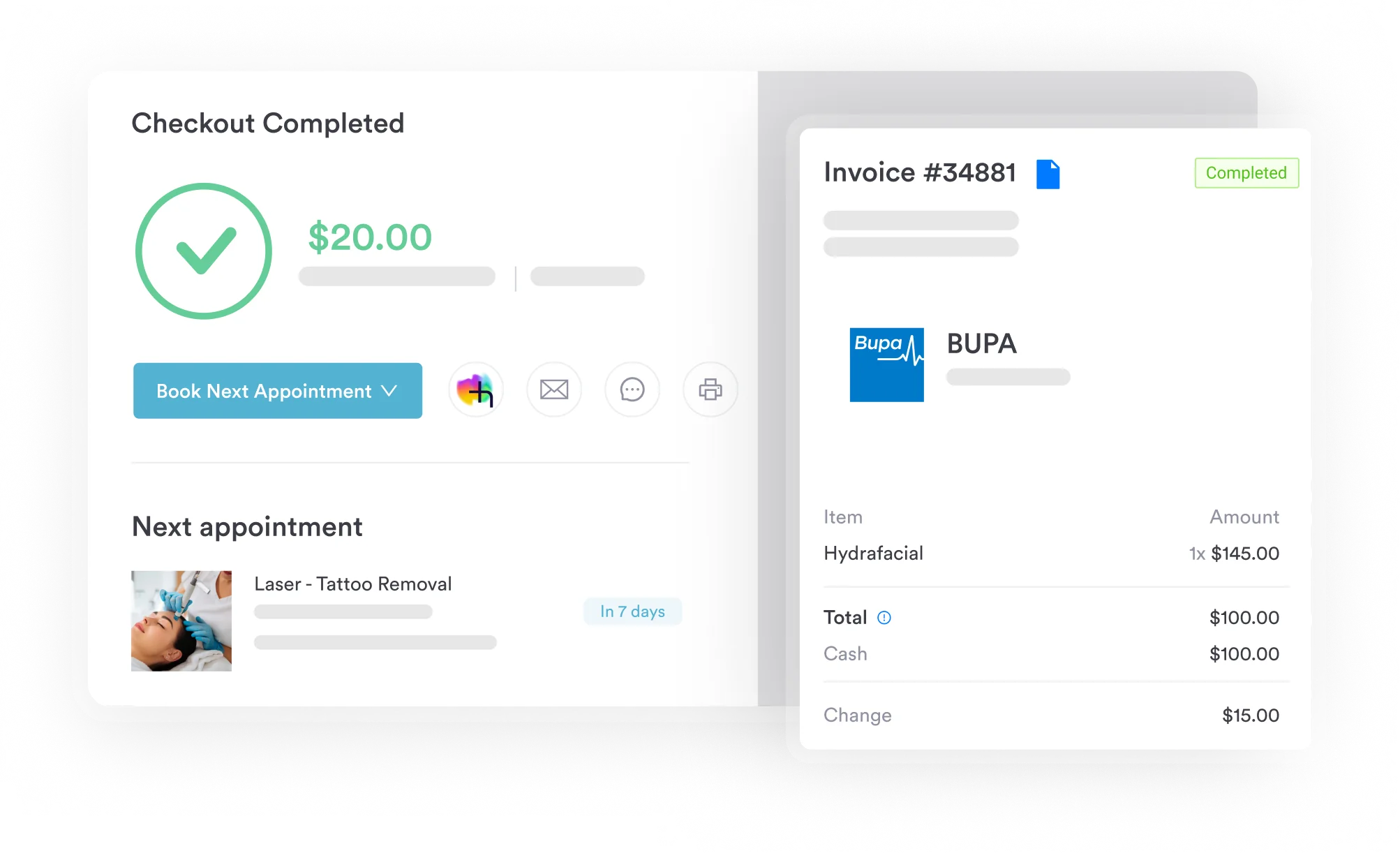
Pabau’s claims management software helps orthopedic and musculoskeletal practices submit clean claims with the correct ICD-10 code pairing every time
Every character in S43.139D carries a specific meaning. Misread any one of them and you are looking at a different code entirely. Here is how the ICD-10-CM code structure breaks down for this specific code:
Together, the full code reads: the patient has a dislocation of the AC joint, laterality not specified, and this visit is a follow-up encounter during the healing phase after initial treatment has been completed.
The acromioclavicular (AC) joint sits at the top of the shoulder where the clavicle meets the acromion process of the scapula. AC joint dislocations are among the most common shoulder girdle injuries, particularly in contact sports, cycling falls, and direct-blow trauma. The injury disrupts the coracoclavicular and acromioclavicular ligaments, causing the clavicle to separate upward relative to the acromion.
Subsequent encounter coding (7th character D) becomes appropriate once the patient’s active treatment phase is complete. In practice, this means the fracture or joint disruption is healing as expected, the patient is no longer receiving interventional management for the acute injury, and the visit is for monitoring, physical therapy follow-up, or rehabilitation progress.
It is worth noting what this code does not describe: it does not apply to glenohumeral (ball-and-socket) shoulder dislocations, which fall under a different S43 subcategory. And it should not be used for the initial emergency or urgent-care presentation for an acute AC joint separation. A right-sided posterior humeral head dislocation at a follow-up visit codes to S43.024D.
The 7th character is arguably the most consequential element in trauma code selection. Using the wrong one on a follow-up visit is one of the most common reasons musculoskeletal claims get flagged for review. The ICD-10-CM Official Guidelines for Coding and Reporting, Section I.C.19.a, define the three 7th character options for injury codes:
A critical nuance: “subsequent encounter” does not mean the patient’s second visit overall. It means any visit after the active treatment phase has ended. A patient who saw their GP twice for acute pain management, then visited a physiotherapist eight times for rehabilitation, would have all eight physiotherapy visits coded as subsequent encounters, even if the GP visits were also coded as initial encounters by a different provider. Different providers treating the same injury can legitimately use different 7th characters for the same episode of care. Australian practices bill the equivalent service through MBS item numbers, which carry their own descriptors and eligibility rules. Keeping a code lookup current matters more than keeping it comprehensive.
If a chiropractor is providing manipulative treatment for ongoing AC joint instability after the acute injury phase, that still qualifies as a subsequent encounter, not a new initial encounter, because the underlying injury is the same episode.
Document the healing-phase status explicitly in every follow-up note. A brief line like ‘patient continues healing from AC joint dislocation sustained [date], no new mechanism of injury, presenting for scheduled rehabilitation follow-up’ is enough to support the D 7th character and prevent payer queries.
Athletic injuries coded here are managed day-to-day in sports medicine software, through assessment, treatment, and return-to-play.
Laterality errors are the most common reason a coder ends up on S43.139D when a more specific code applies. Before using the unspecified laterality variant, check whether the documentation clearly identifies the injured side. The S43.13x family covers three laterality options, each with the full three 7th character variants:
Beyond the laterality siblings, coders should distinguish S43.139D from adjacent S43 subcategories. For occupational therapy clinics managing post-injury shoulder rehabilitation, knowing which joint structure was injured determines the correct parent subcategory:
Fracture codes in the neighboring S42 family are a separate decision again, and they carry 7th characters that dislocation codes do not. A follow-up for a shoulder girdle fracture that is healing slowly is reported as S42.90XG, where the G marks delayed healing rather than routine recovery.
S43.139D is accepted by Medicare, Medicaid, and most commercial payers as a valid diagnosis code for claim submission. As with all injury codes using 7th character D, the payer expectation is that clinical documentation confirms the patient is beyond the acute treatment phase. Using S43.139D on an ED visit or a first orthopaedic consultation for a fresh dislocation will trigger review.
Pabau’s claims management software helps orthopedic and musculoskeletal practices pair ICD-10 diagnosis codes with the correct CPT procedure codes before submission, reducing the risk of mismatched claim data. For S43.139D, common CPT pairings include:
Maintaining HIPAA compliance for medical offices requires that every diagnosis code submitted is supported by the clinical record. For S43.139D, the record needs to confirm the nature of the original injury, that active treatment has concluded, and the reason for the current visit. Per ResDAC’s guidance on ICD codes in Medicare claims, specificity is critical for claims accuracy, and laterality must be coded to the highest degree the documentation supports.

Pabau helps orthopedic, sports medicine, and physical therapy practices manage ICD-10 coding alongside scheduling, clinical notes, and claims submission in one platform. No more toggling between systems to match diagnosis codes with procedures.

Four patterns account for the majority of S43.139D coding errors. Catching them before claim submission is far less costly than managing denials and appeals after the fact.
For a broader look at 7th character selection in ICD-10 coding across different diagnostic categories, the principles are consistent: the 7th character reflects the encounter type, not the chronology of the specific provider relationship.
Supporting S43.139D through an audit requires the clinical record to answer three core questions: What was the original injury? Why is the 7th character D (not A or S) appropriate today? Why is laterality unspecified? Incomplete answers to any of these create audit exposure.
The compliance requirements for physiotherapy clinics and other musculoskeletal providers make structured clinical documentation non-negotiable. The following elements are needed to support S43.139D on every subsequent encounter claim:
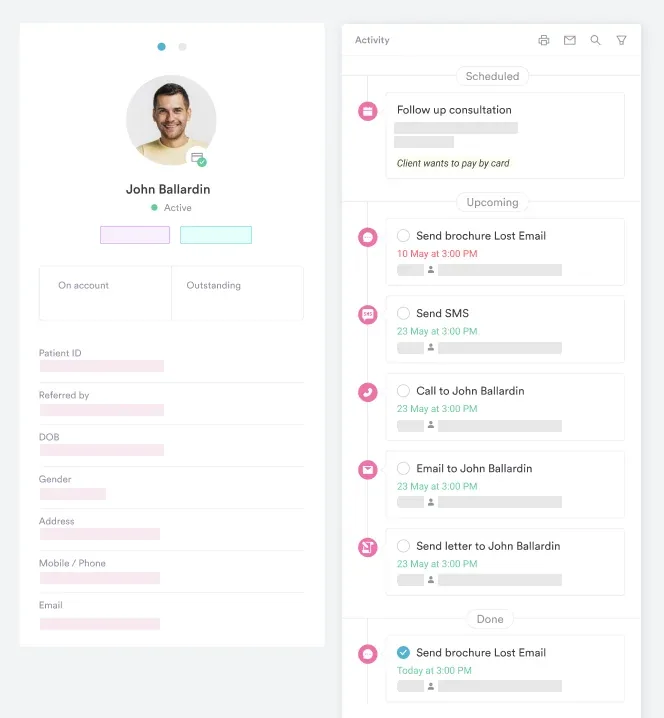
Pabau’s patient records and clinical documentation tools allow providers to structure notes with the fields that support clean coding, including injury reference, encounter type, and laterality, reducing the chance of missing elements at the time of billing review.
When a patient transfers from another provider mid-recovery, request all prior clinical notes before submitting subsequent encounter codes. Payers increasingly cross-reference claim histories. A subsequent encounter (D) with no corresponding initial encounter (A) claim in the patient’s record can trigger a medical records request.
ICD-10 code S43.139D is a specific, billable code for a common clinical scenario: the patient recovering from an AC joint dislocation who presents for follow-up care after active treatment has ended. Getting the 7th character right, using laterality-specific codes when the side is documented, and supporting the claim with clear documentation are the three practices that keep these claims clean.
Pabau’s claims management and clinical documentation tools help musculoskeletal and orthopedic practices structure notes and pair ICD-10 codes with the right CPT procedures before submission. To see how it fits your practice workflow, explore Pabau’s claims management software or book a demo with the team.

Billing a malignant lesion excision? CPT 11621 lesion excision guide covers RVUs, modifiers, and denials for excisions on the scalp, neck, hands, or feet.
Billing a small facial excision? CPT 11640 facial lesion excision covers excisions of 0.5 cm or less on the face, ears, eyelids, nose, or lips.
Coding an intraparenchymal hemorrhage case? Intraparenchymal hemorrhage ICD-10 codes covers the I61.x code series plus documentation tips and coding best practices.
S43.139D is a billable ICD-10-CM diagnosis code for dislocation of the unspecified acromioclavicular (AC) joint during a subsequent encounter. It applies when a patient is receiving routine follow-up care during the healing phase after active treatment for an AC joint dislocation has ended, and the injured side (right or left) is not specified in the clinical documentation. Verify current validity against the CDC/NCHS ICD-10-CM web tool for the active fiscal year.
The 7th character D indicates a subsequent encounter: the patient is receiving routine care during the healing or recovery phase, after active treatment for the acute injury has been completed. It contrasts with “A” (initial encounter, active treatment) and “S” (sequela, late effects of a healed injury). Per ICD-10-CM Official Guidelines Section I.C.19.a, the character reflects the encounter type, not the visit number.
All three codes describe dislocation of the acromioclavicular joint during a subsequent encounter. The difference is laterality: S43.131D specifies the right AC joint, S43.132D specifies the left AC joint, and S43.139D is used when the injured side is not documented. Use S43.139D only when laterality is genuinely unavailable; if the documentation identifies the shoulder, select the laterality-specific code.
Yes, S43.139D is a valid billable code accepted by Medicare for subsequent encounter visits following AC joint dislocation. The claim must be supported by documentation confirming the healing phase, the nature of the original injury, and the reason for the current encounter. Confirm coverage policy and medical necessity requirements via the AAPC Codify ICD-10-CM lookup and your MAC’s LCD if applicable.
The clinical record must establish that the patient has an AC joint dislocation from a prior acute event, that active treatment has ended and the patient is in the healing phase, the reason for the current visit, and if laterality is unspecified, a note confirming this is because the side is not documented in available records. Missing any of these elements creates audit risk.
The S43 category covers dislocation and sprain of joints and ligaments of the shoulder girdle. Key subcategories include S43.0 (glenohumeral/shoulder joint dislocation), S43.1 (acromioclavicular joint dislocation, which includes S43.131-S43.139), S43.2 (sternoclavicular joint dislocation), S43.4 (sprain of shoulder joint), and S43.5 (sprain of acromioclavicular joint). Search the full code set at the ICD List free lookup tool.