



HCPCS code E0198: Water pressure pad billing guide
HCPCS code E0198 is a water pad for a standard mattress HCPCS code E0198 is the ...

Last Updated: Oct 13, 2026

CPT Code 10030 describes percutaneous image-guided fluid collection drainage by catheter in soft tissue, extremities, or trunk, with imaging guidance bundled into the code
Imaging guidance (ultrasound or CT) is included in 10030 and cannot be billed separately with 76942 or 76937, making unbundling a top audit risk
Modifiers 26, TC, RT, LT, 59, 76, and 77 apply in specific settings; incorrect modifier use triggers NCCI edits and delays reimbursement
Pabau’s claims management software helps outpatient clinics attach CPT codes to procedures, flag modifier requirements, and reduce claim denials before submission
CPT Code 10030 is a procedure code maintained by the American Medical Association (AMA) under the integumentary system section of the CPT codebook.
Its full official descriptor reads: Image-guided fluid collection drainage by catheter (eg, abscess, hematoma, seroma, lymphocele, cyst), soft tissue (eg, extremity, abdominal wall, neck), percutaneous.
Three elements define whether 10030 applies: the drainage must use a catheter (not a needle alone), it must be image-guided (ultrasound or CT in real time), and the fluid collection must be located in soft tissue, an extremity, or the trunk.
Collections inside a body cavity, such as the peritoneum or pleural space, fall under different code families entirely.
Understanding the clinical steps matters for coding because each step maps to a documentation requirement. A note that skips any one of these elements gives payers grounds to deny the claim.
The catheter is left in place for ongoing drainage, which distinguishes this procedure from a one-time needle aspiration. That distinction is also what separates CPT Code 10030 from CPT 10160.
Reimbursement for CPT Code 10030 varies by place of service, payer contract, and geographic adjustment factor. The figures below reflect national averages from the 2026 Medicare Physician Fee Schedule (MPFS). Always verify current rates using the CMS fee schedule tool before submitting claims, as rates change annually.
These figures are national averages. Geographic Practice Cost Indices (GPCIs) adjust the final payment up or down depending on location. Private payers and Medicaid programs set their own rates, which may differ significantly. Use the FastRVU lookup tool to calculate location-adjusted Medicare payment estimates for your practice’s locality.
Modifier selection is where many 10030 claims go wrong. Each modifier has a specific clinical scenario that justifies its use. Applying a modifier outside its intended context triggers NCCI edits or payer flags that delay or deny payment.
Verify modifier applicability against current National Correct Coding Initiative (NCCI) edit tables before submission. NCCI edits are updated quarterly, so a combination that was payable last year may be bundled now.
Medical necessity for CPT Code 10030 must be supported by an ICD-10-CM diagnosis code that demonstrates why drainage was required. Payers apply HIPAA-compliant documentation standards and Local Coverage Determinations (LCDs) to assess whether the diagnosis justifies the procedure. The table below lists the most frequently paired codes.
Pair the most specific available diagnosis code with 10030. Unspecified codes (those ending in “unspecified” or “NOS”) are valid when specificity is genuinely unavailable, but they draw more scrutiny during payer review.
That same specificity expectation carries over to other procedure types.
Dermatology practices and plastic surgery practices submit CPT 10030 claims most often, since abscesses, seromas, and hematomas drained under this code are typically managed in those two settings.

Pabau’s claims management workflows help outpatient clinics attach the right CPT codes, flag modifier requirements, and submit cleaner claims the first time.

Payers require the operative or procedure note to demonstrate every element of the CPT 10030 descriptor before they release payment. Missing any single element gives the adjudicator a clean reason to deny. Review these requirements against your practice’s medical forms to ensure they capture each field.
Three billing patterns account for the majority of CPT 10030 denials across outpatient settings.
Run a quarterly audit of your 10030 claims alongside your 10160 and 49406 submissions. If the ratio of 10030 to 10160 claims is unusually high, review whether needle-aspiration procedures are being upcoided to catheter drainage codes. Payer statistical models flag this pattern and may trigger a pre-payment review.
The anatomical location of the fluid collection and the drainage method are the two axes that determine which code applies. The comparison below adds a dimension competitors’ tables typically omit: the imaging requirement and the risk of denial when the wrong code is selected.
The single most important distinction is the drainage instrument. CPT 10160 uses a needle; CPT Code 10030 uses a catheter that remains in place. If the physician inserts a guidewire, dilates the tract, and places a locking pigtail drain, the procedure is 10030.
If the physician advances a needle, aspirates, withdraws the needle, and leaves no catheter, the procedure is 10160. Upcoding 10160 procedures to 10030 is a documented audit target for Medicare Administrative Contractors (MACs).
Anatomical location is the deciding factor. CPT Code 10030 covers soft tissue outside body cavities: a thigh hematoma, a breast seroma, a subcutaneous abscess on the trunk.
CPT 49406 covers fluid collections inside the peritoneal or retroperitoneal space, regardless of how they are accessed. A pelvic collection drained via a percutaneous route through the abdominal wall is still inside the peritoneum and belongs under 49406.
The access route does not change the anatomical classification of the collection: anatomical location determines the code family, and procedural technique determines the specific code within that family. The same anatomy-first logic applies across other procedure categories.
The AMA CPT Editorial Panel and CMS made several changes affecting catheter-assisted drainage coding in the 2026 cycle. Practices billing these codes should review their charge master entries against the final 2026 MPFS rule published by CMS in November 2025.
Turning a completed percutaneous drainage procedure into a clean 10030 claim is almost entirely a documentation and workflow problem. Standalone CPT lookup tools give coders the descriptor; they do not help the practice connect that descriptor to the procedure note, verify modifier logic, or track denial patterns across months of submissions.
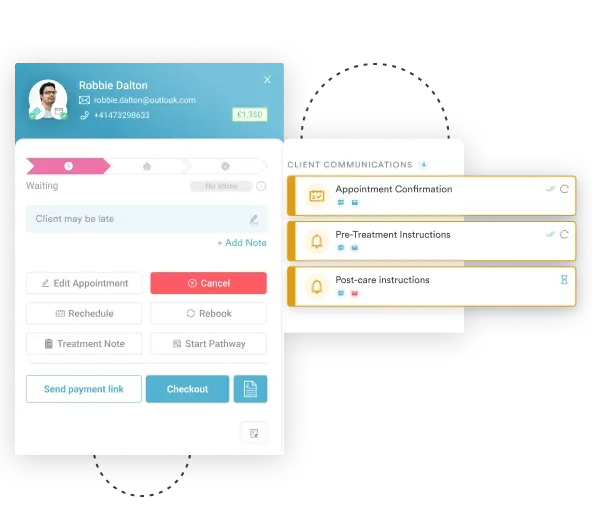
Pabau’s claims management software keeps CPT code assignment, documentation, and claim preparation inside one workflow. Coders can attach procedure codes directly to the appointment record, flag modifier requirements before submission, and monitor which codes generate the most denials over time. That closed-loop visibility, from code selection through payment posting, is where the efficiency gain lives. Benefit verification tells the practice what the plan covers, which is a separate question from whether the patient is active. Auditors read the note before the code, so the documentation level has to support what was submitted.
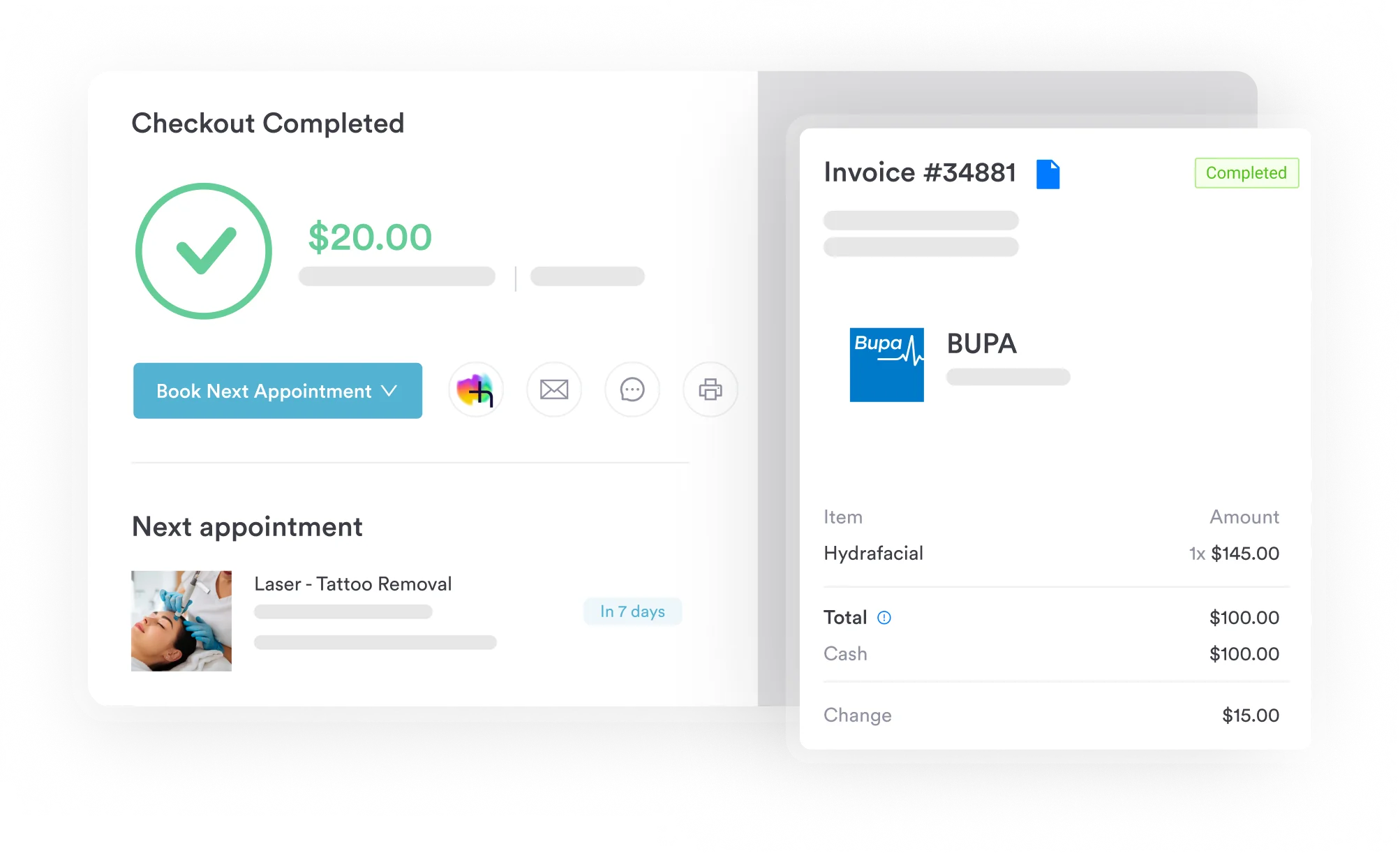
The practice management software layer also supports automated billing workflows that prompt coders when a procedure type is associated with a high-denial modifier combination.
For outpatient practices performing image-guided procedures in a physician-office setting, that kind of pre-submission check is what separates a 95% first-pass acceptance rate from a 78% rate.
Practices managing coding for multiple procedure families, such as those also submitting coaching CPT codes for behavioral health services alongside procedural codes, benefit most from a unified coding environment that handles modifier logic across code families without manual cross-referencing.
CPT Code 10030 denials almost always trace back to one of three problems: missing imaging documentation, the wrong code for the anatomical location, or an unbundled imaging guidance code that should have been included in 10030’s descriptor. Get those three elements right and the code pays reliably.
Pabau’s claims management tools help outpatient practices connect procedure documentation to claim submission in one place, reducing the manual handoffs where coding errors occur.
If your practice performs image-guided drainage procedures and wants to see how Pabau handles CPT code management and denial tracking, book a demo and speak with the team about your workflow.

Documenting obstetric complications? ICD-10 O70.4 covers coding for anal sphincter tears complicating delivery, another example of documentation-driven code selection.
Billing audiology services? ICD-10 H90.0 breaks down coding for bilateral conductive hearing loss.
Coding behavioral health visits? HCPCS T1040 covers Medicaid community behavioral health clinic billing.
CPT Code 10030 is a surgical procedure code covering percutaneous image-guided fluid collection drainage by catheter in soft tissue, extremities, or the trunk. It includes imaging guidance (ultrasound or CT) within the descriptor, meaning imaging guidance cannot be billed separately. Common clinical applications include draining abscesses, seromas, hematomas, lymphoceles, and cysts located outside body cavities.
The 2026 national average Medicare payment for CPT Code 10030 is approximately $197 in a facility setting (hospital outpatient) and approximately $351 in a non-facility setting (physician office). Rates vary by geographic location based on GPCI adjustments. Verify current figures using the CMS Physician Fee Schedule lookup tool at cms.gov before submitting claims.
CPT 10030 requires a catheter left in place for ongoing drainage and mandates real-time image guidance bundled into the code. CPT 10160 (puncture aspiration of abscess, hematoma, bulla, or cyst) uses a needle only, leaves no catheter, and does not require imaging guidance. Billing 10030 when only needle aspiration occurred is upcoding and a documented MAC audit target.
Only in rare, well-documented cases where anatomically distinct fluid collections are drained in the same session: one in soft tissue (10030) and one in the peritoneal or retroperitoneal space (49406). Modifier -59 would be required to demonstrate the distinct procedural services. Each collection must be documented separately in the procedure note. Billing both for a single collection at a single anatomical site is unbundling.
The procedure note or radiology report must confirm the imaging modality used (ultrasound or CT), state that guidance was real-time and continuous during catheter placement, identify the catheter type and size, and describe the fluid aspirated. Generalized phrases such as “performed under image guidance” without specifying the modality are insufficient for most Medicare Administrative Contractors and frequently trigger medical record requests.
Yes, when the abscess is located in soft tissue, an extremity, or the trunk, and when a catheter is placed percutaneously under real-time imaging guidance. If the drainage uses a needle only (no catheter placement), report CPT 10160 instead. If the abscess is located inside the peritoneal cavity, report CPT 49406 rather than 10030.



