ICD-10 Code Z74.8: Other problems related to care provider dependency
ICD-10 Code Z74.8: Definition and code details ICD-10 Code Z74.8 is the billable...

Last Updated: Oct 19, 2026
Billable Code Specific Code
S24.3XXA is the billable ICD-10-CM code for injury of peripheral nerves of thorax, initial encounter.
The Code also instructions for open wound, vertebral fracture, and transient paralysis catch just as many, despite the code's low difficulty rating.
Let Pabau's smart automation suggest the right codes, reduce claim denials, and keep your practice compliant—effortlessly.
Automate repetitive tasks and focus on what matters most—your patients.
Reduce coding errors and ensure compliance with the latest regulations.
Clean claims, fewer denials, and faster reimbursements.
Powerful insights and reporting to help your practice thrive.
HIPAA compliant SOC 2 certified GDPR-compliant Trusted by 4,000+ clinics worldwide

S24.3XXA is a billable ICD-10-CM code for injury of peripheral nerves of thorax, initial encounter, valid for FY2026 (10/1/2025-9/30/2026).
The 7th character A means the patient is receiving active treatment, not that this is their first visit to any provider.
Code Also instructions require S21.-, S22.0-, or R29.5 to be reported alongside S24.3XXA when an open wound, vertebral fracture, or transient paralysis is documented.
Practice management software like Pabau can streamline how practices submit, track, and reconcile insurance claims tied to codes such as S24.3XXA.
ICD-10 Code S24.3XXA is a billable ICD-10-CM diagnosis code for injury of peripheral nerves of thorax, initial encounter. It is valid for HIPAA-covered transactions from October 1, 2025 through September 30, 2026 under the FY2026 edition of ICD-10-CM.
Physical therapy and sports medicine practices most often report this code after blunt or penetrating chest wall trauma.
The 7th character is what makes S24.3XXA specific to the initial encounter. Per CMS ICD-10-CM coding guidelines, “initial encounter” is a billing concept tied to active treatment, not a count of office visits.
A patient can see a new provider for the first time weeks into recovery, and the code stays S24.3XXA if active treatment is still underway. The same active-treatment logic applies to related injury codes such as S21.112A.
The most common error on claims using this code family: applying D (subsequent encounter) when the patient is still under active management. If the treating clinician is still actively adjusting the treatment plan, A is correct regardless of how many visits have occurred.
The ICD-10-CM tabular list provides an Applicable To note that clarifies which anatomical structures S24.3XXA covers. These inclusions determine whether the code applies to the injury documented in the record.
The Applicable To note is a directive, not a suggestion. If the record documents intercostal nerve injury from blunt thoracic trauma with active treatment ongoing, S24.3XXA is the correct code.
S24.3XXA carries an Excludes 2 note for brachial plexus injury (S14.3-). An Excludes 2 note means the excluded condition is not included in the code but may be reported together when both conditions are present.
Coders who confuse Excludes 1 and Excludes 2 create problems here. Per ICD10Data.com, these are the key exclusions to know.
Because brachial plexus injury is an Excludes 2, not an Excludes 1, both conditions can appear on the same claim. A patient with a thoracic peripheral nerve injury and a documented brachial plexus injury can be reported with S24.3XXA and the appropriate S14.3- code together. This applies whenever the record supports both diagnoses. The clearinghouse validates structure before the payer validates content, which is why an electronic claim can fail twice.
This is where many coders undercode. ICD-10 Code S24.3XXA carries three Code Also instructions, each mandatory when the referenced condition is documented in the record. Skipping any of them is an undercoding error that risks claim denial. Good HIPAA compliance includes accurate code pairing, not just data privacy.
Check the operative or emergency note for open wound documentation before finalizing claims with S24.3XXA. If the attending documented a laceration or penetrating injury of the chest wall, S21.- is not optional.
Understanding the parent codes helps coders navigate related injury scenarios and confirm the correct level of specificity. Other Chapter 19 codes.
Coders frequently need to distinguish S24.3XXA from adjacent codes in the S24 category. The distinction matters most when the injury involves the spinal cord rather than only peripheral nerves, or when encounter type changes. The AAPC Codify ICD-10-CM lookup provides crosswalk navigation for the full S24 range.
Coders billing S24.3XXA alongside an open wound frequently also encounter S21.252A, another billable code in the same S21.- range.
The medical record must contain specific elements to support S24.3XXA on a claim. Missing documentation is the most common root cause of denials and audits.
Using patient intake software at the point of care catches missing elements before the claim reaches the coder.

Prompt for encounter type and associated injuries at the time of the visit, not during retrospective coding review.
S24.3XXA is valid under the FY2026 edition of ICD-10-CM with no changes from the prior year’s edition. It remains a stable, billable code. The CDC/NCHS ICD-10-CM web tool confirms the current-year validity of any code before submission.
All HIPAA compliance documentation for covered transactions requires use of valid-year codes, making annual verification a standard step in any billing workflow.
Most coding errors on S24.3XXA surface at submission, not at the coding stage. A claim can go out with a missing detail or a mismatch between linked codes, and the insurer catches it instead of the practice.
Pabau’s claims management software runs validation checks before a claim is sent, and it tracks and reconciles claims once they are submitted.
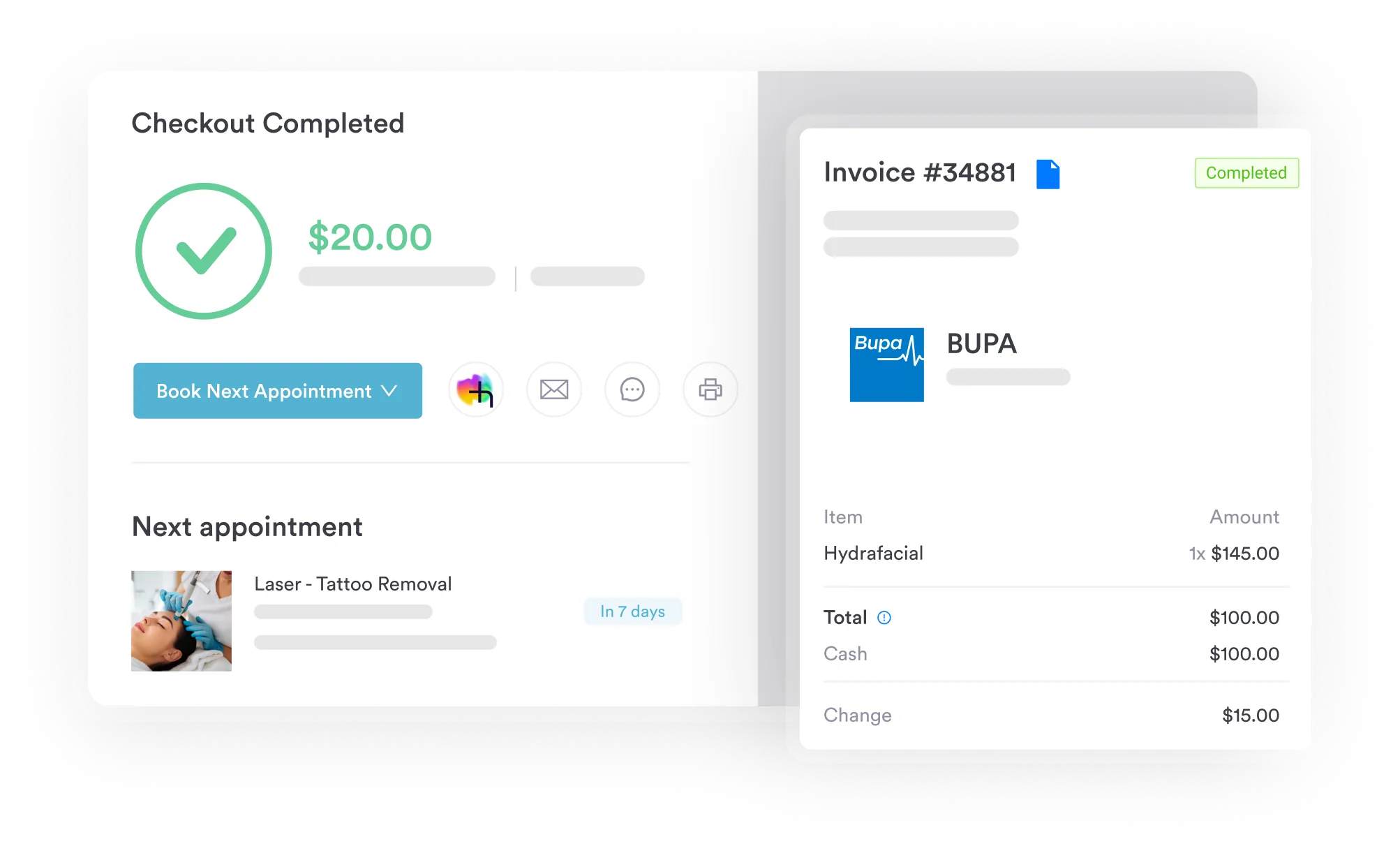
Pabau also links each patient’s insurance details to their record and routes the invoice to the correct payer automatically. Claim status moves through five stages, from pending to paid, so staff can track a submission for a case like S24.3XXA without a phone call.
That visibility cuts the back-and-forth between billing staff and clinicians when a claim needs correction. The efficiency gains from end-to-end practice management software extend well beyond one code, but clean claims submission is where they start.
When S24.3XXA is paired with S21.- for an associated open wound, confirm both codes carry the same 7th character. A claim with S24.3XXA (initial encounter) and S21.90XD (subsequent encounter) will flag as inconsistent in most clearinghouse edits.

Pabau’s claims management software helps practices submit, track, and reconcile insurance claims like those built around S24.3XXA, with built-in validation checks before submission. See how it fits your practice’s billing workflow.

ICD-10 Code S24.3XXA codes cleanly when the documentation backs it up. The denial risk concentrates in three places: an unchecked 7th character, a missing Code Also pairing, and a code submitted outside its FY validity window.
Confirm whether an open wound, vertebral fracture, or transient paralysis is documented before the claim goes out, and S24.3XXA codes without a second look.
Pabau’s claims management software submits, tracks, and reconciles insurance claims, with validation checks that catch missing details before a claim goes out. To see how it fits your practice’s ICD-10-CM billing workflow, book a demo.

Billing anesthesia for a colorectal resection? CPT code 00844 guide Covers the base units and modifiers for open and laparoscopic abdominoperineal resection anesthesia.
Coding a puncture wound of the thorax? S21.349D covers the subsequent-encounter code often paired with thoracic nerve injuries.
Need the code for a healing cervical spinal cord injury? S14.103D covers the subsequent-encounter code for an unspecified C3 injury.
Coding a lower abdomen intraperitoneal procedure? CPT code 00848 guide Covers the modifiers and time unit calculation for lower abdomen intraperitoneal anesthesia claims.
ICD-10 Code S24.3XXA is a billable ICD-10-CM diagnosis code for injury of peripheral nerves of thorax, initial encounter. It belongs to category S24, injury of nerves and spinal cord at thorax level, within Chapter 19 of ICD-10-CM. It is valid for FY2026 HIPAA-covered transactions from October 1, 2025 through September 30, 2026.
Yes, S24.3XXA is a billable and specific ICD-10-CM code. It can be used directly to indicate a diagnosis for reimbursement purposes and is valid for HIPAA-covered transactions in FY2026. Coverage and reimbursement may vary by payer and medical necessity requirements.
The difference is the 7th character. S24.3XXA is used during active or initial treatment of the peripheral nerve injury. S24.3XXD applies when the injury is healing and the patient is receiving routine follow-up care. S24.3XXS is used for sequela – late effects or complications that arise from the original injury after it has resolved.
S24.3XXA carries an Excludes 2 note for brachial plexus injury (S14.3-). Because this is an Excludes 2, both codes can be reported on the same claim when both conditions are documented in the medical record. Spinal cord injuries at the thoracic level are coded under other S24 subcategories such as S24.0 and S24.1, not S24.3XXA.
Use 7th character A (initial encounter) when the patient is still receiving active treatment for the injury, regardless of how many visits have taken place. Switch to D (subsequent encounter) when active treatment has ended and the patient is in routine follow-up for a healing injury. The distinction is based on treatment phase, not visit number.
Three conditions trigger a Code Also instruction alongside S24.3XXA: an open wound of the thorax (S21.-), a thoracic vertebral fracture (S22.0-), and transient paralysis (R29.5). Report the matching secondary code only when the medical record documents one of them. No additional code is required otherwise, and each secondary code should carry the same encounter-type 7th character as S24.3XXA.