ICD-10 code S61.201A: Open wound of left index finger without nail damage
ICD-10 code S61.201A covers a left index finger wound of unstated type ICD-10 co...

Last Updated: Oct 16, 2026
Billable Code Specific Code
S13.8XXD is the billable ICD-10-CM code for sprain of joints and ligaments of other parts of neck, subsequent encounter.
Submitting the initial encounter code, S13.8XXA, on a follow-up physical therapy or chiropractic visit is one of the most common billing errors in musculoskeletal coding.
Let Pabau's smart automation suggest the right codes, reduce claim denials, and keep your practice compliant—effortlessly.
Automate repetitive tasks and focus on what matters most—your patients.
Reduce coding errors and ensure compliance with the latest regulations.
Clean claims, fewer denials, and faster reimbursements.
Powerful insights and reporting to help your practice thrive.
HIPAA compliant SOC 2 certified GDPR-compliant Trusted by 4,000+ clinics worldwide

S13.8XXD is a billable ICD-10-CM code for sprain of joints and ligaments of other parts of neck, subsequent encounter, valid for FY2026 (effective October 1, 2025).
The 7th character ‘D’ designates subsequent encounter: the patient returns for follow-up care after the initial diagnosis and treatment have already been established.
The parent code S13.8 is non-billable. You must use a child code: S13.8XXA (initial), S13.8XXD (subsequent), or S13.8XXS (sequela).
Pabau’s claims management software links encounter history to clinical records, reducing the risk of submitting an incorrect 7th character on follow-up visits.
ICD-10 Code S13.8XXD is a billable, specific ICD-10-CM diagnosis code. Its full official description is “Sprain of joints and ligaments of other parts of neck, subsequent encounter.” It became effective October 1, 2025 under the FY2026 edition of ICD-10-CM, per the CMS ICD-10 codes page.
Being billable means this code can be submitted directly on a claim for reimbursement. It requires no further specification. The parent code S13.8 is not billable on its own.
The 7th character is the single most consequential element of S13.8XXD for billing purposes. ICD-10-CM Official Guidelines for Coding and Reporting (Section I.C.19) define three 7th character options for traumatic injury codes like S13.8. Each reflects a distinct phase of care.
The 7th character refers to the patient’s phase of treatment, not the provider seeing the patient. A patient managed entirely by a physical therapist after an ED diagnosis still gets the “D” suffix on every follow-up visit, because the diagnosis was established at a prior encounter.
Good patient care management documentation makes this determination straightforward.
The three child codes under S13.8 cover every phase of a neck sprain episode. Selecting the wrong sibling code is the most common reason for claim rejection on this code family.
Coders should also distinguish this code family from M95.8, used for other specified acquired deformities of the musculoskeletal system that are not the result of an acute sprain.
Clinical scenario example: A patient sprains their neck in a motor vehicle accident on Monday. The ED visit on Monday uses S13.8XXA. The physical therapy session on Thursday uses S13.8XXD. A year later, if the patient presents with persistent cervicogenic headaches traced directly to the original sprain, S13.8XXS applies.
A crash-related neck sprain also carries an external cause code as a secondary diagnosis. Where the collision happened off the public highway, V49.29XS applies at the sequela visit with a matching 7th character. A patient struck by a railway train while boarding or alighting a pick-up truck or van codes to V55.4XXD at the subsequent encounter.
At the follow-up visit, a patient riding the bicycle that hit an animal-drawn vehicle or streetcar on a public road takes V16.4XXD. That ‘D’ should mirror the 7th character on the neck sprain code at the same encounter.
Athletic injuries coded here are managed day-to-day in sports medicine software, through assessment, treatment, and return-to-play.
S13.8XXD covers sprains affecting joints and ligaments in parts of the neck not captured by more specific S13 sub-codes. The CDC/NCHS ICD-10-CM tool lists approximate synonyms that coders and clinicians commonly use to identify this code.
Note on whiplash: Whiplash injury may map to S13.4 (sprain of ligaments of cervical spine) or S13.8 depending on anatomical specificity documented in the clinical record. Do not default to S13.8XXD for whiplash without confirming the note specifies “other parts of neck.”
If the record instead documents a structural deformity rather than a soft-tissue sprain, M95.3 is the more accurate code. When documentation is unclear, query the treating clinician before coding.
Run a chart audit before submitting subsequent encounter claims. Confirm the prior visit note establishes the diagnosis, and verify the current visit note describes ongoing treatment (not a new injury event). Submitting S13.8XXD when the patient is presenting for a completely separate injury episode is an audit risk.
Understanding the parent-child hierarchy helps coders navigate to the correct code quickly and gives context for related blocks. S13.8XXD lives within the injury and trauma chapter of ICD-10-CM, verified through the ICD List lookup tool.
Payers may deny S13.8XXD claims when documentation fails to support the subsequent encounter designation or the anatomical location. Solid documentation practices reduce these denials. The following elements are required to support this code.
Practices using physiotherapy clinic compliance frameworks often build these documentation checkpoints into their clinical note templates, reducing the risk of missing a required field at the time of billing.
CPT procedure codes paired with ICD-10 Code S13.8XXD depend on the type of provider and the treatment delivered at the subsequent encounter. Payer policies on which CPT codes are covered for neck sprain follow-up vary; verify coverage before submitting.
Common pairings for physical therapy EMR practices and chiropractic software users include the following, per the AAPC Codify ICD-10-CM reference.
Practices that issue home TENS units for interim pain management between visits may also bill A4557 for replacement lead wires as a separate line item.
Important: No CPT code is universally “always” paired with S13.8XXD. Payer policies, local coverage determinations, and medical necessity documentation drive coverage decisions for each visit. Verify payer-specific requirements before submitting.
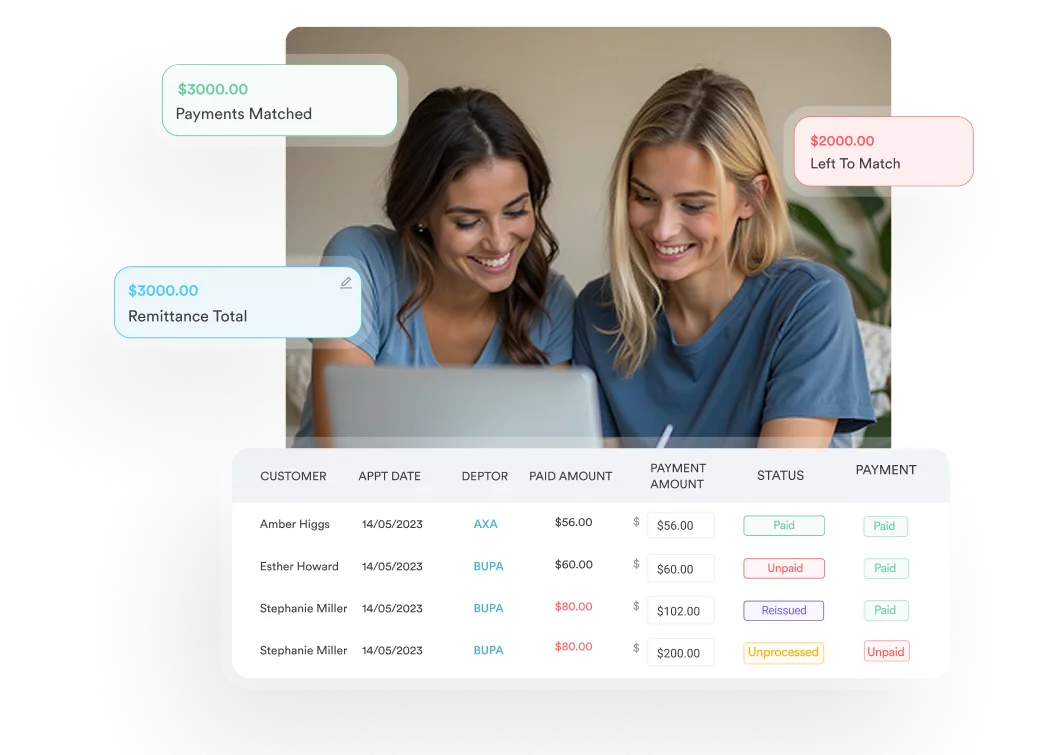
Subsequent encounter coding errors often happen because a billing team cannot quickly confirm whether a patient’s prior visit established the original diagnosis. Pabau’s claims management software links a patient’s appointment history directly to their clinical records, so the coder can see encounter sequence at a glance without switching tools. Tracking which plans carry an authorization requirement for a service saves the appeal later. Front-desk data entry and back-office coding both feed cash collection, so errors compound downstream.
Practices managing high volumes of musculoskeletal follow-up visits also benefit from structured note templates. Pabau allows clinics to configure clinical note templates that prompt the treating clinician to document anatomical location, treatment type, and prior diagnosis reference at each visit.
Those three fields are exactly what a coder needs to assign the correct 7th character with confidence. For physiotherapy practice management teams, this removes the back-and-forth of querying clinicians after the fact.
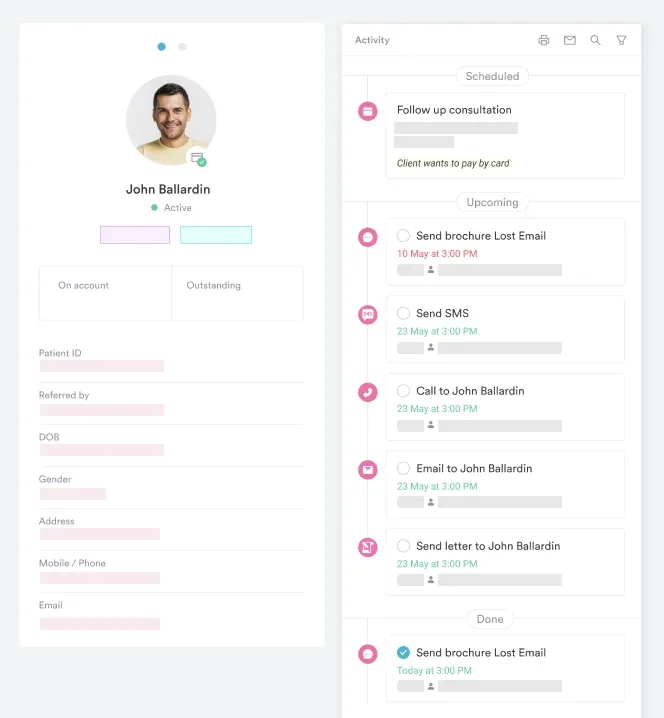
Patient clinical records in Pabau store the full encounter timeline, making it straightforward to identify initial versus subsequent visits without relying on manual recall or paper trail searches. This reduces the risk of inadvertently billing S13.8XXA (initial) when the patient is already on their third follow-up session.
Flag S13.8 family codes for a periodic billing audit. Compare the 7th character submitted against the appointment sequence in the patient record for any claim returned with a denial. A pattern of ‘A’ codes on visit 2+ usually signals a documentation or training gap, not a coding error on a single account.

Pabau links appointment history, clinical records, and claims in one place. Coders can confirm encounter sequence and submit accurate 7th character codes without switching between systems.

The difference between S13.8XXA and S13.8XXD is a single character, but it determines whether a follow-up claim pays or denies. Accurate 7th character selection depends on clear documentation of encounter sequence, anatomical location, and active treatment status at each visit.
Pabau’s linked appointment history and configurable clinical note templates give billing teams the encounter context they need to assign ICD-10 Code S13.8XXD correctly the first time. See how Pabau streamlines musculoskeletal billing with our practice management platform, or book a demo to walk through it with the team.

Billing for TENS therapy supplies? HCPCS Code A4558 covers conductive gel billing for the electrodes used in follow-up physical therapy sessions.
Wondering how subsequent-encounter billing works elsewhere? CPT Code 99307 covers subsequent nursing facility care, a different setting governed by the same encounter-sequence logic.
Billing for a spinal support brace during recovery? HCPCS Code L0457 covers flexible TLSO billing for thoracolumbosacral orthotic support.
S13.8XXD is an ICD-10-CM diagnosis code meaning “Sprain of joints and ligaments of other parts of neck, subsequent encounter.” It is used when a patient returns for ongoing treatment of a previously diagnosed neck ligament or joint sprain, and it is billable for FY2026 (effective October 1, 2025).
Yes. S13.8XXD is a billable, specific ICD-10-CM code that can be submitted directly on a claim. The parent code S13.8 is not billable; you must always use a child code with a 7th character (A, D, or S) for billing purposes.
S13.8XXA is used for the initial encounter, when the patient first receives active treatment for the neck sprain. S13.8XXD is used for subsequent follow-up visits that occur after that active treatment phase, during routine healing or recovery. Using S13.8XXA on a follow-up visit is a common billing error that leads to claim denial.
The 7th character “D” designates a subsequent encounter, meaning the patient is receiving continued or follow-up care for a condition that was diagnosed at a prior visit. Per the ICD-10-CM Official Guidelines (Section I.C.19), this applies across all traumatic injury codes in the S00-T88 chapter.
Use S13.8XXD for follow-up visits during the healing or recovery phase, after active treatment for the original sprain has ended. Use S13.8XXS (sequela) when the patient presents with a late effect or complication, such as chronic cervical stiffness or neurological symptoms, that arose directly from the original injury.
A subsequent encounter in ICD-10 is any visit for routine follow-up or continued care of a condition that was diagnosed at a previous encounter, occurring after the active treatment phase has ended. The definition is based on the patient’s phase of care, not on which provider is treating them. Multiple providers can all use the “D” suffix for the same injury episode as long as the original diagnosis was established at a prior visit.