



CCSD code G5100: Bypass of duodenum billing guide
CCSD code G5100 bills a bypass that leaves the duodenum in place CCSD code G5100...

Last Updated: Oct 16, 2026

CPT Code 99307 describes a subsequent nursing facility visit requiring a medically appropriate history and/or exam with straightforward medical decision making (MDM).
Straightforward MDM means minimal problems addressed, minimal data reviewed, and minimal risk of complications. Selecting 99308 without meeting the low-complexity MDM threshold creates upcoding exposure.
The 2026 Medicare blended national average payment for CPT Code 99307 is approximately $42, but POS 31 (skilled nursing facility) and POS 32 (nursing facility) no longer pay identically under CY2026 rules. Confirm the exact per-POS figure via the CMS Physician Fee Schedule Look-Up Tool.
Pabau’s claims management software and digital forms help NF care providers document MDM complexity correctly, flag coding mismatches before submission, and track RVU productivity across nursing facility visits.
CPT Code 99307 is a subsequent nursing facility care E/M code, billed when a physician or other qualified healthcare professional performs a medically appropriate history and/or exam with straightforward medical decision making (MDM). It is the lowest-complexity tier in the 99307-99310 code family.
Bill one level up without documentation to support it and the claim carries upcoding risk. Bill 99307 when the note documents higher complexity, and the practice leaves reimbursement on the table.
This guide covers the official descriptor, MDM thresholds, documentation checklist, 2026 Medicare reimbursement rates, RVUs, ICD-10 crosswalk, and billing guidelines for CPT Code 99307, including how it fits within the 99307-99310 range and the full 99304-99318 nursing facility care family.
According to the American Medical Association (AMA), which owns and publishes the CPT code set, CPT Code 99307 describes a subsequent nursing facility care service in which the physician or other qualified healthcare professional (QHP) performs a medically appropriate history and/or physical examination with straightforward medical decision making.
It is an Evaluation and Management (E/M) code used exclusively for patients who are already residents of a nursing facility and who have been seen there at least once before. It does not apply to the initial admission assessment (99304-99306) or the annual reassessment (99318).
The 2023 AMA E/M guideline revisions, which extended the 2021 office-visit changes to nursing facility codes, eliminated the requirement to document a specific history and examination level. The medically appropriate history and exam is now at the clinician’s discretion, and MDM complexity alone determines which subsequent NF care code applies.
Straightforward MDM, as defined by the AMA 2023 E/M guidelines, requires that the clinician address a minimal number of problems, review minimal data, and face minimal risk of complications or morbidity. In practice, a typical straightforward NF visit involves one stable chronic condition being monitored without any active management change.
The table below compares all four subsequent nursing facility care codes by MDM level, which is the sole distinguishing criterion since 2023.
*These figures are blended national averages and should be treated as rough approximations only. Under the CY2026 Medicare Physician Fee Schedule final rule, the practice-expense RVU methodology changed so POS 31 (skilled nursing facility) and POS 32 (nursing facility) no longer receive identical payment.
POS 31 is reimbursed at the lower facility-adjusted practice-expense rate, while POS 32 is reimbursed at the higher non-facility-adjusted rate, so the two place-of-service codes are no longer interchangeable for payment purposes.
Pull the exact per-code, per-POS payment amount from the CY2026 PFS final rule Addendum B or the CMS Physician Fee Schedule Look-Up Tool before billing, rather than relying on the blended figures above.
Inadequate documentation is the leading cause of 99307 audits and downcodes. The medical record must support the MDM level selected.
The following elements are required for a defensible 99307 claim:
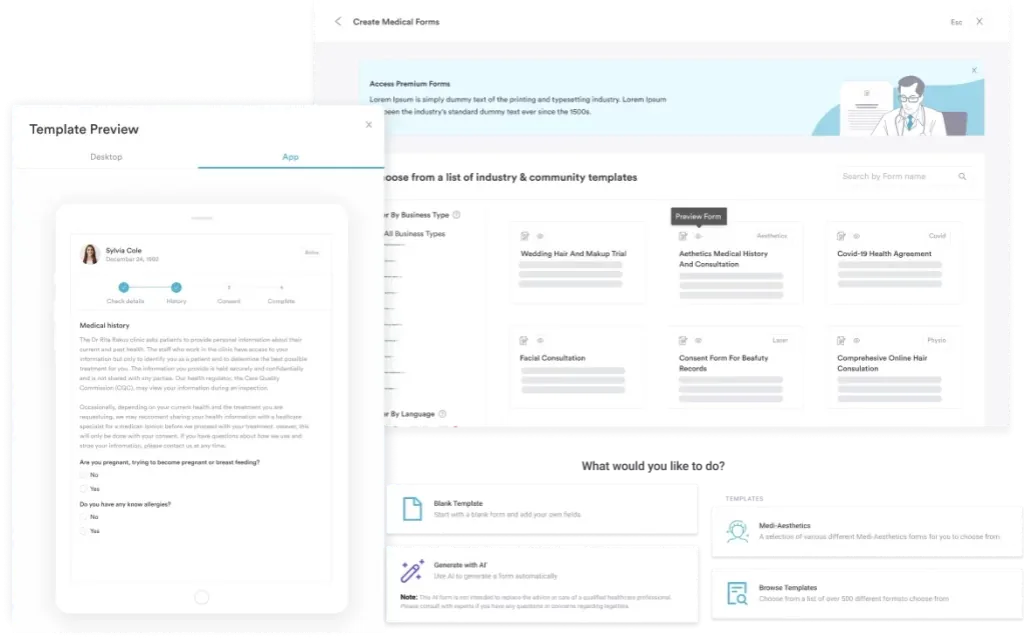
A note that documents two chronic conditions with an active medication change will not support 99307. That scenario meets low-complexity MDM and belongs under 99308. Matching the note content to the code is not optional. Payers cross-reference MDM documentation against the billed code during claims review. Using digital forms with structured MDM fields reduces the risk of underdocumented or mismatched claims.
Before billing 99307, ask: does the note document exactly one minimal-risk problem with no data complexity and no prescription risk? If the answer includes words like ‘adjusted,’ ‘new medication,’ or ‘acute exacerbation,’ the visit likely qualifies for 99308 or higher. Document what happened, then select the code the note supports.
With built-in video consultations, follow-up E/M visits happen without the patient leaving home.
The 99307-99310 range covers all subsequent nursing facility visits. Each code maps to one MDM complexity level. There is no overlap. The most common billing error is using 99307 as a default code for routine visits rather than selecting the code the documented MDM supports.
Beyond MDM level and payment rate, the four codes share the same documentation structure, the same eligible provider types, and the same place-of-service rules. The only functional difference is the clinical complexity threshold. A clear grasp of medical decision making is what separates a defensible 99307 claim from an audit flag.
The boundary between 99307 (straightforward) and 99308 (low complexity) is where most upcoding scrutiny falls. Low complexity requires at least two of the following:
If only one stable chronic condition is addressed with no management change, 99307 is correct. If the clinician adjusts a medication for that condition, the visit crosses into low complexity.
The full nursing facility E/M code family spans 99304-99318. Understanding where 99307 sits within this range prevents billing the wrong category entirely, which is a common error when a patient transfers facilities or returns from a hospital stay.
A patient returning from a hospital stay and readmitted to the same nursing facility requires a new initial care code (99304-99306), not 99307. The subsequent care codes apply only once the patient is established in the facility following that admission assessment.
Good patient care management workflows prevent this category error by flagging readmission events in the scheduling system before the visit note is created. A standardized family medical history form keeps that initial comprehensive assessment consistent across admissions.
Medicare is the dominant payer for nursing facility services. The 2026 national blended average payment for CPT Code 99307 is approximately $42 per visit, but this blended figure no longer reflects how Medicare pays the code under CY2026 rules.
Under the CY2026 Medicare Physician Fee Schedule final rule, the practice-expense RVU methodology now pays POS 31 (skilled nursing facility) and POS 32 (nursing facility) differently. POS 31 receives the lower facility-adjusted practice-expense rate, and POS 32 receives the higher non-facility-adjusted rate.
Treat the $42 blended figure as a rough approximation only. Confirm the exact per-POS payment for your locality using the CY2026 PFS final rule Addendum B or the CMS Physician Fee Schedule Look-Up Tool.
RVUs translate directly into payment. The formula is: Total RVU x Geographic Practice Cost Index (GPCI) x Conversion Factor. For 2026, the Medicare conversion factor is approximately $33.40 for clinicians not participating in an Advanced Alternative Payment Model (APM), and approximately $33.57 for qualifying APM participants.
Use the FastRVU 2026 lookup tool to pull the current work, practice expense, and malpractice RVU components for 99307 by locality.
These RVU values are approximate and blended for illustration only. Under CY2026 rules, the practice-expense RVU (and therefore the total RVU) now varies by place of service, since POS 31 uses the lower facility-adjusted practice-expense rate and POS 32 uses the higher non-facility-adjusted rate.
Verify the exact, POS-specific RVU components against the CMS Physician Fee Schedule Addendum B or the Physician Fee Schedule Look-Up Tool for your specific locality and provider type.
CMS requires that physicians (or their authorized NPP designees) visit nursing facility patients on a federally mandated schedule. These mandated visits are billable under CPT Code 99307 through 99310 depending on the MDM documented. The mandate matters most for physicians who split time between a direct primary care panel and nursing facility rounds, where a missed mandated visit is both a compliance problem and a lost billing opportunity.
Under CMS Medicare Claims Processing Manual (Pub 100-04) Transmittal R808CP, the mandatory visit schedule for nursing facility patients is:
Each mandated visit must generate a compliant note. 99307 is appropriate when the mandated check-in involves stable, low-acuity monitoring with no management changes. Practices using HIPAA-compliant documentation practices in their NF workflows can schedule and document these mandatory visits consistently and avoid missed encounters. The HIPAA compliance checklist outlines the documentation standards that apply to these mandated encounters.
CPT Code 99307 requires a supporting ICD-10-CM diagnosis code on every claim. The diagnosis code must reflect the condition addressed during the visit, not a general “nursing facility” status. Payers cross-reference the diagnosis against the MDM level and the clinical scenario documented in the note. Using AAPC’s CPT code reference alongside CMS ICD-10 guidance helps coders confirm current FY2026 code validity before submission.
Note the J44.1 example above: a COPD exacerbation typically raises MDM to moderate complexity, which belongs under 99309. Pairing J44.1 with 99307 on the same claim creates a clinical inconsistency that triggers payer review.
By contrast, the stable E11.9 diabetes scenario above supports 99307 only while glucose control stays on the established regimen. Sharing a structured diabetes diet plan with the care team helps keep that “no regimen adjustment” finding accurate.
CMS and commercial payers apply specific rules when processing 99307 claims. Violating any of these creates denials, audits, or repayment demands. Practices implementing a paperless HIPAA-compliant practice workflow catch these issues at the point of documentation rather than during post-submission audit.
CPT Code 99307 may be billed by any qualified healthcare professional with recognized scope of practice for nursing facility E/M services. Many of these clinicians also run a GP clinic panel alongside their NF rounds, so their billing workflow needs to handle both settings. Eligible provider types under CMS include:
NPs and PAs can bill 99307 independently in nursing facility settings, but incident-to rules do not apply here. Each NPP bills under their own NPI.
State-specific scope-of-practice rules determine whether an NP or PA can practice independently in a nursing facility without a supervising physician agreement. These rules vary by state and should be verified against current state law before establishing a billing model.
Knowing the practice management vs EMR difference helps practices structure their billing workflows correctly by provider type from the outset. The nurse practitioner private practice guide covers NP billing authority rules in more detail for practices building out their NF care teams.

Pabau helps NF care providers document MDM complexity correctly, match ICD-10 codes to visit notes, and track RVU productivity across all providers – so your 99307-99310 claims go out clean the first time.

Billing CPT Code 99307 accurately at scale, across dozens of NF patients seen weekly, requires more than coding knowledge. It requires systems that flag MDM mismatches before submission, enforce documentation completeness, and surface productivity data by provider.
Pabau’s claims management software gives NF care practices structured claim workflows that keep what is documented aligned with what is billed.
Combined with automated billing workflows, the system can route flagged claims for review before submission rather than after a denial arrives.
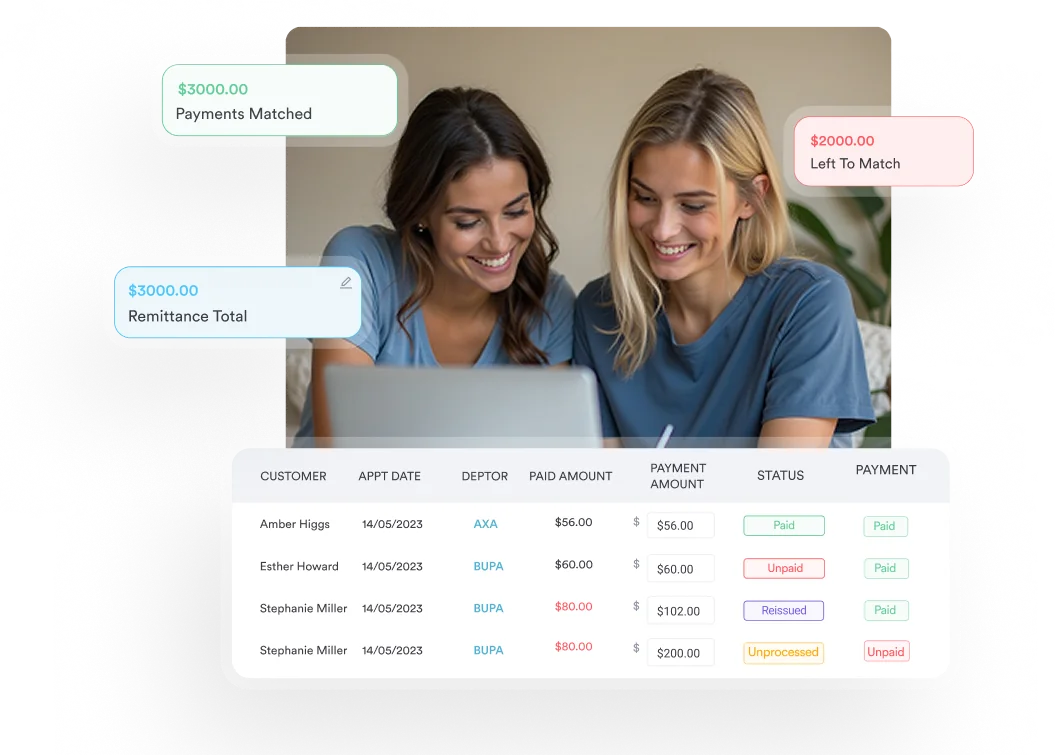
Practice managers overseeing multi-provider NF rosters can use practice management software reporting to track RVU productivity by provider, identify patterns of undercoding (e.g., a provider billing 99307 for every visit regardless of clinical complexity), and build the audit trail that protects the practice during payer review. Going paperless accelerates this by ensuring NF visit notes are structured, searchable, and tied to the billed code at the claim level. A clean claim carries the code, the modifiers and the diagnosis in agreement, and needs no rework before payment. Box-by-box requirements on the professional claim form change by payer, so one filled sample is not a universal template.
Run a quarterly code distribution report for all subsequent NF visits. If more than 80% of claims are billed at 99307, investigate whether providers are genuinely seeing only straightforward-complexity patients or whether there is a default-coding habit. A skewed distribution toward 99307 is one of the patterns the OIG flags in E/M audit work plans.
CPT Code 99307 is the right code when the visit, the note, and the MDM all point to straightforward complexity. Getting it wrong in either direction, whether undercoding 99309 visits as 99307 or defaulting to 99307 for all NF checks, costs the practice money or creates audit exposure. The fix is simple in principle: document what happened, then select the code the note supports.
Pabau’s claims management platform helps nursing facility care teams connect clinical documentation to correct code selection, with structured MDM templates, claim pre-submission review, and RVU tracking built in. To see how Pabau supports NF billing workflows, explore the claims management feature or speak with the team.

Billing a different procedure alongside NF care? 01920 covers a related anesthesia billing scenario coders may encounter alongside nursing facility care.
Billing a percutaneous drainage catheter? Drainage catheter billing guide covers C1729 and the mandatory pairing with a procedure CPT code required since 2005.
Billing a diagnostic electrophysiology catheter? Electrophysiology catheter billing guide covers C1730 and why its packaged OPPS status bundles the device cost into the procedure.
CPT Code 99307 is used to bill a subsequent nursing facility care visit in which the physician or qualified healthcare professional performs a medically appropriate history and/or physical examination with straightforward medical decision making. It applies to follow-up visits for established nursing facility residents, not initial admissions or annual assessments.
Straightforward medical decision making is required. This means the visit addresses a minimal number of problems, involves minimal data review, and carries minimal risk of complications or morbidity. A single stable chronic condition monitored without any management change is the typical qualifying scenario.
The 2026 Medicare national blended average payment for CPT Code 99307 is approximately $42, but this is a rough approximation only. Under CY2026 rules, POS 31 (skilled nursing facility) and POS 32 (nursing facility) no longer pay identically — POS 31 uses the lower facility-adjusted practice-expense rate, POS 32 the higher non-facility-adjusted rate. Confirm the exact per-POS figure for your locality using the CMS Physician Fee Schedule Look-Up Tool.
CPT 99307 requires straightforward MDM (one stable problem, no management change), while 99308 requires low-complexity MDM (typically two or more stable chronic conditions or a minor medication adjustment). The 2026 Medicare blended national average facility rate for 99308 is approximately $65, roughly $23 more than 99307, but under CY2026 rules the exact payment for both codes now depends on whether the visit is billed under POS 31 or POS 32. Treat these as rough approximations and confirm exact figures via the CMS Physician Fee Schedule Look-Up Tool. Selecting between the codes requires honest MDM documentation, not a billing preference.
Yes. Nurse practitioners can bill CPT 99307 under their own NPI in nursing facility settings and receive 85% of the Medicare physician rate. Incident-to billing rules do not apply in nursing facilities. State-specific scope-of-practice laws determine whether a supervising physician agreement is required.
CMS requires physician visits at least once every 30 days during the first 90 days of a nursing facility stay, then once every 60 days thereafter. These mandated visits are billable under 99307-99310 based on the MDM documented. Non-physician practitioners may alternate with the physician on mandated visits after the first required physician encounter.



