

CCSD code G5100: Bypass of duodenum billing guide
CCSD code G5100 bills a bypass that leaves the duodenum in place CCSD code G5100...

Last Updated: Oct 16, 2026
L0457 is the HCPCS Level II code for tlso, flexible, provides trunk support, thoracic region, rigid posterior panel and soft anterior apron, extends from the sacrococcygeal junction and terminates just inferior to the scapular spine, restricts gross trunk motion in the sagittal plane, produces intracavitary pressure to reduce load on the intervertebral disks, includes straps and closures, prefabricated, off-the-shelf.
Let Pabau's smart automation suggest the right codes, reduce claim denials, and keep your practice compliant—effortlessly.
Automate repetitive tasks and focus on what matters most—your patients.
Reduce coding errors and ensure compliance with the latest regulations.
Clean claims, fewer denials, and faster reimbursements.
Powerful insights and reporting to help your practice thrive.
HIPAA compliant SOC 2 certified GDPR-compliant Trusted by 4,000+ clinics worldwide

HCPCS code L0457 describes a flexible TLSO with a rigid posterior panel and soft anterior apron that supports the thoracic region, extending from the sacrococcygeal junction to just below the scapular spine.
Medicare Part B covers L0457 only when the device is PDAC-approved and the claim is supported by a valid written order and medical necessity documentation.
Modifier KX must accompany L0457 claims to attest that LCD-required documentation is on file; missing this modifier is the leading cause of claim denial.
Pabau’s claims management software helps DME suppliers and orthotics providers attach modifiers, link ICD-10 codes, and submit L0457 claims cleanly.
HCPCS code L0457 is the correct Level II code for a flexible thoracic-lumbar-sacral orthosis (TLSO) that is prefabricated and dispensed off-the-shelf. The official long descriptor reads: TLSO, flexible, provides trunk support, thoracic region, rigid posterior panel and soft anterior apron, extends from the sacrococcygeal junction and terminates just inferior to the scapular spine, restricts gross trunk motion in the sagittal plane, produces intracavitary pressure to reduce load on the intervertebral disks, includes straps and closures, prefabricated, off-the-shelf.
Three attributes in that descriptor carry direct billing implications. First, despite the “flexible” name, L0457 is not a soft brace throughout: it combines a rigid posterior panel with a soft anterior apron, which is what lets it restrict trunk motion in the sagittal plane while still flexing at the front.
Second, the device’s coverage area is defined precisely: it extends from the sacrococcygeal junction (the base of the spine) up to just below the scapular spine (the shoulder blades). A brace that reaches higher, into the upper thoracic region with shoulder straps, is coded L0450, not L0457.
Third, “prefabricated, off-the-shelf” means the device requires no custom fabrication or fitting beyond minimal adjustment, which triggers the PDAC approval requirement discussed below.
Medicare Part B covers L0457 under the DME benefit when three conditions are met: the beneficiary has a qualifying diagnosis, a licensed treating practitioner has issued a compliant written order, and the dispensed device is PDAC-approved. Coverage is governed by CMS HCPCS Level II and the applicable DME MAC LCD.
Practices that treat spine conditions routinely. Dispensing first and chasing documentation after is a pattern CMS audits specifically target.
Covered indications typically include:
Non-covered uses include preventive bracing without a documented condition, worker’s compensation pre-authorization bypasses, and devices dispensed without a face-to-face evaluation. The claim will adjudicate through the DME MAC for the beneficiary’s jurisdiction. Always verify the correct MAC jurisdiction before submission.
Non-coverage can also attach to a whole service. Medicare classes prolotherapy as experimental, so practices bill it under M0076 and collect a signed Advance Beneficiary Notice before the session.
Every prefabricated off-the-shelf orthosis billed to Medicare under HCPCS code L0457 must carry a valid PDAC product code assignment. According to PDAC verification guidance, the Pricing, Data Analysis and Coding (PDAC) contractor reviews the specific product and confirms it meets the L0457 descriptor. Approval is granted at the product level, not the code level.
This distinction matters. A supplier cannot assume any flexible TLSO qualifies for L0457. The specific brand and model must appear on the PDAC product classification list. Billing L0457 for a non-PDAC-approved device constitutes a compliance risk that can result in recoupment and potential exclusion from Medicare programs.
To verify PDAC status before billing:
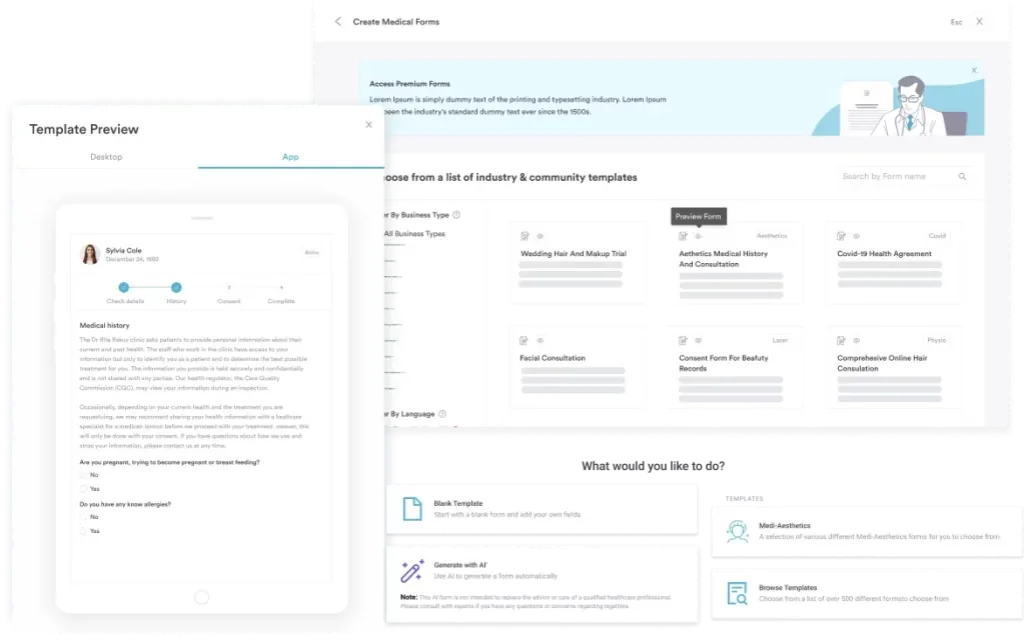
Practices using medical forms for documentation can build a pre-dispensing PDAC verification step directly into their intake workflow, reducing the risk of billing a non-approved product.
An ICD-10 diagnosis code must appear on the L0457 claim and must align with the LCD’s covered indications. Not every back-related ICD-10 code establishes medical necessity. The following codes represent those most consistently supported under the applicable DME MAC LCD. Always confirm alignment with the current LCD for your MAC jurisdiction.
Specificity is essential. M48.00 (unspecified site) is acceptable when the clinical notes document the specific spinal level. Where the LCD permits a diagnosis code, it still requires that the supporting clinical documentation in the chart substantiate medical necessity at the time of dispensing.
Using digital forms for documentation that capture diagnosis, functional status, and physician attestation at the point of care reduces audit exposure significantly.
Modifiers communicate claim-specific information to the DME MAC. For L0457, four modifiers appear most frequently, and selecting the wrong one is a fast path to denial or overpayment recoupment.
KX is the most consequential modifier for L0457. Appending KX without having the complete documentation package on file at billing time is a compliance violation. Per CMS modifier KX definitions and DME MAC billing guidelines, KX attests that the LCD requirements are met. Auditors can request those records. If they are absent, recoupment follows.
Audit your L0457 claims quarterly. Pull a random sample of 10 claims and verify that each KX-appended claim has a matching written order, PDAC product code on file, and a diagnosis code supported in the clinical notes. Catching missing documentation internally costs far less than a post-payment audit recovery.
Inadequate documentation is the second-most-common L0457 denial reason after missing or incorrect modifiers. CMS Policy Article A52500 governs TLSO and LSO billing and specifies what must be on file before the claim is submitted. Review your physiotherapy practice compliance requirements alongside the DME MAC LCD for the specific documentation standard in your jurisdiction.
Required documentation includes:
Practices that use HIPAA-compliant practice management documentation workflows can automate the retrieval and storage of these documents against each claim record. That linkage is what makes a post-payment audit defensible instead of disastrous.
HCPCS code L0457 reimbursement is determined by the CMS DME fee schedule, which varies by DME MAC jurisdiction and is updated annually. According to the AAPC HCPCS code reference, L0457 falls under the orthotic fee schedule pricing structure administered by the DME MACs.
Fee schedule rates for L0457 are locality-adjusted. The national average allowed amount provides a planning benchmark, but the actual Medicare payment your organization receives depends on your DME MAC jurisdiction (A, B, C, or D) and the beneficiary’s geographic locality.
Always verify current rates against the official CMS DMEPOS fee schedule lookup tool before quoting beneficiaries out-of-pocket liability. Patient coverage can change between the referral and the procedure, so eligibility verification belongs close to the date of service.
Fee-schedule pricing applies to L0457 for now, but that is scheduled to change. CMS finalized the CY2026 DMEPOS Competitive Bidding Program rule on December 2, 2025, bringing the OTS back brace category that includes L0457 into a new nationwide competitive bidding round.
Single payment amounts from that round take effect no later than January 1, 2028, replacing the fee-schedule rate shown above for suppliers in the awarded contract.
Third-party aggregator sites publish L0457 fee schedule estimates, but these figures should never be used for billing or patient financial counseling without cross-checking against the official CMS release for the current fiscal year. Rates stated as “2026 allowed amounts” by non-CMS sources may reflect prior-year data or jurisdiction averages that do not apply to your location.
For practices tracking reimbursement across multiple fee schedule types, maintaining a current rate reference per payer and jurisdiction in your practice management system prevents the billing team from relying on stale figures.
Selecting the wrong code from within the L0450-L0492 range is a common billing error. Each code in this range describes a distinct orthosis configuration. The table below covers the codes most frequently confused with L0457.
The distinction between OTS, custom-fitted, and custom-fabricated is critical. OTS devices (L0457) require no individual measurements or fitting beyond minor adjustments. Custom-fitted devices (L0460) are prefabricated but require a qualified professional to trim, bend, mold, or assemble them to fit the specific patient.
Custom-fabricated devices (L0480 and L0486) are made from scratch using a carved plaster or CAD-CAM model of the patient. Billing L0457 for a custom-fitted or custom-fabricated device is upcoding. For comparison with other outpatient billing codes, the same OTS versus custom distinction applies broadly across HCPCS categories.
Clean L0457 claim submission requires a sequenced workflow. Rushing any step creates missing documentation that the DME MAC will find during adjudication or a post-payment review.
Pabau’s claims management software supports this workflow by linking documentation to claim records, flagging missing modifiers before submission, and tracking claim status through adjudication. Practices can also use practice management software with built-in billing rules to enforce PDAC and modifier checks as part of standard claim preparation.
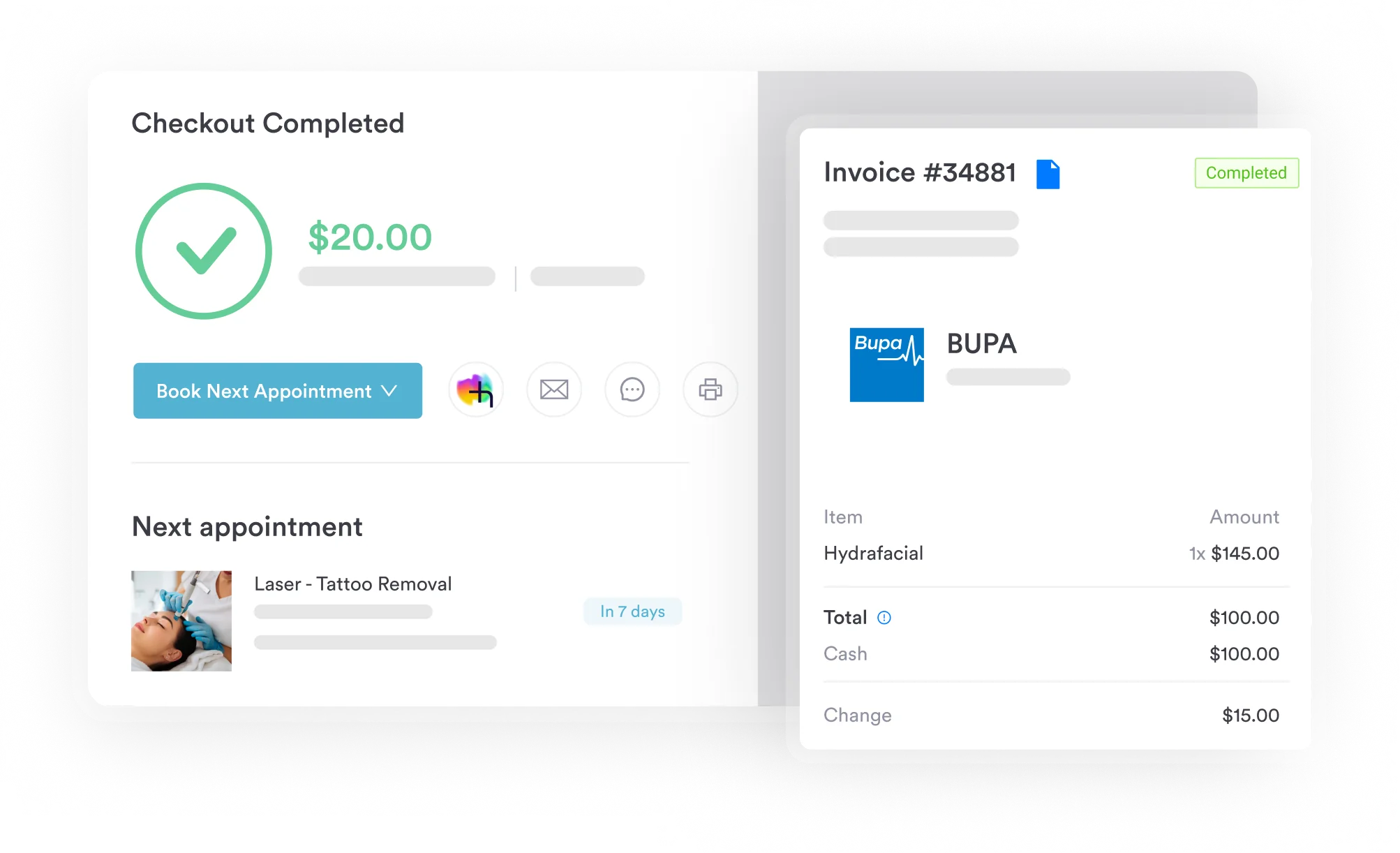

Pabau links written orders, PDAC records, and clinical notes to each claim before submission, so your billing team submits clean claims the first time.

DME MAC denials for HCPCS code L0457 cluster around five recurring mistakes. Each one is preventable with a pre-submission checklist.
Practices that track denial patterns through their procedure code billing workflows can spot systematic errors early. A single retraining session for the billing team often eliminates a denial category that was costing the practice thousands per quarter.
The same denial-clustering pattern shows up in other high-volume codes. HCPCS A4208 claims fail for nearly identical reasons. Staff using HIPAA-compliant documentation workflows that flag incomplete records before claim submission are less likely to face post-payment audits for L0457 claims.
Review your most recent 30 L0457 denials and group them by reason code. If more than three come from the same root cause, you have a systemic billing problem. Build a correction step directly into the pre-submission workflow rather than addressing denials one at a time.
HCPCS code L0457 billing succeeds or fails on the quality of pre-submission preparation. The code itself is straightforward. The complexity sits in PDAC verification, modifier selection, ICD-10 specificity, and documentation completeness.
Pabau’s claims management platform helps DME suppliers and orthotics practices enforce each step in the L0457 billing workflow, from linking the PDAC product code to the claim record to flagging missing KX documentation before submission. To see how Pabau handles DME and orthotics billing, book a demo with the team.

Coding a thyroid diagnosis instead? ICD-11 5A00 hypothyroidism guide covers the WHO’s foundation code for hypothyroidism, replacing the fragmented ICD-10 approach.
Coding a diabetes diagnosis next? ICD-11 5A11 diabetes guide codes type 2 diabetes mellitus, the insulin-resistant disorder that replaces ICD-10-CM code E11.
Coding a prediabetes diagnosis too? ICD-11 5A40 prediabetes guide covers intermediate hyperglycaemia, the metabolic state between normal glucose regulation and type 2 diabetes.
Curious how other procedure codes anchor to the same landmark as L0457? CPT code 10080 covers pilonidal cyst incision and drainage at the sacrococcygeal junction, the same landmark that defines L0457’s lower boundary.
HCPCS code L0457 is the Level II code for a flexible thoracic-lumbar-sacral orthosis (TLSO) with a rigid posterior panel and soft anterior apron that supports the thoracic region, extending from the sacrococcygeal junction to just below the scapular spine, and produces intracavitary pressure to reduce intervertebral disc load. It is billed under Medicare Part B as a durable medical equipment item adjudicated by the DME MAC.
Yes, Medicare Part B covers L0457 when the device is PDAC-approved, the beneficiary has a qualifying diagnosis supported by the applicable DME MAC LCD, a compliant written order is on file, and modifier KX is appended to attest that documentation meets LCD requirements. Coverage is not automatic. Each claim element must be met.
The primary modifiers for L0457 are KX (LCD requirements met), NU (new equipment purchase), RR (rental), and UE (used equipment). KX is required on most Medicare claims to attest that documentation is complete and on file. NU applies to initial new device dispensing. Apply only the modifiers that match the actual transaction type.
PDAC-approved means the specific product brand and model has been reviewed by CMS’s Pricing, Data Analysis and Coding contractor and assigned an active L0457 HCPCS code. Approval is product-specific, not code-wide. Billing L0457 for a device that does not appear on the PDAC product classification list is a compliance violation regardless of whether the device is functionally similar to an approved product.
Commonly supported ICD-10 codes include M48.00 (spinal stenosis), M51.369 (intervertebral disc degeneration, lumbar region), M80.08XA (osteoporotic vertebral fracture), S22.000A (thoracic compression fracture), and M41.20 (scoliosis). The specific covered codes depend on the DME MAC LCD for your jurisdiction. Confirm coverage before billing with any diagnosis code.
The current Medicare allowed amount for L0457 varies by DME MAC jurisdiction and geographic locality. No single national figure applies universally. Use the official CMS DMEPOS fee schedule lookup tool (cms.gov) filtered to HCPCS code L0457 and your MAC locality to retrieve the current applicable rate. Third-party aggregator figures should always be verified against the CMS source.



