ICD-10 code S61.201A: Open wound of left index finger without nail damage
ICD-10 code S61.201A covers a left index finger wound of unstated type ICD-10 co...

Last Updated: Oct 16, 2026
Billable Code Specific Code
S02.641B is the billable ICD-10-CM code for fracture of ramus of right mandible, initial encounter for open fracture.
Let Pabau's smart automation suggest the right codes, reduce claim denials, and keep your practice compliant—effortlessly.
Automate repetitive tasks and focus on what matters most—your patients.
Reduce coding errors and ensure compliance with the latest regulations.
Clean claims, fewer denials, and faster reimbursements.
Powerful insights and reporting to help your practice thrive.
HIPAA compliant SOC 2 certified GDPR-compliant Trusted by 4,000+ clinics worldwide

S02.641B is a billable ICD-10-CM code for fracture of the ramus of the right mandible, initial encounter for open fracture
The 7th character ‘B’ specifically designates an open fracture at the initial (active treatment) encounter – distinct from ‘A’ (closed fracture) and ‘D’ (subsequent encounter)
Physician documentation must explicitly state the fracture is open, identify the ramus as the site, and confirm laterality (right side) to support this code
Pabau’s claims management software and digital forms help oral surgery and maxillofacial practices capture the documentation required to bill S02.641B accurately
ICD-10 code S02.641B is a billable ICD-10-CM diagnosis code that describes a fracture of the ramus of the right mandible, initial encounter for open fracture. It is valid for use on claims submitted under the current ICD-10-CM fiscal year and requires all seven characters to be billable.
The difference between a closed and an open ramus fracture, or between an initial and a subsequent encounter, determines which of several closely related codes applies to a given claim.
This reference covers the code’s official description, its place in the ICD-10-CM hierarchy, 7th character guidance, related codes, associated CPT procedures, and the documentation a provider must have on file to use it correctly.
The table below summarises the key properties of ICD-10 code S02.641B for quick reference.
The mandibular ramus is the flat, roughly quadrilateral portion of the lower jaw that rises vertically from the body of the mandible up to the condylar process and coronoid process. It sits behind the molars and below the temporomandibular joint (TMJ) – but the ramus itself is part of the jawbone, not the joint, so it is not a TMJ injury.
Ramus fractures typically result from a direct blow to the side of the jaw and are one of the less common mandibular fracture sites compared with the angle, body, or condyle, but they still occur regularly after high-velocity trauma – motor vehicle accidents, falls, and assaults account for most cases.
S02.641B applies when three clinical facts are simultaneously true:
Don’t confuse the ramus with the condylar process, which sits at the top of the ramus and forms part of the temporomandibular joint. Condylar process fractures are coded separately, under the S02.61x subcategory (S02.611 for the right side, S02.612 for the left) – not under S02.64x.
The subcondylar neck sits just below the condyle, and an open fracture there during active treatment takes S02.620B when the record omits laterality.
When the documentation clearly identifies the fracture site as the ramus – the flat, vertical portion of the bone below the condylar process and coronoid process – S02.641B is the correct code for an open, right-sided fracture at initial encounter.
Several Jane App competitors handle S-code documentation and progress notes without extra admin for your front desk.
Fracture codes under ICD-10-CM require a 7th character to specify both the type of fracture and the phase of treatment. For mandibular fracture codes in the S02.64x family, the valid 7th character options are:
A critical point: “initial encounter” refers to the phase of treatment, not necessarily the patient’s first visit to your facility.
Per CMS ICD-10-CM guidelines, a patient may see multiple providers during the active treatment phase, and each of those providers correctly uses the ‘A’ or ‘B’ character. Once active treatment ends and the patient enters routine monitoring, switch to ‘D’ for subsequent encounter.
Many ramus-fracture patients continue care with jaw-mobility rehab during this subsequent phase.
S02.641B sits at the most specific level of a well-defined code hierarchy. Understanding where it sits helps coders confirm they are using the right code and identify related codes quickly. The same S00-S09 block structure governs S06.6X0A, showing how the classification system organizes codes consistently across different head-injury sites.
The parent code S02.641 is not billable on its own. A valid claim requires the full 7-character code. Submitting S02.641 without the 7th character will result in a claim rejection.
Always verify code validity against the ICD-10-CM Tabular List for the applicable fiscal year before billing. Codes can be revised, added, or made invalid with each October 1 update. The CDC ICD-10-CM web tool at icd10cmtool.cdc.gov reflects the current year’s official code set.
Mandibular ramus fractures have a broad set of related codes covering laterality, fracture type, and encounter phase. The table below compares the most frequently used codes alongside ICD-10 code S02.641B. S02.642A mirrors this same logic for the left side.
The open vs closed distinction is the most consequential coding decision for this fracture site. Using S02.641A when the fracture is open – or S02.641B when it is closed – misrepresents the clinical picture and may trigger payer audits. The choice must be grounded in physician documentation, not assumed from the mechanism of injury.
The ICD-10-CM Official Guidelines for Coding and Reporting, maintained jointly by CMS and the NCHS, govern how S02.641B is sequenced and used on claims. Practices that invest in solid claims management software can automate the checks that catch common sequencing errors before submission. The key guidelines relevant to this code are:
The same phase-of-care logic governs S02.69XK, where the nonunion character carries equivalent documentation weight.

Pabau’s claims management tools and digital forms help oral surgery and maxillofacial practices capture the open-vs-closed fracture documentation and encounter-type detail that accurate coding requires. See how it works in practice.

S02.641B is a diagnosis code, not a procedure code. On a claim, it pairs with CPT procedure codes that describe the surgical or non-surgical treatment performed. The appropriate CPT depends on the treatment approach documented by the surgeon. Having organised medical forms that capture operative technique detail makes accurate CPT selection more straightforward during coding review.
CPT-to-ICD-10 medical necessity crosswalks are available through the AAPC crosswalk tool, which confirms covered CPT/ICD pairings for specific payers. CPT pairings listed above are commonly associated; payer-specific requirements vary and should always be verified against the applicable LCD or coverage policy before billing. Medicare billing rules for this code differ from commercial payer rules, including the documentation asked for.
Every element of the S02.641B code description must be supported by a corresponding entry in the medical record. Missing documentation for any of the five required elements below is the most common reason this code triggers a denial or audit.
Practices using digital intake forms can build structured trauma documentation templates that prompt clinicians to capture each of these data points at the point of care, rather than relying on retrospective addenda. Consistent patient data security practices also ensure that detailed fracture notes are stored and accessible in a compliant, auditable format.
Maintaining accurate, up-to-date patient records protects the practice if a payer requests documentation months after the original encounter.
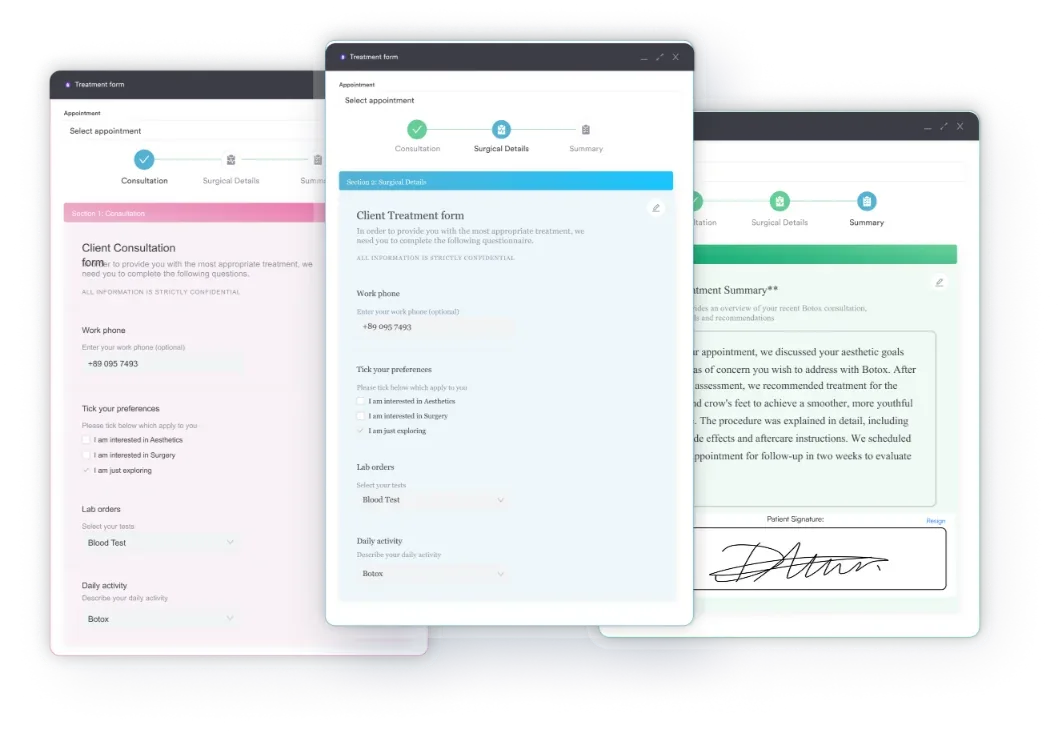
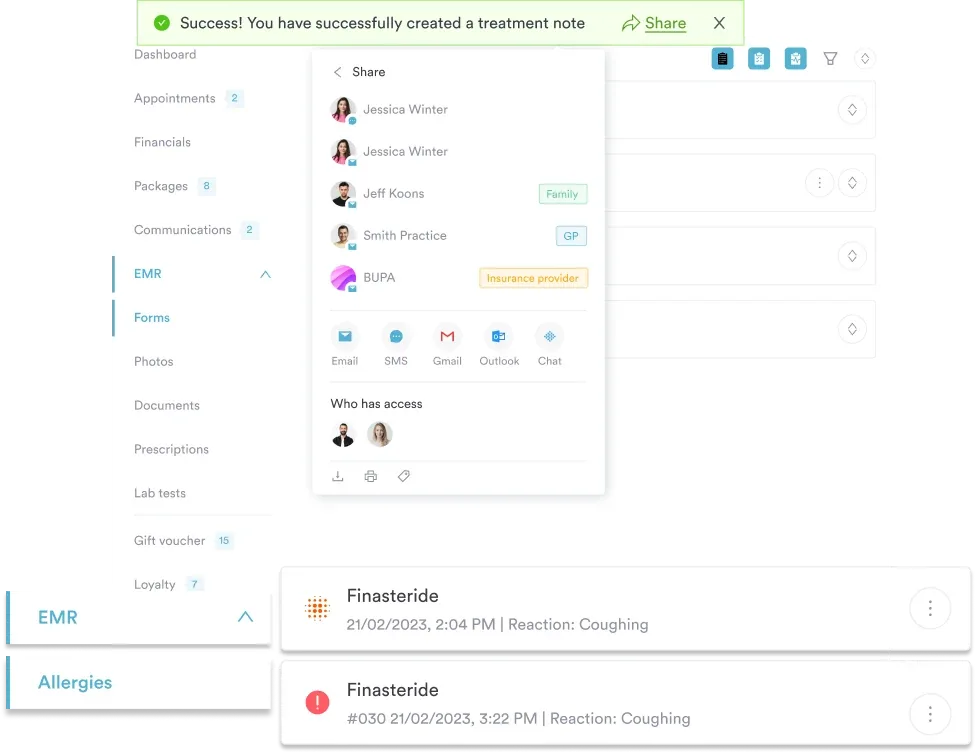
Pabau’s structured patient records give maxillofacial and oral surgery practices a single place to store clinical notes, operative reports, and coding-relevant documentation, reducing the risk of missing information at audit. The platform’s claims management tools can then surface this documentation directly in the billing workflow.
Run a quarterly audit of S02.641B claims. Pull 10-15 cases and verify that each medical record contains all five documentation elements: Open fracture language, ramus site, right laterality, encounter type, and mechanism. Denials cluster where documentation is consistently weak on one element – identify the pattern and fix it at the note template level.
Open mandibular ramus fractures present coders with a tight set of documentation requirements, and a single missing element – fracture type, site, laterality, encounter phase, or mechanism – can flip a clean claim into a denial.
S02.641B is valid for billing when the clinical record explicitly supports all five elements. The 7th character ‘B’ is not interchangeable with ‘A’ – the open-vs-closed distinction carries real reimbursement consequences.
For practices managing oral surgery and maxillofacial billing, Pabau’s integrated claims management platform helps teams build documentation workflows that capture what payers need at the point of care. To see how Pabau supports accurate fracture coding from intake to claim submission, book a demo with the team.

Coding a different traumatic injury with sequela documentation requirements? S01.322S follows the same encounter-character logic for ear lacerations.
Billing brachytherapy preparation and planning? Brachytherapy preparation billing guide explains whether the planning phase for high dose brachytherapy needs its own procedure code.
Need the anesthesia code that pairs with intraoral fracture surgery? 00176 covers the anesthesia component for these procedures.
ICD-10 code S02.641B is a billable diagnosis code meaning fracture of the ramus of the right mandible, initial encounter for open fracture. It is used when a patient presents for active treatment of a right mandibular ramus fracture where the fracture site communicates with the external environment through a skin or mucosal breach.
Yes, S02.641B is a billable ICD-10-CM code. It contains all seven required characters, making it specific enough for claim submission under current ICD-10-CM guidelines. Claims submitted with the truncated parent code S02.641 (without a 7th character) will be rejected.
S02.641A is for a closed fracture of the right mandibular ramus at initial encounter, meaning there is no open wound communicating with the fracture site. S02.641B applies when the fracture is open. The treating physician must document which type is present; coders cannot infer fracture type from imaging or mechanism alone.
The 7th character ‘B’ designates an initial encounter for an open fracture under ICD-10-CM fracture coding guidelines. It signals both that the patient is in active treatment (not follow-up) and that the fracture type is open. Other 7th characters for the S02.641 family include ‘A’ (initial, closed), ‘D’ (subsequent, routine healing), ‘G’ (delayed healing), ‘K’ (nonunion), and ‘S’ (sequela).
Use S02.641B for the right ramus or S02.642B for the left. Add an external cause code (e.g., a fall or motor vehicle accident code) sequenced after the fracture code. Pair with the appropriate CPT procedure code for the treatment performed (e.g., 21461 or 21462 for ORIF). Confirm that the medical record explicitly documents the fracture as open, identifies the ramus as the site, and states the correct laterality.
Closely related codes include S02.641A (right ramus, closed, initial), S02.641D (right ramus, subsequent, routine healing), S02.641S (right ramus, sequela), S02.642B (left ramus, open, initial), and S02.5 (fracture of tooth). The condylar process of the mandible is coded separately, under S02.611 (right) and S02.612 (left) – not part of the S02.64x ramus family. For other facial bone fractures in the same block, see S02.2 (fracture of nasal bones) and S02.4 (fracture of malar, maxillary, and orbital bones).