ICD-10 code K85.90: Acute pancreatitis without necrosis
ICD-10 code K85.90: Definition and clinical description ICD-10 code K85.90 is th...

Last Updated: Nov 13, 2026
Billable Code Specific Code
R19.7 is the billable ICD-10-CM code for diarrhea, unspecified. It covers loose or frequent stools documented without a confirmed infectious, functional or structural cause, including diarrhea recorded as NOS.
The code sits in category R19, within the chapter for symptoms, signs and abnormal findings. Its Excludes1 note bars reporting it with functional diarrhea (K59.1), neonatal diarrhea (P78.3) or psychogenic diarrhea (F45.8). Once the note documents a cause, code that condition instead.
Let Pabau's smart automation suggest the right codes, reduce claim denials, and keep your practice compliant—effortlessly.
Automate repetitive tasks and focus on what matters most—your patients.
Reduce coding errors and ensure compliance with the latest regulations.
Clean claims, fewer denials, and faster reimbursements.
Powerful insights and reporting to help your practice thrive.
HIPAA compliant SOC 2 certified GDPR-compliant Trusted by 4,000+ clinics worldwide

R19.7 is the billable ICD-10-CM code for diarrhea, unspecified, valid in the FY2026 and FY2027 code sets when no specific cause is documented.
Its Excludes1 note bars reporting R19.7 with functional diarrhea (K59.1), neonatal diarrhea (P78.3) or psychogenic diarrhea (F45.8).
The most common denial trigger is choosing R19.7 when the documentation supports a more specific code, which payers can question during an audit.
Pabau, the practice management platform we build, checks eligibility and submits claims through the Claim.MD clearinghouse, so coverage problems surface early.
ICD-10 Code R19.7 covers diarrhea that cannot be attributed to a specific structural, functional, or infectious cause at the time of documentation. The FY2027 ICD-10-CM tabular list names it “Diarrhea, unspecified” and gives it one inclusion term, “Diarrhea NOS.”
The code sits in Chapter XVIII of ICD-10-CM, “Symptoms, signs and abnormal clinical and laboratory findings, not elsewhere classified.” Within it, R19.7 falls under block R10-R19 and parent category R19 (Other symptoms and signs involving the digestive system and abdomen).
The word “unspecified” describes the state of the documentation rather than the severity of the symptom. R19.7 fits when the encounter note records loose or frequent stools without a confirmed diagnosis explaining them. It stops fitting once the documentation supports a more specific alternative.
Presentations that qualify for R19.7 include:
Once the documentation supports a specific diagnosis, such as a confirmed infection, IBS, colitis or a functional pattern, the coder moves to that code. The list below shows which code takes over for each documented cause, in the order a coder should check them.
ICD-10-CM · coding diarrhea
Which code replaces R19.7?
Work down the list. The first cause the encounter note documents decides the code.
Source: CDC/NCHS ICD-10-CM tabular list, FY2027. The three Excludes1 tags mark the conditions listed under R19.7 itself.
Knowing where R19.7 sits in the hierarchy prevents category-level coding errors. The table below shows R19.7 alongside its sibling codes in category R19, two of which are headers rather than billable codes.
R19.7 has no child codes beneath it, so coders cannot add a 5th character to make it more specific. More specificity comes from a different code family, never from a sub-code of R19.7.
R19.7 carries one inclusion term, “Diarrhea NOS,” and three Excludes1 notes. Excludes1 means a listed condition is never reported with R19.7 at the same encounter, because the two are mutually exclusive. Category R19 also carries its own Excludes1 note for acute abdomen (R10.0).
Colitis and diverticular disease raise a sequencing question rather than an Excludes1 one. When diarrhea is integral to a confirmed colitis (K52.x) or diverticular condition (K57.x), it is not reported separately. The condition’s own code already carries the symptom.
Audit your EHR’s ICD-10 auto-suggest list for R19.7. If coders can select R19.7 together with K59.1, P78.3 or F45.8 on one encounter, your templates allow an Excludes1 pairing. Block those three pairings before the next payer audit cycle.
K59.1 (functional diarrhea) is the most frequently confused code with R19.7. Both describe diarrhea without an organic structural cause, but the distinction is clinically meaningful and directly affects code selection. The same K59 category also holds K59.00, used when the note records constipation without naming a type or cause.
The practical test: If the provider’s note says “chronic loose stools, no structural cause found, consistent with functional pattern,” K59.1 is the correct code. If the note says “diarrhea x 3 days, etiology unclear, stool cultures pending,” R19.7 applies. When that workup adds a fecal calprotectin test to check the bowel for inflammation, the lab bills it under CPT code 83993.
Several adjacent codes share enough clinical overlap with R19.7 to cause routine selection errors. Infectious diarrhea is the most frequent switch, and it codes to A09 or a more specific Chapter I code. The table below lists the common alternatives and when each one applies.
Chapter XVIII symptom codes like R19.7 may be reported alongside other diagnoses in one situation. The symptom must not be integral to the other condition, and it must be separately evaluated or treated. The ICD-10-CM Official Guidelines, Section I.C.18, govern when symptom codes stand as principal diagnoses.
Key sequencing rules for common co-presentations:
Payer audits on R19.7 almost always center on whether the documentation justifies using an unspecified code rather than a more specific one. The following elements should be present in the encounter note.
A documentation checklist built around medical billing compliance puts these five elements into every R19.7 note before the claim goes out. A chart note that meets clean claim submission standards gives an unspecified code its strongest defense against denial.
Medicare and Medicaid accept R19.7 when it supports a medically necessary evaluation and management visit. Coverage turns on the CPT procedure code paired with the diagnosis, so R19.7 alone does not trigger coverage or denial.
Several practical reimbursement considerations apply:
An eligibility check before the visit confirms the patient’s coverage, so fewer R19.7 claims come back denied for a coverage mismatch. That check is the first step of revenue cycle management, which carries the claim through to payment.
The denial patterns below map to the Claim Adjustment Reason Code (CARC) categories that commonly apply to unspecified symptom codes. Each row pairs the denial with the fix that prevents it.
A coding review before submission is where Excludes1 pairings and sequencing errors get caught. After a denial, structured denial management workflows track each denial code and its remediation steps by code category.
When an R19.7 claim is denied under CARC 11, attach the encounter note to the appeal with a brief cover letter. The letter explains why the documentation supported an unspecified code at that encounter. A reference to pending lab results or an inconclusive workup is typically enough for a first-level appeal.
Run a quarterly extract of all R19.7 claims submitted in the prior 90 days. Flag any claim where the same patient also had a K58.x or K59.1 code on a different encounter within 30 days. This pattern points to a thin R19.7 note. If a functional or IBS diagnosis followed shortly after, review whether the earlier note documents why no cause was established at that visit.
Section I.C.18 of the ICD-10-CM Official Guidelines for Coding and Reporting governs the use of symptom codes from Chapter XVIII. Its core principle is that signs and symptoms routinely associated with a confirmed disease are not reported as additional codes. The exception is a symptom specifically stated as the reason for the visit.
When R19.7 is appropriate as a standalone or principal code:
When R19.7 should give way to a more specific code:
The CDC/NCHS ICD-10-CM web tool allows coders to verify the official tabular list, Includes/Excludes notes, and hierarchy position for R19.7 against each annual edition. The AAPC Codify ICD-10-CM lookup provides crosswalk references and common pairings used by other coders for the same code.
Knowing which denial codes in medical billing follow R19.7 lets a practice fix its templates before an audit instead of appealing claim by claim. At adjudication, the payer checks both the code’s validity and its pairing with the submitted procedure codes. A clearinghouse such as the Claim.MD clearinghouse passes the claim to the payer and returns its response.
In many practices, R19.7 is coded in the EHR, re-keyed into a separate billing portal, and checked against coverage only when a denial arrives. Each hand-off is a chance for the diagnosis and the claim to drift apart.
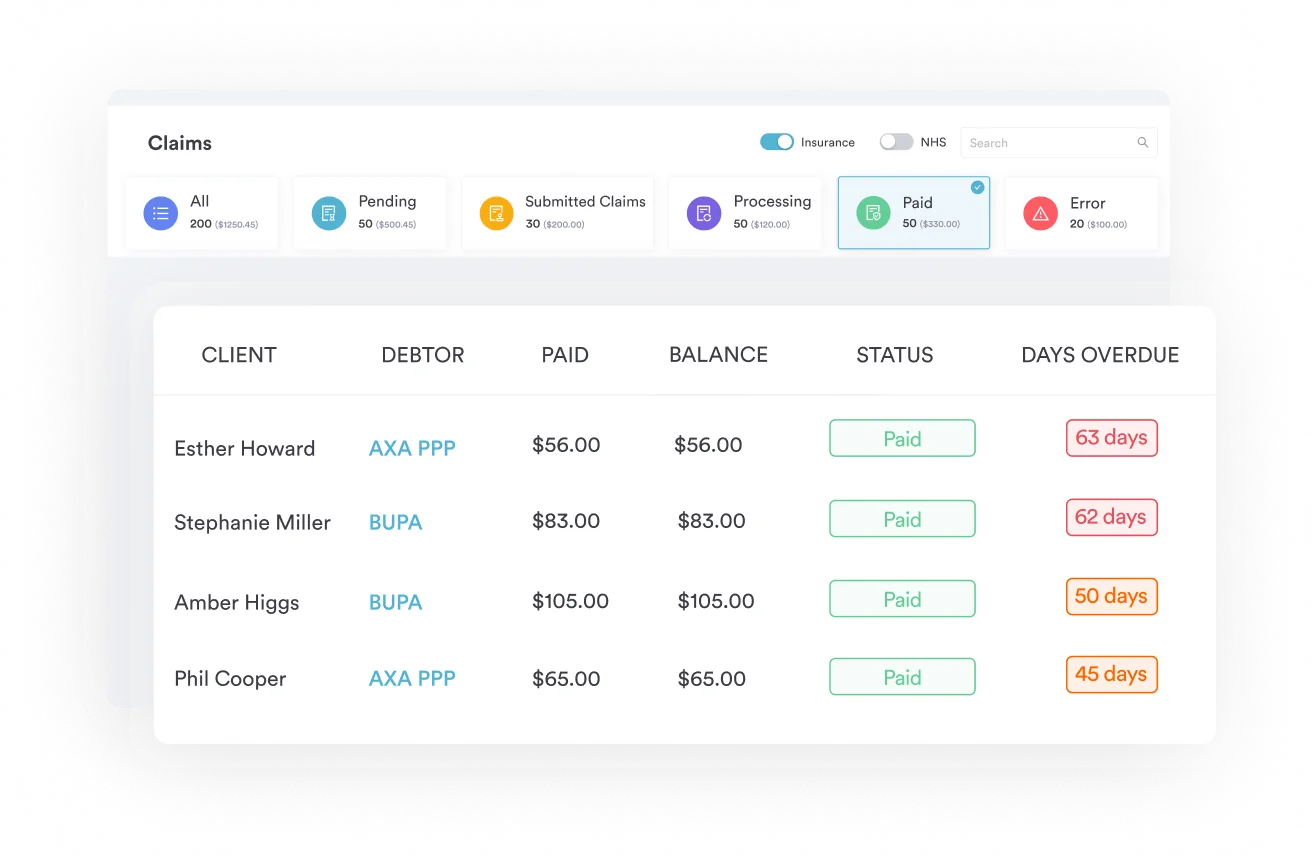
Pabau’s claims management software keeps the encounter note, the diagnosis and the claim on one patient record. It checks eligibility before the visit and submits CMS-1500 claims through the Claim.MD clearinghouse. ERA remittances and secondary claims run from the same place.
The result is fewer coverage denials. With the note and the claim side by side, a denied R19.7 claim also reaches a corrected resubmission faster.

Pabau checks patient eligibility and submits claims through the Claim.MD clearinghouse, with ERA remittances returned to the same record. See how it fits your practice.

R19.7 is safe only while the cause of the diarrhea is unknown. Use it when the workup is pending, record why no cause was established, and switch codes the moment the note names one.
The Excludes1 risk is narrower than most coders assume. Only K59.1, P78.3 and F45.8 are barred, so a template that blocks those three pairings removes the most preventable R19.7 denial.
Book a demo to see how Pabau’s eligibility checks and Claim.MD submission keep your R19.7 claims moving from encounter to payment.

Need to understand how clearinghouse validation works? Our Claim.MD clearinghouse guide explains how a clearinghouse screens claims before they reach the payer.
Seeing high denial rates across your code mix? Denial management in healthcare covers the structured workflow practices use to track, appeal, and prevent recurring rejections.
Want the full billing compliance picture? Medical billing compliance outlines the documentation standards that support unspecified diagnosis codes during payer audits.
ICD-10 Code R19.7 is the billable ICD-10-CM diagnosis code for diarrhea, unspecified. It is a Chapter XVIII symptom code assigned when diarrhea is documented without a confirmed etiology, functional classification, or infectious cause. It is valid for use in all outpatient and inpatient settings when no more specific code is supportable.
Yes, R19.7 is a valid billable ICD-10-CM code in both the FY2026 and FY2027 editions. It has remained stable across recent annual code releases. Verify against the current edition using the CDC/NCHS ICD-10-CM web tool.
R19.7 covers diarrhea with no documented etiology or functional pattern. K59.1 (functional diarrhea) requires an established chronic, recurring functional pattern with structural causes excluded. The two codes have an Excludes1 relationship and cannot be reported at the same encounter.
No. Infectious diarrhea is classified to A09 or a more specific Chapter I code. Code R19.7 only when no infectious cause is documented.
The encounter note should document symptom onset, frequency, and consistency, plus a statement that no specific etiology was established. It should also record any workup ordered or reviewed and the rationale for not selecting a more specific code. This documentation defends the unspecified selection during payer audit.
Code R19.7 and R11.x (nausea and vomiting) separately when both are independently documented and evaluated. No Excludes note prevents dual reporting. Sequence whichever condition drove the encounter as the principal diagnosis.