ICD-10 Code S42.444P: Medial epicondyle fracture, right humerus
ICD-10 Code S42.444P: full descriptor and code validity ICD-10 Code S42.444P car...

Last Updated: Oct 13, 2026
Billable Code Specific Code
M92.8 is the billable ICD-10-CM code for other specified juvenile osteochondrosis.
Let Pabau's smart automation suggest the right codes, reduce claim denials, and keep your practice compliant—effortlessly.
Automate repetitive tasks and focus on what matters most—your patients.
Reduce coding errors and ensure compliance with the latest regulations.
Clean claims, fewer denials, and faster reimbursements.
Powerful insights and reporting to help your practice thrive.
HIPAA compliant SOC 2 certified GDPR-compliant Trusted by 4,000+ clinics worldwide

ICD-10 Code M92.8 covers other specified juvenile osteochondrosis and is billable for FY2026 claims.
Applicable conditions include Kohler disease of the tarsal navicular and Calve’s disease of the vertebral body.
Calcaneal apophysitis, also called Sever’s disease, stopped being an M92.8 inclusion term on October 1, 2024, and now codes to M92.6-.
M92.8 and M92.9 are the only M92 codes billable at four characters, because M92.0 through M92.7 need a fifth.
Practice management software like Pabau captures the diagnosis, site, and laterality at the point of care, which cuts downstream denials.
ICD-10 Code M92.8 is the billable ICD-10-CM code for other specified juvenile osteochondrosis. It covers named childhood osteochondroses at sites that M92.0 through M92.7 do not reach, such as Kohler disease and Calve’s disease. The parent code M92 is not billable, so a claim carrying M92 alone rejects before it reaches adjudication.
M92.8 is valid for HIPAA-covered transactions in the FY2026 ICD-10-CM edition, effective October 1, 2025. That date is the standard annual update cycle for the US system. This article covers the code’s definition, hierarchy, applicable conditions, documentation requirements, and the denial triggers that catch coders out.
The table below works as a quick ICD 10 code lookup for ICD-10 Code M92.8. It pulls the reference fields straight from the FY2026 ICD-10-CM tabular list. Use it when you are verifying billability or populating your physical therapy EMR software or orthopedic practice management system.
M92 is the non-billable parent category for other juvenile osteochondrosis, and most of its subcategories are not billable either. M92.0 through M92.7 each need at least a fifth character for laterality or site. That leaves ICD-10 Code M92.8 and M92.9 as the only two ICD 10 codes in this family you can submit at four characters.
M92.8 vs M92.9: M92.8 applies when the clinician names a specific condition with no discrete site code in M92.0 to M92.7. Kohler disease and Calve’s disease are the usual examples. M92.9 is the fallback when the condition is genuinely unspecified, or the note is too thin to code further. Aim for M92.8 whenever the diagnosis is named in the chart.
Osteopaths treating these conditions can document diagnoses and sessions in osteopathy practice software.
M92.8 covers Calve’s disease, Kohler disease of the tarsal navicular, and any other named juvenile osteochondrosis at a site outside M92.0 through M92.7. Those are the “Applicable To” terms in the official ICD-10-CM tabular list. Kohler and Calve’s are the two you will meet most often in pediatric orthopedic and sports medicine charts.
Kohler disease is avascular necrosis of the tarsal navicular bone, usually presenting in children aged 3 to 7. It causes foot pain, a limp, and localized tenderness over the medial midfoot. The condition is self-limiting in most cases, with the navicular reconstituting over time. For coding, Kohler disease maps to ICD-10 Code M92.8 under the “Applicable To” note for osteochondrosis (juvenile) of tarsal navicular.
Documentation should confirm the affected foot and include imaging that shows navicular sclerosis or fragmentation. The patient’s age belongs in the same note, because it is what supports the juvenile classification. Practices running sports medicine practice management software should capture the diagnosis and the side before the coder ever sees it.
Calve’s disease is osteochondrosis of a vertebral body in children, marked by vertebral flattening known as vertebra plana. It usually affects the thoracic spine and presents with back pain and a limited range of motion. Historically it was confused with eosinophilic granuloma, and modern imaging normally settles the question. Document the affected vertebral level and the juvenile onset to justify M92.8 over an adult osteochondrosis code. Denial rate by code shows which services are worth a process fix and which are one-off errors.
The ICD-10-CM alphabetical index maps condition names to codes, so an ICD 10 lookup by eponym often lands faster than a search by site. When a clinician documents one of the terms below, check whether ICD-10 Code M92.8 is the right assignment. Teams that want a repeatable habit can borrow the approach in our ICD-10 diagnostic code documentation reference.
The international WHO ICD-10 classification structures M92.8 differently from the US ICD-10-CM version. Anyone comparing ICD 10 codes across the two systems should confirm which one the payer expects. For US claims, the CDC and NCHS tabular list is the only authority that counts.
When documentation names a condition rather than a site, check the ICD-10-CM index twice. Look under ‘Osteochondrosis’ and under the eponym, such as ‘Kohler’. Both routes should land on M92.8, and checking both catches a wrong-code selection before the claim leaves the practice.
A claim carrying ICD-10 Code M92.8 needs documentation that clearly supports the diagnosis. Payers do audit these claims, particularly in pediatric orthopedics, where the split between juvenile and adult osteochondrosis codes changes reimbursement. Strong patient record management at the point of care stops the missing detail that surfaces weeks later at claims review.
The record must address all five of the following to support an M92.8 assignment:
Practices seeing several pediatric musculoskeletal diagnoses a week should build these five elements into the note template. That beats another round of coder training. The elements go missing when a clinician is typing between appointments, not because nobody knows the rule.
The M92 family produces a predictable set of errors. Most come from a rushed index lookup, or from the “specified versus unspecified” distinction in ICD-10-CM. The six below are the ones that show up repeatedly in denial reports for this code group.
The second row is the one worth diarizing. The calcaneal apophysitis ICD 10 assignment changed on October 1, 2024, when the FY2025 update dropped the term from M92.8. The change followed advocacy from the American Podiatric Medical Association. Its coding committee had flagged a duplication, because calcaneal apophysitis sat under M92.8 while Sever’s disease sat under M92.6-.
Sever’s apophysitis and calcaneal apophysitis name the same condition, so one home in the tabular list was enough. Claims now belong in M92.6- with the fifth character for laterality. Any internal cheat sheet written before October 2024 still points a podiatry or pediatric sports claim at the wrong subcategory.
The “specified versus unspecified” trap turns up in other code families too. Coders who know the situational anxiety diagnosis code hierarchy will recognize the pattern. A documented condition goes to the most specific option available, never to the catch-all.
For inpatient claims, ICD-10 Code M92.8 groups within the MS-DRG system maintained by CMS. The applicable DRG usually falls in the musculoskeletal section, alongside other non-infectious bone and joint disorders. Assignment shifts with the presence of complications or comorbidities, and with whether M92.8 sits in the principal or secondary position.
For outpatient billing, the code supports medical necessity for imaging, physical therapy, orthotics, and sometimes surgery. Check the current CMS ICD-10-CM update files each October for changes to DRG grouping. Good claims management software surfaces those changes for you, so billing teams are not running manual lookups.

Physical therapy practices billing M92.8 as a supporting diagnosis should also read the payer’s local coverage determinations (LCDs). Our guide to physical therapy clinic billing requirements covers how LCDs decide which diagnosis codes justify treatment authorization in a given state.
Coders working with M92.8 often need the adjacent codes in the M91-M94 chondropathies block. Within that block, ICD-10 code M91.0 covers juvenile osteochondrosis of the pelvis, including the iliac crest and ischiopubic synchondrosis. The table below covers the neighbors that come up most in pediatric musculoskeletal claims. For a worked example of navigating a hierarchical family.
Searching the whole M91-M94 block in the AAPC ICD-10-CM code lookup is a fast way to confirm whether a documented condition belongs in M92.8. Many pediatric orthopedic practices keep the ICD List code lookup open for cross-referencing during busy sessions. Wiring those checks into an orthopedic practice management software workflow saves switching systems mid-appointment.
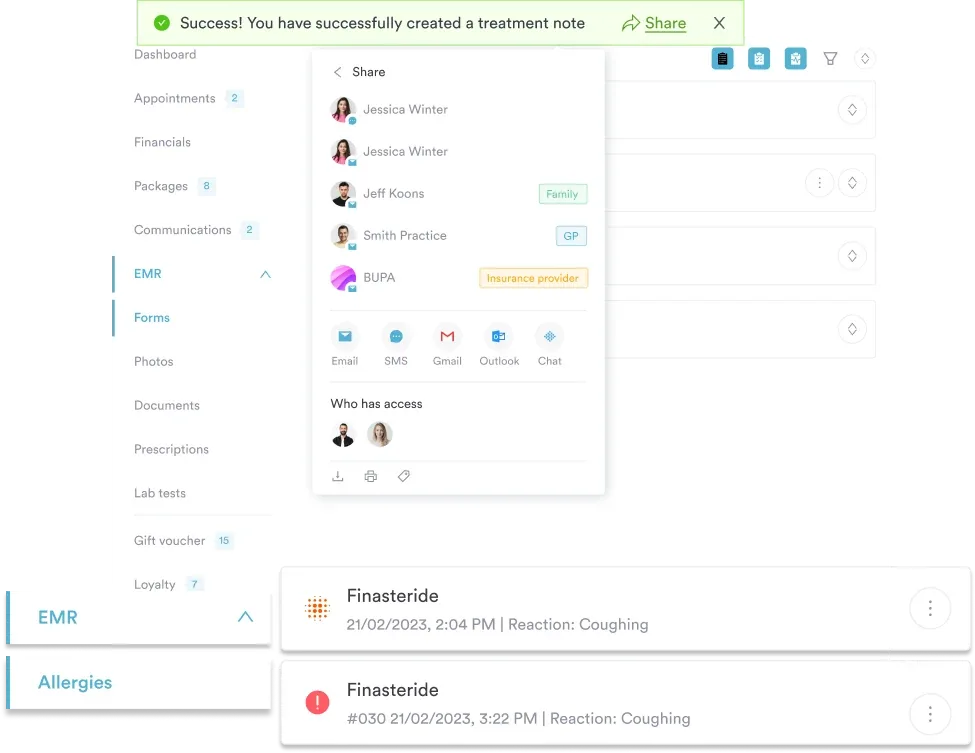
Practice management software like Pabau puts the diagnosis code beside the clinical note rather than in a separate billing screen. The clinician records the site, the imaging finding, and the patient’s age in the same place the code is attached. Nobody has to reconstruct the encounter two weeks later.
That matters for M92.8 because the code stands or falls on the note behind it. A chart naming Kohler disease supports M92.8 comfortably. A chart reading “foot pain, query osteochondrosis” does not, and the claim drops to M92.9 or comes back denied.
Reporting closes the loop. When the same code keeps bouncing, the pattern shows up in your denial reports instead of in the billing manager’s memory. You can then fix the note template that caused it, which is where the M92 family usually goes wrong.

Pabau’s claims management software helps orthopedic and pediatric practices capture diagnosis codes, laterality, and clinical documentation at the point of care. See how it works on a personalized demo.

Miscoding juvenile osteochondrosis is one of the cleaner denial patterns to fix. The hierarchy is short, the applicable conditions are listed explicitly, and the M92.8 versus M92.9 call comes down to a single documentation element. Catch it at the point of care and the rework at claims review disappears.
The trade-off is upkeep. This code family keeps moving, and a cheat sheet written before October 2024 will still route calcaneal apophysitis to M92.8. Check the CDC tabular list each October rather than the laminated copy by the billing desk.
Pabau’s claims management software helps pediatric orthopedic and sports medicine teams attach the right ICD-10-CM code during documentation. It also tracks denial patterns across the M92 family. Book a demo to see how it fits your billing workflow.

Coding a healed finger nerve injury? finger nerve injury sequela S64.498S applies once a digital nerve injury in another finger finishes active treatment and leaves a residual condition.
Coding a follow-up hand vessel injury? hand palmar arch injury S65.301D covers a follow-up visit for an unspecified injury of the deep palmar arch in the right hand.
Coding a healed wrist blood vessel injury? wrist vessel laceration sequela S65.919S covers the sequela of a laceration of an unspecified blood vessel at the wrist and hand.
ICD-10 Code M92.8 is the billable ICD-10-CM code for other specified juvenile osteochondrosis. It covers named conditions such as Kohler disease of the tarsal navicular and Calve’s disease, which have no discrete site code within M92.0 through M92.7. The code is valid for HIPAA-covered claims in FY2026.
Yes. M92.8 is billable and specific in the FY2026 edition, effective October 1, 2025. The parent code M92 is not billable, and neither are M92.0 through M92.7, which each need at least a fifth character. Only M92.8 and M92.9 can be submitted at four characters.
M92.8 applies when the clinician has documented a specific named condition, such as Kohler or Calve’s disease, that M92.0 through M92.7 do not cover. M92.9 is for juvenile osteochondrosis that is genuinely unspecified. When the diagnosis is named in the chart, M92.8 is the correct choice.
Kohler disease is avascular necrosis of the tarsal navicular bone, usually affecting children aged 3 to 7. It codes to ICD-10 Code M92.8 under the Applicable To note for osteochondrosis (juvenile) of tarsal navicular. Documentation should confirm the affected foot and include imaging that supports navicular involvement.
No. Calcaneal apophysitis, also known as Sever’s disease, was removed as an M92.8 inclusion term on October 1, 2024. It now codes to M92.6-, juvenile osteochondrosis of tarsus, with a fifth character for laterality. Any reference still linking ICD 10 calcaneal apophysitis to M92.8 predates the FY2025 update.
The record must confirm patient age for juvenile onset, plus a named condition or a site specific enough to rule out a sibling code. It also needs laterality where applicable, and clinical or imaging evidence of osteochondrosis. CMS guidelines require the highest specificity the documentation supports.
ICD-10-CM code M92.8 is valid in the FY2026 edition, which became effective on October 1, 2025. The ICD-10-CM system updates annually on October 1 under CMS and CDC/NCHS oversight.