ICD-10 code S61.201A: Open wound of left index finger without nail damage
ICD-10 code S61.201A covers a left index finger wound of unstated type ICD-10 co...

Last Updated: Oct 16, 2026
Billable Code Specific Code
M88.9 is the billable ICD-10-CM code for osteitis deformans of unspecified bone.
The catch is that M88.9 should be a last resort, not a default. Most Paget's disease charts do name a site, and coding to the unspecified version when a specific one is documented is a common source of avoidable payer queries.
Here's how to tell which code the note actually supports, the full family of site-specific codes, the comorbidities that tend to ride along, and the documentation habits that keep these claims moving on the first pass.
Let Pabau's smart automation suggest the right codes, reduce claim denials, and keep your practice compliant—effortlessly.
Automate repetitive tasks and focus on what matters most—your patients.
Reduce coding errors and ensure compliance with the latest regulations.
Clean claims, fewer denials, and faster reimbursements.
Powerful insights and reporting to help your practice thrive.
HIPAA compliant SOC 2 certified GDPR-compliant Trusted by 4,000+ clinics worldwide

ICD-10 code M88.9 is the billable FY2026 diagnosis code for osteitis deformans (Paget’s disease) of unspecified bone, effective October 1, 2025.
M88.9 is valid for HIPAA-covered electronic transactions and accepted for reimbursement submission.
Use M88.9 only when the provider note does not specify the affected bone site; site-specific codes in the M88 family are preferred when documentation allows.
Practice management software like Pabau checks that required insurer-submission fields are complete before a claim goes out, and shows submission status on a claim dashboard for musculoskeletal billing.
The official description is osteitis deformans of unspecified bone, also listed under the approximate synonym Paget’s disease of bone, unspecified. It sits within the M88 category of the ICD-10-CM tabular list, which covers all forms of osteitis deformans.
M88.9 is the correct code when the affected bone site isn’t documented in the provider note; when the site is known, a more specific child code in the M88 family applies instead.
The table below summarizes the core reference data for this code. Coders working the musculoskeletal chapter will see the same fields on sibling codes.
Verify current billable status against the CDC/NCHS ICD-10-CM web tool each fiscal year, as code statuses can change with annual updates.
Paget’s disease of bone, coded under the M88 category, is a chronic metabolic bone disorder characterized by abnormal and accelerated bone remodeling. Affected bone is broken down and rebuilt faster than normal, producing bone that is larger, weaker, and structurally disorganized.
Coders working in physical therapy practice software environments frequently encounter this diagnosis alongside rehabilitation referrals for pain and mobility management.
The condition most commonly affects the pelvis, skull, spine, femur, and tibia, though it can involve any bone. Many patients are asymptomatic; when symptoms do present, they include localized bone pain, bone deformity, warmth over the affected site, and pathological fractures. Hearing loss may occur when the skull is involved, due to compression of the auditory nerve.
The key laboratory finding is elevated serum alkaline phosphatase (ALP), a marker of increased bone turnover. This elevation, combined with characteristic radiographic findings, supports the clinical diagnosis. Documentation of these markers in the provider note helps coders assign the appropriate M88 code and supports medical necessity on the claim.
When skull involvement causes documented hearing loss, laterality matters too:
Paget’s disease isn’t the only metabolic bone disorder that shows up with elevated ALP and skeletal pain.
Coders should also be able to tell it apart from M83.8, other adult osteomalacia. Both involve defective bone mineralization rather than the accelerated remodeling seen in Paget’s disease, and mixing them up on a claim can trigger a specificity denial even when the lab picture looks similar on paper.
Provider documentation may use several different terms for the same condition. Coders should recognize all of the following as approximate synonyms for M88.9 within the AAPC ICD-10-CM code database:
When a physician writes “Paget’s disease of bone” in the assessment without naming a bone site, M88.9 is the correct code. If the note uses “osteitis deformans” followed by a bone name, use the corresponding site-specific M88 subcode instead.
Query the provider when documentation says ‘Paget’s disease’ without a site. A single clarifying question resolves the ambiguity and may allow you to assign a more specific M88 subcode, which gives payers clearer clinical context and reduces the risk of medical necessity queries.
M88 is the non-billable parent category for all forms of osteitis deformans. Coders working in osteopathy practice management will encounter the full M88 family regularly. The table below shows every billable child code with its site description and billability status.
Each M88.8-series code carries three variants: right, left, and unspecified side, except M88.88 (other site) and M88.89 (multiple sites), which don’t take a laterality extension. Always use the most specific code the documentation supports. M88.9 stays reserved for cases where the affected bone is genuinely unknown or undocumented.
M88 also carries an Excludes1 note: osteitis deformans in neoplastic disease is excluded from this category and reported with M90.6 instead. If the note ties the bone remodeling to an underlying malignancy rather than idiopathic Paget’s disease, M90.6 is the code, not M88.9 or any M88.8-series subcode.
The ICD-10-CM Official Guidelines for Coding and Reporting instruct coders to use the most specific code the documentation supports. Defaulting to M88.9 when a site-specific code is available is a documentation-based error, not a billing one. Follow these guidelines from the WHO ICD-10 classification to choose correctly.
The same logic governs plenty of other unspecified-site codes elsewhere in the musculoskeletal chapter. Whenever an unspecified code exists, treat it as the fallback for missing documentation, not the default choice. The injury chapter applies the same test. S65.301D covers an unspecified deep palmar arch injury of the right hand at a subsequent encounter.
The ICD-10-CM Official Guidelines for Coding and Reporting, published jointly by CMS and the National Center for Health Statistics (NCHS), govern the correct use of codes across the M88 family. Practices implementing HIPAA-compliant billing workflows should ensure their coding policy reflects the principles below.
ICD-10-CM guidelines require coders to code to the highest level of specificity supported by documentation. M88.9 is appropriate only when the affected bone site is genuinely absent from the provider record. It is not a safe fallback code when the note names a site but the coder is unsure of the correct M88.8x- extension.
Look up “Paget’s disease, bone” in the ICD-10-CM Alphabetic Index. The index routes to M88. From there, navigate the Tabular List to select the correct subcode. The index entry for “osteitis deformans” routes to the same category. Use the Tabular List for the final code assignment; never code directly from the index.
M88.9 is typically sequenced as a principal or secondary diagnosis depending on the reason for the encounter. When the encounter is primarily for management of Paget’s disease, sequence M88.9 (or the relevant site-specific M88 code) first. When Paget’s is an incidental finding documented as a comorbidity, sequence it as a secondary code after the principal diagnosis.
Most encounters also carry a companion CPT code for the visit itself: a new patient completing a full diagnostic workup for suspected Paget’s disease, for example, often pairs M88.9 with CPT 99204 for the office visit, alongside whichever imaging codes the workup required.
Paget’s disease frequently presents alongside or leads to additional diagnoses that require separate coding. Accurate comorbidity coding supports medical necessity and reduces audit risk.
The codes below may be appropriate depending on clinical documentation; confirm each one is supported by the provider note before assigning. Coders can verify code validity using the Check ICD-10 code database.
Do not assign comorbidity codes speculatively. Each code requires explicit documentation in the provider note for that encounter. Assign additional codes only when the complication or comorbidity is documented and clinically relevant to the visit.
Practices that handle complex musculoskeletal billing benefit from Pabau’s claims management software, which checks that required insurer-submission fields are complete before a claim can be sent, then shows submission status on a claim dashboard.
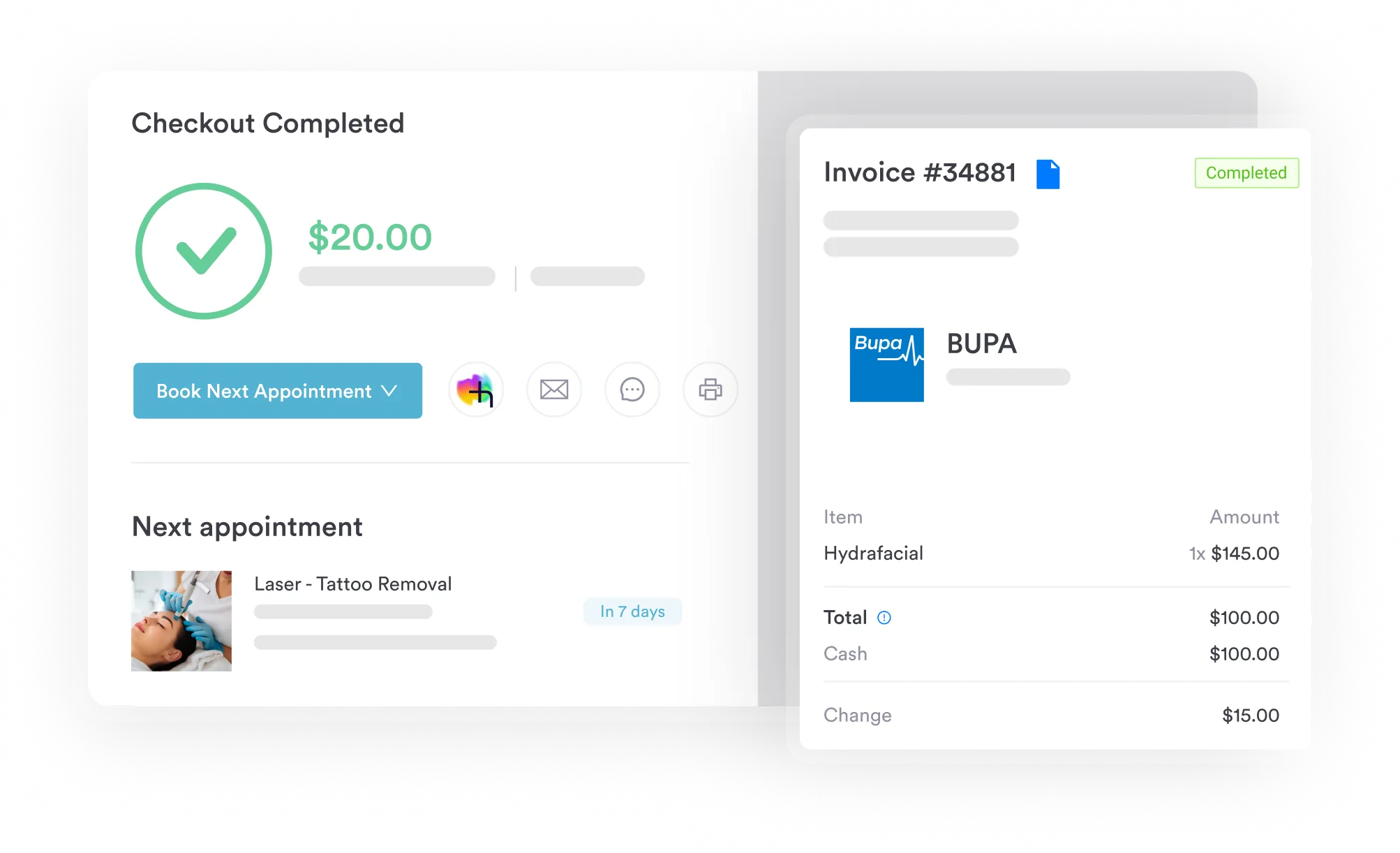

Pabau’s claims management tools check that required insurer fields are complete before a claim goes out, and give practices a clear submission status dashboard for diagnoses like M88.9.

Strong provider documentation is the foundation of defensible coding. When a coder receives a note that lacks site specificity, two things happen: the claim may be coded to M88.9 instead of a more specific code, and a query adds administrative time. These compliance documentation principles for musculoskeletal practices apply equally to Paget’s disease encounters.
Practices that use structured clinical records with templated fields for diagnosis site and laterality consistently produce notes that support site-specific coding. The checklist below covers what a provider note should include to support M88.9 or a more specific M88 code.
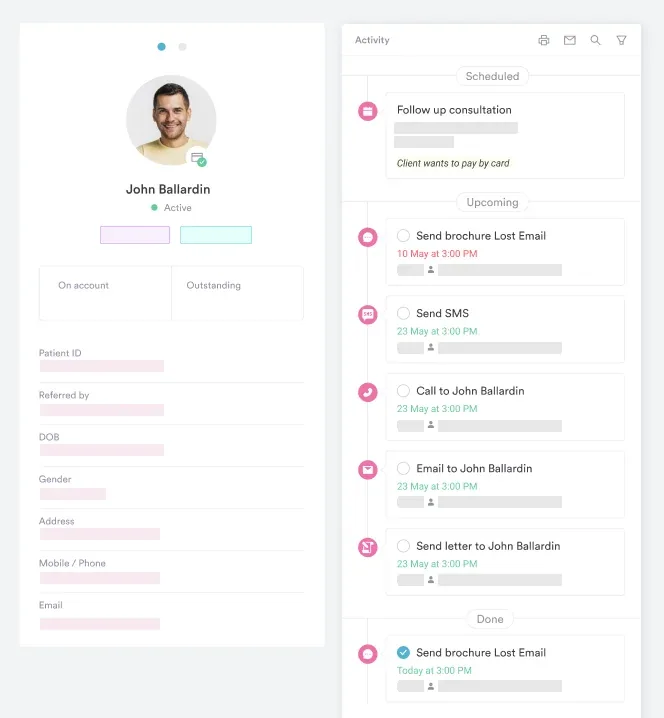
Using digital intake forms that prompt clinicians for site, laterality, and key findings at the point of assessment reduces the volume of coding queries and shortens the claim submission cycle.
Tools that save private practices time, like those discussed in tools that reduce administrative burden in private practice, often include structured documentation features that directly improve coding specificity.
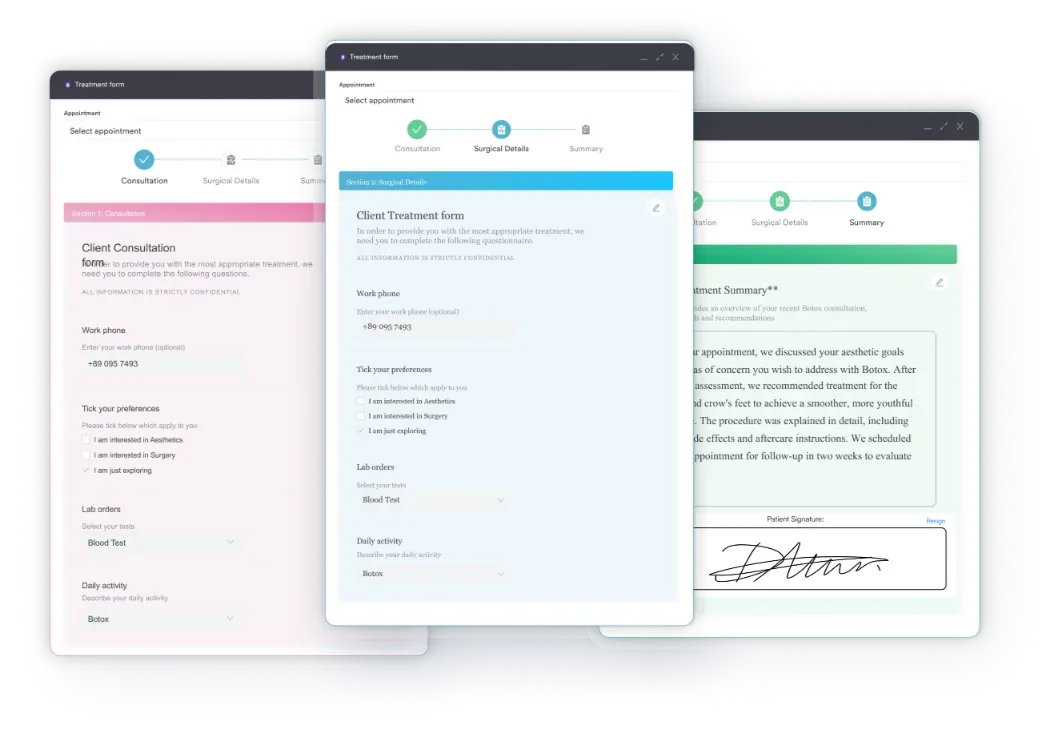
Build a Paget’s disease documentation template in your EHR that includes dropdown fields for bone site, laterality, ALP value, and imaging reference. Providers who complete it at the point of care eliminate nearly all downstream coding queries for M88 encounters.
Practices billing musculoskeletal diagnoses like M88.9 deal with a predictable set of coding friction points: missing site documentation, multi-code comorbidity claims, and claim edits triggered by incomplete diagnosis coding.
Pabau addresses these through integrated tools that connect clinical documentation to billing workflow without requiring a separate coding system.
Pabau’s claims management software checks that the required insurer-submission fields, like membership numbers and authorization codes, are complete before a claim goes out. It won’t tell you a provider note is missing a bone site for a Paget’s diagnosis, that’s still a documentation and coding judgment call, but it will stop an incomplete claim from being sent and show its status on a dashboard once it is. Keeping a code lookup current matters more than keeping it comprehensive. A superbill form is not a claim form, but it carries the same data the patient insurer will ask for.
That kind of gate matters for practice management software used in musculoskeletal and rehabilitation settings.
ICD-10 code M88.9 is the correct billable code for Paget’s disease of bone when documentation does not specify the affected bone site. It is valid for FY2026, effective October 1, 2025, and accepted on HIPAA-covered transactions. The preferred approach is always to use a site-specific M88 subcode when documentation supports it, querying the provider when site is absent from an otherwise detailed note.
Practice management software like Pabau helps close that gap: it checks required insurer fields before a claim goes out and gives practices a clear submission status dashboard instead of a denial notice.
If musculoskeletal billing is eating more staff time than it should, book a demo to see how it fits your workflow.

Coding a finger subluxation with no detail? unspecified finger subluxation coding S63.209A covers a subluxated finger at the initial encounter when the chart names neither the finger nor the hand.
Coding a wrist sprain follow-up visit? wrist sprain follow-up coding S63.501D covers a right wrist sprain at each follow-up visit while it continues to heal.
Coding a healed wrist sprain? wrist sprain sequela coding S63.592S is the billable code for another specified sprain of the left wrist once it has healed.
The exact cause isn’t fully understood, though most researchers point to a mix of genetic factors and a possible slow viral trigger that sets off abnormal bone remodeling. It’s most common in adults over 55, rare before 40, and more frequent in people of European descent.
No, it’s a benign bone remodeling disorder, not a malignancy. In a small number of long-standing cases, usually under 1%, it can transform into osteosarcoma, which is why new or worsening pain at a pagetic site deserves further imaging rather than being written off as routine.
Bisphosphonates are the main treatment, slowing excessive bone turnover and often normalizing ALP levels within months. Pain relievers and physical therapy manage symptoms, and orthopedic referral comes into play when a fracture, deformity, or joint damage needs a surgical fix.
Estimates vary, but it’s thought to affect roughly 1 to 2 out of every 100 adults over 55 in the US, more often men than women. Many cases stay silent and turn up incidentally on imaging or bloodwork ordered for an unrelated reason.
Usually yes. An office visit E/M code covers the diagnostic workup, and imaging codes like an X-ray or bone scan support the diagnosis when ordered. Which ones apply depends on what the encounter actually involved, not on the diagnosis code alone.