ICD-10 Code Y76.0: Diagnostic obstetric and gynecological devices
ICD-10 Code Y76.0: Definition and billable status ICD-10 Code Y76.0 is a valid, ...

Last Updated: Oct 23, 2026
Billable Code Specific Code
M91.91 is the billable ICD-10-CM code for juvenile osteochondrosis of hip and pelvis, unspecified, right leg.
Two mistakes drive most M91.91 denials. Coders submit the non-billable parent M91.9, or they reach for M91.91 when the record documents Legg-Calvé-Perthes disease. That named condition belongs to M91.1. Both mistakes start in the clinical note rather than the billing module, which is where they are cheapest to fix.
Let Pabau's smart automation suggest the right codes, reduce claim denials, and keep your practice compliant—effortlessly.
Automate repetitive tasks and focus on what matters most—your patients.
Reduce coding errors and ensure compliance with the latest regulations.
Clean claims, fewer denials, and faster reimbursements.
Powerful insights and reporting to help your practice thrive.
HIPAA compliant SOC 2 certified GDPR-compliant Trusted by 4,000+ clinics worldwide

ICD-10 code M91.91 covers juvenile osteochondrosis of hip and pelvis, unspecified, right leg. It is billable in ICD-10-CM and took effect on October 1, 2025.
M91.91 is billable but its parent M91.9 is not. Never submit the parent code when a laterality subcode applies.
Legg-Calvé-Perthes disease codes to M91.1x rather than M91.9x. Using M91.91 for a documented case is a coding error that draws denials.
Practice management software like Pabau keeps the laterality note and the diagnosis on one patient record, so the coder is not guessing at claim time.
ICD-10 code M91.91 is a valid, billable ICD-10-CM diagnosis code for fiscal year 2026. It took effect on October 1, 2025, under the FY2026 edition of the CDC/NCHS ICD-10-CM code set. Clinicians and coders can submit it in HIPAA-covered transactions.
The billability distinction matters. M91.91 is specific enough to carry a claim on its own. Its parent M91.9 is not, because HIPAA requires covered entities to use the most specific code available.
Submitting M91.9 when M91.91 is clinically supported invites a rejection or an audit flag. Once the right code sits on the patient record.

M91.9 has three billable child codes, separated only by laterality. Picking the wrong one from incomplete documentation is a leading denial trigger in pediatric orthopedics.
M91.90 is the right choice only when the treating clinician genuinely cannot determine which side is involved. That should be rare. A physical examination or an imaging report confirms right or left involvement in almost every pediatric hip case.
Defaulting to M91.90 when the notes do document laterality is a coding error, not a safe fallback. Accurate clinical record documentation of the affected hip is what drives the code choice.
Before you choose between M91.90, M91.91, and M91.92, open the radiology report or the physical therapy assessment. Imaging findings almost always name the side. If the encounter note leaves it out, check those supporting documents before you default to unspecified.
Juvenile osteochondrosis of the hip covers a group of disorders in which blood supply to the femoral head is disrupted during skeletal development. The result is avascular necrosis, bone fragmentation, and eventual remodeling. It mostly affects children between the ages of 4 and 10.
The presenting symptoms are hip pain, a limp, and restricted range of motion. Several other pediatric hip conditions look the same at first, which is why the specific code matters for both billing and clinical tracking.
Legg-Calvé-Perthes disease, or LCPD, is the named condition under M91.1 rather than M91.9. This one distinction causes more errors than anything else in the code group.
When the clinical record documents LCPD, the M91.1x codes apply. M91.11 covers the right hip and M91.12 covers the left. Using M91.91 for a confirmed LCPD case is incorrect, and it can create medical necessity conflicts during payer review.
The M91 category also carries several related terms in the official ICD-10-CM applicable-to notes. They help coders who search by clinical terminology rather than by code number.
Pediatric hip complaints turn up regularly in physical therapy caseloads and in osteopathy practices, particularly where young athletes are involved.
The M91 group covers juvenile osteochondrosis of the hip and pelvis in full. Choosing correctly within the group means knowing whether a named condition is documented, and which leg is affected. The table below lists every M91 code according to the CMS ICD-10-CM code files.
Juvenile osteochondrosis documented at a site outside the hip and pelvis leaves this group entirely. M92.9 is where it lands when the site is not specified. For anything that looks like an edge case, check the current FY2026 tabular list before you submit.
Sports injury clinics track these diagnoses alongside rehab plans in sports medicine software.
The official ICD-10-CM coding instructions set out several rules that govern when M91.91 applies. The AAPC’s ICD-10 code index is a quick way to compare a sibling code while you work. Review both before submitting a pediatric musculoskeletal claim.
The M91 category carries Excludes notes in the official ICD-10-CM tabular list. They govern what cannot be coded alongside M91.91, and what needs a separate code entirely.
Practices that run digital intake forms can prompt clinicians for laterality and condition type at the point of care. That single prompt makes the whole M91 coding workflow more straightforward.

Ask the clinical team to state left or right in every note on a pediatric hip complaint. That includes physical therapy assessments, imaging referrals, and surgical records. One missing laterality notation becomes an unspecified code downstream, and then a payer request for records.
Yes. M91.91 remains active and valid in the FY2026 edition of ICD-10-CM, effective October 1, 2025. The FY2026 cycle changed nothing about its description, its billability, or its place in the hierarchy. The code has been stable across recent fiscal years.
Codes in every ICD-10-CM chapter can still be revised, retired, or expanded each October. Check M91.91 against the official CMS code files when a new coding year opens, even though it has held steady so far.
Accurate M91.91 documentation starts in the clinical encounter note, not in the billing workflow. These five steps cover the chain from assessment through to claim submission.
Pabau’s automated workflow tools build that prompt into intake and assessment templates, so the side is captured at the visit rather than inferred later.
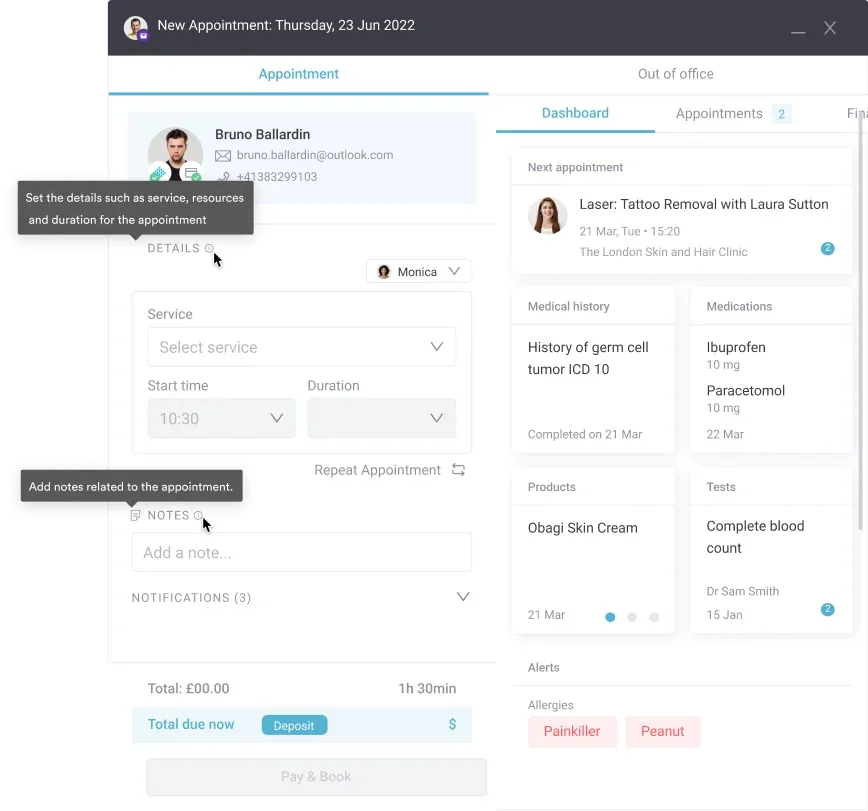
High-volume pediatric caseloads sit mostly with physical therapy and chiropractic practices, where the M91 family comes up often. Connecting the diagnosis on the record to the billing module in your practice management software closes the distance between the note and the claim. That connection keeps the revenue cycle moving without a manual handoff between clinical and billing teams.
In most practices the laterality evidence lives in one place and the claim is built in another. The radiologist names the right hip in a PDF. The coder reads an encounter note that says hip pain, and M91.90 goes out on the claim. The correction arrives weeks later as a denial. Most claim errors are structural rather than clinical, which is why scrubbing rules catch them.
Pabau keeps the assessment, the treatment note, the imaging document, and the invoice on a single patient record. You can build the laterality question into the intake or assessment template, so the side is captured before anyone starts coding. The diagnosis then stays attached to the visit that produced it.
When it is time to bill, Pabau’s claims management tools pull what is already on that record into a pre-filled claim and track its status. Nobody retypes a side from a scanned report, so fewer pediatric hip claims go out with an unspecified code on them.

Pabau holds the assessment, the treatment note, and the diagnosis on one patient record, then pulls them into a pre-filled claim. Your team documents the affected side once and bills from it.

Two decisions settle M91.91. Confirm the condition type is genuinely unspecified rather than LCPD, coxa plana, or another named entity. Then confirm the right leg is documented somewhere a payer can read it.
Get both right and M91.91 is the accurate, billable choice for FY2026. Get either wrong and the cost is a denial plus a records request, weeks after the child was treated. The cheapest place to fix that is the assessment template, long before the billing queue.
Software that carries the laterality note through to the claim takes the guesswork out of it. Book a demo to see how Pabau handles pediatric musculoskeletal documentation and billing.

Coding a sprain on another finger joint? other finger sprain coding S63.638A covers a sprain of the interphalangeal joint of a finger other than the four named digits.
Coding the hip pain alongside the diagnosis? M25.559 covers what to do when the note never names the affected side.
Coding a healed thumb nerve injury? thumb nerve injury sequela S64.31XS applies when a patient has a documented late effect of a prior right thumb digital nerve injury.
Facing an unspecified-site code elsewhere in the M chapter? M66.9 shows how the same specificity rules play out for tendon rupture.
Coding a spinal presentation in the same caseload? M43.9 sets out the documentation a deforming dorsopathy claim needs.
ICD-10 code M91.91 is a billable ICD-10-CM diagnosis code for juvenile osteochondrosis of hip and pelvis, unspecified, right leg. It sits in Chapter 13, which covers diseases of the musculoskeletal system and connective tissue. The code became effective on October 1, 2025 under the FY2026 edition.
Yes. M91.91 is a specific, billable ICD-10-CM code valid for HIPAA-covered transactions. Its parent code M91.9 is not billable. Use M91.91 for the right leg, M91.92 for the left leg, or M91.90 when the side is genuinely unknown.
M91.91 specifies juvenile osteochondrosis of the right hip and M91.92 specifies the left hip. Both are billable subcodes of M91.9. Laterality is the only difference between them, so select the leg documented in the clinical record.
Legg-Calvé-Perthes disease, or LCPD, is avascular necrosis of the femoral head in children, causing bone fragmentation and remodeling. It does not code to M91.91. LCPD maps to M91.1x instead. Use M91.11 for the right hip and M91.12 for the left hip when LCPD is documented.
M91.9 has three billable subcodes: M91.90, M91.91, and M91.92. All three describe juvenile osteochondrosis of hip and pelvis, unspecified. The laterality qualifier is the only difference, covering unspecified leg, right leg, and left leg in that order.
Coxa plana describes a flattened femoral head, which is a feature or sequela of LCPD rather than a separate disease. In ICD-10-CM it carries its own subcategory under M91.2x. That keeps it distinct from LCPD at M91.1x and from unspecified juvenile osteochondrosis at M91.9x.