ICD-10 Code Y76.0: Diagnostic obstetric and gynecological devices
ICD-10 Code Y76.0: Definition and billable status ICD-10 Code Y76.0 is a valid, ...

Last Updated: Oct 23, 2026
Billable Code Specific Code
M79.7 is the billable ICD-10-CM code for fibromyalgia.
Most M79.7 denials trace back to the note rather than the code. Auditors look for the pain region count, the WPI and SSS scores, and a duration statement. Capture those at the visit and the claim usually clears on first submission.
Let Pabau's smart automation suggest the right codes, reduce claim denials, and keep your practice compliant—effortlessly.
Automate repetitive tasks and focus on what matters most—your patients.
Reduce coding errors and ensure compliance with the latest regulations.
Clean claims, fewer denials, and faster reimbursements.
Powerful insights and reporting to help your practice thrive.
HIPAA compliant SOC 2 certified GDPR-compliant Trusted by 4,000+ clinics worldwide

ICD-10 Code M79.7 is the single billable diagnosis code for fibromyalgia, valid through September 30, 2026.
The ACR 2016 criteria require generalized pain in at least four of five body regions, lasting three months or more.
Qualifying scores are WPI 7 or more with SSS 5 or more, or WPI 4 to 6 with SSS 9 or more.
Missing WPI and SSS scores in the clinical note is the most common reason M79.7 claims are denied.
Practice management software like Pabau captures ACR criteria scores at the point of care, so notes are complete before billing.
M79.7 is the official ICD-10-CM code for fibromyalgia. It is a specific billable code, so it carries enough clinical detail for submission without a more specific child code. The 2026 tabular list gives M79.7 no subcategory codes at all.
Per the CMS ICD-10-CM coding guidelines, M79.7 sits in the musculoskeletal chapter. Its neighbors include M79.1 for myalgia and M79.3 for panniculitis. The WHO ICD-10 classification files fibromyalgia in the same chapter internationally.
Clinicians in rheumatology.
Fibromyalgia is a chronic musculoskeletal condition defined by widespread pain, fatigue, and non-restorative sleep. The central nervous system amplifies pain signals, which separates fibromyalgia from localized musculoskeletal pain and from inflammatory arthritis. Coders need that clinical picture to choose M79.7 over a less specific pain code.
Fibromyalgia affects an estimated 2 to 8 percent of the US population, and women are diagnosed more often. No single laboratory marker exists, so the diagnosis rests on clinical evaluation with validated scoring tools. That is why documentation standards weigh so heavily on M79.7 billing.
The American College of Rheumatology published its revised criteria in 2016, and they are the basis for most payer documentation requirements. They retire the older tender-point examination and replace it with three requirements that all have to be met.
The generalized pain requirement is the one most often left out of a note. Jaw, chest, and abdominal pain do not count toward the five regions, so a patient with pain confined to those sites does not meet it.
The WPI asks patients to identify painful areas from a defined list of 19 body regions over the past week. The SSS scores fatigue, waking unrefreshed, and cognitive symptoms from 0 to 3 each. It adds a further 0 to 3 for somatic symptoms, giving a total of 0 to 12.
All three criteria belong in the clinical note: the region count, both scores, and the duration statement. The criteria also state that a fibromyalgia diagnosis does not exclude other diagnoses. A patient can carry both fibromyalgia and an inflammatory diagnosis such as rheumatoid arthritis or M45.6. Never withhold M79.7 because other conditions are present. A clean claim rate below the practice benchmark usually points at one recurring coding or eligibility error. A billing workflow that separates coding from submission creates a handoff where claims stall.
Sports medicine software helps teams link each injury code to treatment progress and return-to-play timelines.
An incomplete note is the most direct path to a denied M79.7 claim. Payers audit fibromyalgia claims because the diagnosis rests on patient-reported scores rather than objective tests. Structured digital intake forms that capture the region count and both scores at each visit keep the record whole.
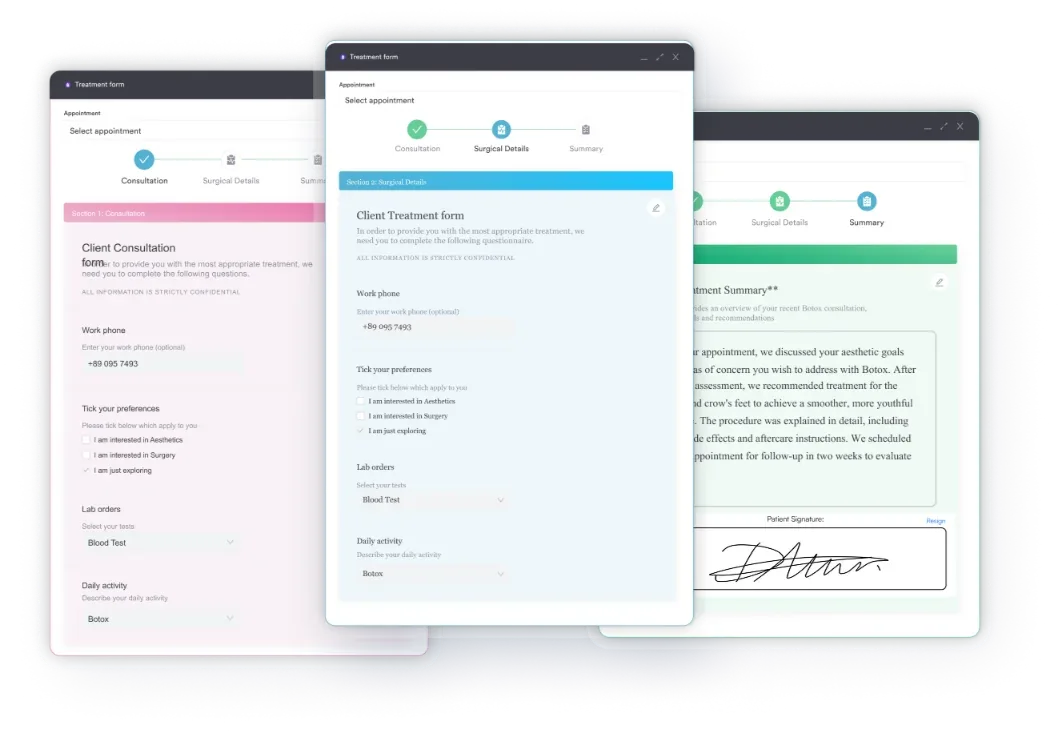
Good patient compliance with symptom tracking between visits strengthens the record too, particularly for the three-month duration requirement.
Document WPI and SSS scores as discrete numeric fields in your clinical note template, not inside a paragraph of free text. Payer auditors look for structured data they can extract quickly. A table or checklist format in the note reduces denial risk and makes chart review faster.
Fibromyalgia management spans several visit types and specialties. The CPT codes paired with M79.7 depend on the service delivered and the complexity of the presentation. Evaluation and management (E/M) codes carry most fibromyalgia billing, with therapy and counseling codes appearing regularly.
Payer coverage for the codes paired with M79.7 varies. Verify medical necessity with each payer before billing, particularly for therapy codes like 97110 and 97530, which may need prior authorization.
Fibromyalgia rarely presents in isolation. Most patients have at least one comorbid condition that earns its own ICD-10 code on the same claim. Assign secondary codes when they are documented and treated at the visit, or when they change clinical decision making. Never assign them routinely without documentation support.
Fibromyalgia and myalgic encephalomyelitis, also known as chronic fatigue syndrome, share fatigue and cognitive symptoms. That overlap makes them a common differential. The specific code for confirmed ME/CFS is G93.32, and R53.82 is reserved for chronic fatigue that does not meet ME/CFS criteria.
Fibromyalgia’s defining feature is generalized pain meeting the ACR criteria, not fatigue on its own. Assign the code the record supports, and code both conditions when both are diagnosed and treated.
Most M79.7 denials trace back to a small set of repeatable errors. Knowing them in advance costs less than correcting denials after submission.
Getting M79.7 right comes down to capturing ACR criteria scores as structured, auditable data instead of narrative buried in free text. Pabau’s client record system supports that with configurable note templates. Those templates hold dedicated fields for the pain region count, the WPI and SSS scores, and symptom duration.
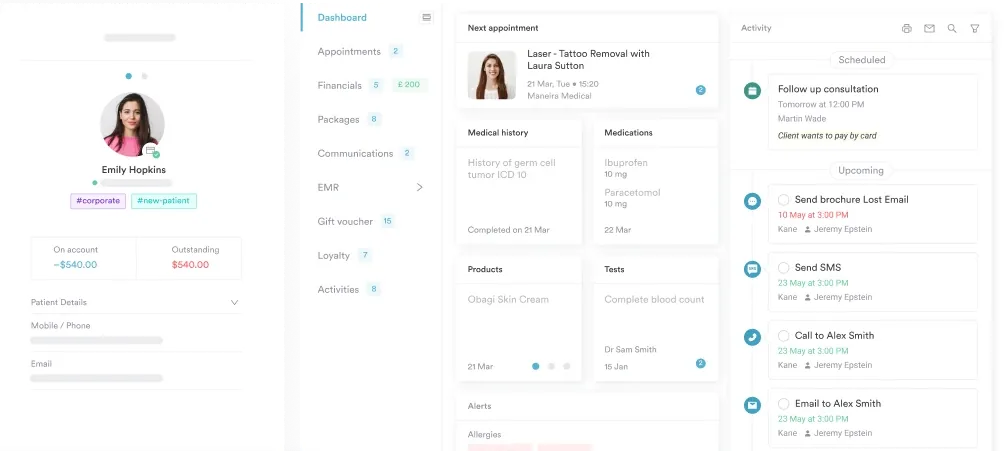
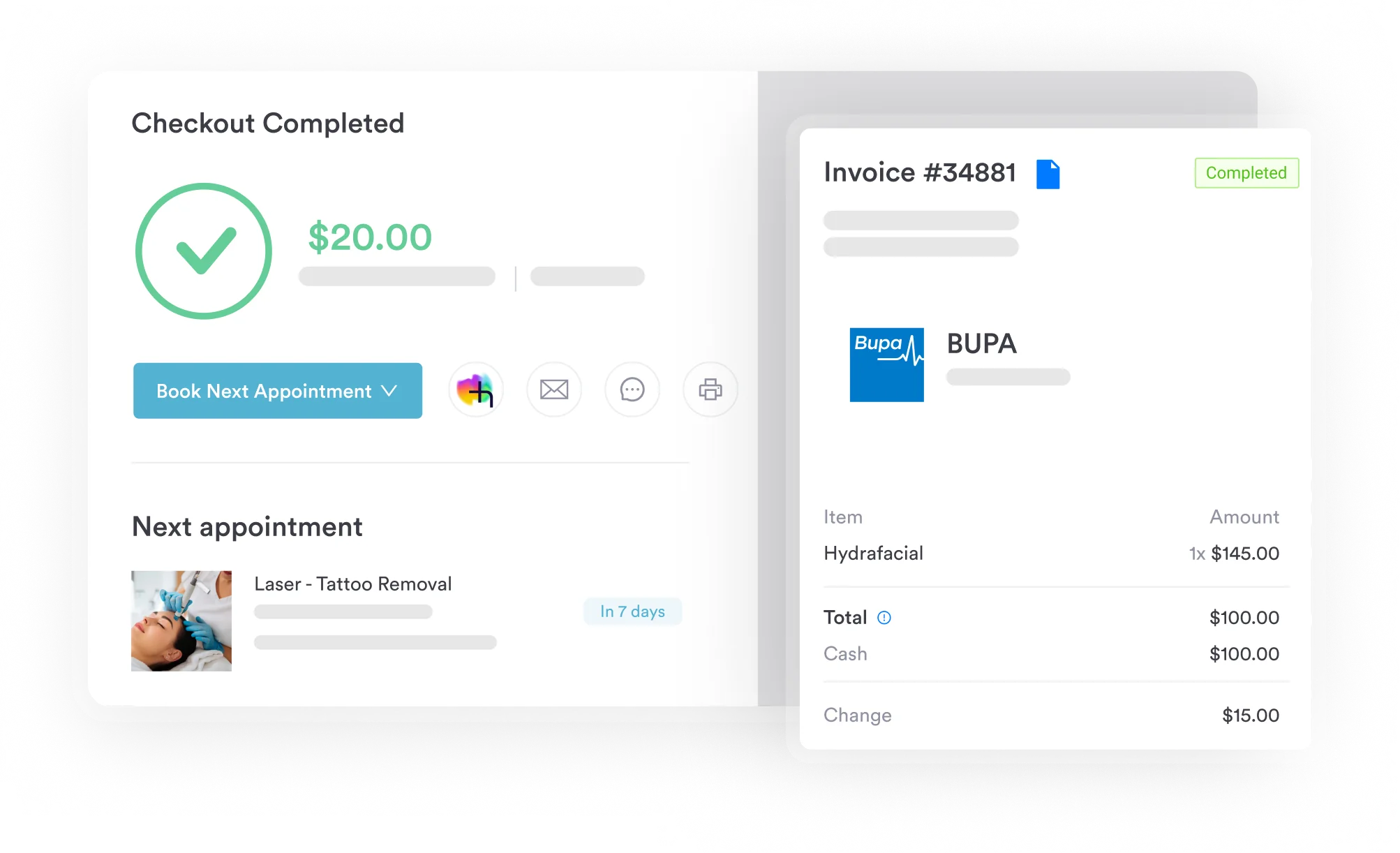
The platform’s claims management software connects clinical documentation to billing, so the diagnosis code reaches the claim without manual re-entry. For teams seeing high volumes of fibromyalgia patients, that removes the transcription errors behind specificity mismatches.
Pabau Scribe, our AI scribe, records the consultation and structures it into a chart note. Clinicians capture WPI and SSS scores during the visit instead of reconstructing them from memory afterward. Structure the documentation at the point of care and M79.7 claims arrive complete.
Review your fibromyalgia visit notes from the last 90 days. Check what share of them includes a numeric WPI score, a numeric SSS score, and a duration statement. If any of the three is missing in more than 20% of notes, update your note template before the next audit cycle.

Pabau’s digital forms and client records capture WPI and SSS scores as structured data at every visit. Your M79.7 claims then reach the payer with the support they need.

Choosing the code is the easy part, because M79.7 covers every fibromyalgia diagnosis whatever the severity. What decides the claim is whether the note carries the region count, both scores, and the duration statement.
Build those three into the note template once and the work disappears into the visit. Retrofitting them during an audit costs far more than collecting them at the point of care.
Pabau’s note templates and claims tools build that habit into every visit. Book a demo to see how Pabau handles fibromyalgia documentation from intake through to the claim.

Coding a Salter-Harris growth plate fracture? Salter-Harris Type I fracture S59.219A codes a Salter-Harris Type I fracture of the distal radius growth plate at the first encounter.
Coding a different growth plate fracture type? Salter-Harris Type II fracture S59.229A covers a Salter-Harris Type II fracture of the lower radius growth plate at the initial visit.
Coding a healed finger contusion? finger contusion sequela coding S60.152S applies once a left little finger contusion has healed but nail damage still needs treatment.
Coding a follow-up finger contusion visit? little finger contusion follow-up S60.159D covers a follow-up visit for a contusion of the unspecified little finger with nail damage.
Coding chronic back pain with no clear structural cause? M43.9 explains when an unspecified dorsopathy code is the right choice.
ICD-10 Code M79.7 is the specific, billable diagnosis code for fibromyalgia in the ICD-10-CM classification system. It is valid for fiscal year 2026, which runs from October 1, 2025 through September 30, 2026. M79.7 has no subcategory codes and is the terminal code for this condition.
Yes, M79.7 is a billable and specific ICD-10-CM code that can be submitted directly for reimbursement. No additional specificity codes are required, because M79.7 is already the most detailed code in its hierarchy.
The most common errors are missing WPI or SSS scores and no symptom duration statement. Another is failing to record generalized pain across four of five body regions. Coding M79.1 instead of M79.7 is a frequent specificity error. Adding G89.29 is appropriate only when chronic pain management is the specific reason for the visit, with G89.29 sequenced first.
Common secondary codes include G47.00 for insomnia and F41.1 for generalized anxiety disorder. F32.1 covers a single moderate episode of major depression, and R53.83 covers other fatigue. Assign a secondary code only when the comorbidity is documented and addressed at the visit, never routinely.