

ICD-10 Code R63.4: Abnormal weight loss
ICD-10 code R63.4: Definition, billability, and code structure ICD-10 code R63.4...

Last Updated: Nov 13, 2026
Billable Code Specific Code
K62.5 is the billable ICD-10-CM code for hemorrhage of anus and rectum. It applies when the physician documents bleeding that arises from the anus or rectum.
When the note names no source, the bleed codes to K92.2 (gastrointestinal hemorrhage, unspecified). When hemorrhoids are the documented cause, K64 is the more specific code.
Let Pabau's smart automation suggest the right codes, reduce claim denials, and keep your practice compliant—effortlessly.
Automate repetitive tasks and focus on what matters most—your patients.
Reduce coding errors and ensure compliance with the latest regulations.
Clean claims, fewer denials, and faster reimbursements.
Powerful insights and reporting to help your practice thrive.
HIPAA compliant SOC 2 certified GDPR-compliant Trusted by 4,000+ clinics worldwide

K62.5 is a billable ICD-10-CM code for hemorrhage of the anus and rectum, valid since FY2016 and still active.
Use K62.5 only when the physician documents an anorectal source. Unspecified GI bleeding defaults to K92.2.
Melena, hemorrhoidal bleeding, fissure bleeding, diverticular hemorrhage and post-procedural bleeding each have their own, more specific codes.
Pabau, the practice management platform we build, sends US claims through Claim.MD and tracks prior authorizations on the patient’s case.
ICD-10 code K62.5 is the billable ICD-10-CM diagnosis code for hemorrhage of anus and rectum. You report it when the physician documents bleeding that arises from the anus or rectum.
It sits in the K62 category (“Other diseases of anus and rectum”) in Chapter 11 of the tabular list, the digestive system chapter. The code has been valid since October 1, 2015 (FY2016) and is still active.
The CDC/NCHS ICD-10-CM web tool is the authoritative source for verifying code validity by fiscal year. Confirm the code against the current tabular list before submission, since the October 1 update each year can change code status.
K62.5 covers bleeding that the treating physician explicitly documents as arising from the anus or rectum. The code captures the following clinical presentations:
The common thread is documentation specificity. The physician’s note must state that the bleeding originates in the rectum or anus, not simply that the patient has blood in the stool. When that anatomical localization is absent, K92.2 (gastrointestinal hemorrhage, unspecified) is the correct code.
Two wordings send coders elsewhere. The ICD-10-CM Index sends hematochezia and blood in stool to K92.1 (melena), so those terms alone do not support K62.5. Bleeding that follows a digestive-system procedure, such as a colonoscopy biopsy, codes to K91.840 instead. If the physician ties the bleeding to Crohn’s disease, combination code K50.911 carries it, rather than K62.5 plus Crohn’s code K50.90.
Several bleeding presentations look like K62.5 but code elsewhere. Some are excluded by the official Excludes1 note, and others have a more specific code that names the source of the bleed.
The official Excludes1 note under K62.5 lists three conditions: gastrointestinal bleeding NOS (K92.2), melena (K92.1) and neonatal rectal hemorrhage (P54.2). An Excludes1 code is never reported together with K62.5.
The other rows are coding guidance for more specific codes. When the physician names hemorrhoids, a fissure, diverticula or angiodysplasia as the source, that condition’s code carries the bleed. Hemorrhoids appear in an Excludes2 note at the K62 category. That means K64 and K62.5 can both be reported only when the note documents them as separate conditions. If it is unclear, query the physician before you add a code.
K92.2 (gastrointestinal hemorrhage, unspecified) is the usual alternative to K62.5, and K92.1 (melena) is its closest neighbor. The decision turns on what the note documents:
The table below applies that rule to common chart wording.
A common coder error is reporting K92.2 for every lower GI bleed, even when the note names the rectum. Per Section I.B of the ICD-10-CM Official Guidelines for Coding and Reporting, code specificity must match what the documentation supports. K92.2 is the correct unspecified code when localization is absent. Once anorectal origin is documented, K62.5 takes over.
A physician note that supports K62.5 must do more than mention rectal bleeding. Payers and auditors look for specific documentation elements before accepting the code as medically necessary.
When documentation is ambiguous, clinical documentation improvement (CDI) teams should query the physician before assigning K62.5. A query asking “Can you confirm whether the documented rectal bleeding originates from the anorectal site, or is the source not yet determined?” protects both the claim and the audit trail.
Flag K92.2 submissions where the clinical note contains the word ‘rectal’ or ‘anorectal’ alongside bleeding. These are CDI query triggers. A physician who documented the site may support K62.5, but only a formal query and updated attestation should change the code.
K62.5 is broadly accepted as a diagnostic colonoscopy indication under Medicare, but acceptance varies by MAC jurisdiction. Always verify against the relevant MAC’s current local coverage determination (LCD) before treating acceptance as universal. The medical billing fundamentals that govern diagnostic versus screening procedures decide which CPT and diagnosis code combination the payer expects.
Modifier 33 (preventive service) does not apply when K62.5 justifies a colonoscopy, because K62.5 signals a diagnostic encounter rather than a screening. Payers flag modifier 33 alongside K62.5 as inconsistent with the diagnostic indication. Bill the procedure as diagnostic 45378 or the matching therapeutic colonoscopy code, never a screening code.
K62.5 denials cluster around three root causes: insufficient documentation, incorrect code selection, and procedure-diagnosis mismatches. Every denial carries a claim adjustment reason code (CARC), so learn to decode each denial code before you appeal.
Structured denial management workflows track K62.5 denials by CARC. They show whether a problem is systemic, such as a documentation template, or a single coder error. Submitting a clean claim on the first attempt keeps a rectal bleeding claim out of the appeals queue.
K62.5 maps to ICD-9-CM code 569.3 (Hemorrhage of rectum and anus) under CMS General Equivalence Mappings (GEMs). The mapping is approximate. ICD-10-CM is more granular, and 569.3 did not carry the exclusion notes that K62.5 inherits from the K62 category. Practices running dual-coding audits on historical claims should note this limitation. The CMS 2018 GEMs files hold the forward and backward mappings for pre-2015 claims.
Knowing where K62.5 sits in the K62 family stops coders from defaulting to it when a sibling code is more specific. The AAPC Codify ICD-10-CM lookup displays the full K62 group with inclusion and exclusion notes for each child code.
K62.0 (anal polyp) and K62.5 can both be reported at a colonoscopy where the physician documents a polyp and a separate anorectal bleed. Each condition needs its own supporting documentation in the procedure note.
A K62.5 denial usually starts in the encounter note, when the bleeding site never makes it into the record. Without a check at the visit, the practice learns about it only when the remittance comes back, weeks after the colonoscopy.
Pabau, the practice management platform we build, keeps the note, the authorization and the claim on one patient record. Its claims management tools build CMS-1500 and 837P claims and submit US claims through the Claim.MD clearinghouse. Here is how that helps on a K62.5 claim:
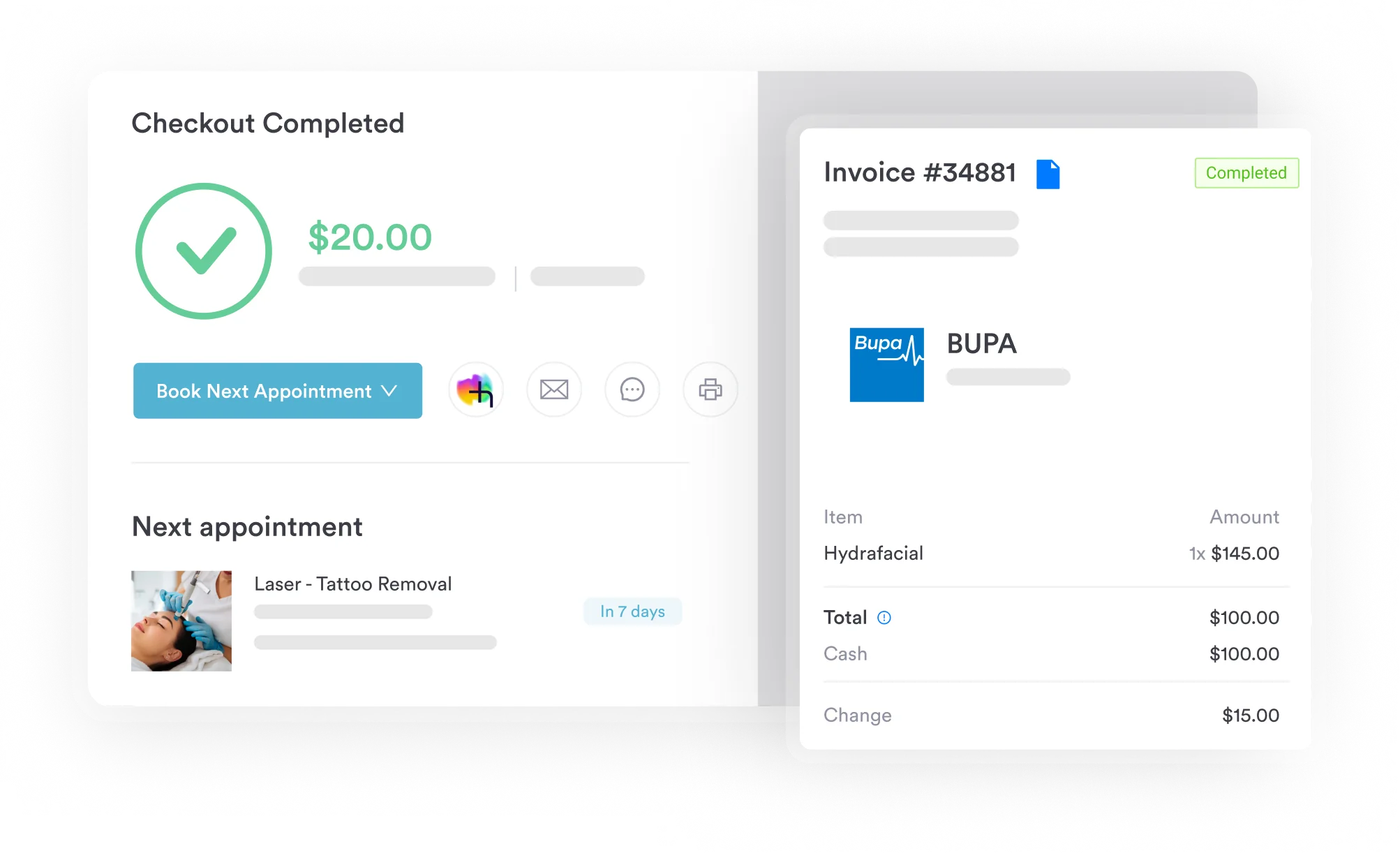
The result is a claim built from a note that already names the anorectal source, with coverage and authorization confirmed before the patient arrives.

Pabau checks eligibility, tracks prior authorizations on the case and sends US claims through Claim.MD, so K62.5 colonoscopy claims go out complete.

K62.5 is only as safe as the note behind it. Before you submit, confirm that the physician named the anus or rectum as the bleeding site. If the note doesn’t, query the physician or report K92.2.
That one check at the encounter costs less than any appeal, and it protects the colonoscopy claim that usually follows. Book a demo to see how Pabau keeps the note, the authorization and the claim together for your gastroenterology practice.

Need a framework for managing claim denials at scale? Denial management in healthcare covers root-cause workflows and CARC code tracking for billing teams.
Want to understand how claims flow through a clearinghouse? The Claim.MD clearinghouse guide explains EDI submission, eligibility checks, and ERA processing.
Looking for a checklist to build a clean claim from the first attempt? What makes a clean claim walks through every field payers validate before adjudication.
ICD-10 Code K62.5 is a billable diagnosis code for hemorrhage of the anus and rectum. It is reported when the physician’s note explicitly places the bleeding in the anus or rectum. Bleeding after a digestive procedure codes to K91.840 instead. Hematochezia and blood in stool with no documented site index to K92.1.
Yes, K62.5 is a billable, non-header ICD-10-CM diagnosis code. It has been valid since FY2016 (October 1, 2015) and is still active, so confirm it against the current tabular list. It can be the principal or secondary diagnosis on claims for colonoscopy and anorectal procedures.
K62.5 applies when the physician documents bleeding from the anus or rectum. K92.2 (gastrointestinal hemorrhage, unspecified) applies when the bleeding source is not localized. K92.1 is reserved for melena, and the Index also sends hematochezia and blood in stool there. Reporting K62.5 when the note only supports K92.2 is a common cause of rectal bleeding denials.
Yes, K62.5 is broadly accepted as a diagnostic colonoscopy indication under Medicare, though acceptance depends on the relevant MAC’s current LCD. When K62.5 is used to justify a colonoscopy, the procedure is diagnostic (CPT 45378), not screening, and modifier 33 does not apply.
The ICD-9-CM equivalent is 569.3 (Hemorrhage of rectum and anus), confirmed by the CMS General Equivalence Mappings (GEMs). The mapping is approximate: ICD-10-CM carries more granular exclusion guidance than ICD-9-CM did, so a one-to-one clinical equivalence should not be assumed in dual-coding audits.
No, not when the physician has identified hemorrhoids as the bleeding source. When hemorrhoidal bleeding is documented, K64.x is the more specific and correct code. Hemorrhoids sit in an Excludes2 note at the K62 category. K62.5 and K64 can then both be reported only when the note documents a separate anorectal bleed.
The most common CPT codes paired with K62.5 are 45378 (diagnostic colonoscopy), 45380 (colonoscopy with biopsy), 45385 (colonoscopy with polypectomy), and 46600 (anoscopy). Each pairing should be supported by procedure notes that confirm the anorectal bleeding as the clinical indication.



