ICD-10 Code S42.444P: Medial epicondyle fracture, right humerus
ICD-10 Code S42.444P: full descriptor and code validity ICD-10 Code S42.444P car...

Last Updated: Oct 13, 2026
Billable Code Specific Code
H92.13 is the billable ICD-10-CM code for otorrhea, bilateral.
Let Pabau's smart automation suggest the right codes, reduce claim denials, and keep your practice compliant—effortlessly.
Automate repetitive tasks and focus on what matters most—your patients.
Reduce coding errors and ensure compliance with the latest regulations.
Clean claims, fewer denials, and faster reimbursements.
Powerful insights and reporting to help your practice thrive.
HIPAA compliant SOC 2 certified GDPR-compliant Trusted by 4,000+ clinics worldwide

ICD-10 Code H92.13 is the billable, laterality-specific code for otorrhea (ear discharge) affecting both ears simultaneously.
H92.13 became effective October 1, 2025 under the 2026 ICD-10-CM edition. It requires explicit bilateral documentation to support claim submission.
Using H92.10 (unspecified) when documentation clearly confirms bilateral involvement is a coding specificity error that may trigger payer documentation requests.
Pabau’s claims management software supports accurate ICD-10 code selection and documentation workflows, helping practices reduce billing errors on ear-related diagnoses.
ICD-10 Code H92.13 is a billable, laterality-specific code representing otorrhea (ear discharge) affecting both ears. It sits within the 2026 ICD-10-CM edition, which became effective October 1, 2025, and is valid for use in claims submitted for dates of service on or after that date.
The code is classified under category H92 (Otalgia and effusion of ear) within chapter H60-H95 (Diseases of the ear and mastoid process). As a billable/specific code, H92.13 can be used directly on claims without requiring a more specific sub-code. According to the CDC/NCHS ICD-10-CM web tool, H92.13 is listed as fully valid for FY 2026 reimbursement purposes.
Otorrhea is the medical term for discharge or drainage from the ear canal. The discharge may be serous (watery), mucoid, purulent (containing pus), or hemorrhagic, depending on the underlying cause. Bilateral otorrhea means both ears are producing discharge at the time of clinical assessment, which is the specific presentation coded by H92.13.
Approximate synonyms used in clinical documentation that map to this code include:
Otorrhea is a symptom code, not a causal diagnosis. Coders should assign H92.13 to capture the presenting sign. An underlying cause, such as chronic otitis media or cholesteatoma, is typically coded separately and sequenced per the ICD-10-CM Official Guidelines.
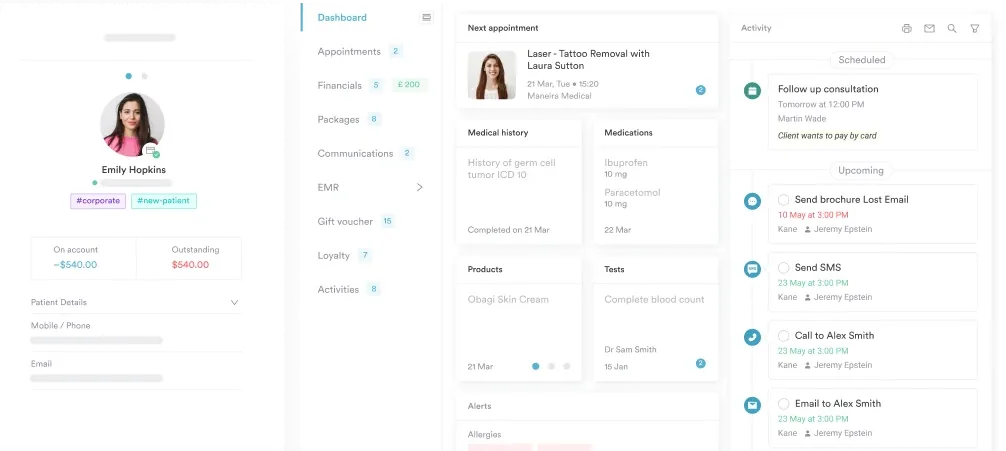
A GP practice platform keeps recurring ear infections and vision changes visible across a patient’s timeline.
H92 covers both otalgia (ear pain) and otorrhea (ear discharge). The H92.1x sub-category isolates otorrhea and uses a fourth character to specify laterality. Understanding the full sibling structure prevents laterality miscoding.
H92.10 is the fallback when the clinician’s note does not specify which ear or ears are affected. Once laterality is documented, H92.10 is no longer appropriate.
The underlying etiology is not embedded in H92.13 itself. Clinicians encounter bilateral ear discharge across several distinct presentations, and the causal code should accompany H92.13 on the claim when documented.
Each of these carries its own ICD-10-CM code. H92.13 captures the presenting symptom, while the underlying condition is sequenced per principal/secondary diagnosis rules in the relevant clinical setting. Practices using claims management software can map both codes simultaneously at the point of documentation.

Billing bilateral otorrhea without clear bilateral confirmation in the medical record is a documentation deficiency. Payers may request records or deny claims when laterality is asserted in the code but not supported in the note.
A complete documentation record supporting H92.13 should include:
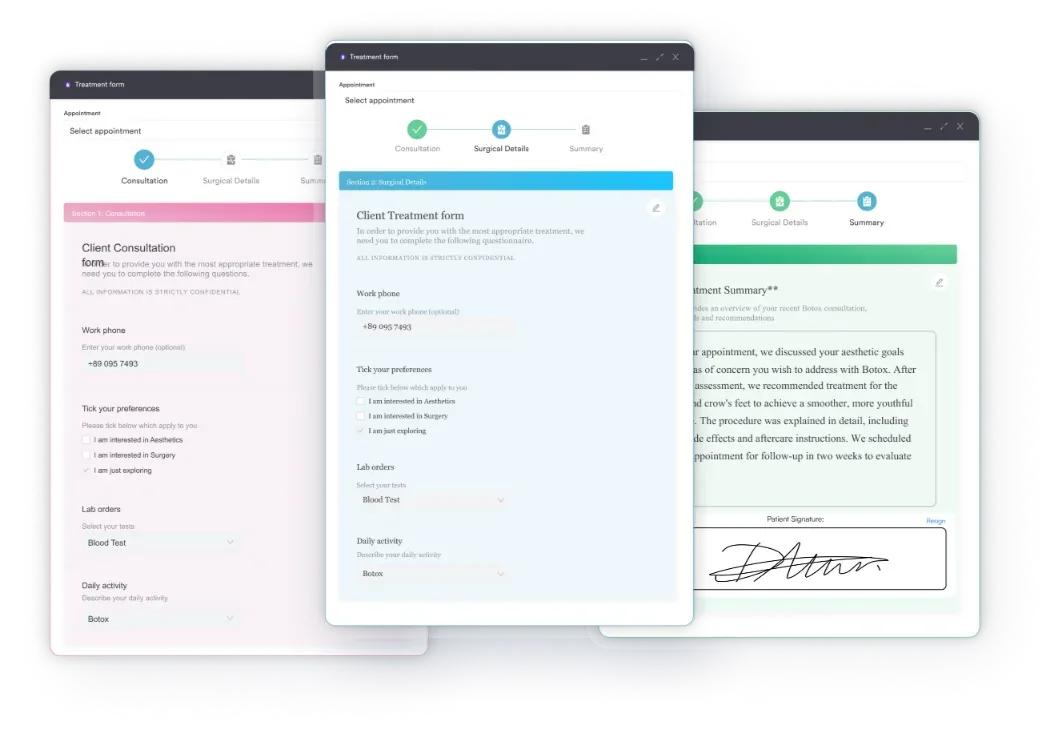
Using digital forms for structured clinical intake can prompt providers to document laterality and discharge character at the point of care, reducing the need for retrospective amendments. Accurate documentation is also central to HIPAA-compliant record-keeping.
Run a periodic audit of H92.10 claims in your practice. Any encounter where the clinical note documents bilateral discharge but the coder submitted H92.10 (unspecified) is a specificity error. Correcting these retroactively for re-submission, where payer rules allow, improves coding quality scores and reduces future documentation queries.
The ICD-10-CM Official Guidelines published by the Centers for Medicare and Medicaid Services (CMS) require coders to use the most specific code supported by the documentation. For otorrhea, that means selecting the correct laterality sub-code rather than defaulting to H92.10.
H92.13 may be used as either a primary or secondary diagnosis. When otorrhea is the reason for the visit, it sequences as principal. When documented as a secondary finding alongside a principal diagnosis, such as chronic suppurative otitis media, it sequences accordingly.
Coders referencing the full code set can use the AAPC ICD-10-CM code lookup to verify the current descriptor and any applicable coding notes.

Pabau helps practices document diagnoses accurately, match ICD-10 codes, and submit clean claims the first time. See how it works for ear, nose, and throat or general practice workflows.

ICD-10 Code H92.13 is a diagnosis code. It pairs with CPT procedure codes that describe what the clinician did during the encounter, and the codes below are commonly associated with bilateral otorrhea presentations. A medical coding cheat sheet covering CPT, ICD-10-CM, HCPCS, and E/M codes helps coders confirm pairings like these quickly.
Payer coverage and prior authorization requirements vary, so verify against individual payer policies before assuming reimbursement. Associated hearing loss, such as H90.3, often accompanies these procedure codes when audiologic assessment is documented alongside the discharge.
These pairings are commonly associated, not mandated. Coverage depends on medical necessity documentation and payer-specific policies. The client record must support both the diagnosis and clinical documentation for the procedure billed in the same encounter.
Coding errors in the H92 family usually fall into two categories: using an unspecified code when laterality is documented, or confusing a symptom code with a causal diagnosis code. The comparison below clarifies when H92.13 applies versus adjacent codes. The WHO maintains the international ICD-10 classification browser with the hierarchical code structure underpinning these distinctions.
When a patient presents with bilateral ear discharge and a known underlying cause such as chronic suppurative otitis media, code both the causal diagnosis (e.g. H66.3×3 for bilateral) AND H92.13 to capture the full clinical picture. Payers evaluating medical necessity benefit from seeing the symptom code alongside the etiology, especially for procedure justification.
Laterality errors in ear discharge coding are largely a documentation workflow problem. When clinicians record findings without a structured prompt for laterality, coders are left with ambiguous notes and default to H92.10. Ophthalmology runs into the same default, where a note describing both corneas still gets H17.00 rather than H17.03. Practices that address documentation at the point of care submit fewer unspecified-code claims.
Pabau’s claims management software integrates ICD-10 code search directly within the clinical workflow, so the treating provider or billing team can assign H92.13 at the point of documentation rather than retrospectively.
Practices managing ENT or general practice patient records can also use Pabau’s client record to maintain longitudinal ear health histories. This makes it straightforward to identify recurring bilateral discharge presentations and code them consistently across encounters. Whether it’s an ENT group or a broader wellness practice, consistent coding standards across multiple locations reduce variance that can trigger payer audits. Reworking denied claims one at a time keeps cash moving but never lowers the denial rate.
Practices interested in how structured medical forms close documentation shortfalls can explore how intake and assessment form design reinforces laterality capture as a standard clinical habit. The workflow integration between clinical notes and billing is what shapes coding accuracy in practice management software more broadly.
Bilateral otorrhea is a specific, documentable diagnosis that carries its own dedicated code. The most common error is billing H92.10 (unspecified) when the note already confirms both ears are involved, which reduces coding specificity and can slow reimbursement.
When documentation supports bilateral involvement, ICD-10 Code H92.13 is the correct, billable choice. Pabau’s claims management software supports practices in matching diagnosis codes to procedures accurately at the point of documentation. To see how Pabau handles ICD-10 coding and billing workflows in a live practice setting, book a demo.

Want to see documentation specificity play out in another specialty? M14.88 covers vertebral arthropathy tied to a systemic disease, where omitting the underlying condition creates the same coding problem as defaulting to unspecified otorrhea.
Think every denial traces back to documentation? A4673 is usually denied for a billing-party reason instead: the cost is already bundled into a separate payment structure.
Need a refresher on CPT and ICD-10 pairing accuracy? 01958 walks through how anesthesia claims get denied when adjacent procedure codes are selected incorrectly.
Looking for another symptom-driven billable code? I5A covers non-ischemic myocardial injury, a diagnosis code that, like H92.13, captures a clinical finding rather than its root cause.
ICD-10 Code H92.13 is the billable ICD-10-CM diagnosis code for otorrhea, bilateral, meaning discharge or drainage from both ears. It is a laterality-specific code within the H92 category (Otalgia and effusion of ear) and became effective October 1, 2025 under the 2026 ICD-10-CM edition. Use it when the clinical record explicitly documents bilateral ear discharge.
Yes, H92.13 is a fully billable and specific ICD-10-CM code valid for claim submission. It does not require a more specific sub-code and can be used as either a primary or secondary diagnosis depending on the clinical context and sequencing rules.
H92.10 is for otorrhea when laterality is unspecified in the record. H92.11 is for right ear otorrhea only. H92.13 is for bilateral otorrhea (both ears). When a clinician documents bilateral ear discharge, H92.13 is the required code. Using H92.10 when bilateral laterality is documented is a coding specificity error.
The medical record must explicitly state bilateral involvement, either using the word “bilateral” or documenting ear findings for both right and left ears separately. The character of discharge, duration, and any associated symptoms should also be documented. Coder-inferred laterality without clinician attestation is not sufficient to support H92.13.
Common causes include chronic otitis media with tympanic membrane perforation, bilateral otitis externa, post-tympanostomy tube drainage, cholesteatoma, and autoimmune conditions affecting the ear. Each underlying cause carries its own ICD-10-CM code that should be assigned alongside H92.13 when documented.
Use H92.13 whenever the clinical record documents that both ears are affected. H92.10 is only appropriate when laterality is absent from the documentation. ICD-10-CM guidelines require the most specific code supported by the record, so defaulting to H92.10 when bilateral is documented is a specificity error that may invite payer documentation requests.