ICD-10 Code S42.444P: Medial epicondyle fracture, right humerus
ICD-10 Code S42.444P: full descriptor and code validity ICD-10 Code S42.444P car...

Last Updated: Oct 13, 2026
Billable Code Specific Code
H50.30 is the billable ICD-10-CM code for unspecified intermittent heterotropia.
Let Pabau's smart automation suggest the right codes, reduce claim denials, and keep your practice compliant—effortlessly.
Automate repetitive tasks and focus on what matters most—your patients.
Reduce coding errors and ensure compliance with the latest regulations.
Clean claims, fewer denials, and faster reimbursements.
Powerful insights and reporting to help your practice thrive.
HIPAA compliant SOC 2 certified GDPR-compliant Trusted by 4,000+ clinics worldwide

ICD-10 Code H50.30 describes unspecified intermittent heterotropia, a billable FY2026 diagnosis code effective October 1, 2025.
Use H50.30 only when documentation does not specify whether the deviation is esotropia or exotropia, or which eye is affected.
Sibling codes H50.31x (intermittent monocular esotropia) and H50.32x (intermittent alternating esotropia) should be used when the type and laterality are documented.
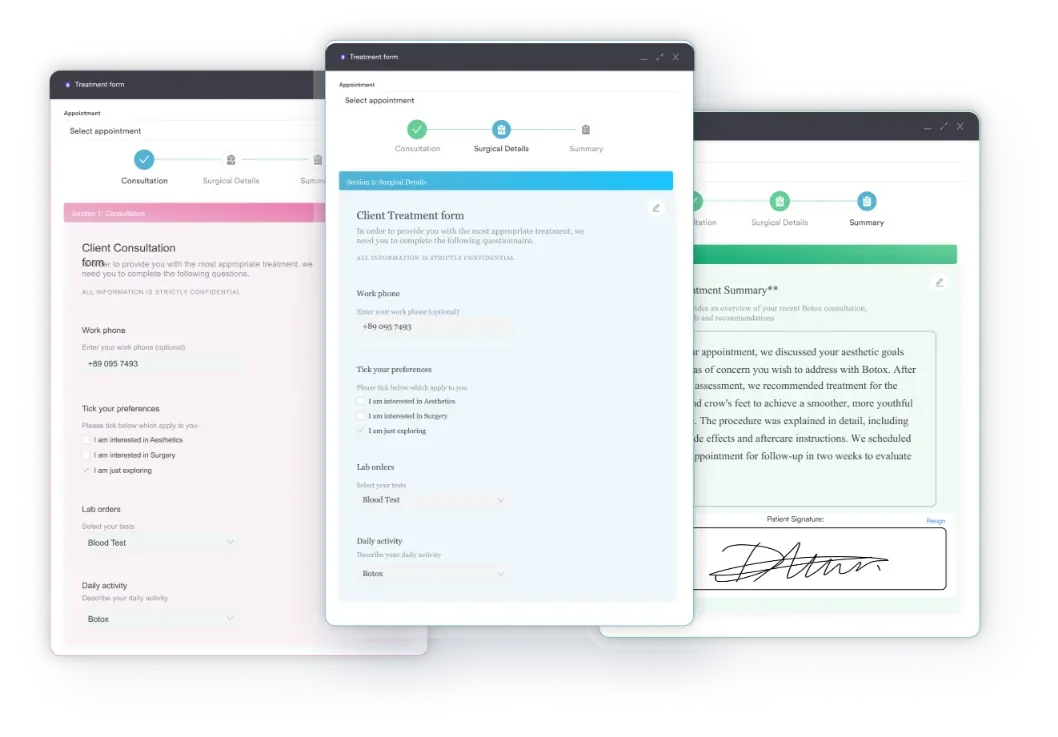
Practice management software like Pabau, along with its claims management tools and digital forms, helps ophthalmology and optometry practices document H50.30 accurately and submit clean claims.
ICD-10 Code H50.30 is a billable, specific ICD-10-CM diagnosis code for unspecified intermittent heterotropia. It is valid for use in all HIPAA-covered transactions from October 1, 2025 through September 30, 2026 (FY2026). The code is found in Chapter 7 of ICD-10-CM (Diseases of the eye and adnexa, H00-H59), within the H50 Strabismus category.
Practices relying on ophthalmology claims management workflows benefit from having this code clearly mapped in their EHR templates.

Understanding where ICD-10 Code H50.30 sits in the classification tree matters for auditors reviewing specificity requirements. The full path from chapter to code is as follows.
The CMS ICD-10-CM code files confirm H50.30 falls under the H49-H52 block covering disorders of ocular muscles and binocular movement. Strabismus frequently co-presents with developmental motor conditions such as F82, so coders should apply the same sequencing logic across both diagnoses.
Heterotropia is a manifest ocular deviation, meaning the eyes are visibly misaligned under normal viewing conditions. “Intermittent” means the misalignment does not occur constantly. The eye periodically drifts out of alignment then returns to correct position, often triggered by fatigue, illness, or visual stress.
“Unspecified” in H50.30 means the clinical record does not identify the direction of the drift (inward or outward) or the laterality (which eye drifts). This is a common scenario in preliminary assessments or referral documentation where a full orthoptic workup has not yet been completed.
Pediatric coding shows the same pattern with codes like R62.50, an unspecified code used before a full developmental workup is complete.
A GP practice platform keeps recurring ear infections and vision changes visible across a patient’s timeline.
One of the most common strabismus coding errors is selecting a heterotropia code when the patient actually has a heterophoria, or vice versa. The distinction is clinical, not just terminological. According to the AAPC ICD-10-CM coding resources, heterotropia and heterophoria are coded in separate subcategories within H50.
Selecting the wrong family creates a downstream problem: a heterophoria code paired with a surgery CPT will trigger a medical necessity audit. Document the cover test findings clearly in the clinical record before assigning either code.
H50.30 is the nonspecific “catch-all” within the H50.3 intermittent heterotropia subcategory. When the clinical record documents the direction and laterality of the deviation, a more specific sibling code is required. Payers and auditors will scrutinize H50.30 on claims where detailed orthoptic examination notes exist but a specific subcode was not assigned.
H50.30 is appropriate when documentation genuinely does not support a more specific assignment. Legitimate use cases include:
Strabismus is also common secondary to cerebral palsy. In those cases, sequencing rules for principal vs. secondary diagnoses apply.
The ICD-10-CM tabular list for H50.30 carries several important coding notes. Per the CDC ICD-10-CM web tool, these notes affect code selection and sequencing.
When strabismic amblyopia (H53.03x) is documented alongside H50.30, assign both codes. Amblyopia is a separately billable condition, and missing it on the claim leaves revenue on the table. Check that the clinical note documents the impact on visual acuity in the affected eye to support the amblyopia code.
ICD-10 Code H50.30 functions as the supporting diagnosis for strabismus procedures. Payers require a documented H50.3x code on claims for the following CPT codes. Vision therapy coverage under H50.30 is payer-dependent and should be verified prior to treatment.
H50.30 is a recognized qualifying diagnosis for vision therapy (CPT 92065). However, coverage for orthoptic training is highly payer-dependent. Medicare traditionally does not cover vision therapy for strabismus in adults. Medicaid policies vary by state. Many commercial plans require documented failure of a trial of patching or prism correction before authorizing CPT 92065.
For optometry practices, the billing difference between ophthalmology and optometry for CPT 92065 lies in payer credentialing requirements. Always verify that the billing provider is recognized by the payer for this service code before submitting. Practices using digital intake forms can build strabismus-specific screening templates that capture the documentation needed for prior authorization at the point of the initial evaluation. The billing cycle for one claim can run weeks, and most of that time is spent waiting on a payer. Practices outside a payer network hand the claim work to the patient, so a superbill form has to be complete.
Vision therapy authorizations follow the same payer logic seen across other rehabilitative disciplines: practices running on physical therapy EMR software face nearly identical documentation demands before insurers approve a therapy course.
Claims carrying ICD-10 Code H50.30 alongside a surgical or therapeutic CPT code will face payer scrutiny for medical necessity. Unlike a straightforward office visit claim, procedural claims require the clinical record to demonstrate that treatment is warranted.
Reviewing HIPAA compliance requirements for medical offices alongside coding guidelines helps practices understand how documentation standards intersect with claims validation. The following elements should be present in the clinical record before assigning H50.30 on a procedural claim.
Practices that standardize their ophthalmology encounter documentation benefit from consistent patient records that contain all required clinical elements in the same location each time. This significantly reduces the administrative burden when a payer requests records to support a strabismus surgery claim.


Pabau helps eye care practices build structured documentation templates, track diagnosis codes, and submit clean claims. See how it works for your practice.

Practices migrating historical records or conducting retrospective claims audits need to map legacy ICD-9-CM codes to current ICD-10-CM equivalents. The standard General Equivalence Mappings (GEMs) crosswalk files, maintained by CMS, provide the following conversions for the intermittent heterotropia family. These crosswalk mappings may be verified against AAPC’s code lookup tool or directly through CMS GEMs documentation.
Note that ICD-10-CM introduced laterality for monocular exotropia (H50.311 right, H50.312 left) that did not exist in ICD-9-CM. EHR systems migrating from legacy databases may default to H50.30 on converted records. Review historical converted records and update to the appropriate specific code where the underlying clinical documentation supports it.
Correct documentation of ICD-10 Code H50.30 begins before the coder opens the chart. The clinical note is the source of truth. These practical steps reduce the risk of using H50.30 when a more specific code is available, and protect the claim when H50.30 is genuinely the right choice.
Good clinical documentation best practices apply equally to ophthalmology coding as to any other specialty.
Practices that manage patient data consistently across intake and examination workflows tend to produce more reliable documentation, which directly reduces rework on strabismus claims.
Build a strabismus examination template in your EHR that includes mandatory fields for cover test result, prism measurement, and which eye is affected. When coders see these fields populated, they can assign the most specific code immediately rather than defaulting to H50.30 as a fallback.
Intermittent heterotropia claims fail audits most often because H50.30 is used as a default rather than a deliberate coding choice. The code is legitimate when the clinical record genuinely cannot support laterality or direction, but it demands scrutiny on every claim before it reaches the payer.
Pabau helps ophthalmology and optometry practices build structured examination templates, track diagnosis code assignments across patient records, and route clean claims. If your practice wants to reduce strabismus claim rework, book a demo to see how it works.

Need CPT context for the exam behind a strabismus diagnosis? CPT code 92004 covers the comprehensive ophthalmological exam that often precedes a heterotropia diagnosis.
Coding a co-occurring lacrimal condition? ICD-10 Code H04.9 covers unspecified lacrimal system disorders that can present alongside heterotropia in the same encounter.
Confirming the correct autism diagnosis code? Autistic disorder F84.0 guide confirms F84.0 as the billable code clinicians use to classify autism spectrum diagnoses.
ICD-10 Code H50.30 is a billable diagnosis code for unspecified intermittent heterotropia, used when the clinical record documents an intermittent manifest strabismus but does not specify the direction (esotropia or exotropia) or the laterality (which eye). It is valid for all HIPAA-covered transactions in FY2026.
Yes. H50.30 is a specific, billable ICD-10-CM code effective October 1, 2025 through September 30, 2026. It can be reported as a principal or secondary diagnosis on HIPAA-covered claims.
Heterotropia (H50.3x) is a manifest ocular deviation visible under binocular conditions, whereas heterophoria (H50.5x) is a latent deviation that only appears when fusion is disrupted by a cover test. The clinical distinction drives the code family: a tropia on cover test supports H50.3x; a phoria on alternating cover test supports H50.5x. Selecting the wrong family creates a medical necessity conflict on surgical claims.
Use H50.30 only when the clinical record does not document whether the deviation is esotropia or exotropia, and does not specify which eye is affected. When those details are documented, use H50.311 or H50.312 for monocular esotropia (right or left eye) or H50.32 for alternating esotropia. Assigning H50.30 when more specific information exists is a coding error that can trigger a specificity audit.
Strabismus surgery CPT codes 67311 (one horizontal muscle) and 67312 (two horizontal muscles) are most commonly paired with H50.30. CPT 92065 for orthoptic/pleoptic training (vision therapy) also uses H50.30 as a qualifying diagnosis, though coverage for vision therapy varies significantly by payer and plan type.
The legacy ICD-9-CM code 378.20 (Intermittent heterotropia, unspecified) crosswalks to H50.30 in the standard CMS General Equivalence Mappings. For EHR migration or retrospective claims review, records coded with 378.20 before October 2015 should be updated to H50.30 or a more specific H50.3x code where the clinical documentation supports greater specificity.