



HCPCS code E0198: Water pressure pad billing guide
HCPCS code E0198 is a water pad for a standard mattress HCPCS code E0198 is the ...

Last Updated: Oct 13, 2026

CPT code 01958 reports anesthesia services for the external cephalic version (ECV) procedure, where an anesthesiologist or CRNA provides care during fetal repositioning from breech to vertex presentation.
The code carries 5 base units. Total reimbursement is calculated as (base units + time units + qualifying circumstance units) multiplied by the payer’s anesthesia conversion factor.
Modifier AA (personally performed by the anesthesiologist) is required for 100% reimbursement. CRNA and medical direction scenarios use QX, QZ, QK, or QY modifiers, each with distinct payment implications.
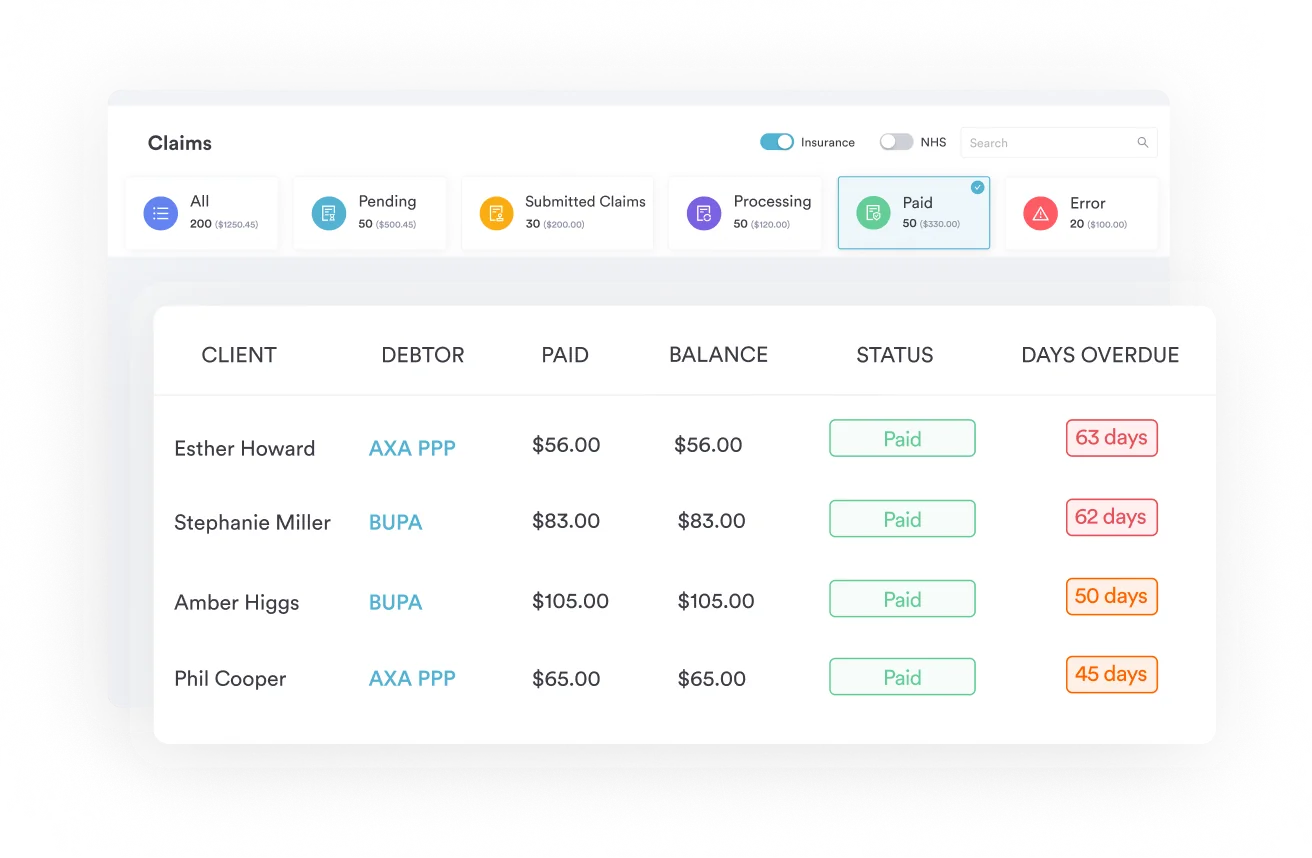
Pabau’s claims management software captures start/stop times and provider identifiers at the point of care, reducing the missing documentation that causes the most common CPT 01958 claim denials.
CPT code 01958 reports anesthesia services for an external cephalic version (ECV), the procedure that repositions a fetus from breech or transverse presentation to head-down before delivery. The American Medical Association (AMA), which maintains the CPT code set, places 01958 within the obstetric anesthesia range spanning 01958 through 01969, covering the full spectrum of labor and delivery anesthesia services.
External cephalic version is a procedure performed typically between 36 and 38 weeks of gestation to reposition a fetus from breech or transverse presentation into a head-down (vertex) position. Successful version reduces the likelihood of cesarean delivery.
Neuraxial anesthesia (spinal or epidural) has become a widely adopted adjunct to ECV. It relaxes uterine tone, reduces maternal discomfort, and may improve success rates, though specific efficacy claims should be verified against current peer-reviewed obstetric literature. An anesthesiologist or Certified Registered Nurse Anesthetist (CRNA) must be present throughout the procedure, which is what generates the CPT code 01958 service.
OB-GYN and maternal-fetal medicine practices perform most ECVs.
Anesthesia billing does not follow the standard E/M or procedure code model. Instead, reimbursement is calculated from three components combined and multiplied by a payer-specific conversion factor, as confirmed by CMS physician fee schedule.
The formula: (Base Units + Time Units + Qualifying Circumstance Units) x Conversion Factor = Allowed Amount
CPT code 01958 carries approximately 5 base units. Base units reflect the relative complexity and risk of the anesthesia service and are set by the American Society of Anesthesiologists (ASA) Relative Value Guide, not the AMA.
Always verify the current base unit value against the published ASA guide or AAPC’s CPT lookup before submitting claims, as values can change.
Under Medicare, one time unit equals 15 minutes of anesthesia time. This is confirmed in the CMS Medicare Claims Processing Manual, Chapter 12. Anesthesia time begins when the anesthesia provider starts preparing the patient and ends when the provider is no longer in personal attendance.
To look up current RVU and reimbursement figures for CPT code 01958, use the FastRVU 2026 RVU lookup tool, which pulls from published CMS data.
Anesthesia billing runs smoother when medical practice management software ties time units, modifiers, and charges to the visit record.
The most common reason for CPT code 01958 claim denials is a missing or incorrect modifier. Every anesthesia claim requires a provider-status modifier that identifies who performed the service and in what capacity. Billing without a modifier, or using the wrong one for the provider’s role, triggers automatic denial with most payers.
Medical direction (QK/QY) requires the anesthesiologist to meet CMS’s seven-step requirements, including performing the pre-anesthesia evaluation personally and being present at induction and emergence. Medical supervision (AD) applies when an anesthesiologist oversees more than four concurrent cases and does not meet those seven steps.
The payment difference is significant: Medical direction pays 50% per directed case, while medical supervision under AD pays only 3 base units total regardless of case duration.
CRNA independent billing using modifier QZ is only available in states that have opted out of the Medicare physician supervision requirement. Scope of practice varies by state. Always verify your jurisdiction before billing QZ.
For practices managing complex anesthesia staffing models.

Pabau captures start and stop times, provider identifiers, and pre-anesthesia notes at the point of care. More complete documentation means fewer denied claims for complex codes like CPT 01958.

Qualifying circumstances are add-on codes that reflect unusual conditions increasing the character and complexity of the anesthesia service. They add units to the base + time calculation. Incorrect use of qualifying circumstances is flagged as an OIG audit risk area, so apply them only when documentation clearly supports the condition.
Note that 99100 (extreme age) applies to patients under age 1 or over 70. In a standard obstetric context, this is uncommon, but may apply in documented cases of advanced maternal age at the extreme end of the spectrum. Always verify specific payer policies before billing qualifying circumstances, as coverage varies by insurer.
Medicare reimbursement for CPT code 01958 is calculated using the base + time + qualifying circumstances formula, multiplied by the Medicare anesthesia conversion factor (CF). The CF is updated annually by CMS and varies by geographic region through the Geographic Practice Cost Index (GPCI) adjustment.
Because the CF changes each calendar year, always verify the current figure directly with CMS before quoting expected reimbursement to your practice.
For the current Medicare anesthesia conversion factor, consult CMS’s physician fee schedule search tool directly. Commercial payer conversion factors are typically negotiated separately and are often higher than Medicare rates.
Anesthesia claims for CPT code 01958 are typically submitted on the CMS-1500 form, with time units, modifiers, and qualifying circumstance codes captured in the appropriate fields. An itemized superbill keeps those same fields in one place: dates, codes, charges, and provider identifiers.
Inadequate documentation is the second leading cause of CPT code 01958 claim denial after modifier errors. Every element below must appear in the anesthesia record to support billing and withstand payer audit. Using structured medical forms reduces the risk of missing fields during a busy labor and delivery shift. Downcoding is as common as upcoding, and both trace back to how the decision-making level was recorded.
Using digital intake forms that auto-capture timestamps alongside patient data is one practical way to prevent the missing documentation that creates the most billing risk for CPT 01958 claims. Practices that rely on handwritten anesthesia records frequently struggle to reconstruct accurate start/stop times after the fact.
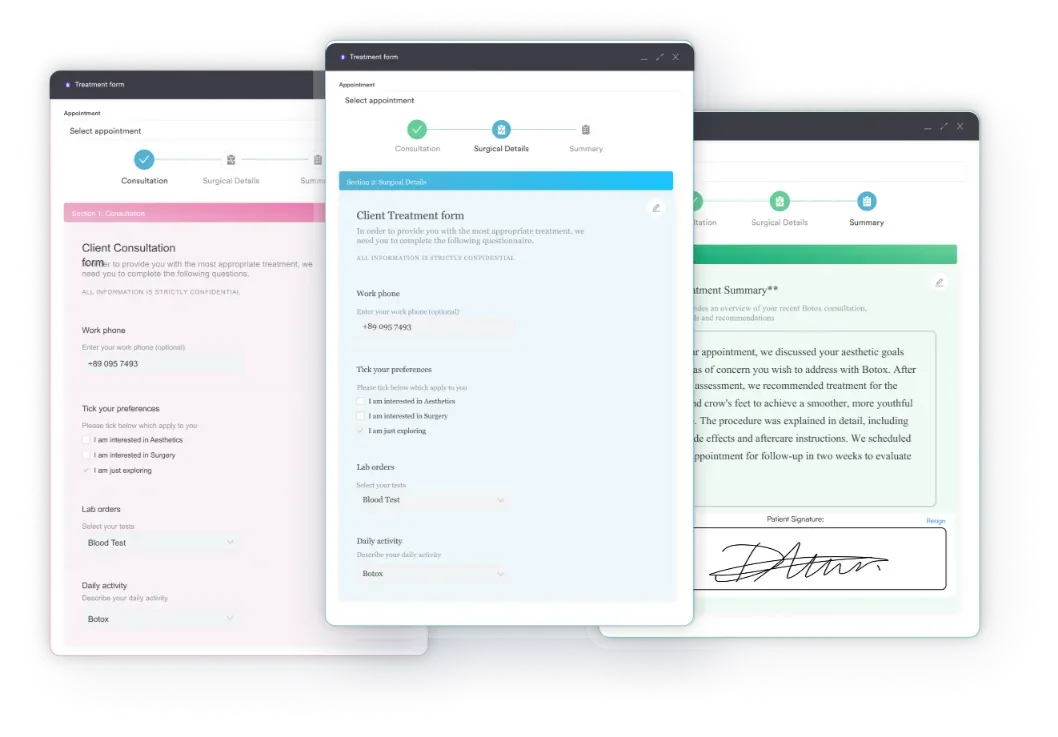
Most CPT code 01958 denials trace back to a small, recurring set of errors.
Run a monthly audit of your CPT 01958 claims against the modifier table above. Flag any claim submitted without a provider-status modifier and any claim where the modifier does not match the staffing model documented in the anesthesia record. Most anesthesia groups find 3-5% of their obstetric claims have a correctable modifier error.
Selecting the correct code within the 01958-01969 range depends on the specific obstetric procedure performed. These codes are not interchangeable. The table below covers the most commonly used codes in the range, including the three most frequently confused with CPT code 01958. For a broader reference on procedure billing.
The most common code confusion involves 01958 and 01960. Both describe anesthesia in the obstetric context, but 01958 is specifically for the version procedure before delivery.
If the ECV converts to an emergency cesarean, the correct coding would transition to the appropriate cesarean delivery code. Billing 01960 for an ECV case is a code selection error that is frequently flagged in payer audits.
This base-and-time billing model isn’t unique to obstetric anesthesia. Codes like 01932 follow the identical base-plus-time-plus-conversion-factor formula for entirely different procedures.
Standalone coding reference tools like AAPC and MDClarity provide useful code lookup data but have no integration with the clinical documentation where anesthesia billing evidence is created. The disconnect between the anesthesia record and the billing system is where most CPT code 01958 claims fail.
Practice management software like Pabau closes that disconnect. Its claims management software captures start and stop times alongside provider identifiers within the clinical workflow, rather than reconstructing anesthesia time after the fact from memory or handwritten notes.
This is particularly valuable for medical direction scenarios (QK/QY + QX pairings), where both the supervising anesthesiologist and the CRNA must have their roles captured accurately for the claim to pay correctly.
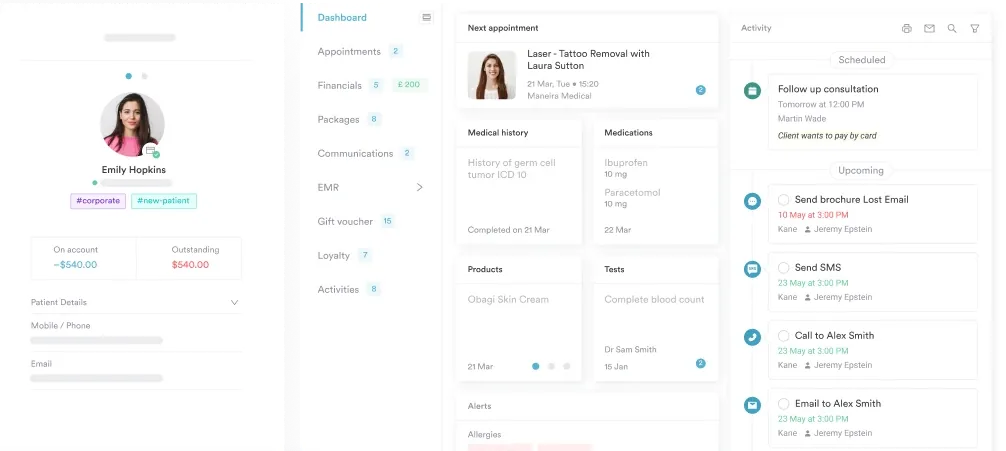
The clinical records management tools in Pabau support EHR integration, so the pre-anesthesia evaluation, intraoperative monitoring data, and post-anesthesia note all live in one auditable record.
Practices that also use paperless clinical documentation report fewer missing-record denials on complex time-based codes like CPT 01958.
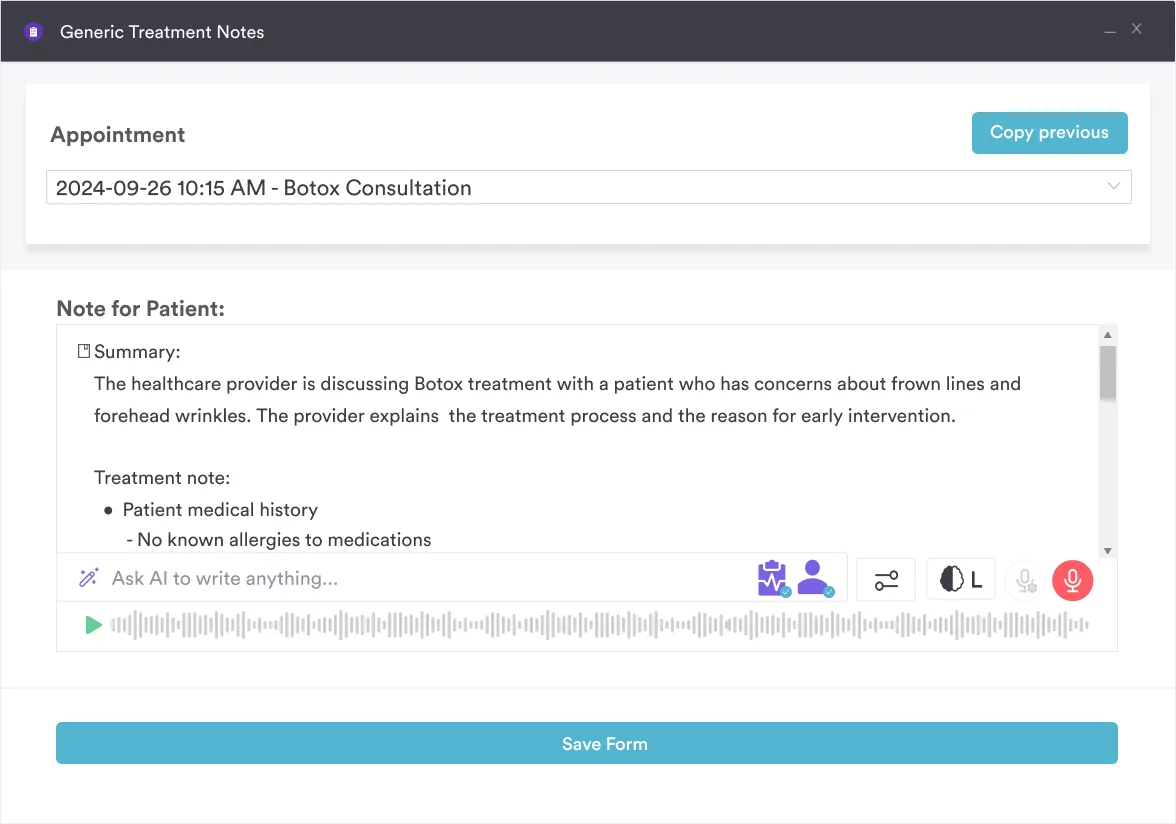
For practices running a reporting review, medical dictation tools integrated with structured note templates ensure the narrative component of the pre-anesthesia evaluation meets payer documentation standards without adding time to the provider’s workflow.
CPT code 01958 claims fail most often for two reasons: The wrong modifier or missing time documentation. Both are preventable with the right systems in place before the anesthesiologist leaves the room.
Pabau’s integrated documentation and claims management tools capture the exact data points that make or break CPT code 01958 claims: Start/stop times, provider roles, and pre-anesthesia evaluation records. To see how Pabau supports obstetric and anesthesia-adjacent billing workflows, book a demo with the team.

Billing for regional nerve block anesthesia? 01772 covers the base and time unit structure for upper extremity nerve block procedures.
Need the code for anesthesia during cardiac catheterization? 01522 breaks down billing for this diagnostic anesthesia service.
Looking for hernia repair anesthesia billing details? 00630 explains the qualifying circumstances that affect reimbursement.
CPT code 01958 is an anesthesia procedure code that reports anesthesia services provided during an external cephalic version (ECV), a procedure that manually repositions a breech or transverse fetus to a head-down position before delivery. It falls within the obstetric anesthesia range 01958-01969 and is billed using a base unit plus time unit formula.
CPT code 01958 carries approximately 5 base units, as widely cited in the ASA Relative Value Guide and billing reference sources. Always verify the current base unit value against the published ASA guide or the CMS fee schedule for the applicable fiscal year, as values can change with annual updates.
CPT code 01958 requires a provider-status modifier on every claim. Modifier AA applies when an anesthesiologist personally performs the service. Modifier QX is used by a CRNA under medical direction. Modifier QZ applies to an independent CRNA (state opt-out required). The supervising anesthesiologist uses QK for 2-4 directed cases or QY for one directed CRNA. Modifier AD applies when supervising more than four concurrent cases.
CPT code 01958 reports anesthesia specifically for the external cephalic version procedure, while CPT code 01960 reports anesthesia for vaginal delivery only. These are different clinical events. Billing 01960 for an ECV case is a code selection error that is commonly flagged in payer audits.
A CRNA can bill CPT code 01958 independently using modifier QZ, but only in states that have opted out of the Medicare physician supervision requirement. In states that have not opted out, the CRNA must bill under medical direction using modifier QX, with the supervising anesthesiologist also billing the case using QK or QY. Scope of practice varies by state. Verify current state law before billing QZ.
CPT code 01967 describes neuraxial labor analgesia and anesthesia for a planned vaginal delivery (the labor epidural). It is distinct from CPT code 01958, which covers anesthesia for the external cephalic version procedure. If a labor epidural is subsequently converted to surgical anesthesia for a cesarean section, CPT code 01968 is reported as an add-on to 01967.



