ICD-10 Code S42.444P: Medial epicondyle fracture, right humerus
ICD-10 Code S42.444P: full descriptor and code validity ICD-10 Code S42.444P car...

Last Updated: Oct 13, 2026
Billable Code Specific Code
H82.2 is the billable ICD-10-CM code for vertiginous syndromes in diseases classified elsewhere, left ear.
Let Pabau's smart automation suggest the right codes, reduce claim denials, and keep your practice compliant—effortlessly.
Automate repetitive tasks and focus on what matters most—your patients.
Reduce coding errors and ensure compliance with the latest regulations.
Clean claims, fewer denials, and faster reimbursements.
Powerful insights and reporting to help your practice thrive.
HIPAA compliant SOC 2 certified GDPR-compliant Trusted by 4,000+ clinics worldwide

ICD-10 Code H82.2 is a billable diagnosis code for vertiginous syndromes in diseases classified elsewhere, specifically the left ear
Always assign an additional code for the underlying condition – Meniere’s disease (H81.0x) or labyrinthitis (H83.0x) – when billing H82.2
Excludes1 applies to epidemic vertigo (A88.1): never assign H82.2 when epidemic vertigo is the documented cause
Pabau’s claims management software flags dual-coding requirements at point of entry, helping reduce denials for manifestation codes like H82.2
ICD-10 Code H82.2 identifies vertiginous syndromes in diseases classified elsewhere, left ear. It is a billable/specific ICD-10-CM code — a complete 4-character code that can be used directly for reimbursement purposes, with no additional 5th or 6th character required. The CDC/NCHS ICD-10-CM web tool confirms the 2026 edition of H82.2 became effective on October 1, 2025.
The phrase “diseases classified elsewhere” is the critical distinction. H82.2 is a manifestation code: it describes a symptom (vertigo) that arises as part of another, separately classified disease. The underlying disease must always be coded first. Coders who assign H82.2 alone, without the companion etiology code, will routinely see claim rejections.
The ICD-10-CM Tabular List does not include any Applicable To annotations under H82.2. Per the CDC/NCHS ICD-10-CM web tool, the only official instructional notes attached to H82.2 are inherited from its parent category, H82: a “Code First: underlying disease” note and a Type 1 Excludes note for epidemic vertigo (A88.1). There is no separate annotation naming specific etiologies.
The Code First convention means H82.2 can never be the lead diagnosis on a claim: whatever disease is producing the left-ear vertiginous syndrome must be coded first, with H82.2 following as the manifestation code. Two of the most common qualifying underlying diseases are:
These are clinical examples of underlying diseases that qualify for the Code First pairing, not an exhaustive or officially annotated list. Any confirmed disease classified elsewhere that produces left-ear vertiginous syndrome can pair with H82.2, provided it is separately coded first.
Other manifestation codes.
H82 is the non-billable parent code. It requires a 4th character to specify laterality. Assigning H82 alone will result in a payer rejection because it is not billable at the 3-character level. Select the correct sibling based on which ear is documented in the clinical record.
Documentation rule: audiologists and ENT clinicians should specify laterality in every encounter note. Selecting H82.9 (unspecified) is valid only when the clinical record genuinely does not document which ear is affected. Coders should query the provider before defaulting to unspecified, because payers scrutinize non-specific codes during audits. Good clinical record documentation reduces the need to use unspecified codes.
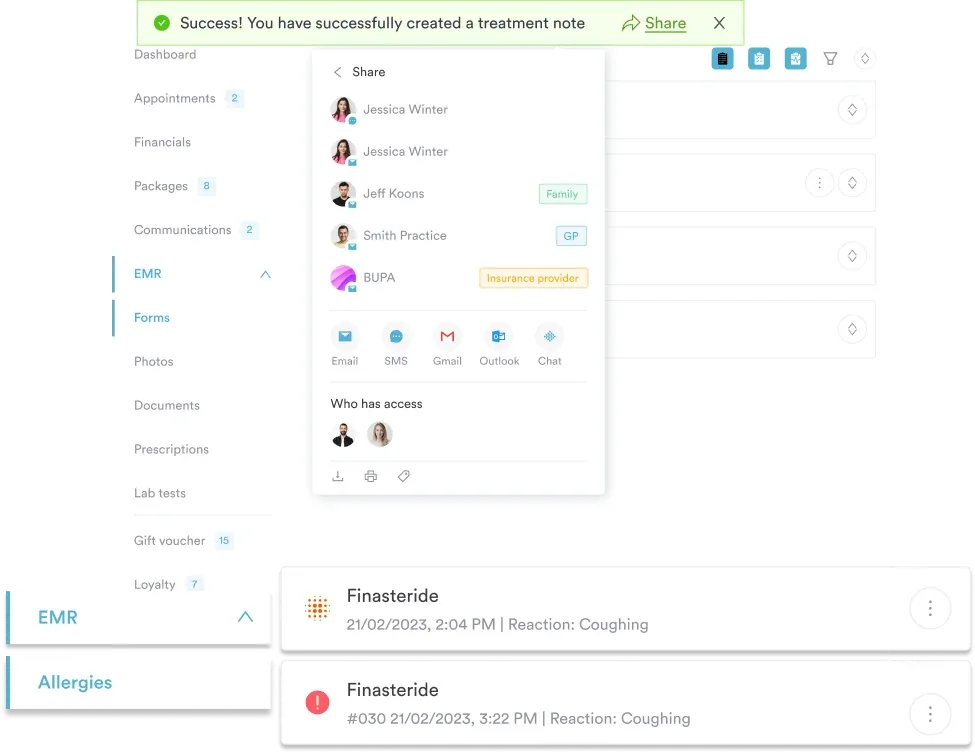
Good practice management software for medical teams keeps hearing and vision follow-ups booked and coded correctly.
Under ICD-10-CM coding conventions, H82.2 carries a “Code First: underlying disease” instruction. This etiology/manifestation convention requires coders to always assign both the underlying disease code and H82.2 together — H82.2 is never submitted alone. Claims that carry H82.2 without an etiology code are clinically incomplete and will typically be denied.
Common dual-coding pairs:
Sequencing matters too. Per the AAPC ICD-10-CM coding guidance, etiology/manifestation pairs follow a strict rule: list the etiology code first, then the manifestation code. Reversing the sequence can trigger editing software flags even when both codes are correct.
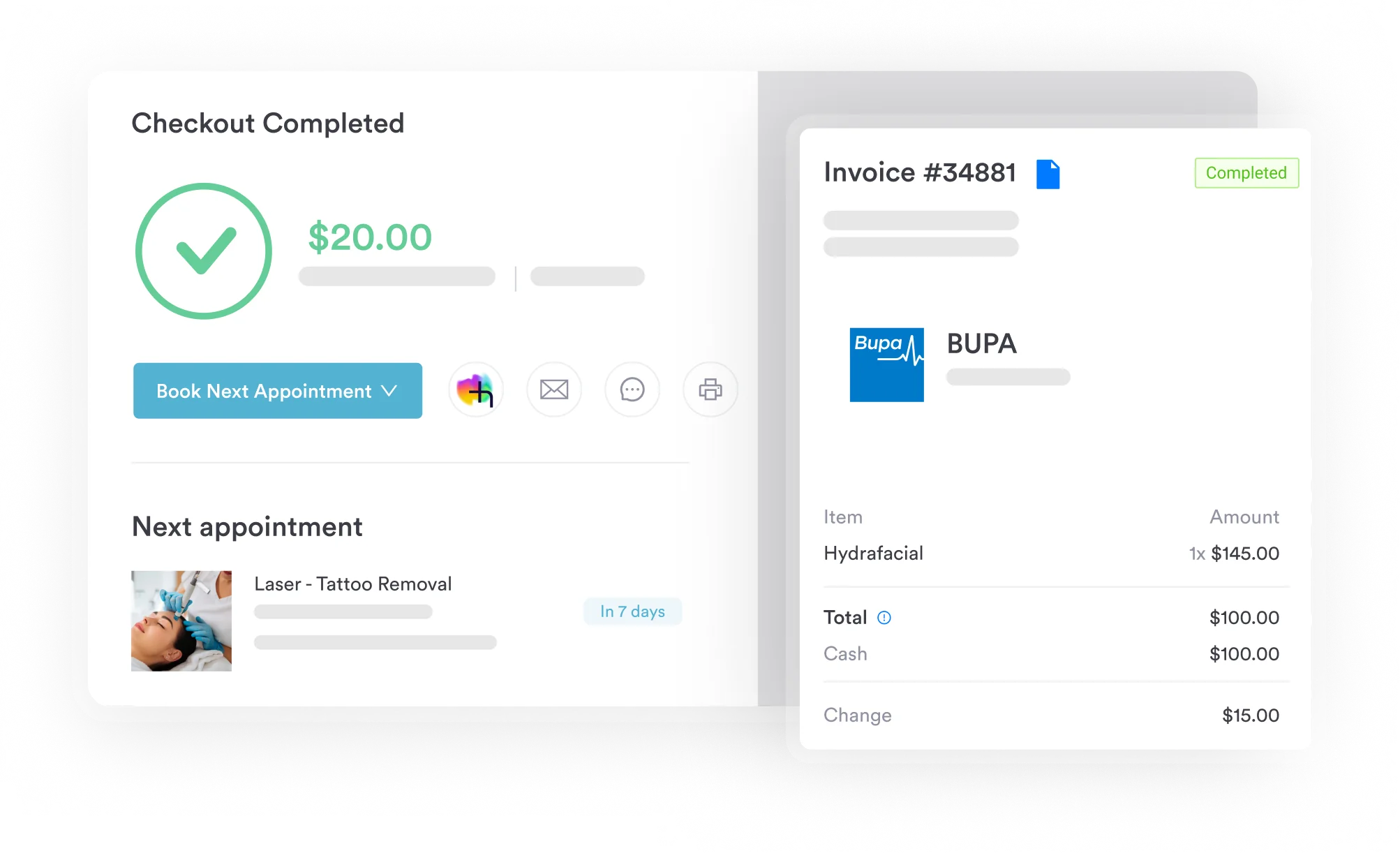
Flag H82.x codes in your billing workflow as requiring a companion etiology code. A simple scrubbing rule that checks for an H81.x or H83.x paired code before H82.2 can submit catches the most common denial trigger before the claim leaves the practice.
The H82 category carries one Excludes1 note that applies to all H82.x sibling codes, including ICD-10 Code H82.2:
There is no Excludes2 note directly on H82.2. Meniere’s disease codes (H81.0x) are not excluded from use with H82.2 — they are the intended etiology pair. The distinction matters because Meniere’s disease is separately classified in block H81 (disorders of vestibular function).
H82.2 captures the vertigo manifestation of that disease, while H81.0x captures the disease itself. Both apply simultaneously. The same etiology/manifestation convention shows up in E84.8, another code that pairs a symptom with its underlying disease across chapters.
Several ICD-10-CM codes describe vertigo or inner-ear dizziness. The table below maps the most commonly confused codes, helping coders select the correct one based on clinical context. Per the CDC/NCHS ICD-10-CM web tool, each code occupies a distinct clinical category within the US-specific ICD-10-CM tabular list. The Medicare Benefits Schedule sets its own item structure, so this US-specific code has no direct Australian counterpart.
Common mistake: assigning R42 (dizziness) alongside H82.2 when H82.2 already describes the vestibular symptom. R42 is a symptom code – use it only when no confirmed diagnosis exists. Once a vertiginous syndrome secondary to a classified disease is documented, H82.2 replaces R42. ENT and audiology practices using specialist EMR software can configure code libraries to surface the correct pairing automatically.
Payers auditing H82.2 claims look for four elements in the clinical record. Missing any one of them can trigger denial or post-payment recoupment.
Practices using digital intake forms and structured encounter templates can pre-populate laterality and confirm diagnosis fields, so nothing is missing by the time the note closes. Audiology and speech therapy practices handling vestibular referrals benefit most from this setup, since laterality gets captured once and reused across every downstream code.
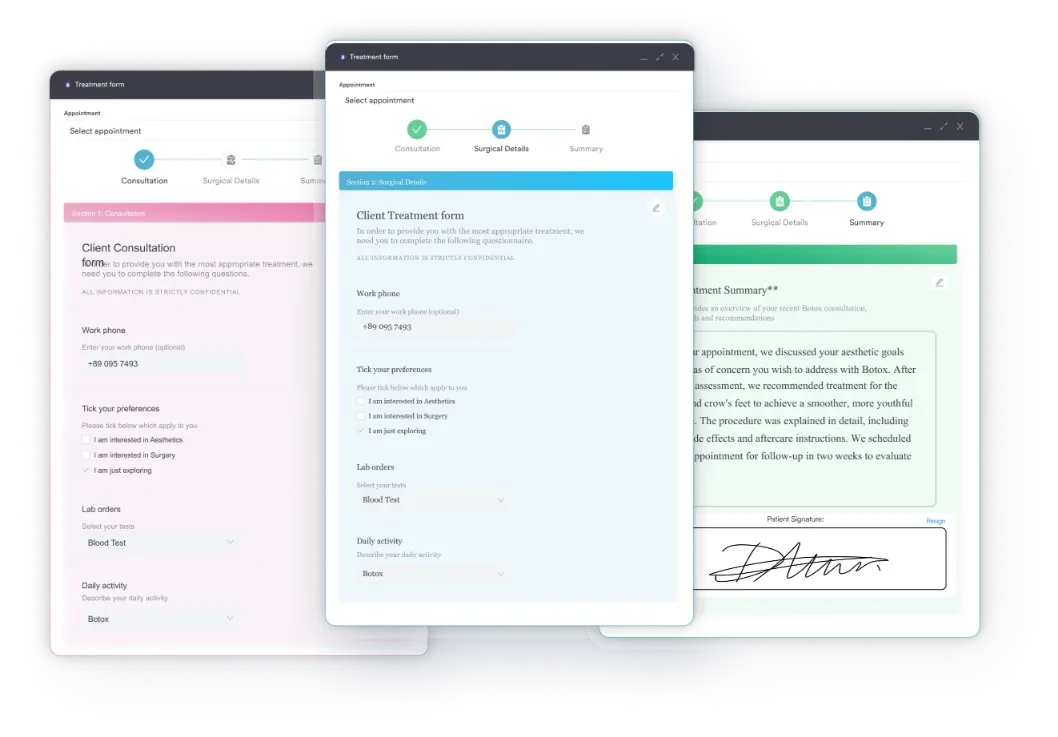

Pabau’s claims management workflow flags dual-coding requirements at point of entry, prompts laterality documentation, and maintains an audit trail that supports payer review. See how ENT and audiology practices use Pabau to keep coding accurate and claims clean.

H82.2 has been a valid ICD-10-CM code since the ICD-10-CM system came into US use. The 2026 edition, effective October 1, 2025, carries no structural changes to H82.2: the code description, Code First instructional note, Excludes1 note, and laterality family remain unchanged from prior fiscal years.
Coders who verified H82.2 in FY2025 do not need to relearn the code for FY2026. They do need to confirm their billing software uses the FY2026 code files, which became active on October 1, 2025.
The single most common billing failure with H82.2 is submitting the manifestation code without the etiology. This happens because clinical documentation and billing are often handled by different team members, and the handoff breaks down. Integrated claims management software prevents that breakdown by enforcing dual-code pairing before submission. A billing workflow that separates coding from submission creates a handoff where claims stall.
Practices can configure claim scrubbing rules that flag any encounter with H82.2 submitted without a companion H81.x or H83.x code. Billing-integrated practice management systems offer this as a standard feature.
The same workflow catches sequencing errors. If H82.2 appears as the primary code with H81.02 secondary, the scrubber can alert the coder to reverse the order before the claim reaches the clearinghouse.
For ENT and audiology practices handling a high volume of vestibular disorders, structured encounter templates with mandatory laterality and diagnosis fields catch missing information upstream. When the clinician completes a structured note, the required fields for H82.2 coding — laterality, confirmed diagnosis, symptom link — are captured at the time of care instead of being reconstructed during coding.
Practices building these workflows use compliance-first documentation approaches that protect both the patient record and the revenue cycle. The same dual-coding convention appears in H67.9, another classified-elsewhere ear code, across multiple ICD-10-CM chapters wherever a manifestation code is in play.
ICD-10 Code H82.2 is a straightforward billable code with one non-negotiable rule: it never stands alone. Every H82.2 claim requires a paired etiology code, correct laterality documentation, and awareness of the Excludes1 boundary with epidemic vertigo (A88.1). Coders who build those checks into their pre-submission workflow will rarely see H82.2-related denials.
Pabau’s claims management workflow can be configured to enforce dual-code pairing and laterality checks before H82.2 claims reach the clearinghouse. To see how it fits an ENT or audiology practice, book a demo.

Want another laterality-specific ENT code? H92.13 covers bilateral otorrhea using the same laterality-first coding logic.
Need the claim form that carries H82.2 to the payer? Our CMS-1500 form guide walks through the fields coders complete before submission.
Coding a diagnosis with no documented laterality? H10.9 shows how unspecified codes work when the record doesn’t specify a side.
ICD-10 Code H82.2 is a billable diagnosis code used to identify vertiginous syndromes in diseases classified elsewhere affecting the left ear. It applies when a confirmed underlying condition – most commonly Meniere’s disease (H81.0x) or labyrinthitis (H83.0x) – causes secondary vertigo in the left ear. The code is always assigned alongside the underlying disease code, not in isolation.
Yes. H82.2 is a billable/specific ICD-10-CM code, effective October 1, 2025 for fiscal year 2026. It is a complete 4-character code with no 5th or 6th character required, provided it is paired with the required additional code for the underlying disease.
H82.1 designates vertiginous syndromes in diseases classified elsewhere affecting the right ear. H82.2 designates the left ear. H82.3 designates bilateral presentation. All three are billable sibling codes under parent H82; the correct choice depends on which ear laterality is documented in the clinical record.
An additional code identifying the underlying disease must always accompany H82.2. Common pairings include H81.02 (Meniere’s disease, left ear) and H83.02 (labyrinthitis, left ear). The etiology code is sequenced first; H82.2 follows as the manifestation code. Submitting H82.2 alone will result in a claim denial.
H81.02 is the etiology code for Meniere’s disease of the left ear – the disease itself. H82.2 is the manifestation code for the vertiginous syndrome that Meniere’s disease produces. Both codes are required simultaneously: H81.02 first (etiology), then H82.2 (manifestation). Using only one of the two is clinically incomplete.
“Diseases classified elsewhere” is an ICD-10-CM convention indicating that the condition described by the code (vertigo) is a manifestation of a disease that is classified in a different part of the coding system. The vertigo does not have its own primary code; instead, H82.2 acts as a secondary code that identifies the symptom, while the underlying disease (such as Meniere’s disease) is coded from its own chapter.
ICD-10 Code H82.2 became effective for fiscal year 2026 on October 1, 2025. The code carried no structural changes from the prior year – its description, Code First instructional note, and Excludes1 note remain unchanged.