Hyperbole and a Half pain scale: Every level + free template
The Hyperbole and a Half pain scale is Allie Brosh’s humorous pain chart, ...

1
Last Updated: Oct 5, 2026

The Thompson test, also called the Simmonds test or calf squeeze test, detects Achilles tendon rupture from the plantarflexion response to calf compression.
A positive Thompson test means no plantarflexion, which points to complete rupture and calls for urgent orthopedic referral.
Published research puts sensitivity near 96% and specificity near 93%, which makes it one of the most reliable bedside tests.
Record the response as absent, reduced, or normal rather than only positive or negative, because the receiving specialist needs that detail.
Practice management software like Pabau stores those findings in a structured record, so nothing is lost between your exam and the referral.
The Thompson test is a 60-second bedside check for a complete Achilles tendon rupture. With the patient prone, you squeeze the calf and watch the foot. If the foot does not plantarflex, the tendon is probably torn through.
Complete ruptures are still picked up late, usually because swelling hides the palpable gap in the tendon and nobody squeezes the calf.
This guide covers the anatomy behind the test, how to perform it, how to read both results, and when to escalate to imaging. It also covers how to word the finding in your notes, so the specialist can act on it.
The Thompson test is a provocative examination that checks whether the Achilles tendon is still continuous. With the patient prone, the clinician compresses the calf muscles and watches for plantarflexion. Absence of that response signals a probable complete rupture.
The test goes by three names in practice: the Thompson test, the Simmonds test, and the calf squeeze test. Credit for it is contested, because F.A. Simmonds described the sign in 1957 and T.C. Thompson published independently in 1962. All three names describe the same maneuver.
Achilles rupture mostly affects active adults, and particularly men between 30 and 50. It is easy to miss when swelling obscures the palpable gap in the tendon. The calf squeeze gets around that, because it relies on force transmitted through the musculotendinous unit rather than palpation of a defect.
The anatomy explains why the test works. The Achilles tendon, also called the calcaneal tendon, is the largest and strongest tendon in the body. It carries force from the gastrocnemius and soleus muscles to the calcaneus, producing plantarflexion at the ankle.
The plantaris muscle also crosses this region, and it can hold a small amount of plantarflexion even when the Achilles is fully torn. That is the main anatomical reason false negatives happen.
No specialist equipment is needed. A firm examination table and a relaxed patient are enough. The whole test takes under two minutes, including positioning.
Position the patient prone, face down on the examination table. Their feet must extend past the end of it so the ankles hang free. That stops the table blocking plantarflexion and lets you see the foot move. Ask the patient to relax the calf completely, because guarding or voluntary contraction invalidates the test.
Grasp the mid-calf firmly with both hands and compress the bulk of the gastrocnemius and soleus. Aim for the widest part of the muscle, roughly 10 cm above the calcaneal insertion. Squeezing too far down, near the tendon itself, reduces mechanical advantage and can produce a false negative.
Always compare both sides. Testing the unaffected limb first gives you a baseline and shows the patient what to expect, which reduces guarding on the injured side. Bilateral comparison is easy to skip in a busy emergency department, where attention goes to bony tenderness and the Ottawa ankle rules.
Interpretation itself is binary, but the pathway that follows each result is not. Here is how to read the two outcomes.
A positive result is a strong clinical signal rather than a final diagnosis, and it should drive the next steps the same day. A negative result does not rule out a partial tear or tendinopathy. Restricted ankle dorsiflexion is another common driver of posterior heel pain, and the knee to wall test measures it quickly.
Plantar fasciitis sits on the same differential when the tendon is intact, and the windlass test helps confirm it. History and mechanism of injury still carry weight in either direction. Practices that log examination findings in a physical therapy record system lose less detail between referral and specialist review.
Always record whether plantarflexion was absent, reduced, or normal. The words positive and negative alone lose that nuance. A reduced but present response with acute posterior ankle pain warrants imaging, whatever the nominal result.
Published data put the sensitivity of the Thompson test near 96% and the specificity near 93% for complete rupture. Those figures come from Maffulli’s 1998 series and later reviews, and they place the test among the most reliable in bedside musculoskeletal examination.
False negatives are most likely when the plantaris survives the rupture and keeps a weak plantarflexion response. False positives are rarer. They tend to follow significant edema or hematoma that blunts force transmission without a true rupture. Imaging resolves the ambiguity either way.
A positive test starts a specific pathway, and speed matters. Delay narrows the options, because a retracted tendon is harder to repair primarily. AAOS guidance covers both the surgical and nonsurgical routes.
High volumes of sports and musculoskeletal patients turn referral documentation into a workflow problem. Sports medicine software can capture examination findings, timestamp the referral, and file the imaging report in one place. That cuts the back-and-forth between primary care, imaging, and orthopedics.
No clinical test is infallible. Several scenarios lower the reliability of this one enough that imaging becomes the sensible next step.
When any of these apply, move to imaging rather than rely on the bedside test alone. Musculoskeletal ultrasound is usually the first study, and it can confirm the diagnosis in ambiguous cases.
The Thompson test is not the only bedside option for Achilles integrity. Two others are worth knowing, particularly when your primary result is inconclusive.
Combining the Thompson test with the Matles test raises your confidence when either result is ambiguous. The O’Brien needle test is effectively obsolete now that bedside ultrasound is widely available. It is unrelated to O’Brien’s test for the shoulder, which uses active compression.
A vague note such as “Achilles tested, negative” gives the receiving specialist nothing, and it offers no defense if the diagnosis is later disputed. A useful entry records the bilateral comparison, the quality of the plantarflexion response, whether the patient could relax, and what you did next.
Practice management software like Pabau gives that structure a home. Structured digital records let sports medicine and physical therapy practices build one standard musculoskeletal exam template. Thompson test findings then sit alongside mechanism of injury, pain scores, neurovascular status, and imaging results in a single timestamped record.
Digital intake forms collect history and consent before the patient is on the table, so your exam starts with the background already captured. When a positive test needs same-day orthopedic contact, automated referral workflows route it without anyone chasing by phone.
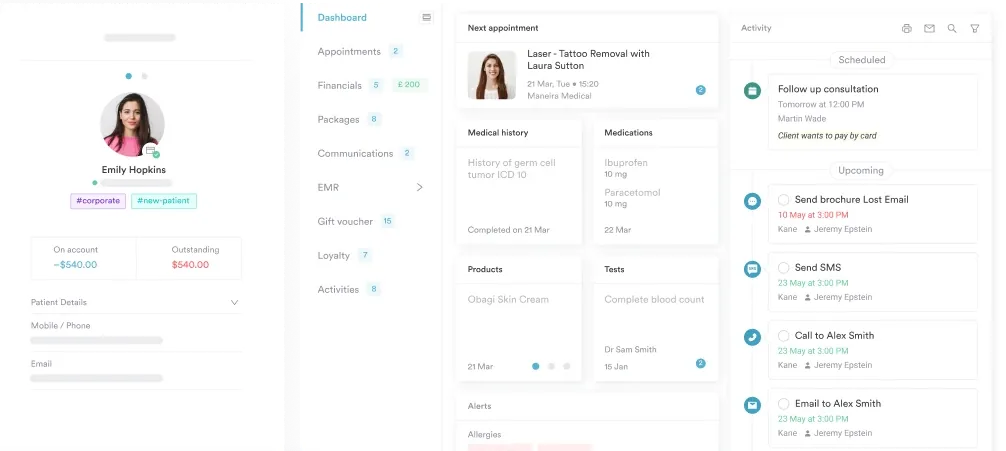
Pabau Scribe, our AI scribe, drafts the note from the consultation itself, so exam detail survives a full day of appointments. The result is a record the next clinician can read without calling you.
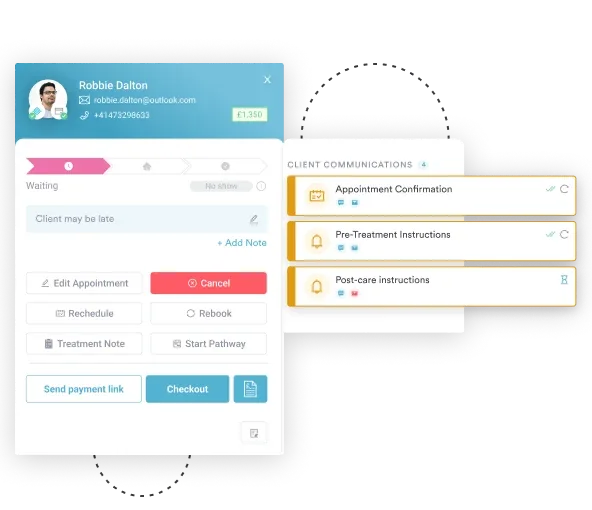

Pabau helps physical therapy and sports medicine practices capture structured exam findings, automate referral messages, and hold one clinical record from assessment to discharge.

The Thompson test earns its place because it is quick, needs no equipment, and gets the answer right far more often than not. It fails at the edges, with partial tears, an intact plantaris, or a patient who cannot relax.
So treat a positive result as a trigger for the next step. Refer the same day, immobilize the ankle in plantarflexion, and let imaging settle anything ambiguous. Grade the response you saw instead of writing a bare positive or negative, and the specialist inherits a usable exam.
If your notes still live on paper or across two systems, that detail is the first thing to go. Book a demo to see how Pabau captures musculoskeletal exam findings and moves urgent referrals the same day.

Assessing sensory function in the same patient? Kinesthesia test template A standardized template guides sensory assessment for stroke rehabilitation, reducing missed neurological findings and inconsistent documentation.
Need another prone special test? Ely’s test covers rectus femoris tightness, including how to grade a positive result.
Wondering how special tests earn their reputation? Lateral pivot shift test shows how a highly specific test can still miss most cases.
Building a musculoskeletal intake pack? Chiropractic intake form template gives you a structured starting point you can adapt.
The Thompson test is a bedside clinical assessment used to detect complete Achilles tendon rupture. The clinician squeezes the calf with the patient prone. Plantarflexion at the foot means the tendon is intact, and its absence points to a rupture.
Position the patient prone with the feet hanging free over the end of the examination table. Squeeze the mid-calf firmly and watch whether the foot plantarflexes. Compare the response on both sides, testing the unaffected limb first to establish a baseline.
A positive Thompson test means no plantarflexion occurs on calf squeeze, which indicates a probable complete rupture of the Achilles tendon. That calls for urgent orthopedic referral, with confirmatory ultrasound or MRI before definitive management decisions.
They are the same test. Both names describe the identical calf squeeze procedure for assessing Achilles tendon integrity. The eponym dispute arises because F.A. Simmonds published a description in 1957 and T.C. Thompson published independently in 1962. In clinical practice both names refer to the same maneuver, as does calf squeeze test.
Yes. False negatives occur most often when the plantaris tendon is intact after Achilles rupture, producing residual weak plantarflexion. False positives can arise from significant edema, hematoma, or severe tendinopathy. In either case, imaging confirms or refutes the bedside finding.
Pooled data from systematic reviews reports sensitivity of approximately 96% and specificity of approximately 93% for complete Achilles tendon rupture. These figures apply to complete ruptures only. The test is much less reliable for partial tears.