GLP-1 diet plan
A GLP-1 diet plan is a structured eating framework for patients taking semagluti...

2
Last Updated: Oct 13, 2026

A telemedicine physical exam uses patient-assisted self-examination guided by a clinician over video, covering most basic body systems.
The Telehealth Ten framework (published in PMC/NIH) covers ten areas: vital signs, skin, HEENT, neck, lungs, heart, abdomen, extremities, neurological status, and social determinants of health.
Auscultation, deep palpation, and reflexes requiring direct contact remain genuine limitations that may trigger in-person referral.
Practice management software like Pabau integrates scheduling, digital consent, SOAP note templates, and post-visit billing into a single practice workflow.
A telemedicine physical exam asks clinicians to trade hands-on assessment for guided observation, patient-reported findings, and self-examination performed on camera. Done well, it produces clinically useful findings. Done poorly, it produces a rushed video call followed by fragmented documentation, consent, and billing.
This guide covers the techniques, technology, and documentation requirements for a virtual physical exam, along with the practice management tools that keep the workflow together once the call ends.
Whether you work in telehealth in GP clinics or manage a multi-specialty practice, the principles here apply across primary care, physical therapy, mental health, and beyond. According to HHS telehealth guidance, most basic body systems can be meaningfully assessed remotely when clinicians guide patients or caregivers through structured self-examination steps.
A telemedicine physical exam trades palpation and auscultation for systematic observation, patient-reported findings, and guided self-examination — a distinct clinical skill in its own right. The clinician watches, asks targeted questions, and directs the patient or a caregiver to perform specific maneuvers in front of the camera.
The Telehealth Ten framework, published in peer-reviewed literature via PMC/NIH, formalizes this into ten areas: vital signs, skin, HEENT (head, eyes, ears, nose, and throat), neck, lungs, heart, abdomen, extremities, neurological status, and social determinants of health.
Each area has standardized patient instructions and corresponding clinician observation criteria. Practices that adopt a framework like this produce more consistent, defensible documentation than those relying on improvised questioning.
The table below maps each body system to the remote technique and what the clinician can reasonably conclude. It improves on most published frameworks by distinguishing between “observational only” and “patient-assisted” assessments, which affects how findings are documented in the clinical note.
Each body system requires a slightly different approach. The key is giving patients clear, simple instructions before the clinician attempts to draw any conclusions from what they see or hear. Preparation language matters: “press firmly with two fingers just below your ribs on the right” produces better clinical information than “check your abdomen.”
Ask the patient to position the camera at eye level with good frontal lighting. Inspect conjunctival color, scleral icterus, pupil symmetry, and visible facial asymmetry.
For the neck, guide them through a sequence: look up, look down, turn left, turn right. Ask them to press gently along both sides of the neck to identify tenderness or swelling. Speech clarity and facial droop are observable in real time.
Visible respiratory effort, accessory muscle use, and lip color provide immediate data before any device is involved. If the patient has a home pulse oximeter, review the reading in real time.
Patients with a Bluetooth stethoscope can transmit heart and lung sounds through compatible telehealth platforms. Without that device, ask the patient to breathe deeply with the camera close to the chest. Audible wheeze or stridor often carries through a standard microphone.
For abdominal assessment, have the patient lie supine and guide them through quadrant-by-quadrant self-palpation. They can report tenderness while the clinician watches for wincing or guarding. Rebound tenderness and peritoneal signs, though, aren’t reliable to assess this way.
Musculoskeletal assessment transfers well remotely. Ask the patient to demonstrate full shoulder rotation, knee flexion, or grip strength using a common household object. Weight-bearing capacity can be observed by having the patient stand and take a step.
Neurological assessments transfer well to telehealth. The finger-to-nose test, tandem gait, and rapid alternating hand movements are all observable via video, and coordination deficits, gait asymmetry, and dysarthria typically come through clearly on camera.
Skin assessment requires adequate lighting and camera proximity. Ask the patient to hold the camera 10 to 15 cm from the area of interest, and document camera distance limitations in the note when resolution affects clinical confidence.
Most of a telemedicine physical exam requires nothing beyond a stable video connection and a well-lit room. Peripheral devices extend clinical reach but are not always necessary. The table below maps device type to clinical use case.
Platform requirements matter as much as devices. Use a HIPAA-compliant video platform with a current Business Associate Agreement (BAA) in place, since the technical configuration for services like Zoom for Healthcare differs from a standard consumer account.
Reviewing HIPAA compliant telehealth platforms before committing to one saves a compliance headache later. Always verify BAA status directly with the vendor before conducting a telemedicine physical exam on that platform.
A productive telemedicine physical exam depends almost entirely on what happens before the video call starts.
Patients who receive preparation instructions in advance arrive with the right equipment, the right environment, and a clear understanding of what to expect. Those who don’t often spend the first ten minutes of the visit adjusting lighting or locating a device they didn’t know they needed.
Send pre-visit instructions at least 24 hours before the appointment. Use digital intake forms to collect the patient’s current medications, recent vitals, and any equipment they have at home before the visit begins. This gives the clinician context before the camera turns on.
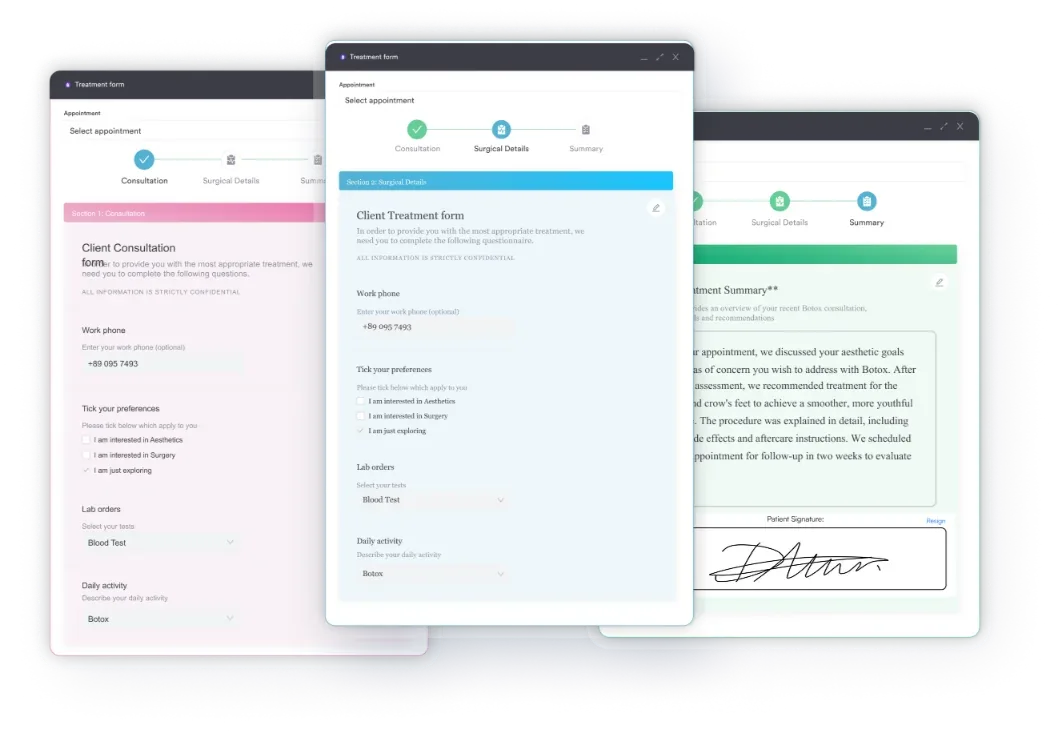
Maintaining HIPAA-compliant paperless workflows for pre-visit consent and intake means patients complete forms digitally before the appointment, including behavioral health-specific paperwork like a counseling informed consent form when the visit calls for it. Clinicians then enter the call with a complete pre-visit record rather than spending clinical time collecting administrative information.
Documentation for a telemedicine physical exam follows the same E&M framework as in-person visits, with two additional requirements: the note must specify that the encounter was conducted via video, and the clinician must document which examination components were assessed remotely, what patient-assisted techniques were used, and any limitations that affected the assessment.
According to CMS telehealth coverage guidance, Medicare reimburses telehealth evaluation and management visits using standard E&M CPT codes with the appropriate place-of-service code (10 for telehealth in a patient’s home) or telehealth modifier. The table below covers the core coding structure for telehealth physical exams.
Keeping practice software HIPAA compliant for documentation is non-negotiable. The platform storing the telehealth visit note must have a current BAA in place with the covered entity. Clinicians should document the consent process, the platform used, and any technical limitations that affected exam quality in each telehealth note.
Honest clinical practice requires understanding where a telemedicine physical exam genuinely cannot substitute for in-person assessment. These are not hypothetical limitations: they affect clinical decision-making and documentation.
A telehealth physical exam is appropriate for most routine assessments, chronic disease management follow-ups, and post-procedure check-ins. Specific clinical scenarios, though, require in-person attendance regardless of patient or clinician preference.
For teams managing physical therapy EMR workflows, building a clear triage protocol into the intake process prevents situations where a patient presents for a telehealth visit that should have been in-person from the start. Include a brief clinical screening question set in the pre-visit intake form to flag these cases before the appointment begins.
The clinical part of a telemedicine physical exam is one piece of the workflow. The operational part, including scheduling, patient consent, structured documentation, and post-visit billing, is where most practices lose time.
Dedicated video platforms like Doxy.me or Zoom for Healthcare handle the call, but they leave documentation, consent, and billing to whatever separate system the practice already uses. For many practices, that means switching between three or four tools per visit.
Pabau’s telehealth software integrates the full workflow: online appointment booking for telehealth slots, digital intake forms and consent collection before the visit, pre-configured SOAP note templates during the consultation, and invoicing immediately after. The pre-visit workflow runs through automated pre-visit workflows that send preparation instructions and consent forms automatically when a telehealth appointment is booked.
For clinicians conducting high volumes of telehealth physical exams, AI scribes for documentation reduce the time spent writing SOAP notes by generating structured notes from the consultation.
The structured clinical notes in Pabau support telehealth-specific fields, including exam technique documentation and visit modality. Practices using claims management software built into the same platform can apply the correct telehealth modifier and place-of-service code at the point of billing without re-entering data from a separate EHR.
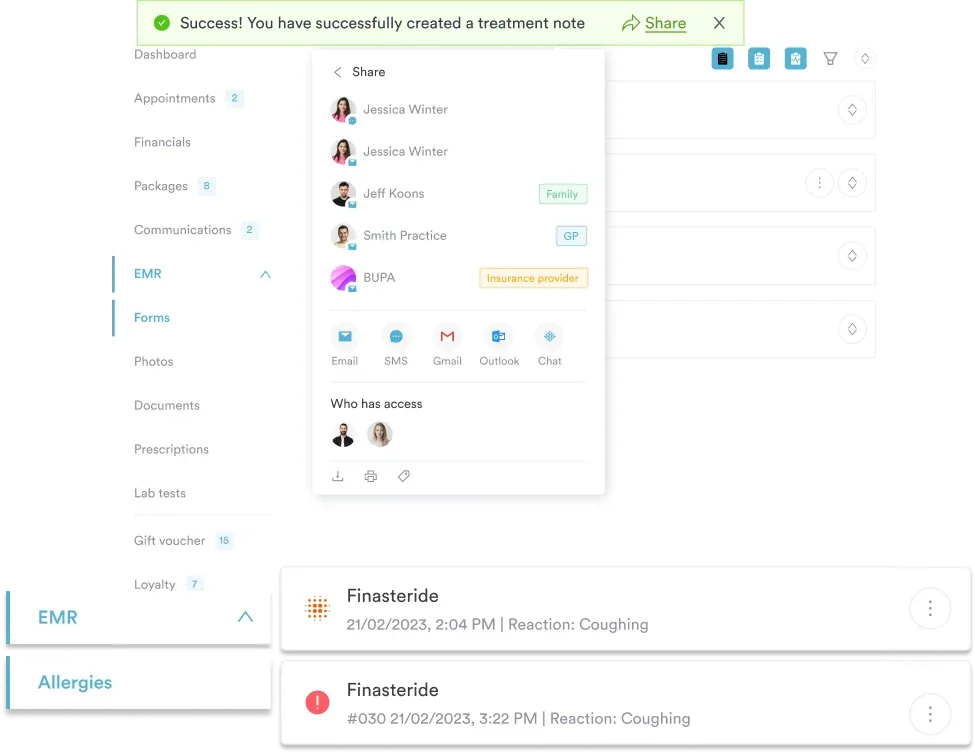
Time-saving practice features matter here too. Fewer missed consent steps, consistent documentation structure, and automated billing all cut the administrative back-and-forth between scheduling, clinical, and billing teams.

Pabau connects telehealth scheduling, digital consent, SOAP note documentation, and billing in one platform. See how it fits your practice workflow.

A telemedicine physical exam delivers genuine clinical value when clinicians use a structured framework, prepare patients properly, and document findings with the same rigor as an in-person encounter. The Telehealth Ten provides a replicable system; the limitations are real but manageable with clear triage criteria.
The operational side matters as much as the clinical technique. Pabau’s telehealth software connects scheduling, consent, documentation, and billing so clinicians spend their time on the exam, not on switching between tools. To see how the workflow fits your practice, book a demo.

Running two separate systems for calls and notes? Telemedicine EHR covers the integrations and compliance features that connect the two.
Choosing a telehealth platform for a UK practice? Telehealth platforms in the UK covers CQC oversight and GDPR requirements for remote consultations.
Outgrowing your current video call setup? Telemedicine software platforms compares tools for scheduling, billing, and multi-practitioner workflows.
A telemedicine physical exam is a structured clinical assessment conducted over a HIPAA-compliant video platform, where the clinician observes the patient and guides them through patient-assisted self-examination techniques in place of direct hands-on contact. It covers most major body systems, including general appearance, vital signs, neurological function, and skin, using a combination of visual inspection and home devices such as blood pressure cuffs and pulse oximeters.
The clinician guides the patient through system-by-system self-examination steps while observing via video. Techniques include directed self-palpation for abdominal and lymph node assessment, range-of-motion demonstrations for musculoskeletal evaluation, finger-to-nose and gait tests for neurological assessment, and camera-proximity skin inspection. Patient preparation, including gathering home devices and setting up proper lighting, determines exam quality.
The primary limitations are auscultation depth (standard microphones cannot reliably transmit murmur detail), deep palpation findings (rebound tenderness and guarding require direct tactile assessment), deep tendon reflexes (require hands-on contact), and rectal, pelvic, and breast exams (not possible via telehealth). These limitations define the criteria for in-person referral.
No, a telemedicine physical exam is a clinically useful alternative for routine and follow-up assessments, but it does not replace in-person care for acute presentations, suspected surgical abdomen, new neurological deficits, wound assessment, or any scenario where tactile findings are essential to clinical decision-making. The two modalities are best understood as complementary rather than interchangeable.
The minimum requirement is a stable HD video connection and a HIPAA-compliant platform with a current BAA. Peripheral devices that significantly expand clinical reach include a home pulse oximeter, blood pressure cuff, and Bluetooth digital stethoscope. A digital otoscope and dermoscope attachment extend capability for ENT and dermatology assessments but are optional for general practice telehealth exams.
An online physical exam can support many occupational health assessments, including medication review, fitness-for-work consultations, and chronic condition monitoring. Assessments requiring direct measurement such as audiometry, spirometry, or standardized musculoskeletal provocation testing still require in-person attendance and cannot be completed via a telemedicine physical exam alone.