Despina Petrushevska
Vitamin C protocol: Free template for oral and IV treatment
A vitamin C protocol is a written clinical framework for giving vitamin C to pat...

7
Last Updated: Oct 16, 2026
Free PDF 1 page, print-ready Clinician-reviewed
A hydration handout gives patients a take-home reference for how much they should drink and how to tell whether they are getting enough. This guide covers what to put in one, what the research says about daily fluid needs, and when to hand it over.
You can also share it digitally. Practice management software like Pabau stores the file against the patient record, so the front desk can send it before an appointment. Nobody has to print a stack of copies.
A one-page patient handout with daily fluid intake targets, everyday hydration tips, a short list of hydration facts, and a list of high-water foods. It ends with a blank fluid intake tracker patients fill in by time of day.
Upload this PDF, or any form you already use, and Pabau's AI Form rebuilds it with tick boxes, text fields and a signature. Attach it to the treatment once, and every patient gets it on time.
AI Form rebuilds the consent, history and aftercare forms you already use. You review each one, then publish.
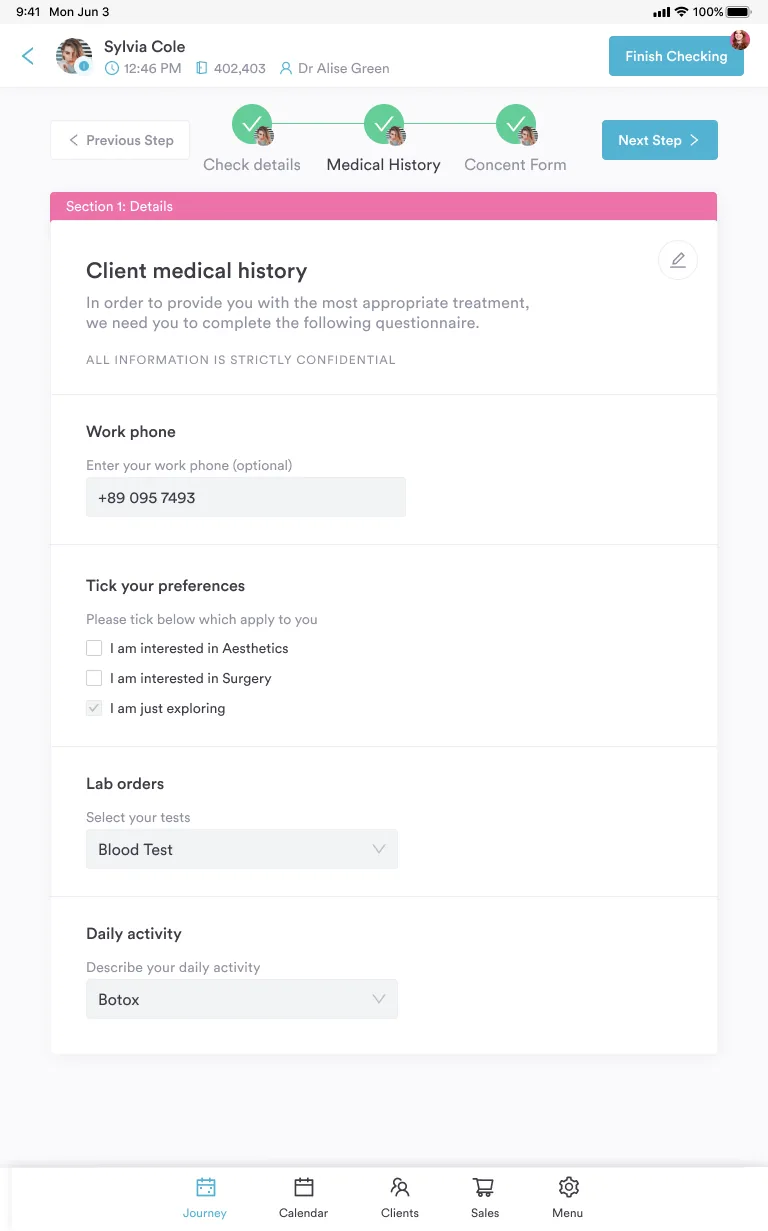
Patients complete forms on their phone before they arrive, so the front desk stops retyping paper.
Every signed form is versioned and attached to the treatment record, ready when you need it.
Set how long a consent stays valid. Returning patients skip forms they have already signed.
Supports HIPAA and GDPR compliance AES-256 encryption 4.8 on G2 4.7 on Capterra Trusted by 4,000+ practices worldwide

A hydration handout is a one-page patient education sheet covering daily fluid targets, simple hydration tips, and a fluid intake tracker.
Most healthy adults need 2.7 to 3.7 liters of fluid daily from all drinks and food, per the National Academies.
Adequate intake does not fall with age, but older adults dehydrate more easily because thirst signals weaken.
Dark or amber urine signals dehydration, while pale yellow means the patient is drinking enough.
Sharing the handout through a patient portal, then logging it in the chart, keeps education consistent across the team.
A hydration handout is a short, patient-friendly sheet on why fluid intake matters. It also covers how to spot dehydration and how to build a drinking habit that sticks. Practices give it out before or after a consultation to back up what was said in the room.
Why practices bother with hydration education:
The National Academies of Sciences, Engineering, and Medicine sets the reference figures below. They cover total water from every source, and roughly 20% of it comes from food.
The eight glasses a day rule works as a rough guide for average adults in temperate climates. Individual needs shift with activity, climate, diet, and medical conditions.
Dehydration sets in when fluid loss outpaces intake. Catching it early keeps a mild case from turning into a hospital visit. Confirmed dehydration is coded as E86.0, and the handout gives patients the warning signs before it gets that far.
For a quick in-office check.
Urine color is a reliable, non-invasive proxy for hydration status. Ask patients to check in daylight or near a window. B vitamins, rifampin, beets, and rhubarb can all change the color, but the pattern holds for most people.
Follow-up visits keep plans like this on track, and patient scheduling software makes those check-ins automatic.
Water does specific jobs in the body, and naming them gives patients a reason to bother.
Hydration is a habit, so give patients a routine rather than a target to remember.
Around 20% of daily fluid comes from food. Patients who hate drinking plain water are usually relieved to hear that watermelon counts.
Check the list against any dietary restriction first. A patient on a renal diet may need a low potassium food list alongside this one.
Hydration advice is not one-size-fits-all. Older adults, athletes, pregnant patients, and children each have different drivers. Noting the advice you gave in the patient record keeps the whole team consistent at the next visit.
Aesthetic practices, IV therapy providers, and wellness centers often set their own post-procedure fluid protocol. Concrete volumes and timings beat a vague drink plenty of water. When the practice runs the drip itself, that infusion is billed under 96360.
Timing decides whether the handout gets read. Send it through the patient portal a few days before the visit, and hand over a printed copy on the way out.
Most practices hand out patient education on paper. Someone prints a stack, the front desk remembers to include it, and nobody knows afterwards who took one home. When a patient calls two weeks later asking how much water they should drink, the answer is a guess.
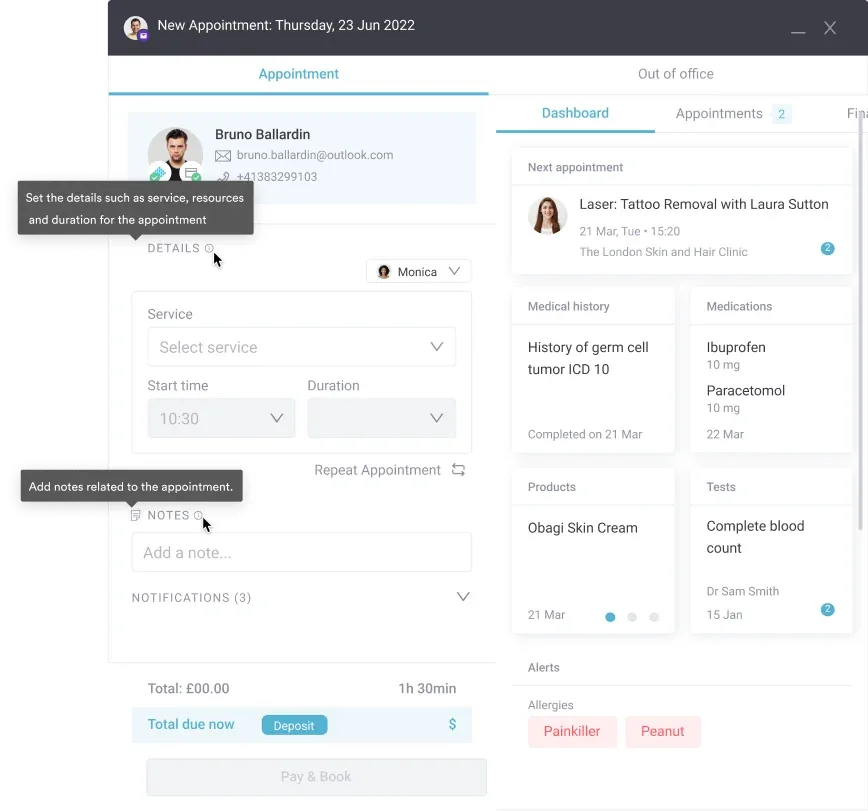
Pabau stores the handout against the patient record and sends it from the same screen you book the appointment on. You can attach it to a confirmation email, drop it into the portal, or schedule it to go out two days before the visit. Every send is logged, so the chart shows what the patient received and when.
Pabau Scribe, our AI scribe, writes up the hydration advice you gave during the consultation. The next clinician to see that patient then repeats the same numbers. The result is one less printing job, and a patient record that can answer the follow-up call.

Send the handout from the patient record, log who received it, and let automated reminders do the chasing.

A hydration handout is a small thing that keeps working after the patient leaves. Give them the numbers, the urine color check, and a tracker, and most people manage the rest themselves.
The trade-off worth remembering is that paper only reaches the patients you remember to hand it to. Sending it digitally and logging it means the education is on file when a question comes up months later. Book a demo to see how Pabau handles patient education from the record you already work in.

Also giving vitamin C injections? The vitamin C injection aftercare template covers site care, side effects, contraindication flags, activity limits, and follow-up scheduling.
Running an IV hydration service? IV therapy intake template collects the history and consent you need before a drip goes up.
Worried about what can go wrong on a drip? IV therapy complications covers the reactions to brief patients on and how to respond.
Offering IV hydration in Arizona? This Arizona IV hydration requirements guide covers the provider’s order, ADHS license, staffing roles, and fees your practice needs.
The National Academies of Sciences recommends about 2.7 liters (91 oz) daily for adult women and 3.7 liters (125 oz) for adult men. That figure covers all drinks and food combined, and individual needs vary with activity, climate, and health.
Mild dehydration causes thirst, dry mouth, and light-headedness. Moderate dehydration brings fatigue, dizziness, headache, and muscle cramps. Severe dehydration includes confusion, fainting, and minimal urination, which needs medical help straight away.
Yes, urine color is a reliable, non-invasive hydration check. Pale yellow means adequate hydration, while dark amber or brown signals dehydration. Beets and B vitamins can change the color, but the pattern holds for most patients.
Yes. Several liters in a short window can cause hyponatremia, a dangerously low sodium concentration. Advise patients to sip steadily through the day rather than in large boluses, and to follow their thirst.
After most procedures, patients should drink 250 to 500 ml (8 to 16 oz) of water or an electrolyte drink within 30 minutes. Keep total intake at 3 to 4 liters for the first 24 hours, and avoid alcohol and heavy caffeine.
No. Adequate intake stays the same across adult ages, at 2.7 liters for women and 3.7 liters for men. Dehydration risk still rises after 51, because thirst signals weaken and kidney function declines, so small frequent sips help.