CRM for chiropractors: how to manage patients, bookings and marketing
A CRM for chiropractors is a patient relationship management system built around...

Last Updated: Oct 13, 2026

Email marketing for mental health professionals builds client retention and fills caseloads without relying on social media algorithms.
HIPAA rules distinguish treatment communications from marketing: appointment reminders don’t require a Business Associate Agreement (BAA), but promotional campaigns do.
Never segment email lists by diagnosis. Ethical segmentation uses service type, referral source, or inquiry status only.
Pabau’s built-in email and SMS campaigns, automated reminders, and recall workflows handle most clinical communication needs inside your practice management system.
Most therapists lose more clients to silence than to dissatisfaction. A client finishes a successful course of therapy, life gets busy, and six months later they’re back to struggling. Without a structured communication system, that practitioner will never hear from them again. Improving patient engagement between sessions and after discharge is one of the highest-leverage things a mental health practice can do. Email marketing for mental health professionals is a practical way to keep that momentum going once sessions end.
This guide covers how to build an ethical email strategy and what HIPAA actually requires. It also covers which email types work in a clinical context, and how to automate the process without a marketing team.
Social media platforms surface your content to a fraction of your followers. Email reaches your list directly, every time. That difference matters enormously for solo practitioners and small group practices with limited marketing bandwidth.
Three specific outcomes make email marketing worth the effort:
The channel also costs very little. Clinic marketing strategies that rely on paid advertising require ongoing budget; email requires time investment upfront and scales without proportional cost increases. According to Litmus’s 2024 State of Email report, email marketing delivers an average ROI of $36 for every $1 spent across industries. Mental health practices won’t hit that figure, but the directional argument holds: owned audiences outperform rented ones.
The most common mistake practitioners make is adding existing clients to a marketing list without explicit consent. This isn’t just an ethical problem. Under the CAN-SPAM Act, recipients must be able to opt out. Under HIPAA, combining a client’s name with details about their healthcare relationship constitutes protected health information (PHI).
Ethical list building for mental health practices follows three channels:
Never import a client list from your EHR into a general email platform. The moment clinical context exists, compliance rules apply. Patient acquisition strategies that generate inbound interest through content perform far better than lists built from existing clinical records anyway.
HIPAA distinguishes between two types of communication. Treatment communications (appointment reminders, care coordination, post-session notes) are covered under the treatment exception. Marketing communications (promotional emails, service announcements, newsletters) require explicit patient authorization when they involve PHI.
For most mental health email marketing, the practical rules are:
The BAA requirement is where most practitioners run into trouble. According to HHS guidance on HIPAA marketing rules, any business associate that creates, receives, maintains, or transmits PHI on your behalf must sign a BAA. Standard consumer email platforms don’t automatically offer this.
For clinical communications specifically, Pabau’s email and SMS campaigns operate within a practice management environment designed for healthcare data handling. That removes the need to route PHI through a third-party consumer platform. For general marketing emails with no PHI, standard platforms work if subscribers have opted in and you never include clinical identifiers. Read more about HIPAA compliance for clinic software to understand what your tech stack needs to cover.
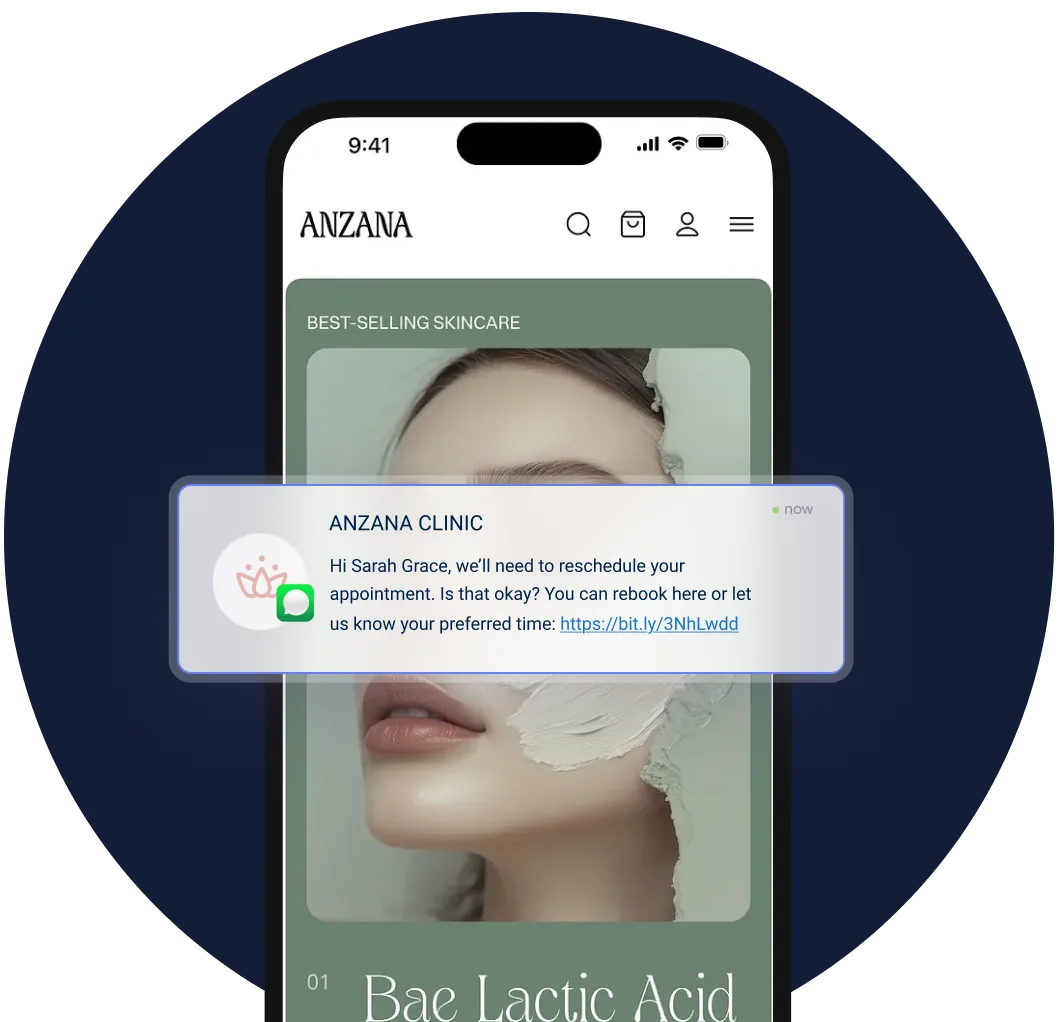
Most practitioners overthink email content. Four email types cover the majority of use cases effectively.
Someone fills out a contact form but isn’t ready to book. A 3-email welcome sequence over two weeks keeps the conversation going while they decide. Email 1 acknowledges their inquiry and shares what to expect. Email 2 addresses a common concern for your target population (e.g., “What happens in a first session?”). Email 3 offers a soft invitation to book, with no pressure framing.
This sequence works for prospective clients who found you through search or a referral but are still deciding. Keep clinical language minimal and framing practical.
A monthly newsletter positions you as a credible, trusted resource. Content ideas that work well include:
Monthly is the sweet spot for most solo and small group practices. Less frequent risks being forgotten. More frequent risks unsubscribes from people who found you helpful but aren’t active clients.
A lapsed-client re-engagement email sent at 6-12 months after last contact is one of the highest-value emails in a mental health practice’s toolkit. Keep it warm, non-clinical, and genuinely helpful: “It’s been a while since we worked together. If you’re navigating a difficult period, here’s how to get back in touch.” No diagnosis references. No pressure.
For referral partners, send a quarterly check-in email with something useful. Share a resource you’ve developed, an article relevant to their clients, or an update on your availability. It keeps the relationship active without phone calls. Email marketing strategies for clinical practices consistently show that referral nurturing via email outperforms cold follow-up calls for professional sources.
Automation removes the “I keep meaning to send that email” problem. Three automated sequences are worth setting up in any mental health practice.
Pabau’s automated workflows handle the post-session and lapsed-client sequences inside the practice management system, where appointment data already lives. Automated pre- and aftercare emails are particularly effective at reducing no-show rates and improving follow-through on between-session recommendations. For the new inquiry auto-responder, a general email platform works since it doesn’t involve PHI.
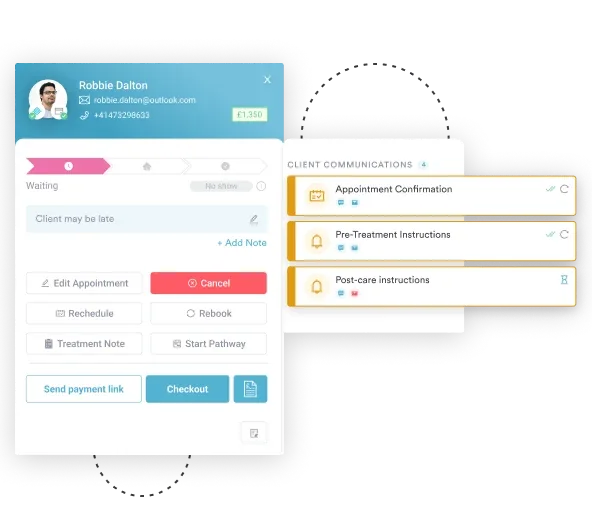
The key principle: automate the sequences tied to clinical events through your practice management system. Use a separate general platform for marketing content lists with no PHI.
Segmentation means sending different emails to different groups based on their relationship to your practice. Get it wrong in a mental health context and you disclose PHI without meaning to. Segment by these criteria only.
The safe options are:
Never segment by diagnosis, presenting issue, medication status, or any clinical identifier. This applies even if clients have given broad consent to receive communications. Segmenting a list into “clients with anxiety” and “clients with depression” creates a de facto disclosure of PHI, regardless of how the email is worded. Under 45 CFR 164.501, a name combined with information about a health service or condition constitutes PHI.
Treat it as a bright line: diagnosis, presenting issue, and medication status never determine which email someone gets. When in doubt, send a single educational newsletter to your whole opted-in list and skip segmentation until you have a compliance-reviewed system in place.
The right platform depends on what you’re sending. Clinical communications (appointment reminders, recall sequences, post-session follow-ups) should stay inside your practice management system. General marketing emails (newsletters, welcome sequences, referral outreach) can use a standalone email platform, provided no PHI is involved.
An important note on Mailchimp: as of their published terms, Mailchimp explicitly states it is not HIPAA compliant and will not sign a BAA. This is confirmed in their official terms of service. If you use Mailchimp for general newsletters with no PHI, that’s fine. If you route any appointment-related communications through it, you’re creating a compliance risk.
For most small mental health practices, the most practical setup is Pabau for all clinical communications plus one general marketing platform for opted-in newsletter subscribers. See how Pabau compares to Mailchimp for a side-by-side breakdown of where each fits in a clinical marketing stack. You can also explore Pabau’s mental health practice features to understand the full communication toolkit available within the system.
Four metrics matter for a practice-sized email list. Ignore vanity numbers like total subscribers and focus on these:
Review these metrics quarterly rather than after every send. Small lists are statistically noisy. A month with unusually low open rates often reflects timing or subject line variables rather than a systemic problem. Email templates for clinical practices that test different subject line formats can help identify what resonates with your specific audience over time.
Review your email unsubscribe reasons quarterly. Most platforms capture why someone unsubscribed. ‘Too many emails’ and ‘content not relevant’ are fixable with frequency adjustments and better segmentation. ‘Never signed up for this’ indicates a consent problem that needs immediate attention.
The mistakes that damage mental health practices aren’t about poor copywriting. They’re about consent, compliance, and clinical boundary confusion.
The APA Ethics Code and its equivalents across counseling and social work licensing bodies all address marketing and client solicitation. Familiarize yourself with your specific licensing board’s guidance before launching any active marketing campaign. What’s permissible varies by state and credential type.
For practices ready to implement a compliant, clinician-first communication system, appointment confirmation emails are often the easiest starting point. They’re treatment communications rather than marketing, and they’re HIPAA-covered through your practice management system. They also reduce no-shows and late arrivals while building a habit of consistent client communication.
Most mental health practices run two disconnected systems. A general email platform handles newsletters, while a separate scramble of phone calls or a non-compliant tool handles reminders and follow-ups. Neither talks to the client record, so nobody has one view of who received what.
Pabau’s built-in email and SMS campaigns sit inside the same system that holds each client’s appointment history and treatment notes. Automated workflows trigger the post-session follow-up and lapsed-client re-engagement sequences directly from appointment data, so nobody has to remember to send them. Every send, clinical or marketing, is logged against the same client file. Client replies arrive in one secure inbox, so a response to a campaign never sits in a personal account.
That means one system handles both compliant clinical communication and general marketing content. There’s no separate, HIPAA-lacking platform to stitch together with your practice management system.

Pabau’s built-in email and SMS campaigns, automated appointment reminders, and recall workflows mean you spend less time on admin and more time with clients. See how it works for mental health practices.

Most therapists are sitting on an underused asset: a list of people who already trust them. A structured email strategy turns that dormant audience into active re-engagements and referral conversations. It also warms up prospective clients who needed weeks of helpful content before they were ready to reach out.
The compliance framework is navigable once you separate clinical communications (handled through your practice management system) from general marketing content (handled through opted-in, PHI-free lists). Pabau’s email and SMS campaigns, automated recall sequences, and appointment confirmation workflows handle the clinical communication layer inside a system built for healthcare data. If you want to see how that works in a mental health practice context, book a demo and we’ll walk through the specific workflows.

Need a marketing strategy beyond email? Clinic marketing strategies covers the full channel mix for growing a healthcare practice, from search to social to referral networks.
Want to understand what HIPAA covers in your tech stack? HIPAA compliance for clinic software explains which systems need a BAA and how to audit your current setup.
Looking to reduce no-shows alongside your marketing efforts? Automated pre- and aftercare emails shows how post-booking and post-session automation lowers drop-off rates.
Ready to measure what’s working across your practice? Improving patient engagement covers the metrics and touchpoints that predict long-term client retention.
Email marketing for mental health professionals is the practice of using permission-based email communications to attract new clients, retain existing ones, and nurture referral relationships. It includes educational newsletters, automated welcome sequences, re-engagement campaigns, and referral partner outreach. Unlike clinical communications (appointment reminders, care coordination), marketing emails are sent to opted-in subscribers and must not include protected health information (PHI).
General marketing emails sent to opted-in subscribers with no PHI are not regulated by HIPAA. Clinical communications (reminders, follow-ups) that reference a client’s appointment or health information are PHI and require a HIPAA-compliant platform with a Business Associate Agreement (BAA). Mailchimp explicitly declines to sign a BAA. For clinical communications, use your practice management system. For general newsletters, a standard platform works provided subscribers opted in and no clinical identifiers are included.
Build your list through website opt-in forms offering a free resource, like a self-care guide or sleep checklist. Add a voluntary opt-in checkbox at intake specifically for marketing newsletters. Also reach out to professional referral partners, including primary care physicians, schools, and HR departments. Never import a client list from your EHR or add clients without explicit written consent separate from their clinical care consent.
The most engaging content includes seasonal mental health topics, self-care frameworks tied to common presenting issues, and brief psychoeducation on the therapeutic approaches you use. Round it out with local community resources and practice updates like new services or training. Monthly is the recommended frequency for solo and small group practices.
Healthcare email open rates average 21-25% according to Mailchimp and Campaign Monitor benchmark data. Mental health practices with warm, permission-based lists often exceed this, particularly for educational newsletters sent monthly. If open rates fall below 15%, review your subject lines, sending frequency, and list quality. Small lists under 300 subscribers show high variance and need at least 6 months of data before you draw conclusions.
Email marketing helps grow a therapy practice through three mechanisms. It re-engages lapsed clients, who are statistically your most likely source of new bookings. It converts warm inquiries who weren’t ready to book when they first contacted you. And it maintains referral relationships with primary care physicians and schools without requiring ongoing calls. The channel works best as a retention and nurture tool rather than a cold acquisition channel.