Massage Gift Card Template
A massage gift card template is a fill-in-the-blank certificate you customize wi...

21
Last Updated: Sep 11, 2026

Third-party sources report CareCloud Central pricing around $349 per provider monthly, with Complete reaching roughly $629 to $649 per provider monthly.
CareCloud’s actual products are Central (practice management), Charts (EHR), Complete (Central plus Charts), and Concierge (outsourced billing, priced as a percentage of collections).
Add-on modules, implementation fees, and clearinghouse charges can push CareCloud’s total cost well above the advertised per-provider rate.
CareCloud earned 3.6/5 on Capterra (112 reviews) and 3.6/5 on G2 (34 reviews), with reviewers citing pricing opacity and inconsistent support.
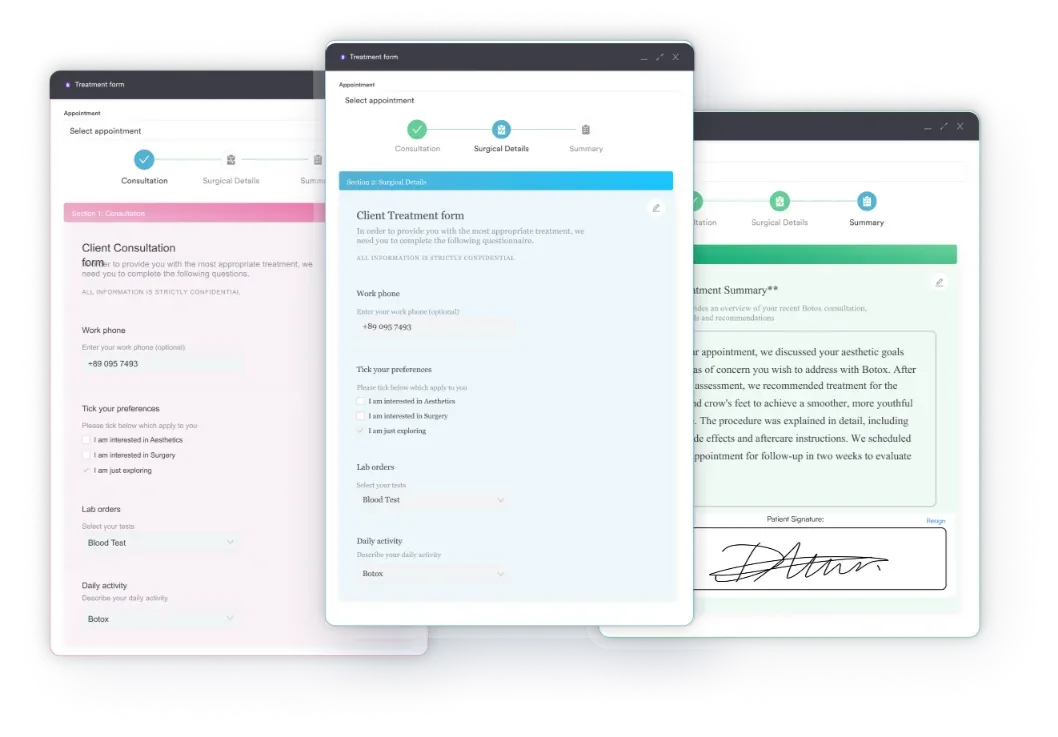
Pabau offers transparent, publicly listed pricing from $104/month with integrated invoicing, digital forms, and automated workflows built into every plan.
Most practice managers evaluating EHR and billing software hit the same wall with CareCloud: there’s no public pricing page. You fill out a form, wait for a callback, and eventually get a quote that may or may not match what third-party review sites report. That friction adds time to an already long evaluation process. This article breaks down what CareCloud pricing looks like across its real product lineup, and what hidden costs reviewers consistently flag. It also covers how CareCloud compares to alternatives built for practices that want straightforward practice management software costs from day one.
CareCloud does not publish pricing on its website. All pricing is provided through a customized quote. CareCloud’s product lineup is Central, Charts, Complete, and Concierge, not the “Essential/Advanced/Complete” tier names some review sites describe.
Third-party review sites report the per-product monthly costs below, though actual figures depend on practice size, specialty, and negotiated terms.
Important caveat: these figures come from third-party review sources including JotForm and Business News Daily, not from CareCloud directly. Treat them as reported estimates. Your actual quote may differ.
Central is CareCloud’s practice management product: scheduling, claims submission, and basic billing tools, without the EHR. It suits practices that already run a separate EHR or don’t need charting in the same system. Third-party sources put Central at roughly $349 per provider per month, though CareCloud does not confirm this publicly.
Charts is CareCloud’s EHR module, sold as an add-on to Central or bundled into Complete. It covers charting, e-prescribing, and specialty-specific templates. Understanding how revenue cycle management connects to the EHR matters here, because Charts alone doesn’t include the billing depth that Complete or Concierge add.
Complete bundles Central’s practice management tools with the Charts EHR into one subscription. Third-party sources report Complete pricing around $629 to $649 per provider per month. Multi-provider practices with in-house billing teams and high appointment volumes tend to evaluate this product.
Concierge is CareCloud’s outsourced revenue cycle management service, not a flat per-provider subscription. Third-party sources report Concierge is priced at 3% to 7% of collections, so the monthly cost scales with billing volume rather than provider count. It suits practices that want to hand off claims submission and denial management entirely, rather than run billing in-house on Central or Complete.
The monthly per-provider subscription is rarely the full story. Reviewers on Capterra and G2 consistently flag additional costs that raise the true total cost of ownership well above the base rate.
The pattern across reviewer feedback is consistent. Practices that didn’t ask detailed questions about total cost of ownership during the sales process found themselves with higher bills than expected. Build a checklist of every operational function your practice needs before getting a quote. Ask explicitly what’s included versus billed separately. Evaluating EHR integration requirements upfront also helps avoid costly add-on surprises after go-live.
Before signing with any EHR vendor, request a written breakdown of every cost for your first 12 months: base subscription, implementation, training, clearinghouse fees, and any module add-ons. CareCloud’s quote-based model means this information must be requested explicitly. Compare that full-year figure, not just the monthly rate, against alternatives.
CareCloud is a cloud-based platform designed for ambulatory medical practices. Its core value is bundling several functions that practices often buy separately. Here’s what the platform covers across its feature modules.
CareCloud Charts is the EHR component, offering customizable templates, clinical note-taking, and charting workflows for ambulatory specialties. ONC certification status appears on CareCloud’s cost and fees page, and practices can verify current certification through the ONC Certified Health IT Product List. Reviewers generally rate the EHR functionality positively, calling out the breadth of specialty templates as a strength.
The billing module handles claims submission, denial management, and payment posting. RCM automation is one of CareCloud’s strongest differentiators, particularly for practices with high insurance billing volume. Practices evaluating healthcare CRM software alongside billing tools often find CareCloud’s RCM depth appealing for insurance-heavy workflows. The trade-off is that full RCM functionality lives mainly in Complete and Concierge, not the standalone Central product.
CareCloud’s practice management module covers appointment scheduling, provider calendars, and basic workflow management. Multi-provider scheduling is available, though reviewers note the learning curve for staff unfamiliar with enterprise-grade practice management systems.
Patient engagement runs through separate CareCloud products: Breeze handles contactless check-in and intake, and Community covers portal-based communication. Availability varies by which product you buy. Complete bundles the fullest patient engagement feature set, while Central may need Breeze or Community added on top for the same capabilities. Digital intake forms and automated patient communications are increasingly standard expectations in this category.
CareCloud holds 3.6/5 on Capterra (112 reviews) and 3.6/5 on G2 (34 reviews). Based on those reviewer themes, here’s an honest picture of where CareCloud performs well and where it draws consistent criticism.
Most CareCloud review content mentions alternatives in passing, without a direct pricing comparison. Here’s how CareCloud pricing benchmarks against the platforms practices most commonly evaluate alongside it. All third-party figures are reported estimates. Verify each one directly with the vendor.
The clearest structural difference is this: CareCloud and most of its competitors require a sales call before you see a number. Practice management software like Pabau, plus a small number of alternatives, publishes pricing publicly. That lets practices self-qualify without committing time to a demo call first. For practices comparing medical practice management software options, this transparency difference alone can narrow the shortlist quickly.
See also: how Healthbridge pricing compares for another perspective on healthcare platform cost structures in this category.

Pabau publishes pricing openly and includes invoicing, automated workflows, digital forms, and patient management in every plan. No hidden fees, no per-module surprises. Book a demo and see the full platform for your practice type.

CareCloud pricing is easier to justify for some practice types than others. This decision framework covers specific practice scenarios rather than generic recommendations.
All three SERP competitors include an alternatives section, but they treat it as a brief list with no differentiation. Here’s a more useful breakdown organized by practice type.
Implementation cost is a meaningful part of CareCloud’s total cost of ownership, and it’s one of the least-discussed aspects in standard review content. Reviewers on G2 and Capterra note that onboarding can take weeks to months. The timeline depends on practice size, data migration complexity, and specialty-specific configuration.
Customer support receives mixed reviews. Positive feedback centers on the responsiveness of dedicated implementation specialists during go-live. Criticism focuses on post-implementation support: longer response times and inconsistent resolution quality once the initial onboarding period ends. This pattern shows up in HIPAA-compliant practice software evaluations more broadly: implementation support tends to be stronger than ongoing support across many enterprise EHR vendors.
For practices without a dedicated IT team, the complexity of CareCloud’s setup can disrupt day-to-day operations during the transition. Build in time and budget for a longer-than-expected go-live period. Ask CareCloud specifically about support SLAs after the initial onboarding window closes. Comparing medical practice management software on post-implementation support quality is as important as comparing features.
CareCloud is a capable platform for insurance-heavy ambulatory practices that can absorb its quote-based pricing model and implementation complexity. Central, Charts, Complete, and Concierge give practices a genuine choice between running billing in-house or handing it off entirely. The challenge is that CareCloud’s pricing opacity means evaluations take longer, and smaller or cash-pay practices often find themselves paying for infrastructure they don’t need.
Practices that want pricing transparency, faster onboarding, and a platform purpose-built for aesthetic and wellness workflows should look at Pabau. Pabau publishes pricing from $104/month, with digital forms, automated patient workflows, and payment processing included in every plan. The total cost of ownership is visible before the first conversation. Book a demo to see how Pabau fits your practice’s specific workflow.

Want a structured view of what practice management software should include? Practice management software features outlines the core capabilities practices should evaluate before committing to any platform.
Evaluating EHR options for a private practice? Best EHR for private practice compares top-rated platforms across key criteria including pricing transparency and onboarding complexity.
Exploring software options for a medical spa or wellness practice? Medical spa software covers the feature set that aesthetic and wellness-focused practices need, distinct from insurance-billing EHR platforms.
CareCloud pricing is quote-based and not published on the vendor’s website. CareCloud’s real products are Central (practice management), Charts (EHR), Complete (Central plus Charts), and Concierge (outsourced billing). Third-party sources report Central and Complete cost roughly $349 to $649 per provider monthly, while Concierge runs 3% to 7% of collections. Contact CareCloud sales for a firm quote.
Reported per-provider monthly costs run about $349 for Central, and $629 to $649 for Complete, according to third-party sources. Concierge is priced separately, at 3% to 7% of collections rather than a flat monthly fee. These are estimates, not confirmed vendor figures, and your quote may differ.
CareCloud does not publicly advertise a free trial. Evaluation typically involves a demo with a sales representative followed by a custom quote. Practices should request a structured product demonstration that covers their specific specialty workflows and billing requirements before committing.
Multiple reviewers on Capterra and G2 report additional costs beyond the base subscription, including implementation fees, onboarding charges, clearinghouse fees, and add-on module costs. CareCloud does not publicly confirm or deny these as standard policy. Ask your sales contact for a full 12-month cost breakdown before signing.
The best CareCloud alternatives depend on practice type. Pabau suits aesthetic and wellness practices, with transparent pricing from $62/month. Kareo (Tebra) fits independent physician practices. athenahealth uses a revenue-share model suited to larger practices. AdvancedMD targets enterprise multi-specialty groups. DrChrono appeals to smaller practices wanting iPad-native workflows.
No. CareCloud does not publish plan pricing on its website. All pricing is provided through a custom sales quote, which adds friction to the evaluation process compared to platforms that list costs publicly. This lack of transparency is one of the most commonly cited criticisms in CareCloud user reviews.