Healthcare workforce planning: a practical guide for practice leaders
Healthcare workforce planning is the structured process of matching clinical cap...

Last Updated: Oct 13, 2026

Blood pressure monitoring is the only reliable way to detect hypertension, which causes no symptoms in most people until serious complications arise.
The American Heart Association defines Stage 1 hypertension as 130/80 mmHg or higher, a threshold lowered from the previous 140/90 in 2017.
Home readings taken after five minutes of rest, twice per sitting, give clinicians better diagnostic data than a single office measurement.
Pabau’s measurements tracking software lets clinic teams log, trend, and act on BP readings inside the same system used for scheduling and patient records.
Nearly half of US adults have high blood pressure. However, the CDC estimates that only about 1 in 4 of those with hypertension have it under control. Blood pressure monitoring is what turns that number around.
Without a reading, there is nothing to act on. With a consistent record of readings, however, clinicians can detect trends and titrate medication. As a result, they can catch hypertensive crises before those crises become strokes or heart attacks.
This guide is written for clinic owners, GPs, and practice managers. Specifically, it explains the clinical foundations of blood pressure monitoring and helps you build smarter workflows around it. It covers measurement technique, reading interpretation, and device selection. In addition, it covers frequency protocols and how chronic disease care management software fits into the picture.
Hypertension rarely announces itself. Most patients with elevated blood pressure feel completely normal, so practices cannot treat blood pressure monitoring as optional.
The clinical stakes are well-established. Uncontrolled hypertension is a leading driver of heart disease, stroke, kidney failure, and vision loss. For example, a patient with a systolic reading of 145 mmHg may feel fine today. However, that same patient could face a significant cardiovascular event within five years. That’s why routine blood pressure monitoring is the intervention that creates the window to prevent that outcome.
There are three distinct reasons why monitoring matters beyond a one-off screening:
The American Heart Association’s 2017 guidelines lowered the threshold for Stage 1 hypertension from 140/90 to 130/80 mmHg. As a result, that change added roughly 30 million Americans to the hypertensive category overnight. Every clinician and patient reviewing blood pressure readings should therefore use the classification set by these new blood pressure guidelines.
Source: American Heart Association / ACC 2017 Hypertension Guidelines. A healthcare provider should always confirm individual targets, as clinical context can shift the appropriate threshold.
One detail the table cannot show: home readings run lower than office readings. Under the 2017 ACC/AHA guideline used throughout this guide, the home diagnostic threshold matches the office threshold. Specifically, that threshold is 130/80 mmHg for Stage 1.
Older, pre-2017 guidance paired a home average of 135/85 mmHg with a 140/90 office reading. This table now classifies 140/90 as Stage 2, so don’t apply that older pairing against the Stage 1 cutoff. When you check a patient’s home log against these categories, use 130/80 mmHg as the home Stage 1 threshold.
For patients in the Elevated or Stage 1 range, first-line treatment is dietary before it’s pharmacological. The DASH diet has the strongest trial evidence for lowering blood pressure. In addition, a low-cholesterol diet plan is worth pairing with it for patients carrying combined cardiovascular risk.
Technique errors account for a significant proportion of inaccurate home readings. The AMA’s guidance for physicians stresses that patients need explicit instruction on measurement protocol before they start monitoring. In practice, that means more than just a device and a handout.
Check your blood pressure cuff size before trusting any reading. A cuff that is too small for the patient’s arm will inflate around less tissue and give a falsely elevated systolic reading. Most home monitors come with a standard adult cuff. Adults with larger arms need a large adult or thigh cuff. Always verify the fit before interpreting results.
Automatic monitors dominate home use, but clinicians and trained staff still need to know how to take blood pressure manually. The manual, or auscultatory, method uses a sphygmomanometer and a stethoscope. It remains the reference technique against which manufacturers validate automated devices.
Not all home monitors are created equal. The most important criterion is whether the device appears on a validated device list. Validation means independent testers have checked the monitor against a clinical reference method and confirmed its accuracy within defined thresholds.
For instance, the dabl Educational Trust and the British and Irish Hypertension Society both publish maintained lists of validated devices for home and clinical use.
Beyond validation, the choice between upper-arm and wrist monitors is the most common decision point for patients. Most home blood pressure monitors use an upper-arm cuff. However, a blood pressure wrist cuff appeals to patients who find the upper-arm band uncomfortable. The trade-off is accuracy, because wrist devices are far more sensitive to arm position.
Devices with Bluetooth or app connectivity can sync readings directly to a patient’s phone. As a result, sharing data at the next clinical visit becomes easier. Clinics that integrate with patient records software can pull this data directly into the consultation workflow. Instead of relying on patients to recall or bring printed logs, the system does it automatically.
Frequency depends on where the patient sits in their clinical journey. There is no single correct answer. However, there are evidence-based frameworks that most hypertension guidelines follow.
Patients managing blood pressure alongside other chronic conditions, such as diabetes or chronic kidney disease, often need more intensive monitoring. This overlap comes up constantly in metabolic health practices. In practice, blood pressure gets tracked alongside labs and weight as part of the same care plan.
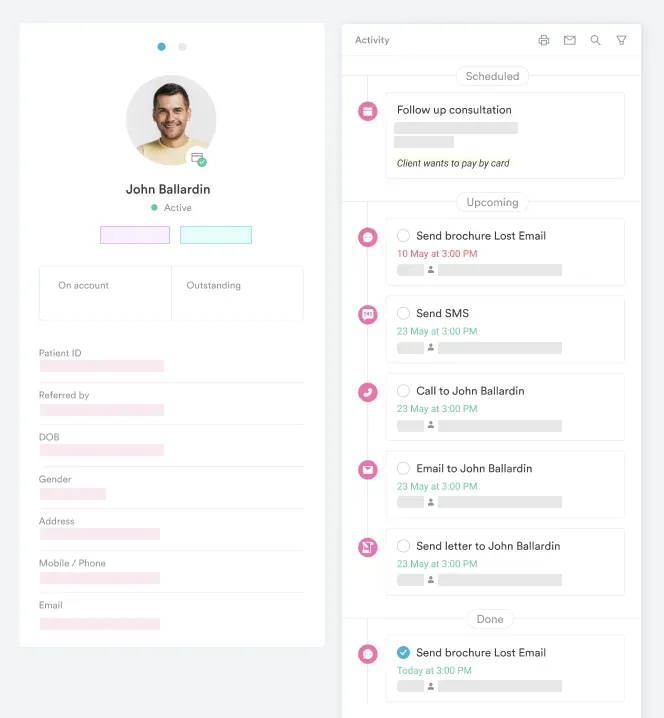
The practice team’s ability to set up automated recall workflows for these patient cohorts is a meaningful operational advantage.
Frequency answers how often. Timing answers when. The best time to take blood pressure is twice a day at consistent hours. Specifically, that means once in the morning before medication, food, or caffeine, and once in the evening. Anchoring readings to the same times is what makes a home log comparable from one week to the next.
Blood pressure follows a daily rhythm. It is usually lowest during sleep, climbs around waking, and often peaks in the late morning and early evening. What time of day blood pressure is highest varies between patients. So, a morning-and-evening pattern captures both ends of that curve.
When you advise a patient on how often to check blood pressure at home, recommend fixed times of day. Instead of leaving it to chance, consistency makes the pattern easier to read over time.
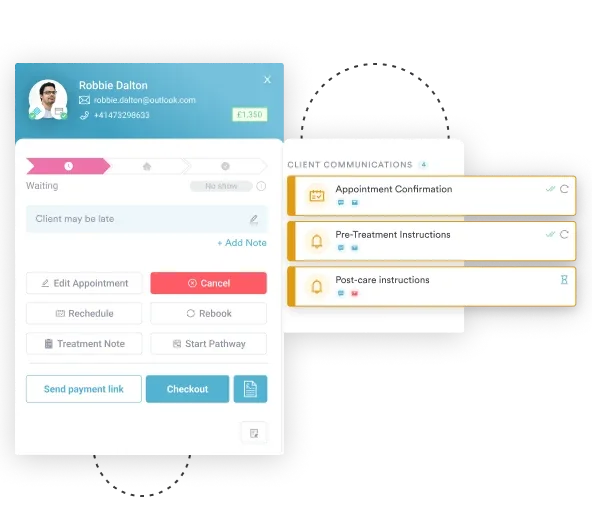
Getting patients to measure at consistent times is far easier when automated prompts replace memory-based reminders. That’s where a structured recall workflow earns its place.

Pabau lets your team automate recall reminders for hypertension reviews, log BP readings directly in the patient record, and track trends across a full patient history. Book a demo to see how the workflow fits your practice.

A single reading is a snapshot. However, a log of readings over weeks or months is a clinical story. Tracking is where blood pressure monitoring transforms from a screening tool into a management tool.
Whether patients use a paper log, a smartphone app, or a connected device, each entry needs the same minimum data. Specifically, that means the date, time of day, and both systolic and diastolic values. In addition, record the pulse if the device captures it and which arm was used. Add any relevant notes too, such as symptoms or missed medication.
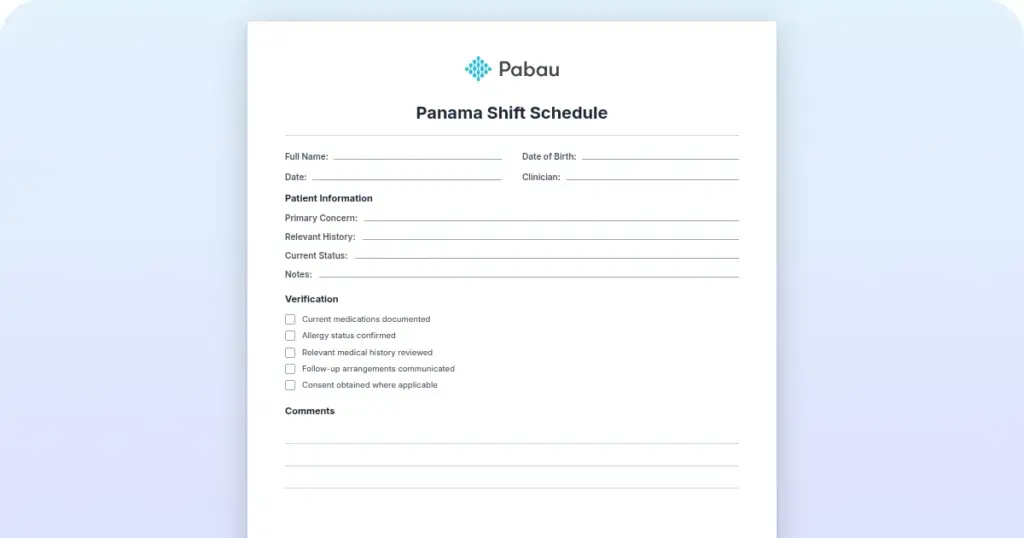
The clinical forms a practice uses to collect this information matter as much as the monitoring itself.
Knowing how to track blood pressure at home comes down to consistency and format. A simple printable blood pressure log works as well as any app. It should have columns for date, time, systolic, diastolic, pulse, arm, and notes. In fact, many patients prefer paper. Pabau’s vital signs record template is a ready-made version practices can hand out at the visit.
The record can be a printable chart, a set of blood pressure monitoring cards, or a phone app. However it’s formatted, bring it to the visit so the clinician can read it at a glance.
For clinic teams, the practical challenge is bringing patient-generated readings into the clinical record in a structured way. A patient who emails a screenshot of their phone app creates manual work. By contrast, a patient whose readings sync into a structured measurements tracking system creates a reviewable trend.
HIPAA-compliant data storage is also relevant here. Any patient-generated health data received by the clinic and stored in a digital system becomes part of the medical record. First, clinics should confirm their practice management software handles this under appropriate HIPAA-compliant data security standards. Only then should they set up remote data collection workflows.
Ambulatory blood pressure monitoring (ABPM) uses a device worn for 24 hours. Specifically, it takes automatic readings every 15-30 minutes throughout the day and night. It is the most diagnostically complete form of blood pressure measurement available in clinical practice.
This is not continuous, beat-to-beat monitoring. Instead, ABPM devices sample at fixed intervals and assemble a 24-hour profile from those points.
ABPM is particularly useful for two clinical phenomena that home and office monitoring can miss:
ABPM is also the method used to assess nocturnal dipping. Blood pressure naturally falls 10-20% during sleep. Patients who do not show this drop (non-dippers) have higher cardiovascular risk than their daytime readings alone would suggest. In fact, that signal is only visible through 24-hour ambulatory monitoring.
The measurement itself is well documented. However, what breaks down, in a busy GP practice or specialist clinic, is the workflow around it.
Consider a typical primary care scenario. A patient has newly diagnosed Stage 1 hypertension. The clinician wants daily home readings for two weeks, then a follow-up consultation to review results and adjust medication. In many practices, here is what happens instead:
Fixing this comes down to operations, not just clinical guidance. The practice team needs structured tools to improve patient engagement with monitoring protocols. That means more than just clinical guidelines printed on a leaflet.
Practice management software like Pabau handles this by design. Its measurements tracking feature lets teams log and review BP data within the same system as appointments and clinical notes. In addition, automated workflows can schedule follow-up reminders based on the time since the last recorded reading. This happens instead of relying on manual scheduling.
For GP clinics managing chronic disease registers, this kind of automation makes a real difference. Specifically, it separates a hypertension program that runs reliably from one that depends on staff members remembering to chase patients.
Telehealth integration adds another layer. Patients who use video consultations can share readings during the call from their home monitoring app. As a result, the clinician can review trends live without needing the patient to travel in.
The time-saving features for private practices that matter most in chronic disease management reduce friction around data collection and follow-up. In fact, that matters more than scheduling alone.
Remote blood pressure monitoring takes the home reading one step further. The patient’s device sends data straight to the practice between visits. As a result, the clinician sees trends without waiting for an appointment. A Bluetooth cuff or a blood pressure monitoring wearable syncs readings to an app. Next, the practice reviews them on a set schedule.
For US practices, this work is also billable. Self-measured blood pressure services have dedicated CPT codes. Specifically, 99473 covers device setup and patient training, and 99474 covers the monthly reading review. Remote physiologic monitoring codes cover longer programs.
Practices typically bill these codes alongside a hypertension diagnosis, most often I10. As a result, the diagnosis on the claim needs to match the monitoring service.
Billing either code compliantly means having specific documentation on file, not just the reading itself. For 99473, that’s confirmation the device is validated. In addition, it requires proof the patient has completed training on cuff size, positioning, and technique.
For 99474, the chart needs at least 12 readings over a 30-day period. In addition, it needs the reported average systolic and diastolic values. Finally, it needs a note showing the clinician communicated a treatment plan based on those numbers.
Billing has one common trap. Billers shouldn’t attach 99473 and 99474 to a same-day evaluation and management visit unless the E/M code carries modifier 25.
Building this workflow inside a practice management system keeps the readings, training records, and treatment plan notes together. Rather than living in a separate app, everything stays attached to the same file the biller works from. Pabau’s claims management software sits in that same system, so documentation and billing don’t live in two different places.
Set up a dedicated chronic disease recall list in your practice management system for hypertension patients. Tag patients by their current BP category and last measurement date. Automated reminders sent 48 hours before the recall is due will consistently outperform manual follow-up calls on both response rate and staff time.
Clear action thresholds help patients know when a home reading needs immediate attention. They also clarify when it warrants a call during office hours instead.
Practices that make it easy for patients to message readings securely capture this data before the consultation. This works whether the practice uses a patient portal or structured intake. Instead of scrambling to collect data during the visit, the information is already there.
Hypertension is only manageable when it is visible. In practice, blood pressure monitoring, done consistently and documented properly, is what makes it visible.
The clinical protocols are well established. The remaining work for most practices is operational. Specifically, that means getting readings into the record, acting on trends, and keeping patients engaged between visits.
Pabau’s measurements tracking and automated workflow tools help GP clinics and primary care practices build that infrastructure. If you want to see how it fits your hypertension management program, book a demo with the team.

Screening for peripheral artery disease at a routine visit? Ankle brachial index test explains ABI thresholds, from PAD confirmation below 0.9 to calcified vessels above 1.4.
Need to log more than just blood pressure at a visit? Our abnormal vital signs chart flags out-of-range values across every measurement the visit records.
Want to understand how telehealth changes the remote monitoring workflow? Telehealth in GP clinics walks through the practical and clinical considerations for virtual consultations in primary care.
Blood pressure monitoring is the regular measurement of the force that blood exerts against artery walls, expressed as two numbers: systolic (pressure during a heartbeat) over diastolic (pressure between beats). It is the primary method for detecting and managing hypertension, which typically has no symptoms until complications occur.
Normal blood pressure is defined as less than 120/80 mmHg by the 2017 AHA/ACC guidelines. Readings between 120-129 systolic with diastolic below 80 are classified as elevated. Individual targets vary depending on age, comorbidities, and clinical context, so a healthcare provider should set the specific goal for each patient.
Patients newly diagnosed with hypertension should monitor twice daily (morning and evening) for at least one week to establish a baseline. Patients on stable medication typically step down to two to three times per week once BP is controlled. Your clinician should confirm the schedule based on your current treatment stage.
Systolic pressure is the top number and measures the force on artery walls when the heart contracts and pumps blood. Diastolic pressure is the bottom number and measures the force between beats when the heart is at rest. Both values matter: isolated systolic hypertension (high top, normal bottom) is the most common pattern in adults over 60.
Pharmacy machines can give a reasonable estimate but are not a substitute for a validated home monitor or clinical measurement. Accuracy depends on calibration and maintenance schedules, which vary widely. The AMA recommends upper-arm validated devices for home use. If a pharmacy reading is significantly elevated, confirm it with a validated device before drawing clinical conclusions.
Ambulatory blood pressure monitoring (ABPM) is a 24-hour monitoring method where a device worn on the upper arm takes automatic readings every 15-30 minutes throughout the day and night. It is used to diagnose white coat hypertension, masked hypertension, and to assess nocturnal blood pressure dipping patterns that single-point readings cannot capture.
Blood pressure is monitored with an inflatable cuff that measures the pressure inside an artery, either automatically with a digital monitor or manually with a sphygmomanometer and stethoscope. Home monitoring, office readings, and 24-hour ambulatory monitoring are the three settings clinicians rely on, and each captures a different slice of a patient’s true blood pressure.
Blood pressure is usually lowest during sleep and rises around waking, often peaking in the late morning and again in the early evening. This daily rhythm is why readings taken at the same times each day are more comparable than random spot checks, and why a morning-and-evening logging routine is the home standard.
Normal blood pressure is defined as below 120/80 mmHg for adults regardless of age under the 2017 AHA/ACC guidelines. Older adults often run higher because arteries stiffen with age, but a higher reading is not automatically normal for that age. It still carries risk, so a clinician should set the individual target based on age, comorbidities, and overall cardiovascular risk.