CRM for chiropractors: how to manage patients, bookings and marketing
A CRM for chiropractors is a patient relationship management system built around...

Last Updated: Oct 13, 2026
Y-BOCS scoring turns a patient’s obsessive-compulsive symptoms into a number you can act on. A clinician rates 10 items from 0 to 4, five for obsessions and five for compulsions. Each subscale runs 0 to 20, so the total lands between 0 and 40. A total of 16 or higher usually calls for active treatment.
Rate it loosely and the treatment plan tilts with it, because most OCD protocols key their next step to that number. What follows is the interview structure, the scoring steps, the severity bands, and the errors that quietly skew a total.
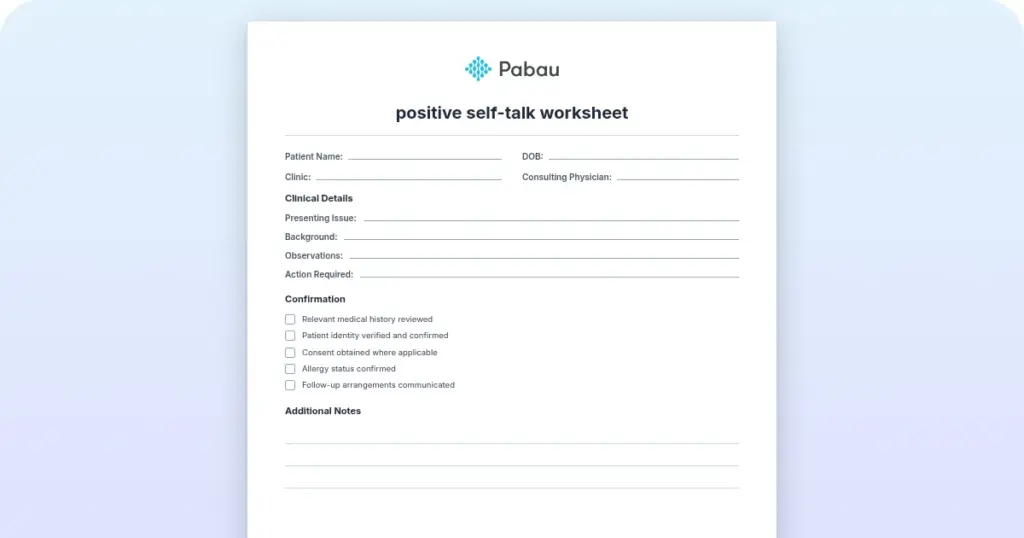
A ready-to-use assessment sheet with the symptom checklist, the 10-item scoring grid, the severity legend, and a serial tracking table. Use it to record baseline, mid-treatment and end-of-treatment scores in one place.
Download template
The Y-BOCS is a clinician-administered interview, not a self-report form. Ten items scored 0 to 4 give a total of 0 to 40.
Five severity bands sit behind the total. They run 0 to 7 subclinical, 8 to 15 mild, 16 to 23 moderate, 24 to 31 severe, and 32 to 40 extreme.
A drop of 35% or more from baseline counts as treatment response, which is why serial administrations matter.
Two patients can share a total of 26 and still need different treatment, because the subscale split carries the plan.
Most scoring errors come from loose anchoring, mixing up the two subscales, or leaving avoidance out.
The Y-BOCS measures how severe a patient’s OCD is, not whether they have it. Goodman and colleagues published the scale in 1989, and it has been the reference measure ever since.
A diagnostic interview settles the diagnosis. The Y-BOCS then tells you what the symptoms are costing the patient this week.
It also keeps obsessions and compulsions apart, and that separation is the whole point. Two patients with the same diagnosis can need very different work. Practices running a mental health EMR usually store the scale beside the diagnostic write-up. The severity number then sits next to the clinical picture that produced it.
In most workflows the structured psychiatric evaluation comes first. The Y-BOCS then sets the severity baseline you will measure every later score against.
The scale runs in two parts. Part I confirms which symptoms are present, and Part II rates how severe they are. Working in that order stops you rating severity for a symptom the patient does not report.
The checklist is a present-or-absent inventory of common symptoms. The original 1989 version totals 54 items across all categories.
Obsessions cover aggressive, contamination, sexual, hoarding, religious, symmetry, somatic and miscellaneous themes. Compulsions cover checking, cleaning, counting, ordering, hoarding, repeating and miscellaneous rituals.
Clinicians mark each item for the past week, which builds the symptom profile before any severity rating happens. It also saves time in the room. If the patient denies contamination fears, you skip the contamination probing entirely.
Five items cover obsessions and five cover compulsions. Both sets rate the same five dimensions: time consumed, interference, distress, resistance, and control. Every item scores 0 to 4 against written anchors, so the rating is tied to a description rather than a clinical hunch.
The time item shows how the anchors work:
Items 1 to 5 sum to the obsessions subscale and items 6 to 10 sum to the compulsions subscale. Each runs 0 to 20. Add the two for the total.
Scoring takes a structured interview anchored to the past seven days. Seven steps, in this order.
Five bands sit behind the total. They give you a shared language with the patient, and a defensible reason for the level of care you recommend.
The boundaries are not magic numbers. A 15 and a 16 describe nearly the same patient, so read the band as a prompt to think rather than a rule to follow.
Two patients can post the same total and still need different treatment. The split between the subscales is what tells you which one is sitting in front of you.
Take a total of 26. It could be obsessions 18 with compulsions 8, a balanced 13 and 13, or the mirror image at 8 and 18. Same band, three different plans.
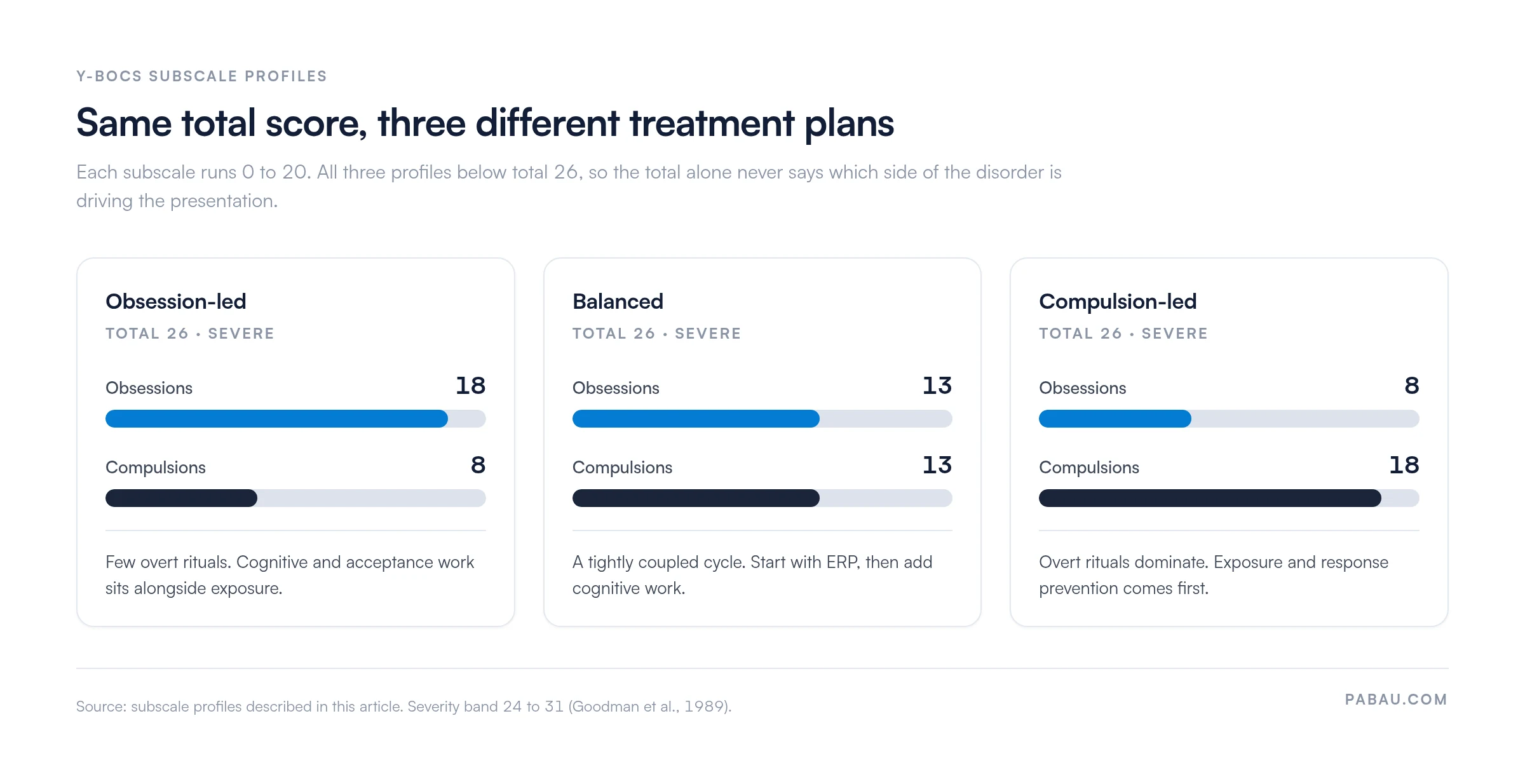
Obsession-led. Intrusive thoughts dominate and overt rituals are thin on the ground. Cognitive strategies, mindfulness and acceptance work sit alongside exposure. These patients often try to think their way out of an obsession rather than resist it behaviorally.
Compulsion-led. Visible rituals carry the presentation, so exposure and response prevention aimed at those rituals is the first move. Plan it from an exposure hierarchy, because these patients often describe the behavior as automatic and struggle to say how it started.
Balanced. Severe obsessions feed equally severe compulsions, so the loop is tight. Most clinicians open with ERP to interrupt it, then add cognitive work once the rituals loosen.
Treatment response is conventionally a fall of 35% or more from the baseline total. Serial administrations are what make that measurable, so the baseline is worth protecting.
Here is how it plays out. A patient starts at 30, which sits in the severe band. Twelve weeks of ERP later they score 19, in the moderate band. That is a 37% reduction, so they meet the response criterion.
Remission thresholds vary across the literature, but a final total of 7 to 10 is a common marker of minimal symptoms. The interim scores are just as useful. A 10% fall by week 4 points to a slow responder, and the options are more frequent sessions, medication augmentation, or a specialist referral.
A 50% fall by week 6 means the opposite. You can ease the session intensity without handing the gains back. Serial scores only work if someone schedules them, which makes this a therapy practice management problem as much as a clinical one.
Fix the interval before treatment starts: weekly during intensive ERP, every two weeks during maintenance. Scores taken at set intervals can be compared against each other. Scores taken whenever someone remembered tell you little beyond how that particular week went.
The Y-BOCS-II, published by Storch and colleagues in 2010, revised the scale rather than replacing it. The scoring changed, so the two versions do not produce interchangeable totals.
That difference in range is the part practices get caught by. A total of 24 out of 40 is not the same score as 24 out of 50. The two versions cannot share a trend line. Pick one, note which version each score came from, and stay on it for the duration of a treatment episode.
Reliability lives or dies on administration. Four errors show up again and again, and each one bends the total in a predictable direction.
Compulsion time gets scored on the obsessions subscale, or the other way around. The boundary is simple. Obsessions are unwanted intrusive thoughts, and compulsions are the acts performed in response.
A patient who spends two hours checking locks is reporting compulsion time, not obsession time. Part I is your reference here. If the obsession is contamination fear and the compulsion is hand washing, the compulsion item measures washing, not rumination.
Some patients avoid the trigger rather than perform a ritual. Staying home to dodge contamination is still interference, and it belongs on the interference items.
Ask it directly: what do you avoid because of your OCD? Without that question, an avoidant patient scores far lower than they live.
The Y-BOCS rates the past week only. Asking how much time obsessions usually take invites a long-term average, and symptoms that wax and wane will flatten out inside it.
Put the anchor in the question every time: thinking back over the past seven days, how many hours a day?
A 30-minute baseline in the room and a 10-minute phone reassessment at week 8 are not the same measurement.
Hold the setting, the depth of probing and the time allowed steady across time points. Structured progress notes make that far easier to repeat, especially when a colleague runs the reassessment.
Run through this before the score goes into the record. It takes under a minute and catches most of what goes wrong.
The last line catches more than the others. Comparing back to the previous score makes small drifts look like progress, while the baseline is the only figure the 35% rule is measured from.
Most practices score the Y-BOCS on paper, then someone types the total into the record later that day. The sheet goes in a folder, the subtotals live only on that sheet, and the week-8 comparison turns into a hunt through the file.
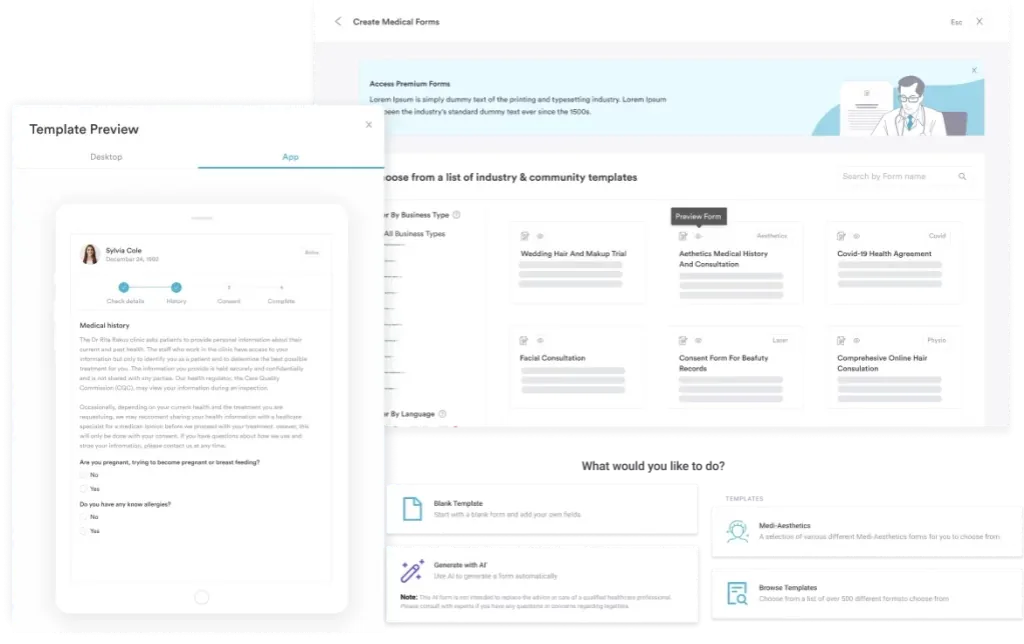
Pabau keeps the whole sequence in one place. The assessment is built as a digital form, so ratings are captured during the interview instead of copied over afterwards. Each completed form saves against the patient record with its date and the clinician who ran it.
Because the history sits on the record, the baseline is one click away at every reassessment. Recurring appointments carry the assessment with them, so the week-4 and week-12 scores get taken rather than remembered. Your outcome data stops depending on who happened to book the follow-up.
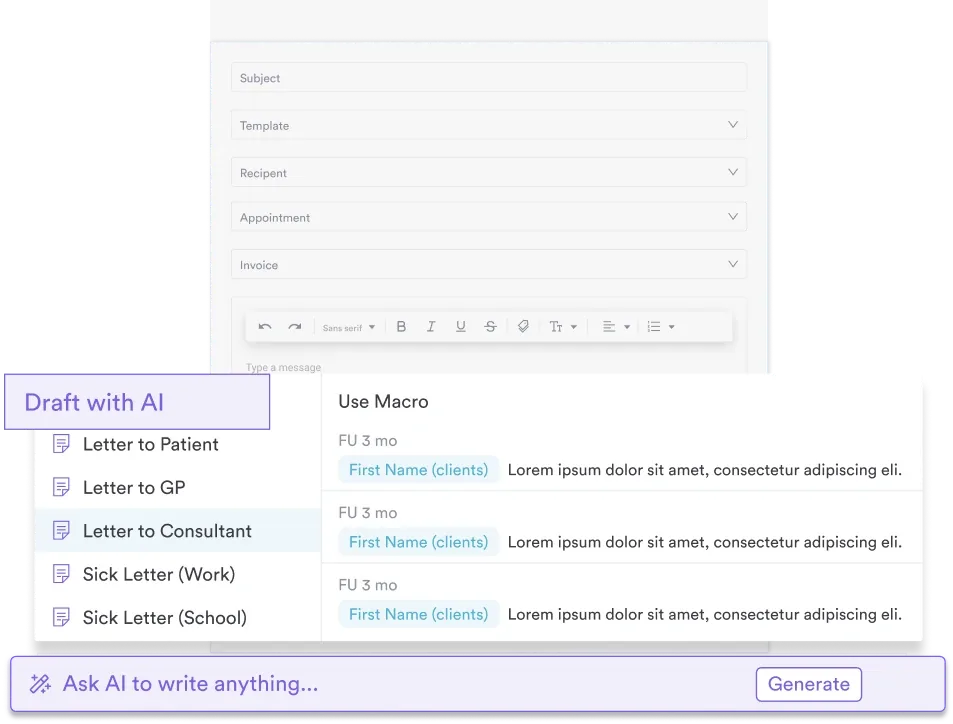

Build the scale as a digital form, capture ratings in session, and see the baseline next to every reassessment. Pabau stores each administration with its date and rater.

The Y-BOCS is only ever as good as the interview behind it. A careful 20 minutes produces a number that holds up in front of a patient, a supervisor or an insurer. A rushed one produces a number that moves for reasons nobody can explain three months later.
So pick your habits and keep them. Anchor to the past seven days, score both subscales separately, and run each reassessment the way you ran the baseline. Do that and the trend line means something.
The trade-off is small and worth naming. Consistency costs a few minutes at every visit, and it pays them back at the visit where treatment has to change.
Download the template above to hold the format steady across raters. Book a demo to see how Pabau stores each Y-BOCS administration against the patient record, so the baseline is there when you need it.

Need the diagnostic framework that sits in front of the severity score? Psychiatric evaluation template gives you the structured interview clinicians usually run before a Y-BOCS baseline.
Planning the exposure work that follows the baseline? Exposure hierarchy worksheet helps you rank triggers with the patient before the first ERP session.
Want something the patient works on between sessions? Weekly goals tracker OCD worksheet keeps small, specific targets visible across the week.
Assessing hoarding alongside OCD? Hoarding rating scale covers a presentation the Y-BOCS checklist notes but never scores on its own.
Yes. Self-report adaptations exist and correlate reasonably well with the clinician-rated interview, which makes them useful for screening or between-session tracking. For treatment decisions, the interview remains the reference version.
Not directly. The Children’s Yale-Brown Obsessive Compulsive Scale (CY-BOCS) is the pediatric version. It keeps the 10-item structure, with wording and probes adapted for younger patients and for parent input.
Most clinicians budget around 30 minutes for a first administration, including the symptom checklist. Reassessments run shorter because the checklist is already established. Compressing the baseline is the one shortcut worth avoiding.
No formal certification is required, but the scale assumes training in structured clinical interviewing. Where several clinicians rate in the same practice, calibrating them against each other matters far more than any certificate.
Check the administration before you change the plan. A rise can follow a stricter rater, a harder week, or exposure work that briefly raises reported distress. If the method held steady and the rise persists across two assessments, review the plan.