Crisis safety plan template
A crisis safety plan is a short, personalized written plan that a patient and cl...

3
Last Updated: Oct 19, 2026
A social work treatment plan is a written document that sets out a client’s presenting problems, agreed goals, and planned interventions. It also states how progress will be measured. Most practitioners draft one after the intake and biopsychosocial assessment, then revisit it throughout the work.
Documentation standards are the reason the plan matters. Funders, supervisors, and accreditors all expect to see a clear link between what was assessed and what was done. The NASW Code of Ethics sets the professional expectations for documentation, and requirements for specific plan formats vary by setting, state, and license type.
This guide gives you a free, ready-to-use social work treatment plan template. It then shows how to complete each section, write SMART goals, and trace every goal back to the assessment.
A fillable plan with fields for client and social worker details, DSM diagnosis, problem identification, goals, objectives, and interventions. It closes with an evaluation and review section and a dated social worker signature.
Download template
A social work treatment plan records the presenting problem, goals, interventions, and review dates in one signed document.
Goals work best when written as SMART objectives with a measurable target and a date.
The golden thread runs from each assessment finding to a goal, an objective, an intervention, and the progress notes that measure it.
Review the plan on the schedule your setting, funder, or accreditor requires, and write that interval into the plan.
Pabau, the practice software we build, keeps the plan, intake forms, and progress notes on one client record.
A social work treatment plan is the working agreement between a social worker and a client about what needs to change. It also sets out how that change will be pursued. It translates the biopsychosocial assessment into specific goals and interventions.
Licensed clinical social workers (LCSWs), licensed master social workers (LMSWs), and case managers all use treatment plans. You’ll find them in mental health, child welfare, and substance use settings. Requirements differ by license type and state, so check your board’s rules before assuming a particular format is mandatory.
The plan is also a professional obligation. Standard 3.04 of the NASW Code of Ethics asks social workers to keep records that are accurate and reflect the services provided. Standard 1.02 protects the client’s right to self-determination. That is why the client helps set each goal in the plan.
Most plans share the same core sections. The table below summarizes what each one captures.
The presenting problem anchors the rest of the plan. If it is vague, goals drift and progress becomes hard to show.
The strengths row sets a social work plan apart from a purely clinical one. Social work practice is strengths-based, so the plan names what the client can draw on as well as what needs to change.
Work through the plan in the order the client’s case unfolds, since each step draws on the one before it.
Discharge planning belongs in the same document. Record the criteria for closing the case from the outset, so the client and the team both know what a planned exit looks like.
Client participation is a core expectation in social work planning. Draft goals in session where you can, using the client’s own words for what they want to change.
A plan the client helped write is easier to review honestly. Disagreement shows up early, while there is still time to adjust the goal.
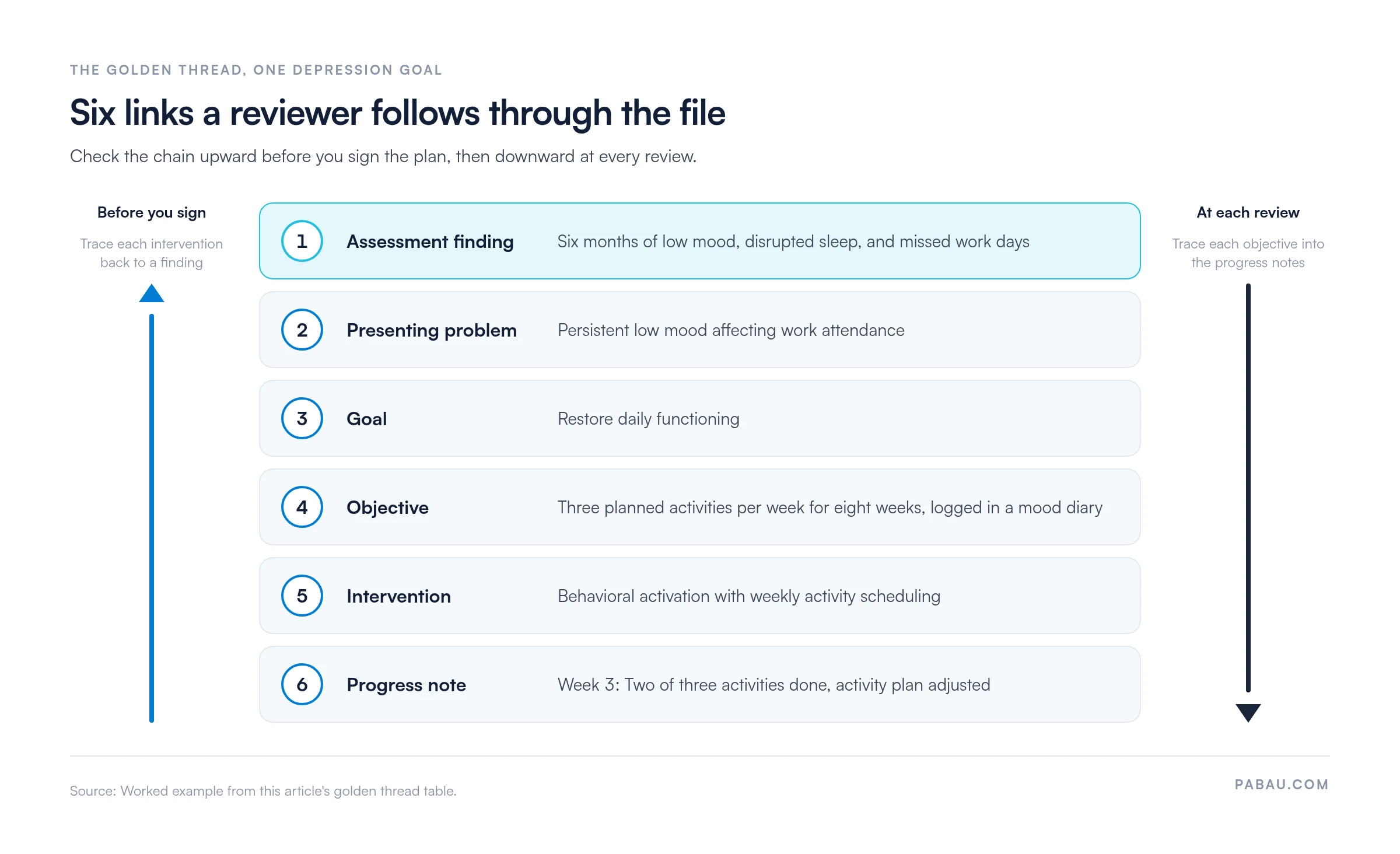
The golden thread is the line a reviewer follows from an assessment finding to the progress note that shows it being addressed. If one link is missing, the plan looks disconnected, even when the work was sound.
Supervisors, auditors, and insurers tend to read a file in this order. The table traces one depression goal through every stage.
Run the thread backward before you sign the plan. Every intervention should point to an objective, and every objective to a documented finding. An intervention with no finding behind it needs a new assessment note or belongs in a different plan.
Run it forward at each review. If the progress notes stop mentioning an objective, the review should say whether that objective still matters to the client. The diagram below shows both checks on the same depression goal.
SMART goals are Specific, Measurable, Achievable, Relevant, and Time-bound. Many social work settings and accreditors recommend this framework as best practice, though the exact format is set by your agency.
A goal that fails any one of these tests usually needs rewriting before the plan is signed.
Goals describe the change. Objectives describe the measurable steps toward it. The examples below show how that split works across common presenting problems.
A sample plan for a client with depression might record the presenting problem as persistent low mood affecting work attendance. The assessment notes sleep disruption and limited social contact. The client identifies a close friend and a weekly class as supports.
The goal is to restore daily functioning. The objective is three planned activities per week for eight weeks, logged in a mood diary. Interventions include behavioral activation and cognitive behavioral therapy techniques, with progress reviewed at each session.
A sample plan for alcohol use might record the presenting problem as drinking that has led to two missed custody visits. The assessment notes daily drinking, a supportive sister, and the client’s wish to stay involved with their children.
The goal is to attend every scheduled custody visit sober. The objective is to log alcohol-free days weekly, against a target the client sets with the social worker. Interventions include motivational interviewing, a relapse-prevention plan, and a referral to a peer support group. Progress is reviewed every two weeks.
Programs that need a dedicated recovery format can start from our substance abuse treatment plan template instead.
The intervention section names the methods you will use and why they fit the problem. Cognitive behavioral therapy (CBT) and dialectical behavior therapy (DBT) are both recognized as evidence-based approaches. The Substance Abuse and Mental Health Services Administration (SAMHSA) publishes guidance on evidence-based treatment for behavioral health.
Name the specific method. “Counseling” tells a reviewer very little, while “motivational interviewing, weekly, 50 minutes” shows what was delivered and how often.
Trauma-informed care shapes how every session is run, from pacing and consent to how the plan is explained to the client. List it as the approach behind the plan, then name each intervention separately.
A treatment plan focuses on the clinical work the client and social worker agree to do. An individualized service plan lists the services a client will receive and who provides them. A care plan often covers the wider coordination of health and social support.
Terminology varies by setting. In some agencies one document covers all three functions, while in others each is a separate record. Check which term your funder or accreditor uses before choosing a title.
Progress notes are where objectives get measured. Each session note should say whether the client moved toward an objective, stayed flat, or moved backward. It should also say what that means for the plan. A structured social work case note makes that measurement easier to record.
Review frequency varies by agency, funder, and accreditor. Joint Commission and SAMHSA guidance both support regular review, so write your interval into the plan itself.
For clinical social workers who bill insurance, the plan also supports medical necessity. Payers reviewing psychotherapy claims often ask to see a current plan that links the diagnosis to the services billed.
Keep the ICD-10 diagnosis, the goals, and the session frequency consistent across the plan and the claim. When they disagree, the claim is easier to question at audit.
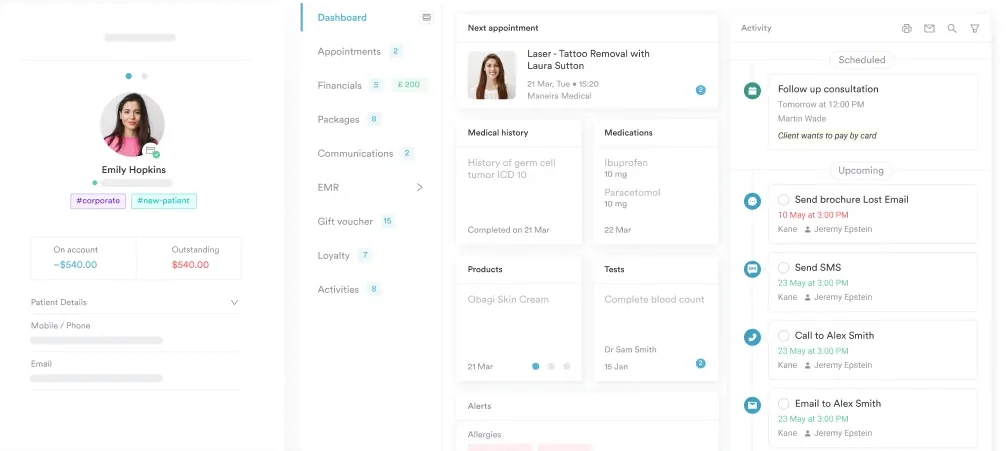
In Pabau’s practice software, Client records keep progress notes next to the plan they relate to, which makes each review quicker to prepare.
Most weak plans fail in a handful of predictable ways. Each one is easy to spot in a file review.
The template suits private therapy practices, community mental health teams, case management services, and agency settings. Each team can adapt the sections to match its referral pathway and documentation rules.
The PDF is a single-client form that runs from client details to a signed evaluation and review section. Fill it out in this order.
The form has no separate fields for strengths, risk, or discharge criteria. Add them under problem identification or the evaluation section if your setting expects them. Add client and supervisor signature lines where your agency requires both.
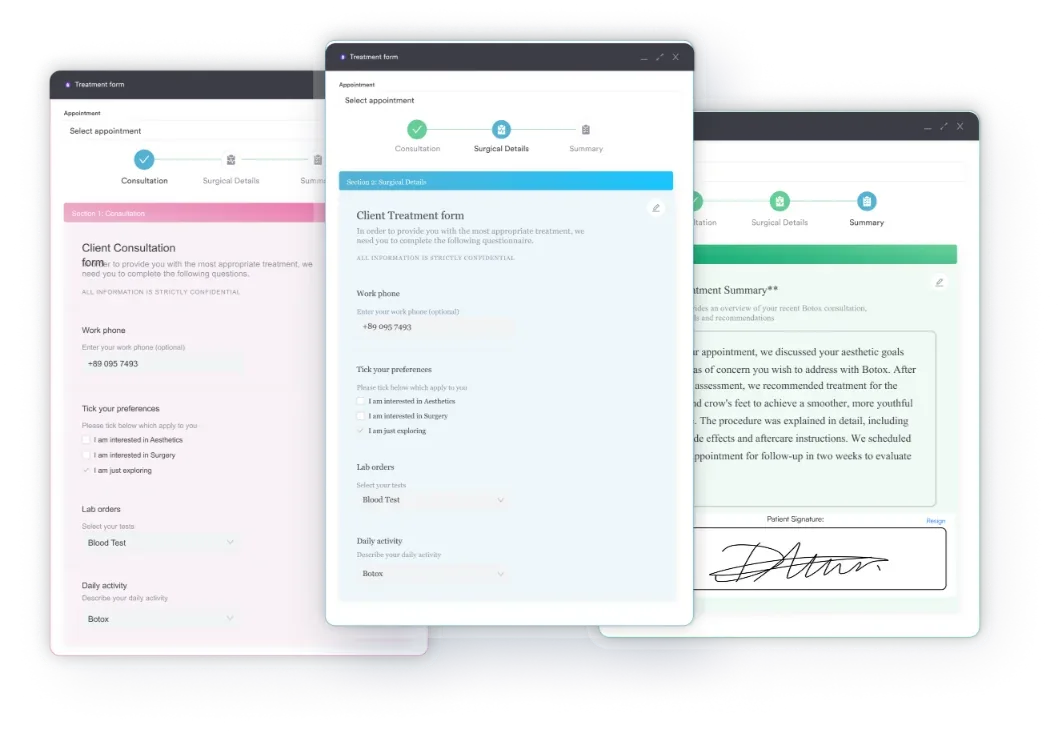
Digital intake is a practical way to collect the assessment inputs before you draft the plan. Pabau’s digital forms let clients complete intake questionnaires ahead of the first session.
A shared structure makes plans easier to audit and easier to hand off when a client moves between workers.
Write your review interval into the evaluation and review section when you first draft the plan. Audit teams look for a dated review schedule, and a plan without one is harder to defend in supervision.
Consent and data protection rules apply to every plan you store. The Health Insurance Portability and Accountability Act (HIPAA) governs how US practices handle client records, and NASW standards set the professional expectations for confidentiality. Confirm how your organization stores and shares plans before you adopt any template.
Plans from substance use programs can carry stricter rules. Records from federally assisted substance use disorder programs fall under 42 CFR Part 2, which adds consent and redisclosure restrictions on top of HIPAA.
SAMHSA publishes treatment planning resources for behavioral health teams. They are useful when you need a reference for your own protocols.
In many practices the plan lives in a Word file and intake answers sit in a separate forms tool. Progress notes go into a third system, so each review starts with a search for the latest version.
Pabau brings those pieces into one client file. Intake questionnaires completed through digital forms land on the client’s record before the first session. Session notes sit beside the plan they measure, so a review starts from the evidence.
Every Pabau subscription includes the full platform, so scheduling, forms, notes, and billing sit under one login. Your team spends review time on the client instead of hunting for documents.

See how Pabau links treatment plans, digital intake, and progress notes to each client record, so reviews take less time to prepare.

A treatment plan earns its place in the file when it changes what happens in the next session. If a review leaves each goal and intervention as it was, the plan has stopped steering the work.
The most useful habit is the golden thread check. Before signing, trace each intervention back to an assessment finding. At each review, trace each objective forward into the progress notes. Plans that pass both checks are easier to defend in supervision, at audit, and with a payer.
The trade-off is time. A measurable, client-agreed plan takes longer to draft than a list of problems. That time comes back at every review, because progress is already counted.
Pabau’s therapy practice management software keeps plans linked to the client file, so updates happen where the work is recorded. Book a demo to see how Pabau keeps treatment plans, intake forms, and session notes in one record.

Collecting intake details before the first session? Social work intake form template covers the sections that feed the biopsychosocial summary in your plan.
Recording progress against each objective? Social work case note template shows how to document each session so reviews have evidence to work from.
Mapping a client’s support network? Ecomap social work template helps you chart the relationships and resources the strengths section can build on.
Need a plan focused on services rather than treatment? Individualized service plan template lists the services a client receives and who delivers each one.
Want more goal and objective examples? SMART treatment plan template gives worked SMART goals you can adapt for your own clients.
A social work treatment plan is a written document that records a client’s presenting problem, agreed goals, interventions, and review dates. It is usually drafted after the biopsychosocial assessment.
Review intervals depend on your setting, funder, and accreditor. Write the interval into the plan so the review schedule is clear to the client and the supervisor.
A treatment plan covers the clinical goals and interventions, while a service plan lists the services a client receives and who provides them. Some agencies combine the two in one document.
A social work treatment plan should include the presenting problem, a biopsychosocial summary, client strengths, goals, measurable objectives, and interventions. It also needs review dates and discharge criteria. Most agencies require client and supervisor signatures.
A goal describes the change the client wants, such as restoring daily functioning. An objective is a measurable step toward that goal, with a target and a date. Three planned activities per week for eight weeks is an objective.
The client and the social worker usually sign the plan, and many agencies also require a supervisor’s signature. Check your agency policy and payer rules, because signature requirements vary by setting and license type.
Record the disagreement and work toward a goal the client can accept. Self-determination is a core NASW standard, so a goal imposed on the client is unlikely to hold. Note the reason in the plan so reviewers can follow the decision.
Many insurers that reimburse psychotherapy ask for a current treatment plan as evidence of medical necessity. The plan should link the diagnosis to the services billed, and its session frequency should match the claims.
The golden thread is the traceable link from an assessment finding to the problem, goal, objective, intervention, and progress note. A reviewer should be able to follow each step in either direction.