ADHD Cleaning Checklist
An ADHD cleaning checklist is a cleaning list built for adults with ADHD. In oth...

2
Last Updated: Oct 12, 2026
A sample treatment plan is a structured clinical document that sets out a patient’s diagnosis, treatment goals, measurable objectives, interventions and review schedule. Therapists, counselors, psychiatrists and primary care physicians use it as a roadmap for care that is patient-centered, measurable and regularly reviewed.
A well-built plan links every intervention to a specific objective. That link is what payers look for when they judge medical necessity, and it makes claim denials less likely.
This guide gives you a free template to download, two worked plans for depression and anxiety, and a walkthrough for writing SMART goals. Once a plan is written, a mental health EMR keeps it with the patient’s notes and review dates.
A ready-to-use PDF covering patient details, presenting problem, ICD-10-CM diagnosis, treatment goals and objectives, evidence-based interventions and a progress monitoring schedule. You can customize it for any healthcare specialty.
Download template
A treatment plan documents the patient’s presenting problem, diagnosis, goals, objectives, interventions and review schedule, which clinical and insurance compliance both require.
SMART goals (specific, measurable, achievable, relevant, time-bound) are the gold standard for writing objectives that are clinically meaningful and measurable.
Vague goals, missing diagnoses and interventions that serve no objective are common reasons for claim denials and audit findings.
Practice software such as Pabau lets you complete, store and track treatment plans as digital forms, and its secure records help support HIPAA compliance.
A treatment plan is a clinical document that outlines how a healthcare provider will help a patient reach health and wellness goals. It brings the presenting problem, diagnosis, goals, objectives, interventions and monitoring schedule into one record.
One plan serves four audiences at once:
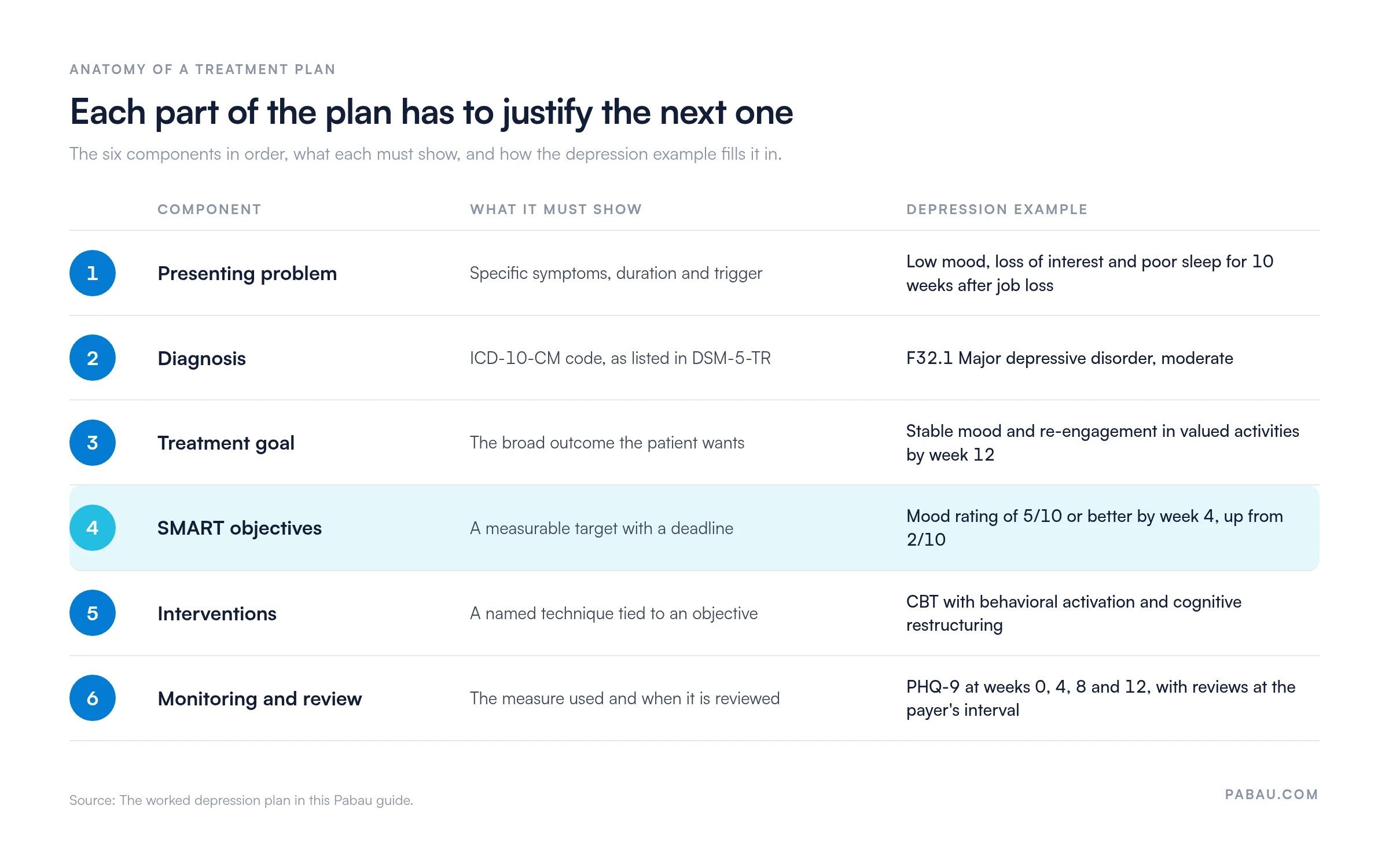
Every treatment plan needs five core components:
The table below shows how each component feeds the next, using the depression plan worked through later in this guide.
The downloadable template walks you through treatment planning in five steps:
Once it’s complete, file the plan alongside the patient’s digital intake forms, so the presenting problem and goals sit in one record. Review it at the interval your payer or state requires (often every 30 to 90 days).
The template suits any clinician who provides ongoing care and documents treatment decisions, including:
Any practitioner working under insurance billing requirements or regulatory oversight needs a well-structured treatment plan. The template works across specialties because its core structure of diagnosis, goals, objectives, interventions and monitoring is widely used across therapy practices.
Clinical benefit: A treatment plan forces intentional care. Writing specific, measurable objectives sharpens clinical thinking and shows quickly whether treatment is working.
Insurance compliance: Insurance payers require treatment plans to demonstrate medical necessity. A clear, well-documented plan reduces claim denials and supports authorization for ongoing care.
Legal protection: Treatment plans are part of the patient’s medical record and are discoverable in litigation or audit. A documented, evidence-based plan shows you acted within the standard of care.
Patient engagement: When patients see their goals and objectives written down, they feel heard and understand what treatment will involve. That clarity supports adherence and better outcomes.
Storing treatment plans in secure digital records keeps them accessible, easy to update and retained for compliance purposes.
These documentation errors lead to insurance denials and audit findings:
Digital documentation backed by compliance management tools keeps treatment plans stored securely and supports HIPAA compliance. Built-in templates and prompts also steer you away from these errors.
The SMART framework is the gold standard for writing treatment objectives. SMART stands for:
Example SMART objective: By week 6, patient will attend at least 2 social activities per week, up from a baseline of 0. A weekly check-in measures progress. Every objective in your plan should follow this framework. If you want the patient to draft targets with you in session, a SMART goals worksheet gives that conversation a structure.
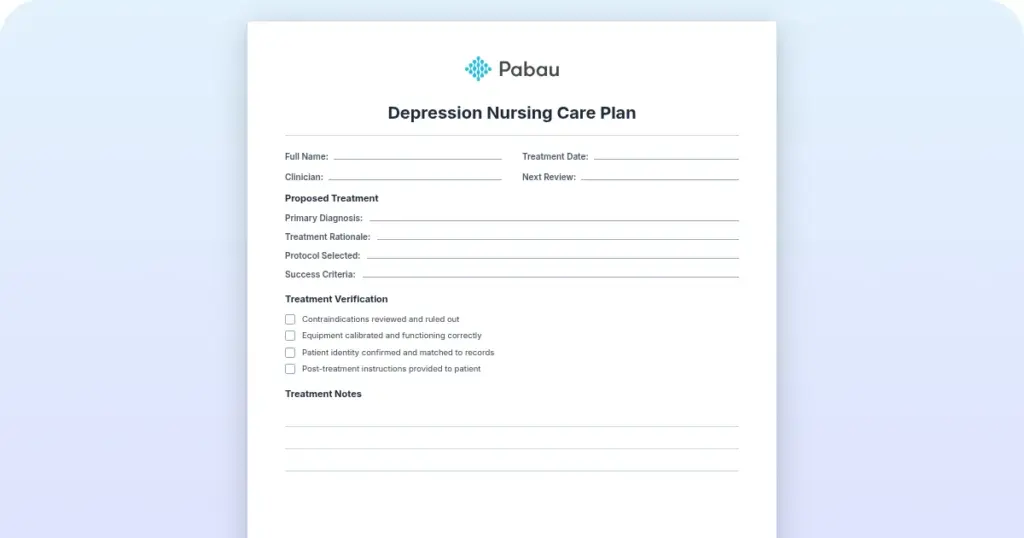
Here’s a complete, realistic treatment plan for a patient presenting with depression:
This plan documents medical necessity, links interventions to objectives, includes measurable outcomes and defines a review schedule. Scoring the PHQ-9 at fixed weeks gives each review a number to compare against the objective.
Here’s a complete treatment plan for a patient with generalized anxiety disorder. It follows the same structure as the depression plan, which makes adapting either one easy.
The anxiety plan uses the same framework as the depression example. Up to about 60% of people with an anxiety disorder also experience depression symptoms. When both are present, use integrated interventions like behavioral activation and cognitive restructuring rather than separate treatment tracks.
Document your treatment plan within 24 hours of the patient’s first session, while the presenting problem and initial assessment are fresh. Update the plan at every scheduled review, at the interval your payer or state requires (often every 30 to 90 days). Use automated reminders to flag plan reviews before they fall due.
Different conditions call for different goal structures. The framework stays SMART, but the content varies with the clinical presentation:
Adapt these examples to your patient population and specialty, and tie every objective to a measurable outcome and a timeframe. That keeps each plan clinically sound and ready for payer review.
Many practices still keep treatment plans as PDFs or word processor files, with review dates tracked in a calendar or someone’s head. Plans drift out of date, and a payer audit turns into a search through folders.
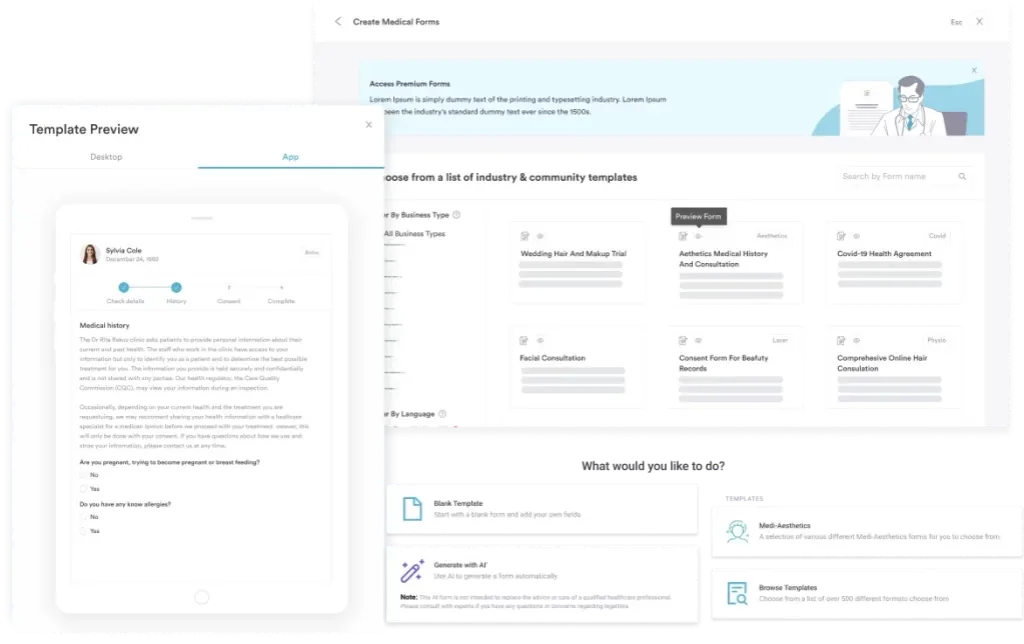
With Pabau’s digital forms, you build this template once and complete it inside the patient record. The diagnosis, goals and objectives then sit next to session notes and outcome scores. Automated workflows flag each plan review before it falls due, so nobody has to remember the date.
Pabau Scribe, our AI scribe, drafts session notes for you to review, so recording progress against each objective takes minutes rather than an evening. Every subscription includes these features, and structured onboarding sets the template up around how your practice works.

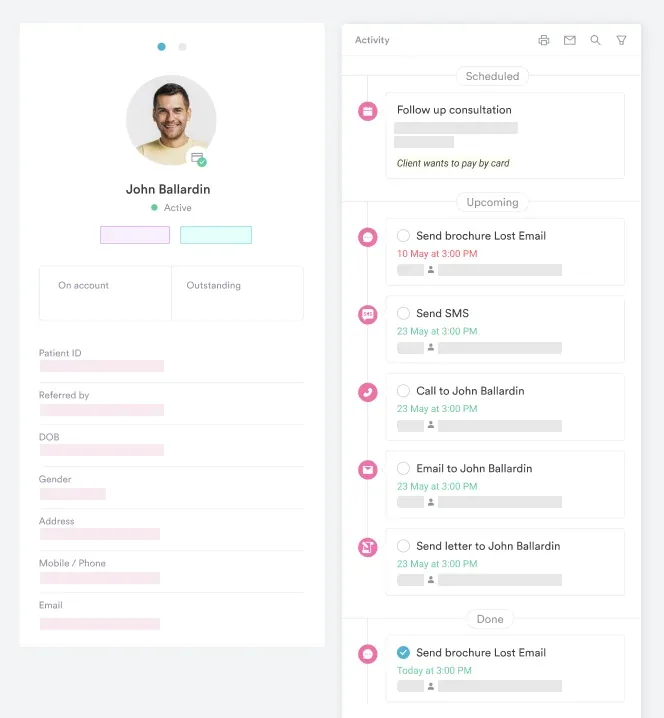
Pabau keeps treatment plans, session notes and outcome scores in one patient record. Automated reminders flag each plan review before it falls due.

Start your next intake with the template open, and write the presenting problem in specific, observable terms. Every later section depends on that first entry being concrete.
The trade-off is time up front. A careful first plan takes longer to write than a vague one, but it makes every review faster and every claim easier to defend.
Book a demo to see how Pabau keeps your treatment plans, notes and review dates in one patient record.

Need a structure for each session’s note? SOAP note for counseling shows how to record each session against the plan’s objectives.
Want to measure treatment outcomes objectively? Goal attainment scale turns each treatment goal into a scored outcome you can track between reviews.
Documenting ongoing psychotherapy? Progress notes for psychotherapy covers how to record progress toward each treatment goal.
Tracking depression severity over time? Montgomery-Åsberg depression rating scale gives you a clinician-rated score to compare at each plan review.
Every treatment plan needs five parts. They are the presenting problem and diagnosis, treatment goals, measurable SMART objectives, evidence-based interventions, and a progress monitoring and review schedule.
Review it at the interval your payer or state requires, which is often every 30 to 90 days. Track outcomes at every session, then formally update the written plan at each scheduled review or when clinical status changes significantly.
Goals are broad, long-term outcomes the patient wants to achieve, such as “reduce depression symptoms and return to work”. Objectives are specific, measurable, time-bound steps toward each goal, such as “by week 4, increase social activities to 2 per week”. Each goal typically has two or three supporting objectives.
Treatment plans demonstrate medical necessity, showing the patient meets diagnostic criteria. They document the rationale for the treatment chosen and provide measurable outcomes that justify continued authorization. A clear plan reduces claim denials and speeds up authorization for ongoing care.
No. Each patient’s plan must reflect their specific presenting problem, severity, life circumstances and preferences. You can reuse the structure, but write the content for each patient.