Talkaholic scale
The talkaholic scale is a 16-item self-report questionnaire that measures compul...

2
Last Updated: Oct 8, 2026
A psychotropic medication list records the mental health medications a practice prescribes or a patient takes, grouped by drug class. The five main classes are antidepressants, antipsychotics, mood stabilizers, anxiolytics and hypnotics, and stimulants. For each drug, a useful list notes the generic and brand name, indication, dose range, controlled substance schedule, and the monitoring it needs.
This guide shows you how to build your own list, class by class, from antidepressants to stimulants. Our free download is a one-page blank checklist form for recording a patient’s list by hand. It holds no drug data, so the guidance below tells you what to write on it.
A one-page blank checklist with fields for the patient’s name, date of birth, record or MRN number, and who prepared it. Empty tick-box sections and item rows let you write in each medication yourself.
Download template
The free download is a blank one-page checklist form, so you write in each medication yourself using the class-by-class guidance in this article.
For each drug, record the generic and brand name, indication, dose range, DEA schedule where one applies, and the monitoring it requires.
Monitoring differs by class: lithium needs serum level checks, antipsychotics need metabolic screening, and stimulants need blood pressure and heart rate checks.
Mark every controlled substance with its schedule so staff apply the right prescribing and record-keeping rules, including a tapering plan for benzodiazepines.
Review the list at every appointment to catch interactions, duplicate therapy, and outdated indications before they reach a prescription.
Psychotropic medications act on the central nervous system and change mood, perception, or behavior. They include antidepressants (SSRIs, SNRIs, TCAs, MAOIs), first- and second-generation antipsychotics, and mood stabilizers such as lithium and anticonvulsants. The group also covers anxiolytics (benzodiazepines, buspirone), stimulants (amphetamines, methylphenidate), and hypnotics prescribed for sleep.
A psychotropic medication list puts those drugs in one place. Clinicians use it to track approved medications, check indications and contraindications, confirm controlled substance status, and note monitoring protocols.
The list does regulatory work, too. It shows state licensing boards that the practice governs its medications, and it supports informed prescribing that reduces polypharmacy errors. Linked to your electronic health records, it leaves an audit trail of what was prescribed and when.
Practices that prescribe controlled psychotropics must follow DEA scheduling rules, HIPAA confidentiality rules for mental health data, and state board prescribing guidelines.
The download is a one-page clinical form titled Psychotropic Medication List. It is a blank checklist, not a pre-filled drug reference. It contains no drug classes, drug names, doses, or monitoring schedules, so every entry comes from you or the prescriber.
Because the form is generic, treat it as a paper starting point. Write each current medication as an item under Essentials, and use the notes area for schedules and monitoring due dates.
Step 1: Record the patient’s details. Fill in the name, date of birth, and record or MRN number so the list matches the right chart. Add who prepared it and the date, which tells the next clinician how current it is.
Step 2: List every current medication. Write each drug as its own entry with the generic name, brand name, indication, dose, and frequency. Use the class sections below to decide which details matter for each drug.
Step 3: Flag controlled substances and boxed warnings. Note the DEA schedule next to every scheduled drug. Mark boxed warnings too, such as the antidepressant suicidality warning for patients under 25.
Step 4: Add monitoring due dates. For each drug, write the labs or checks it needs and when they are next due. The monitoring table further down gives a starting point by class.
Step 5: Review it and keep it current. Check the list at every appointment and update it when a prescription changes. If your practice keeps a shared reference list as well, compliance management software helps track which staff have read the current version.
Antidepressants are the most commonly prescribed psychotropic medications. SSRIs (selective serotonin reuptake inhibitors) such as sertraline, fluoxetine, and escitalopram are first-line for depression and anxiety disorders. SNRIs (serotonin-norepinephrine reuptake inhibitors) such as venlafaxine and duloxetine treat depression and generalized anxiety disorder.
Tricyclic antidepressants (TCAs) like amitriptyline are older agents, now used mainly for chronic pain and insomnia. Atypical options include bupropion, which has a dopamine effect, and mirtazapine, which is sedating and stimulates appetite.
All antidepressants carry an FDA boxed warning for increased suicidality risk in patients under 25, so document it at initiation. Common side effects include sexual dysfunction with SSRIs and SNRIs, weight gain with mirtazapine and TCAs, and anticholinergic effects with TCAs. Most take 4–6 weeks to show clinical benefit.
On your list, record the dose range for each agent, such as sertraline 50–200 mg/day or fluoxetine 20–80 mg/day. Add monitoring intervals, such as follow-up visits, and liver function tests only where hepatic impairment or an older agent calls for them.
Antipsychotics treat schizophrenia, schizoaffective disorder, bipolar mania, and severe depression. First-generation agents such as haloperidol and chlorpromazine carry a high risk of extrapyramidal side effects (EPS), including tremor, rigidity, and akathisia. Long-term use also raises the risk of tardive dyskinesia.
Second-generation agents, including quetiapine (Seroquel), risperidone, olanzapine, and clozapine, carry a lower EPS risk. They bring metabolic risks instead, such as weight gain, dyslipidemia, and hyperglycemia, which call for regular lipid and glucose monitoring.
Clozapine is highly effective for treatment-resistant psychosis. Its labeling calls for absolute neutrophil count (ANC) monitoring because of agranulocytosis risk, as the FDA explains. For each agent on your list, record its indication, metabolic monitoring schedule, and EPS risk profile to guide clinician selection.
Mood stabilizers treat bipolar disorder and bipolar depression, and they augment treatment for resistant depression. Lithium is the gold standard but has a narrow therapeutic index. Serum levels must stay between 0.6 and 1.2 mEq/L for efficacy without toxicity. For a list focused on this class alone, see our mood stabilizer medication list.
Lithium needs baseline and periodic kidney function (creatinine, eGFR), thyroid function (TSH), and serum lithium levels. Levels are typically checked at baseline, 5 days after starting, weekly for 4 weeks, then every 3–6 months. Valproate (divalproex) needs liver function tests and platelet counts. Lamotrigine (Lamictal) needs slow titration to avoid Stevens-Johnson syndrome, particularly in younger patients.
Mood stabilizers often take 2–4 weeks to show efficacy, and baseline kidney, thyroid, and liver labs come before initiation. Interactions are common with lithium, since NSAIDs, thiazide diuretics, and ACE inhibitors can raise serum levels. Clinical record systems that keep every prescription on one record make those interactions easier to spot.
Anxiolytics and hypnotics treat anxiety disorders, panic disorder, insomnia, and acute agitation. Benzodiazepines include alprazolam (Xanax), lorazepam (Ativan), diazepam (Valium), and clonazepam (Klonopin). They are Schedule IV controlled substances with high dependence and abuse risk, especially with long-term use.
Guidelines increasingly limit benzodiazepines to short-term use of 2–4 weeks for acute anxiety or insomnia. SSRIs are preferred as first-line anxiolytics, alongside cognitive behavioral therapy for anxiety disorders.
Buspirone is a non-controlled anxiolytic for generalized anxiety with lower abuse potential. Non-benzodiazepine hypnotics such as zolpidem (Ambien) and zaleplon are Schedule IV. They carry risks of dependence and complex sleep behaviors, so they are usually prescribed for short-term insomnia only.
Flag a tapering plan for any benzodiazepine to avoid seizures or rebound anxiety. The taper is typically a gradual reduction of about 5–10% every two to four weeks, individualized to the patient. List contraindications such as respiratory depression and substance use disorder. Monitoring here is mainly clinical, covering mood, anxiety, and sleep quality, rather than lab-based.
Stimulants such as amphetamine salts (Adderall), methylphenidate (Ritalin), and lisdexamfetamine (Vyvanse) treat ADHD, and some also treat narcolepsy. Atomoxetine is a non-stimulant ADHD option and is not a controlled substance. Amphetamines, including lisdexamfetamine, and methylphenidate are Schedule II drugs with high abuse and dependence potential.
Prescribing them calls for DEA records, state-mandated prescription forms in some jurisdictions, and screening for substance use and cardiac arrhythmias. Stimulants raise heart rate and blood pressure, so baseline cardiac assessment comes before initiation. Check blood pressure and heart rate, and consider an EKG in patients with cardiac risk.
Approved ages vary by product. Methylphenidate products and lisdexamfetamine are approved from age 6, while some immediate-release amphetamine products are approved from age 3.
Record approved indications by age, dose ranges such as methylphenidate 5–60 mg/day, and the intervals for blood pressure and heart rate checks. Diverted stimulants are a public health risk, so secure dispensing matters too. Practices with a large ADHD caseload can keep a separate ADHD medication list alongside this one.
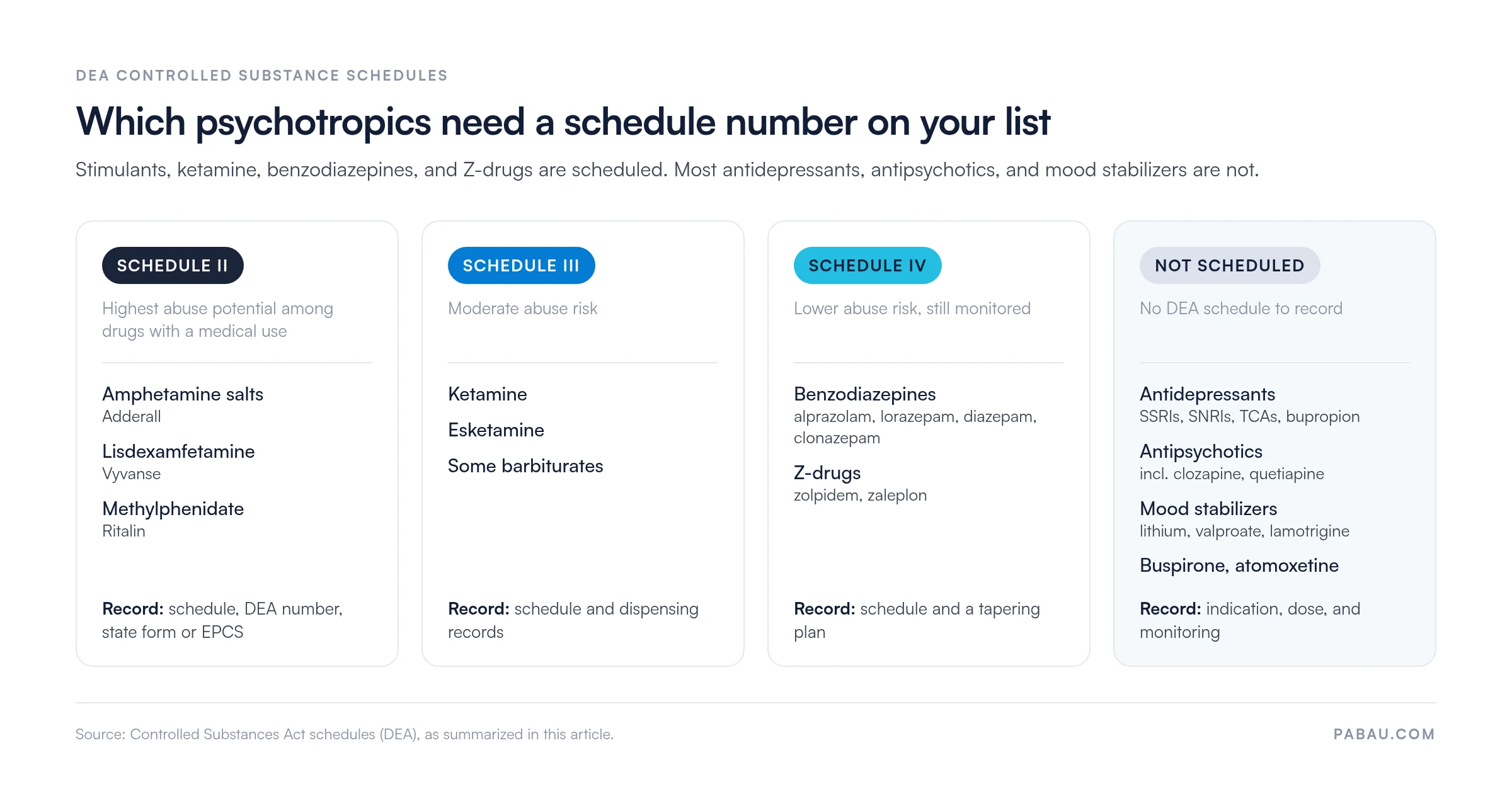
The Controlled Substances Act schedules sort psychotropics by abuse potential and accepted medical use. Schedule II drugs, including stimulants and some opioids, have the highest abuse potential among drugs with a medical use. They require prescriber DEA registration, state-mandated prescription forms or electronic prescribing of controlled substances (EPCS), and dispensing records.
Schedule III drugs, such as ketamine, esketamine, and some barbiturates, carry moderate abuse risk. Schedule IV drugs, including benzodiazepines and zolpidem, have lower abuse risk but still need monitoring.
Practices must keep accurate dispensing records for Schedule II and III drugs, or verify electronic records through state prescription drug monitoring programs (PDMPs). Your list should show the schedule number beside every scheduled drug, so staff apply the right documentation and dispensing steps. The breakdown below shows which classes that covers.
Prescribing psychotropics to children and adolescents calls for extra caution. The antidepressant boxed warning covers children, adolescents, and young adults under 25. Watch closely for worsening mood, suicidal thoughts, and behavior changes in the first 2–4 weeks.
Many antipsychotics and mood stabilizers have restricted pediatric indications. Quetiapine, for example, is approved for schizophrenia from age 13. Stimulants carry cardiac warnings and age-based dosing. Methylphenidate products and lisdexamfetamine are approved from age 6, while some immediate-release amphetamine products are approved from age 3.
Add an age and indication column that flags pediatric restrictions and boxed warnings for each class. Prescribers treating young patients should document that benefits outweigh risks and that caregivers know the warning signs. Schedule follow-up within 1–2 weeks of initiation. State child welfare and mental health departments often mandate their own monitoring protocols for minors.
Use this summary to fill in the monitoring column of your list. It brings together the checks described in each class section above.
| Drug class | Before starting | During treatment |
|---|---|---|
| Antidepressants | Baseline mood assessment; document the boxed warning for patients under 25 | Follow-ups around weeks 2, 6, and 12; no routine labs unless hepatic impairment is present |
| Second-generation antipsychotics | Weight, blood pressure, fasting glucose, and lipid panel | Metabolic screening at least annually; ANC monitoring for clozapine |
| Lithium | Kidney function (creatinine, eGFR) and TSH | Serum level at 5 days, weekly for 4 weeks, then every 3–6 months; target 0.6–1.2 mEq/L |
| Valproate | Liver function and platelet count | Periodic liver function tests and platelet counts |
| Lamotrigine | Clinical baseline | Slow titration with clinical monitoring for rash |
| Benzodiazepines and Z-drugs | Screen for substance use disorder and respiratory risk | Clinical review of anxiety, sleep, and dependence; taper on discontinuation |
| Stimulants | Blood pressure and heart rate; consider an EKG with cardiac risk | Periodic blood pressure and heart rate checks |
Accurate documentation of psychotropic medications is a legal and clinical requirement. Every prescription should show the patient’s name and date of birth, the prescriber’s name, and the DEA number for controlled substances. It should also show the medication name and strength, indication, dose, frequency, refills, and date issued.
For controlled substances, record the prescriber’s state license number and DEA registration number. Document patient consent and acknowledgment of boxed warnings, especially for antidepressants in young patients.
Medication administration records (MARs) in inpatient or residential settings document receipt, time given, staff signature, and any refusals or adverse reactions. Digital intake forms cut transcription errors in medication histories and keep records ready for audit.
Set a protocol for keeping each patient’s list current and reviewing it at every appointment. That review catches interactions, duplicate therapy, and outdated indications. State boards and accreditation bodies, such as The Joint Commission for psychiatric hospitals, expect this level of documentation. Mental health EMR software can remind your team when a review or lab is overdue.
Many practices keep medication lists on paper forms or in spreadsheets, separate from the chart. Every prescription change then means a second update, and the copies drift apart.
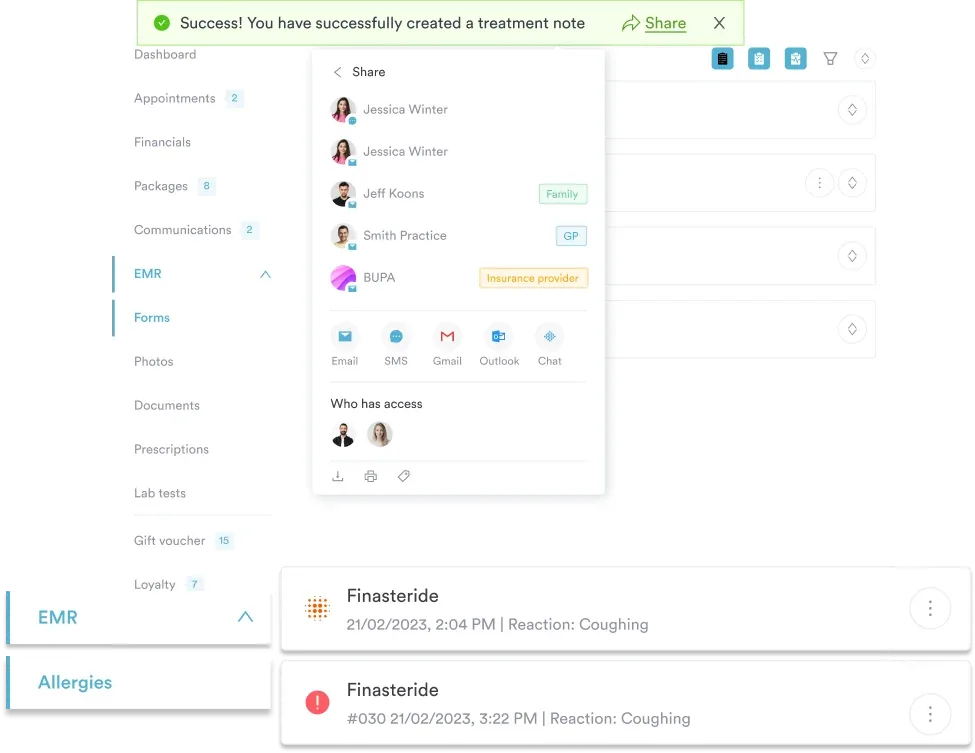
Pabau, the therapy practice management software we build for mental health teams, keeps prescriptions, allergies, and treatment notes on one patient record. You can rebuild this checklist as one of Pabau’s digital forms, so each completed list is stored against the patient’s chart.
Pabau Scribe, our AI scribe, drafts the treatment note from the consultation, including any dose changes the clinician discusses.
The result is one current list per patient that every clinician on your team reads from at the next appointment.
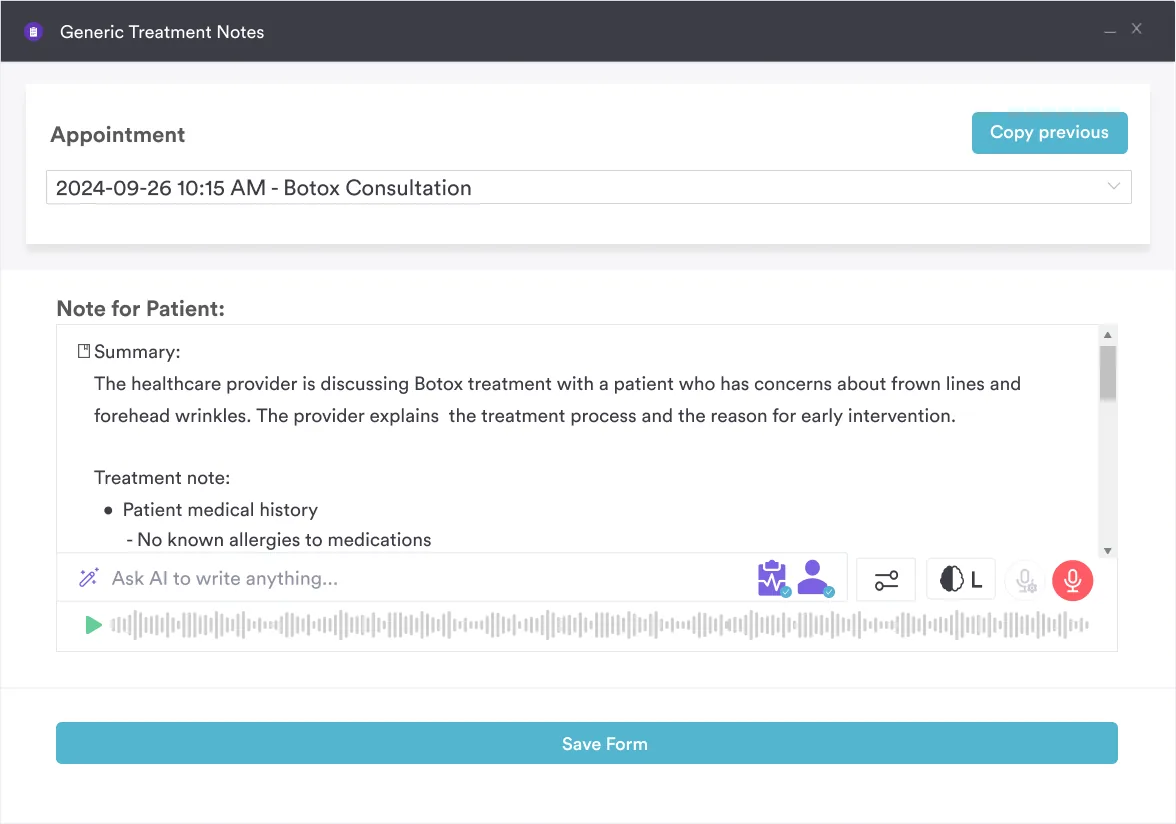

Pabau keeps prescriptions, allergies, and treatment notes on one patient record, so your clinicians review an up-to-date medication list at every appointment.

A psychotropic medication list protects patients only while it is current and specific. Start with the blank form, fill it in class by class, and give each controlled drug and monitoring due date its own entry.
The trade-off is upkeep. A paper list goes stale the first time a dose changes, so tie its review to every appointment. If many of your patients take lithium, clozapine, or stimulants, keeping the list inside the patient record saves the most time.
Book a demo to see how Pabau keeps medication lists, prescriptions, and treatment notes together for mental health practices.

Running a full psychiatric assessment? Psychiatric evaluation template gives you a structured framework for intake and ongoing clinical assessment.
Collecting history before the first visit? Psychiatry intake form gathers a new patient’s history, including current medications, before the first appointment.
Tracking stimulant side effects between visits? ADHD medication side effects monitoring sheet gives patients and clinicians one place to log side effects, so dose changes rest on recorded data.
Treating bipolar disorder? Manic depression medication list covers the drugs used across manic and depressive phases.
Choosing software for a psychiatry practice? Psychiatry EHR explains what to look for in an EHR built for psychiatric care.
No. The download is a blank one-page checklist form with patient details, tick-box sections, and item rows. You add each medication, dose, schedule, and monitoring date yourself, using the class guidance in this article.
A psychotropic medication list is a clinical reference that prescribers and staff use to check indications, side effects, and monitoring for each drug. A formulary is a payer document listing which medications a specific plan covers and at what cost tier. Many practices keep both: an internal list for clinical decisions and the formulary for reimbursement.
No. Only some psychotropics are controlled, such as amphetamines and methylphenidate (Schedule II), esketamine (Schedule III), and benzodiazepines (Schedule IV). Most antidepressants, antipsychotics, and mood stabilizers are not scheduled and need no DEA prescribing documentation. They are still tracked in health records for clinical safety.
Yes. Off-label prescribing is legal and common in psychiatry when clinical evidence supports it and informed consent is documented. Your list can include a section for off-label uses with evidence-based examples, such as quetiapine for anxiety or bupropion for ADHD. Mark off-label use clearly in the patient record, and note that reimbursement varies by payer.