Trauma response test: Free template for clinicians
A trauma response test is a structured screening questionnaire that helps clinic...

8
Last Updated: Oct 15, 2026

A family meeting agenda is a structured outline that walks everyone through the same topics in the same order. Most run 15 to 30 minutes.
The eight core sections are an opening ritual, gratitude, old business, new business, chores, schedule, goals, and a closing activity.
Start with appreciation and end with something fun. Those two bookends are what make people willing to come back next week.
Weekly meetings run about 20 minutes, monthly check-ins take 45 to 60, and adult-only agendas swap chores for finances and caregiving.
Practice management software like Pabau lets a therapist or coach log what a family agreed and schedule the follow-up automatically.
A ready-to-print agenda with timed sections for gratitude, old and new business, chores, the week ahead, goals, and a closing activity. Weekly, monthly, and adult-only versions are all included.
Download templateFamily meetings work when everyone knows what is coming. Without an agenda they drift, or one person’s complaint takes over the whole half hour. A family meeting agenda fixes the order of topics in advance. The conversation then has somewhere to go and a clear point at which it ends.
Family meetings increasingly show up as between-session homework in mental health practices and in coaching programs. That adds a second job to the agenda. It has to hold the conversation together, and it has to leave behind decisions the practitioner can follow up on.
This guide covers the sections worth including and a timed weekly format. It also covers monthly and adult-only variations, and what to do when the habit starts to slip.
A family meeting agenda is a structured outline that walks a household through the same discussion topics in a predictable, time-limited format. Most run 15 to 30 minutes. The agenda creates a container for the conversation. Everyone knows they have a dedicated slot to speak, be heard, and settle things together.
Ad-hoc conversations at dinner or in the car do the same work informally. A written agenda signals that this one matters. It tells everyone their concerns will get airtime rather than being raised and dropped. For families juggling a major transition, ongoing conflict, or four different schedules, the regular slot holds the week together.
The most effective agendas run to six or eight sections. The order matters more than the exact list. Start with positives, move to operational topics, handle the harder items in the middle, and finish on a high note.
Open the same way every time. A moment of silence works, or a family affirmation, or just everyone sitting down with the phones face down. The repetition is what signals the switch into meeting mode.
Each person shares one thing they appreciate about another family member, or one win from the past week. Treat this as non-negotiable. Starting with appreciation softens the room before anyone has to raise a problem.
Address issues raised at the last meeting, or flagged in advance by someone at the table. Describe the issue, hear every perspective, brainstorm together, then agree on one next step. Frame problems as something the whole household has to solve rather than as one person’s fault.
Quick announcements, or a new topic someone wants on the table. Keep it tight. Anything that needs real discussion can wait for the problem-solving slot next week.
Confirm who owns which household job, flag anything that is not working, and adjust. A shared calendar reminder between meetings does the chasing, so nobody has to nag.
Run through the week or month ahead. Appointments, events, school dates, and travel all go on the table. Everyone leaves knowing what is coming and who needs a lift.
Report back on goals set at an earlier meeting, and name anything that went well since. Progress said out loud in front of the family is what keeps a goal alive.
Finish on something light. A game, a shared video, a walk, or five minutes of nonsense all work. This is the part people remember, and it decides whether they turn up next week.
If you recommend family meetings to patients, the outcome is worth capturing in the file. Clinical documentation tools turn a short verbal report into a note with action items attached. The next session then starts from what the family actually did.
A family meeting takes 15 to 30 minutes and follows the same sequence every time. Consistency does most of the work, so hold it on the same day and in the same place.
Here is a weekly format that fits inside 20 minutes.
Adult-only meetings drop chores and school runs and pick up finances, caregiving, and long-term planning. The structure holds. The topics get heavier.
If someone at the table is a healthcare practitioner, the discipline used in patient care management travels well here. Write the decision down, name the owner, and set the date you will review it.
Beyond the weekly slot, longer check-ins give families room for the bigger questions. A month is long enough to see whether a goal moved. A year is long enough to notice what changed.
When a meeting stalls, the problem is usually that nobody arrived with a topic. These prompts fill the silence. Practitioners will recognize several of them from the frameworks used to improve patient engagement.
The American Academy of Pediatrics keeps an age-appropriate chores guide worth checking before assigning anything new at the meeting.
Younger children often need help naming what they feel. A printable emotional check-in worksheet or a negative emotions list gives them the words before the meeting starts.
Consistency is where family meetings break down. One skipped week turns into a reschedule, and the reschedule turns into quietly dropping the whole thing. These habits keep it alive.
Put it on the calendar and set a reminder. Give it the respect you would give a doctor’s appointment. Cancel only for a genuine emergency.
15 to 20 minutes is realistic for most families. If meetings run long every time, either the topics are too big or the facilitator is not moving. Use a timer, and let a deep topic wait a week.
Let a different person lead each week. It shares ownership, teaches a useful skill, and stops one voice from steering every agenda. For practitioners tracking this with a family, a patient portal holds the record of who led and what was decided.
A meeting that feels like a review board will not survive the month. The gratitude round is what makes it a place where people get noticed rather than corrected.
The last five minutes decide whether anyone looks forward to the next one. A game, a laugh, or a bit of easy time together is enough.
A therapist who sends a family home with an agenda usually finds out how it went by asking. The answer arrives verbally and gets summarized in a note. The action items then sit in that note, and nothing chases them.
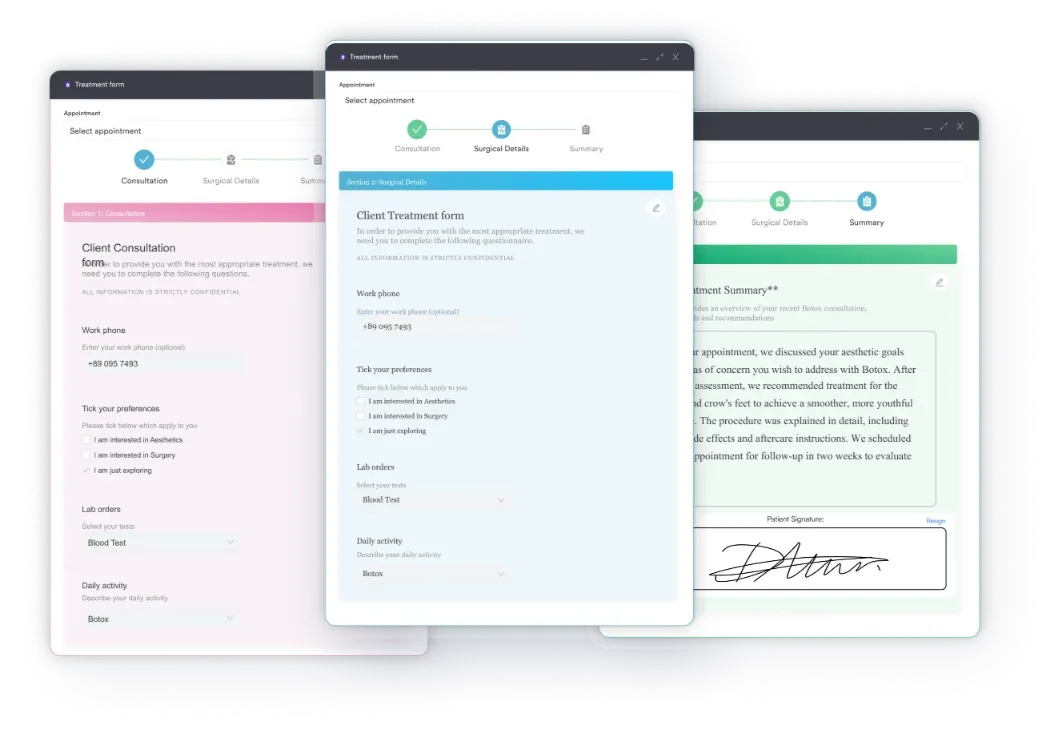
Practice management software like Pabau closes that loop. You can send the agenda out as one of your own digital intake forms, so what the family agrees comes back into the client record. Set up an automated workflow and the reminder for the next meeting goes out on its own.
The next session then opens with what the family actually did, rather than what they remember doing. Every Pabau subscription includes the forms, the client record, and the automations, so none of this sits behind a higher tier.

Pabau’s digital forms capture what a family agreed straight into the client record. Automated workflows then send the follow-up reminder without anyone chasing it.

Pick one slot, run the template as written for two months, then start adjusting it. Most families need about that long before the meeting stops feeling like an exercise and starts feeling normal.
One trade-off is worth knowing. A fixed agenda can make an urgent conversation wait until Sunday, so keep the structure for the recurring topics. Let the urgent things happen when they happen.
If you recommend family meetings in your practice, the value shows up in what gets followed up. Book a demo to see how Pabau records what a family agreed and schedules the next check-in.

Need a structured way to record what you observe in session? The behavioral observation checklist gives you a printable form for tracking specific behaviors over time.
Need a full intake before the first session? mental health intake assessment captures psychological history, risk factors, and treatment goals to build an individualized plan.
Most family meetings run 15 to 30 minutes. Weekly ones usually stay under 20 minutes to hold everyone’s attention. Monthly or annual meetings can run 45 to 120 minutes. Use a timer, because people manage themselves once they know the limit.
Weekly suits most families. It keeps communication steady and stops issues from festering between conversations. Monthly check-ins work better for adult-only families or households with packed schedules. Annual meetings earn their place for major decisions and long-term planning.
Children as young as four or five can sit in, though they may not contribute much. By seven or eight, most can join the gratitude round and say how they feel. Full participation in problem-solving usually arrives around 10 to 12. Tailor what you expect to each child’s maturity.
Handle it calmly, outside the meeting. Ask what the resistance is about. They may be uncomfortable, too busy, or unconvinced it is worth the time. Start smaller with a 10-minute trial. Teenagers usually respond to autonomy, so let them lead a section or pick the closing activity. Keep attendance non-negotiable, but take the feedback seriously.
Yes, if the family has action items or goals to track. A one-page summary works. Note the decisions, who owns each one, and the focus for next week. If you are a practitioner recommending this, documented outcomes give you something concrete to review at the next session.
Tighter control of the agenda helps. Assign a timekeeper. When a topic runs over, park it and book a separate conversation for it. Sharing the agenda in advance also cuts down on surprises. Facilitators can open with ground rules such as no interrupting, no phones, and one person speaking at a time.