Free model waiver form + what it is and when your practice needs one
A model waiver form is a signed document that lets a healthcare practice use a p...

7
Last Updated: Sep 29, 2026

NuEra Tight is a multi-frequency radiofrequency platform made by Bios S.r.l. and sold by Lumenis, cleared in the US under 510(k) K223856.
The US clearance covers cellulite appearance, abdominal circumference reduction with adjunctive skin laxity improvement, and radiofrequency heating for minor pain and local circulation.
Wrinkle reduction is marketing language rather than a cleared indication, and no US clearance covers intimate or vaginal treatment with this device.
Energy reaches the patient at 470 kHz and at 1, 2, 4 and 6 MHz, through capacitive monopolar and bipolar electrodes under automatic temperature control.
Record the electrode, frequency and temperature set point for every session, and note any treatment that sits outside the cleared indications.
A one-page patient handout covering the first hours after treatment, the 24 to 48 hour window, first-week skin and sun care, and long-term maintenance. It also lists common side effects, the warning signs that need a call, and a patient acknowledgment line.
Download templateA NuEra Tight session is easy to sell, and easy to over-promise. Most marketing around the device talks about wrinkles, faces and intimate treatments. The indications the FDA cleared are narrower than that.
That mismatch turns into a paperwork problem fast. A consent form that calls the device FDA-cleared for wrinkle reduction claims something no clearance supports. Session notes without the electrode, frequency and set point cannot be reconstructed a year later.
Cleared use comes down to three things. NuEra Tight covers cellulite appearance, abdominal circumference reduction with adjunctive laxity improvement, and heating for minor pain and local circulation. Anything else you treat stays a clinical decision to record, never a claim to advertise.
The aftercare sheet above is the patient-facing half of that record. Its clinical half starts with the device itself.
NuEra Tight is a multi-frequency radiofrequency platform for non-invasive body and skin treatment. Bios S.r.l., based in Vimodrone, Italy, manufactures it. Lumenis sells it as part of its aesthetics range.
The platform heats tissue through hand-held electrodes rather than cutting or injecting. In FDA terms, it sits under 21 CFR 878.4400, as an electrosurgical cutting and coagulation device, product code GEI.
Two further product codes, NGX and PBX, sit on the same clearance.
Patients feel warmth rather than pain, and they leave without a recovery period. There are no incisions and no anesthesia, so a result builds across a course of sessions instead of arriving on the treatment couch.
The US clearance covers three uses, and facial wrinkles are not one of them. That clearance is K223856, granted to Bios S.r.l. on August 11, 2023 for the NuEra Tight RF family. Earlier submissions cover previous versions of the same platform.
In the FDA’s own wording, the indications for use on that clearance are:
Two widely repeated claims are missing from that list. Wrinkle reduction appears in marketing material and in no NuEra indications for use. Intimate treatment has no US clearance at all.
Skin laxity survives, but only in the form the clearance grants it. It is an adjunctive improvement alongside abdominal circumference reduction, achieved through heat-induced lipolysis at 1 and 2 MHz. Body contouring language holds up for the abdomen and struggles anywhere else.
Treating outside the cleared indications is legal for a licensed practitioner. Describing an uncleared indication as FDA-cleared is what creates exposure. Keep the two apart in your marketing, your consent forms and your clinical notes.
A vaginal and vulvar version of the device exists, marked NuEra Tight VRF. It carries a CE mark in Europe and holds no US clearance, so it is a different regulatory product from the one this page describes.
Lumenis registered a US study of the VRF applicator for vaginal and vulvar tissue laxity, NCT04511260. That record has not been updated since December 2020, and the applicator remains investigational in the US.
A US practice therefore cannot offer or advertise intimate treatment on this platform. If a patient asks, the accurate answer is that the applicator is not cleared here.
Energy comes out at five frequencies: 470 kHz, 1 MHz, 2 MHz, 4 MHz and 6 MHz. Lumenis brands that multi-frequency approach FocalRF. Frequency choice is how you change the depth at which energy is absorbed.
Lower frequencies carry energy deeper into tissue, and higher frequencies concentrate it closer to the surface. The 1 MHz and 2 MHz settings are the two the clearance ties to heat-induced lipolysis and abdominal circumference reduction.
Energy reaches the patient through interchangeable electrodes. The monopolar and bipolar versions are both capacitive, and they couple into tissue differently. A mechanical massage handpiece covers the cellulite indication. The electrode you pick belongs in the note alongside the frequency.
Output is not left to guesswork during a pass. Lumenis fits the platform with automatic power and impedance control, branded NuAPIC. It tracks impedance and temperature, then adjusts output to hold your set point, which goes up to 45°C.
Heating dermal collagen produces immediate fiber contraction, then a slower remodeling response over the following weeks. Improvement is therefore progressive, and it usually shows most clearly 4 to 8 weeks after the last session in a course.
The areas practices treat and the areas the clearance names are two different lists. Practitioners use radiofrequency on the face, neck, abdomen, flanks, thighs, knees and arms. The US clearance names cellulite appearance, abdominal circumference, and heating for pain and circulation.
Read the table below as a map between the two lists. Where a treatment sits outside the cleared indications, it stays a clinical judgment. Write it down in the note, and keep it off your price list and your website.
For a medical spa running several energy-based devices, that mapping belongs in the protocol folder. Store which areas were treated, and on what basis, in structured treatment records rather than free text.
One line in the note usually does the job. A flank treatment might read: flanks, 1 MHz, capacitive monopolar electrode, set point 42°C, four passes. Add the reason beside it, such as patient-reported laxity, plus a line placing the area outside the cleared indications.
Treating under the pain and circulation indication needs a baseline too. A short circulation assessment before the first pass gives you something to compare the next visit against.
The best candidates have mild to moderate laxity, early cellulite, and realistic expectations about a gradual result. Baseline skin quality, age and finishing the full course all change what the patient sees at the end.
Radiofrequency does not target melanin, so practitioners treat Fitzpatrick types I to VI with it. Screening still comes first. Every patient needs a contraindication check recorded before the first pass, not after it.
Absolute contraindications rule the patient out entirely. Relative ones need medical director sign-off before you book the treatment. The table below splits the two, with the action each group calls for.
Your intake paperwork should show which of these you asked about, and what the patient answered. A structured review of systems makes that easy to evidence months later.
A session runs 30 to 60 minutes, depending on the size of the area. Appointments sit 2 to 3 weeks apart, which gives collagen time to respond between visits.
A typical course is 4 to 6 sessions on the face and neck, and 6 to 8 on larger body areas. Patient condition and the goal you agreed at consultation move those numbers either way.
During the appointment you apply gel, then work the electrode in slow, overlapping passes so heating stays even. Most patients describe warmth and mild tingling. Settings change with skin type, area and patient feedback during the pass.
Write the session up while it is fresh. Two practitioners sharing one course need the same fields in the same places, so the second can see exactly what the first did.
The template is a one-page patient handout with an acknowledgment line at the end. It runs in the order patients need it, from the first hour after treatment through to long-term maintenance.
The wording is deliberately plain, and it makes no wrinkle or intimate-treatment claims. If you add a line about the clearance, keep it to the three cleared indications and check it against your consent form.
Aftercare is where a good session either holds or unravels. Patients keep little of what they hear at the end of an appointment, so patient education works best spoken and written. Talk the sheet through, then send a copy home.
Book the next session before the patient leaves, then log that the sheet was issued. A patient portal can send aftercare by email or SMS automatically, which lifts compliance and cuts follow-up calls to the front desk.
Consent has to describe what the device is cleared to do, what you are treating, and what the patient will and will not see. All three belong in writing, and the third does the most work when a patient complains.
Name the cleared indications accurately, and drop any wrinkle-reduction or intimate-treatment wording. If you are treating a face or a flank, say plainly that the treatment sits outside the cleared indications, and record why you recommended it.
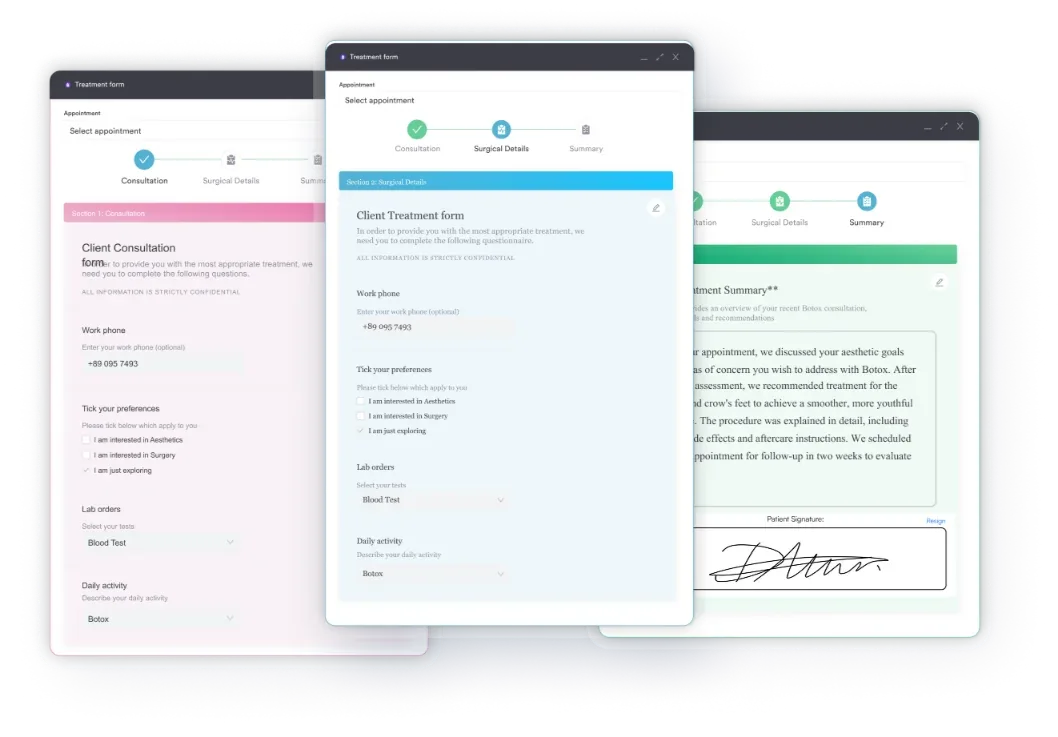
Then cover the mechanism in a line, the progressive timeline, the side effects listed in the aftercare sheet, and the contraindications you screened for. Add the patient’s signature, your countersignature and the date to make it auditable.
Digital consent forms in practice management software like Pabau give every patient the same version of that document. The system tracks completion, and the signed copy sits on the patient record for inspections and complaint reviews.
Med spas and dermatology practices get the most from it, usually as a body service with a named course and a price per session. Plastic surgery offices use it around surgery, for patients who want no downtime.
Wellness practices sit at the other end, offering it to patients who want maintenance rather than correction. The absence of downtime is what makes the treatment workable for someone booking on a lunch break.
Marketing lands best with patients who have visible laxity or early cellulite, usually between 40 and 65, plus younger patients focused on maintenance. Keep every message inside the cleared indications, whichever group you are speaking to.
A structured consultation separates a good candidate from a disappointed one. Capture goals, medical history and contraindications before the patient is on the couch, and the course you sell is one you can deliver.
Whether you answer to the CQC in the UK or a state medical board in the US, the same records get asked for. A NuEra Tight program stands or falls on what each session note contains.
Run this list before you close each note:
Program-level obligations sit around those notes. You need signed consent on file, contraindication screening, adverse event reporting, and evidence that staff are trained on the device. A medical spa compliance checklist is a practical way to audit yourself.
Automated workflows can prompt for the required fields at each step. A missing set point or an unsigned consent then surfaces on the day, not during an inspection.
In many practices this workflow lives in three places. Consent sits in a paper folder, the session details live in a calendar note, and the aftercare sheet gets printed when someone remembers. Across a course of six sessions, that paperwork drifts apart.
Skin clinic software holds all three on one client record. In Pabau, the consent form goes out before the appointment and comes back signed and timestamped. It then stays attached to the patient, not to a filing cabinet.
Session notes use your own template, so the electrode, frequency, set point and any off-label decision each have a field. Pabau Scribe, our AI scribe, can draft that note from your dictation and leave you to check it.
Mark the session complete and the aftercare sheet sends itself, by email or SMS, with the send logged against the record. Ageless Enhancements, a two-location med spa, made that switch and saves 10 minutes per patient.
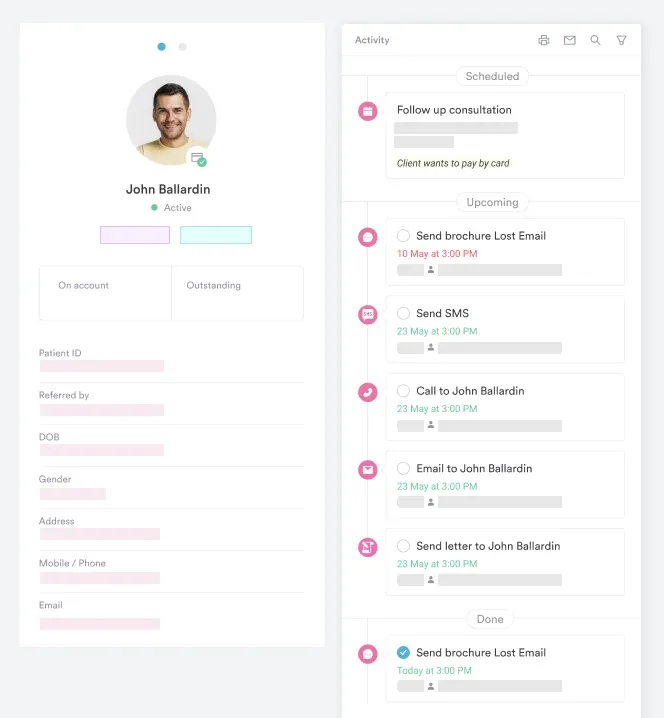

Pabau sends digital consent before the appointment and stores each session’s settings against the patient. The aftercare sheet then goes out automatically when you mark the session complete.

NuEra Tight earns its place in a body and skin service, as long as the words around it match the paperwork behind it. The clearance is narrower than the marketing, and that is the practical lesson.
You can claim three things. Cellulite appearance, abdominal circumference reduction with adjunctive laxity improvement, and radiofrequency heating for minor pain and local circulation. Faces, flanks and intimate treatment are not on that list, and one of them you cannot offer at all.
So do three things this week. Download the aftercare sheet, strip wrinkle-reduction language out of your consent form, and give every session note a field for electrode, frequency and set point. Book a demo to see how Pabau keeps those records together.

Writing consent for another energy device? Plasma IQ consent form shows how the wording changes when the clearance covers a different treatment area.
Documenting another energy-based tightening treatment? HIFU aftercare guide sets out post-treatment wording you can adapt for a radiofrequency course.
Planning the budget to launch your practice? Costs of starting an aesthetics business breaks down the one-off and ongoing costs of launching an aesthetics practice.
Checking your wider compliance position? Medical spa compliance checklist walks through the policies and records an inspector asks to see.
Curious what an aesthetic nurse earns? What aesthetic nurses earn shows US aesthetic nurses earn about $80,000 to $104,000 a year, with more for injector skills or certification.
Yes, most recently under 510(k) K223856, granted in August 2023. The cleared indications are cellulite appearance, abdominal circumference reduction with adjunctive skin laxity improvement, and radiofrequency heating for minor pain and local circulation.
No. Wrinkle reduction appears in marketing material, not in any NuEra indications for use. Treating facial lines is off-label use, which is permitted but should be recorded as such.
Not in the US. The vaginal and vulvar applicator, NuEra Tight VRF, is CE-marked in Europe and investigational here. Its registered US study, NCT04511260, has not been updated since 2020.
Usually 4 to 6 on the face and neck, and 6 to 8 on larger body areas, spaced 2 to 3 weeks apart. Each visit takes 30 to 60 minutes.
The clearance describes the cellulite improvement as temporary, so treat maintenance as part of the plan. Collagen remodeling continues for weeks after the last session, and results fade without top-ups.
Scope rules vary by state. Some states let trained non-medical staff run energy devices under supervision, while others restrict them to licensed clinicians. Check your state board, and keep training records on file.
Not straight away. A peel or aggressive laser in the past two weeks is a relative contraindication. Let the skin settle, and get medical director sign-off first.