Despina Petrushevska

HCPCS code Q4168: AmnioBand particulate billing guide (per 1 mg)
HCPCS code Q4168 is the Level II code for AmnioBand, 1 mg, the particulate form ...

Last Updated: Nov 20, 2026
Free PDF 2 pages, print-ready Clinician-reviewed
The hardiness scale is a self-report questionnaire that measures psychological hardiness, the mix of commitment, control, and challenge that helps people cope with stress. This template is based on the validated 15-item Dispositional Resilience Scale (DRS-15). Respondents rate each statement from 0 to 3, six items are reverse-scored, and totals run from 0 to 45. Clinicians, coaches, and occupational health teams use it as a screening and research tool, not as a diagnostic instrument. The template's low, moderate, and high bands are indicative rather than published norms.
A ready-to-use questionnaire covering the commitment, control, and challenge subscales, with items for practitioner scoring and a space to record results. Its interpretation bands are indicative, not published norms.
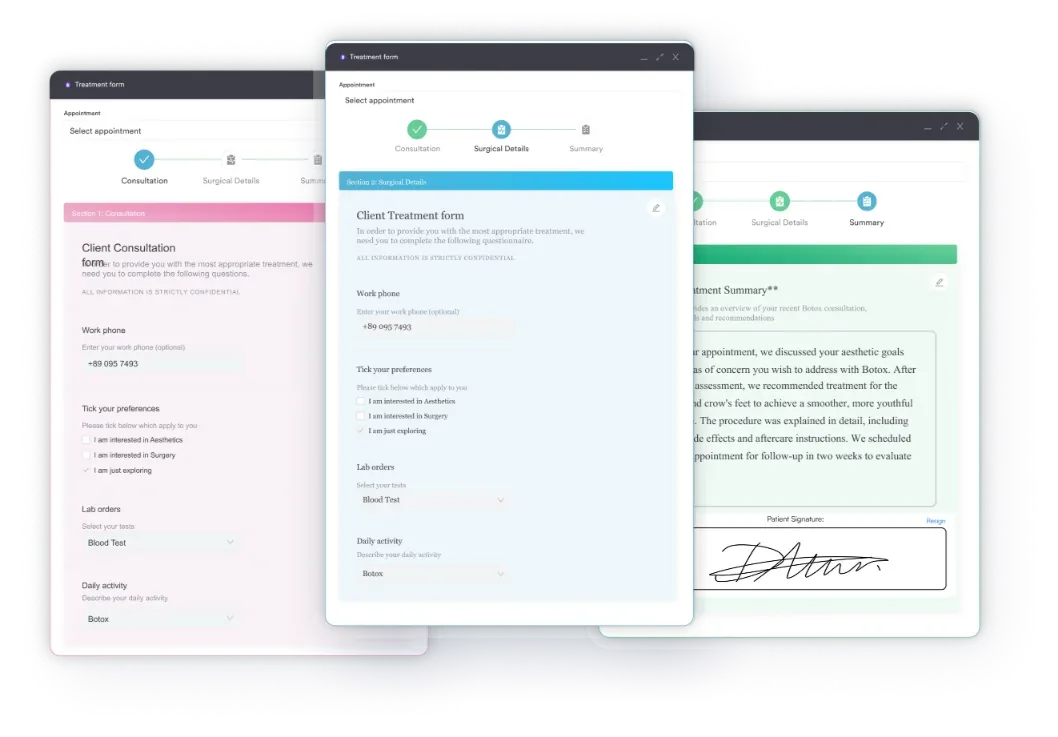
Start from scratch, or upload this PDF or any form you already use, and Pabau's AI Form rebuilds it with tick boxes, text fields and a signature. Attach it to the treatment once, and every patient gets it on time.
AI Form rebuilds the consent, history and aftercare forms you already use. You review each one, then publish.
Patients complete forms on their phone before they arrive, so the front desk stops retyping paper.
Every signed form is versioned and attached to the treatment record, ready when you need it.
Set how long a consent stays valid. Returning patients skip forms they have already signed.
Supports HIPAA and GDPR compliance AES-256 encryption 4.8 on G2 4.7 on Capterra Trusted by 4,000+ practices worldwide

The hardiness scale measures commitment, control, and challenge as a screening aid, not a diagnosis.
This template is based on the 15-item DRS-15, with each item scored from 0 to 3 for a total of 0 to 45.
Its low, moderate, and high bands are indicative and not a validated norm table, so read scores alongside the person’s history.
Six items are reverse-scored, and each one must be flipped before the subscale totals are calculated.
Pabau, a practice management platform, can store completed forms and track repeat assessments in the patient record.
The hardiness scale is a questionnaire based on the validated 15-item Dispositional Resilience Scale (DRS-15). It measures psychological hardiness, a personality pattern linked to resilience under stress. Paul Bartone’s DRS-15, as listed in UC San Diego’s EMERGE database, covers commitment, control, and challenge and rates each item from 0 to 3. Suzanne Kobasa first described hardiness in 1979, in research with executives facing high-pressure work.
The scale is useful because it turns a broad idea about resilience into structured, comparable answers. Clinicians can use it to start conversations about how a patient handles pressure. Occupational health teams can use it to understand well-being trends across a workforce.
The questionnaire is a self-report instrument, so the process is simple but needs care. Follow these steps to keep administration consistent.
Practices using digital intake can send the same questionnaire through digital forms, which keeps responses in one place. Administration should always be overseen by a qualified practitioner.
Psychologists, psychiatrists, and counselors use the hardiness scale in mental health settings to understand stress resilience. Paired with the Perceived Stress Scale, it shows how much pressure someone reports alongside how they tend to meet it.
Occupational health practitioners use it when designing well-being or burnout prevention programs for staff, often next to the Maslach Burnout Inventory. Coaches and wellness practitioners may also use the scale as a starting point for goal setting. Each group should interpret results within its own scope of practice and professional guidelines.
Commitment is the tendency to involve yourself in what you do rather than withdraw. Control is the belief that you can influence outcomes, even when circumstances are difficult. Challenge is the view that change is a normal opportunity to grow.
Each component is measured through its own subset of five items. Looking at subscales separately can show which area of hardiness a respondent finds easiest or hardest.
Scoring involves reverse-scoring six items, summing the five items within each subscale, and then adding the subscales for a total. The template’s own scoring page supplies the item key. Its interpretation bands are indicative, not a validated norm table.
The PDF groups the 15 items as follows, with an asterisk marking each reverse-scored item.
Reverse-scoring flips the response, so 0 becomes 3, 1 becomes 2, 2 becomes 1, and 3 becomes 0. Each subscale then runs from 0 to 15, and the scoring map below shows how the pieces add up.
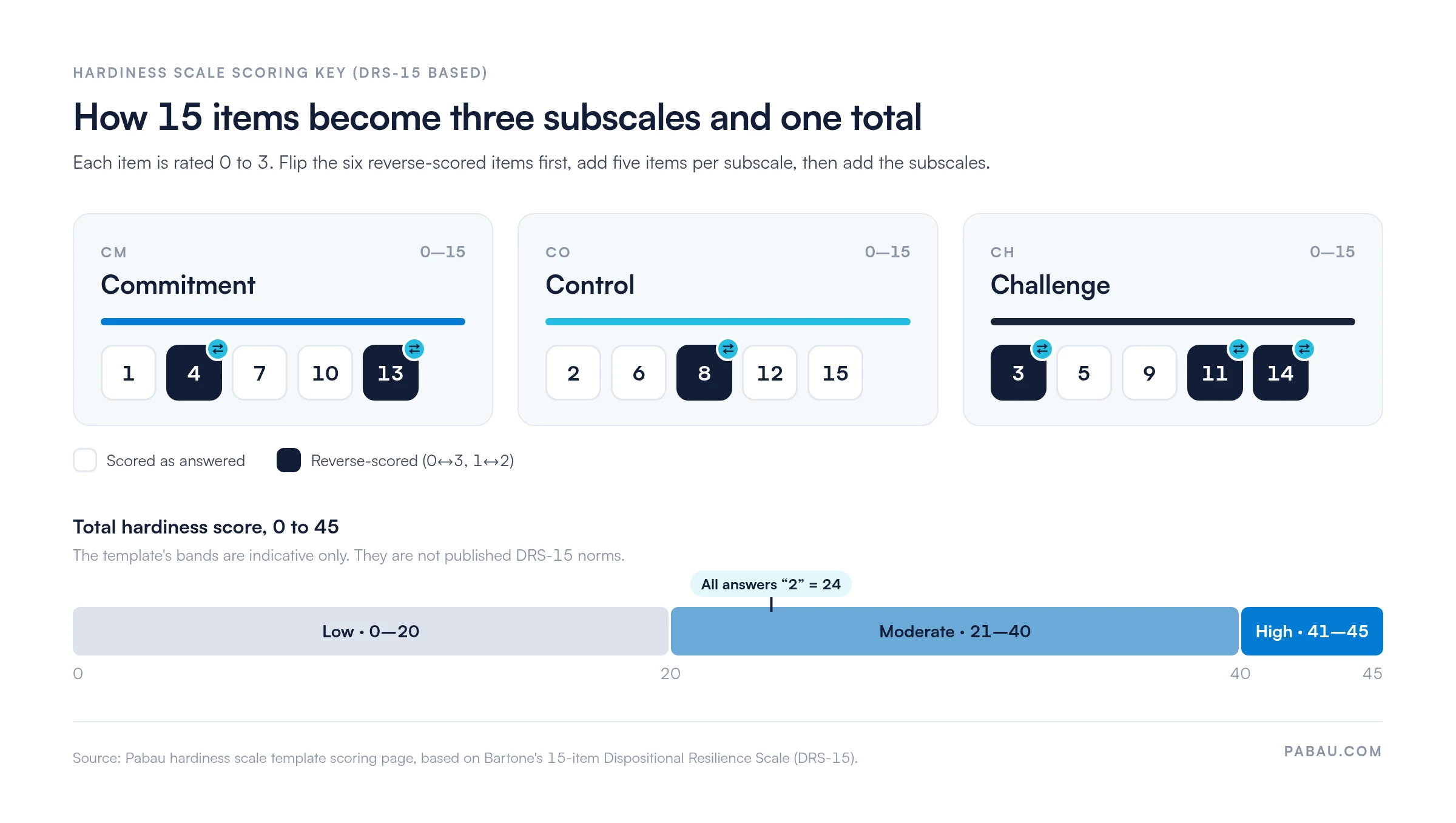
The template scores 15 items from 0 to 3, for a maximum total of 45. Its scoring page labels a total of 20 or below as low hardiness, 21 to 40 as moderate, and above 40 as high. Those bands are indicative only, because no published DRS-15 norms support them.
A worked example shows why the flips matter. A respondent who answers 2 on every item scores 2 on the nine positively worded items and 1 on the six reversed ones. That gives a total of 24, inside the moderate band, with commitment at 8, control at 9, and challenge at 7.
Treat any single total as a prompt for discussion rather than a verdict. If your service has collected its own baseline data, compare against that.
This template is based on the DRS-15, Bartone’s short Dispositional Resilience Scale, which measures commitment, control, and challenge in 15 items. The Hardiness Resilience Gauge is a commercially licensed alternative. For a wider screen of how someone recovers from setbacks, a resilience test covers ground beyond the three hardiness components.
Teams choosing between these should check licensing terms, the population any norms were built on, and whether a short form fits their time constraints.
Results are most useful when they shape a conversation or plan, not when they stand alone. A lower control score might prompt a discussion about problem-solving support, and a locus of control worksheet can structure it. A lower challenge score might open a talk about reframing setbacks.
Repeat administration should use the same instrument version so changes are comparable. Practitioners should document how results informed decisions, which keeps medical records complete for audits.
Many practices hand out the hardiness scale on paper, score it by hand, and file it in a folder that rarely comes out at follow-up. Six reverse-scored items make hand scoring slow, and one missed flip skews the total.
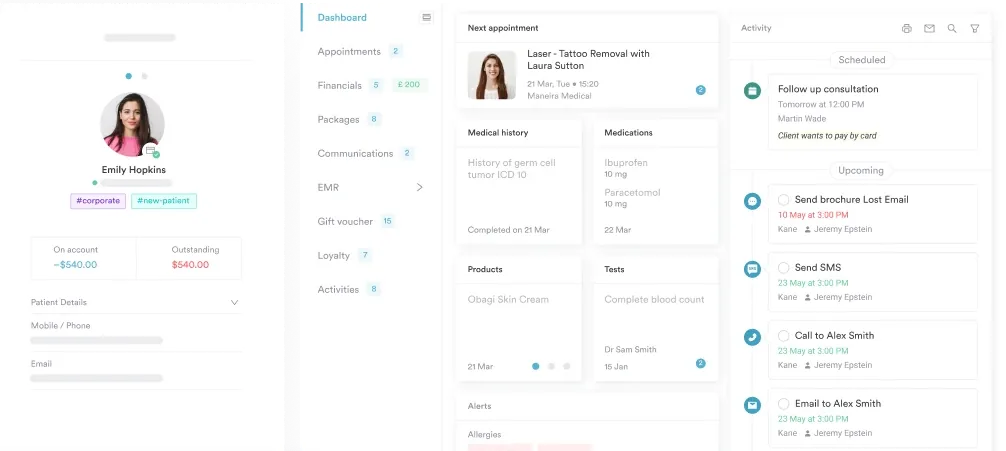
Pabau is therapy practice management software that sends the form as a digital questionnaire before the visit. The completed form is saved to the patient record with its date, so a six-month repeat sits next to the baseline.
Your team stops chasing paper forms, and each follow-up conversation starts from the patient’s own trend instead of memory.

Pabau’s digital forms send the hardiness questionnaire before the visit and file each completed copy in the patient record. Your team can compare repeat screens without digging through paper folders.

The hardiness scale earns its place when you use it to open a conversation and to measure change over time. Score it with the template’s item key, treat the low, moderate, and high bands as rough guides, and repeat the same version at set intervals.
The trade-off is precision. Without published norms behind the template’s bands, one total says less than the movement between two totals for the same person.
Book a demo to see how Pabau keeps every completed questionnaire on the patient record, ready for the next review.

Want a second self-report on coping? Coping self-efficacy scale measures how confident a person feels about handling stressful situations.
Following up on a low challenge score? Growth mindset worksheet gives patients prompts for reframing setbacks as chances to learn.
Building a resilience plan after the screen? Resilience worksheet turns the conversation into concrete steps a patient can practice.
Need a broader stress screen? Stress assessment questionnaire covers stress sources and symptoms with its own scoring guide.
Screening your own team? Therapist burnout explains the warning signs, causes, and prevention steps for clinicians.
The hardiness scale is a self-report questionnaire that measures commitment, control, and challenge. It is used as a screening and research aid, not a diagnostic test.
Yes, a hardiness scale template is available to download above. Check the licensing terms of any commercial instrument before reproducing its items.
Yes, the questionnaire can be administered on paper or through digital forms. Keep the same version and scoring key for every administration.
Reverse-score the six asterisked items, add the five items in each subscale, and then add the three subscales. Totals run from 0 to 45. The template’s low, moderate, and high bands are indicative, not published norms.