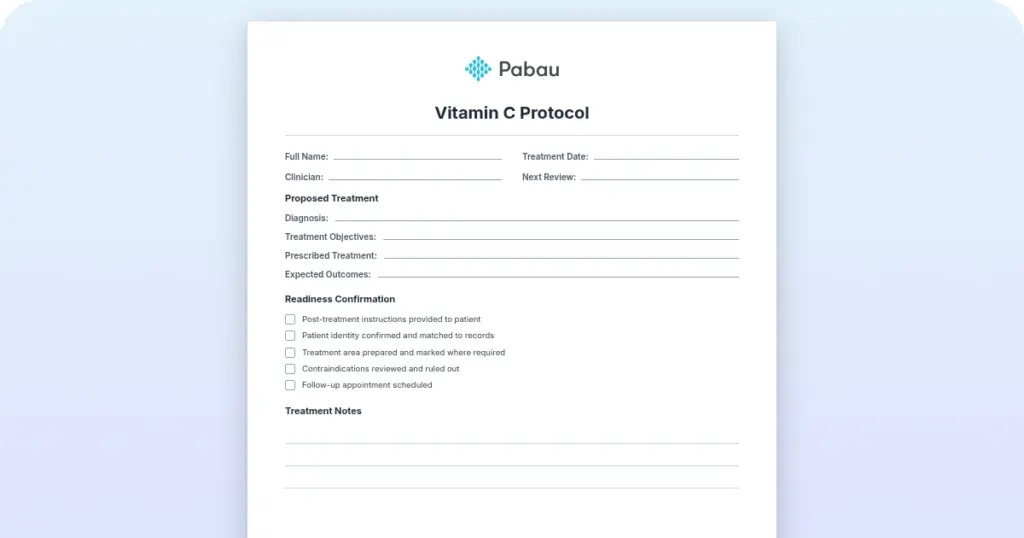
Vitamin C protocol: Free template for oral and IV treatment
A vitamin C protocol is a written clinical framework for giving vitamin C to pat...

4
Last Updated: Oct 16, 2026

Porcelain veneers are ultra-thin ceramic shells bonded to the front of teeth to improve appearance and smile aesthetics.
Treatment requires permanent tooth preparation and multiple appointments; patients must understand the irreversible nature of the procedure.
Pre-procedure screening, informed consent, and detailed treatment planning prevent complications and improve patient satisfaction.
Pabau’s digital forms and client portal streamline veneer consultation workflows and maintain HIPAA-compliant patient records.
Porcelain veneers are one of the most sought-after cosmetic dentistry treatments for transforming smiles. Dental clinics need structured workflows to ensure every patient is properly assessed, consented, and cared for. This template collection provides ready-to-use clinical forms and checklists. They help your practice standardize the veneer patient journey — from initial candidacy screening through aftercare compliance.
Porcelain veneers are wafer-thin, custom-made shells of tooth-colored ceramic material. They are permanently bonded to the front surface of teeth. Each veneer is crafted in a dental laboratory to match the patient’s desired shade, shape, and size. The result is a natural-looking restoration that closely mirrors the light-reflecting properties of natural tooth enamel.
Unlike dental crowns, porcelain veneers address only the visible front surface. They bond directly to the tooth using adhesive resin. Practices typically use digital intake forms to record the baseline aesthetic concerns being addressed.
Porcelain veneers can address discoloration, chips, gaps, slight misalignment, and worn or uneven surfaces. Most patients require 6-10 veneers across the upper front teeth to achieve a balanced, natural-looking smile.
A comprehensive template for porcelain veneers procedures, covering patient assessment criteria, candidacy evaluation, treatment planning documentation, pre-operative consent, and post-operative care instructions.
Download templatePorcelain veneer placement involves permanent tooth modification. A portion of the tooth’s outer enamel layer is removed to create space for the veneer shell – this step is irreversible and must be clearly disclosed to patients before treatment begins.
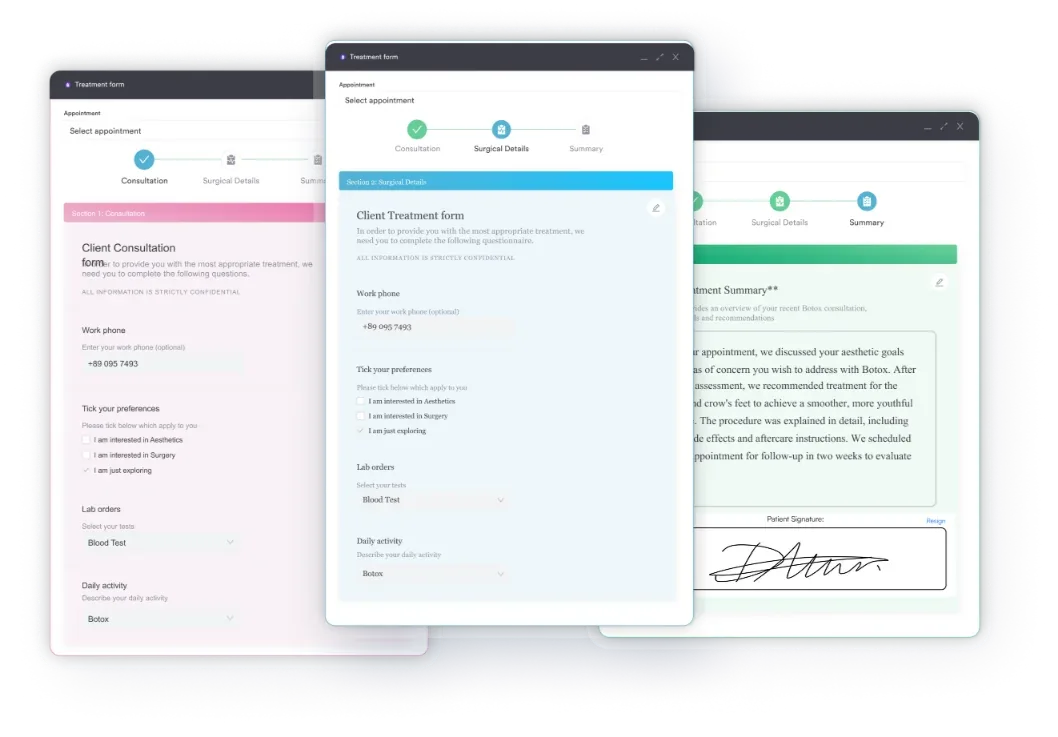
Informed consent documentation protects your practice legally. It also ensures patients understand the permanent nature of the procedure and reduces post-treatment dissatisfaction. A thorough facial consent form should outline the procedure, potential risks, and longevity expectations. Risks include tooth sensitivity, bite adjustment issues, and the possibility of future replacement. Aftercare responsibilities should also be clearly documented.
Effective treatment planning begins with a structured patient consultation. This should document the patient’s cosmetic goals, current tooth appearance, and baseline oral health. Your practice should establish a standardized assessment that includes:
Storing this information in a cosmetic surgery consent form ensures every team member can reference the agreed-upon treatment plan.
Practices using software for managing patients retrieve past forms in seconds during consultations.
The days leading up to veneer placement require careful preparation. A pre-procedure checklist ensures no critical steps are missed:
Using a patient consultation form template in your practice management system allows the entire clinical team to track completion of these pre-operative steps and ensures accountability.
Patient compliance with post-operative care is critical to veneer longevity and satisfaction. Your aftercare instructions should cover the following:
Storing these instructions in your client portal allows patients to access them anytime and reduces follow-up questions.
While porcelain veneers dominate cosmetic dentistry workflows, some practices also offer composite veneers. These use direct bonded composite placed on the tooth in a single appointment. Your practice template should clarify which veneer type each patient is receiving. Treatment timelines, aftercare requirements, and longevity expectations differ significantly between the two.
Porcelain veneers typically last 10-25 years with proper care. Composite veneers typically last 5-7 years before requiring replacement. Documenting this distinction in your consent form prevents patient confusion and manages expectations about future costs.
Implementing standardized templates across your clinic ensures consistency, reduces administrative burden, and improves patient outcomes. Here are five practical implementation steps:
Book a demo to see how Pabau’s digital forms and automated workflows help cosmetic dental practices standardize their veneer consultation and treatment-planning processes.
Porcelain veneers treatment documentation must comply with dental regulatory standards and patient data protection laws. In the United States, the American Dental Association (ADA) recommends that all cosmetic treatment consent forms explicitly cover the irreversible nature of tooth preparation and potential risks. In the UK, ADA guidance on veneers emphasizes informed consent as a cornerstone of ethical cosmetic dentistry practice.
All patient records — including consent forms, treatment plans, and before-and-after photos — must be stored in a HIPAA-compliant system. The system must have appropriate access controls, audit trails, and data encryption. Your templates should include a statement confirming that clinical information is protected under applicable privacy laws. This means HIPAA in the US and GDPR in the EU.
Anticipating patient questions helps your team build confidence in the treatment plan. Consider including answers to these common questions in your patient education materials:
Porcelain veneers treatment requires careful planning, clear communication, and comprehensive documentation. This protects patients and your practice. Standardized templates for consent, assessment, and aftercare help your team deliver consistent care. They also reduce administrative friction throughout the patient journey. Download the porcelain veneers template and integrate it into your clinic workflows today.
A porcelain veneers template is a clinical documentation package that includes patient consent forms, candidacy assessment questionnaires, pre-procedure checklists, and post-operative care instruction sheets designed to standardize the veneer treatment workflow in dental clinics.
Yes. A signed informed consent form is essential to document that the patient understands the irreversible nature of tooth preparation, potential risks (including sensitivity and bite adjustment), expected outcomes, and aftercare requirements. It protects your practice legally and reduces post-treatment disputes.
Porcelain veneers typically last 10-25 years depending on patient compliance with oral hygiene and habits. Some may require replacement sooner if the bonding degrades or if the veneer chips; others may last 25+ years with excellent care.
Yes. These templates are provided as starting points and should be customized to match your clinic’s specific protocols, branding, and regulatory requirements. Consult with your legal and clinical teams before implementing them in your practice.
These templates are designed to support HIPAA-compliant documentation practices, but compliance depends on how you store, access, and manage patient data. Ensure all records are stored in a secure, encrypted system with appropriate access controls and audit trails.