GLP-1 diet plan
A GLP-1 diet plan is a structured eating framework for patients taking semagluti...

2
Last Updated: Oct 13, 2026
A low sodium diet meal plan is a structured week of meals that holds daily sodium to 1,500-2,300 mg, depending on the clinical indication. Breakfasts, lunches, dinners, and snacks are set in advance, and every day carries its own sodium count. That structure is what “eat less salt” never gives a patient managing hypertension, heart failure, or chronic kidney disease.
This guide sets the sodium threshold for each condition, walks through a seven-day menu, and names the foods that quietly break it. The downloadable template below is the version you hand to the patient. It is written for the weight and metabolic practices that run this conversation every week.
Inside are seven days of breakfasts, lunches, dinners, and snacks, with each day totaling under 2,000 mg of sodium. The file also carries a grocery list and the adjustments for hypertension, heart failure, and kidney disease.
Download template
A low sodium diet meal plan holds daily sodium to 1,500-2,300 mg, and the number depends on the patient’s condition.
The general population targets 2,300 mg, hypertension and heart disease 2,000 mg, and heart failure or CKD as little as 1,500 mg.
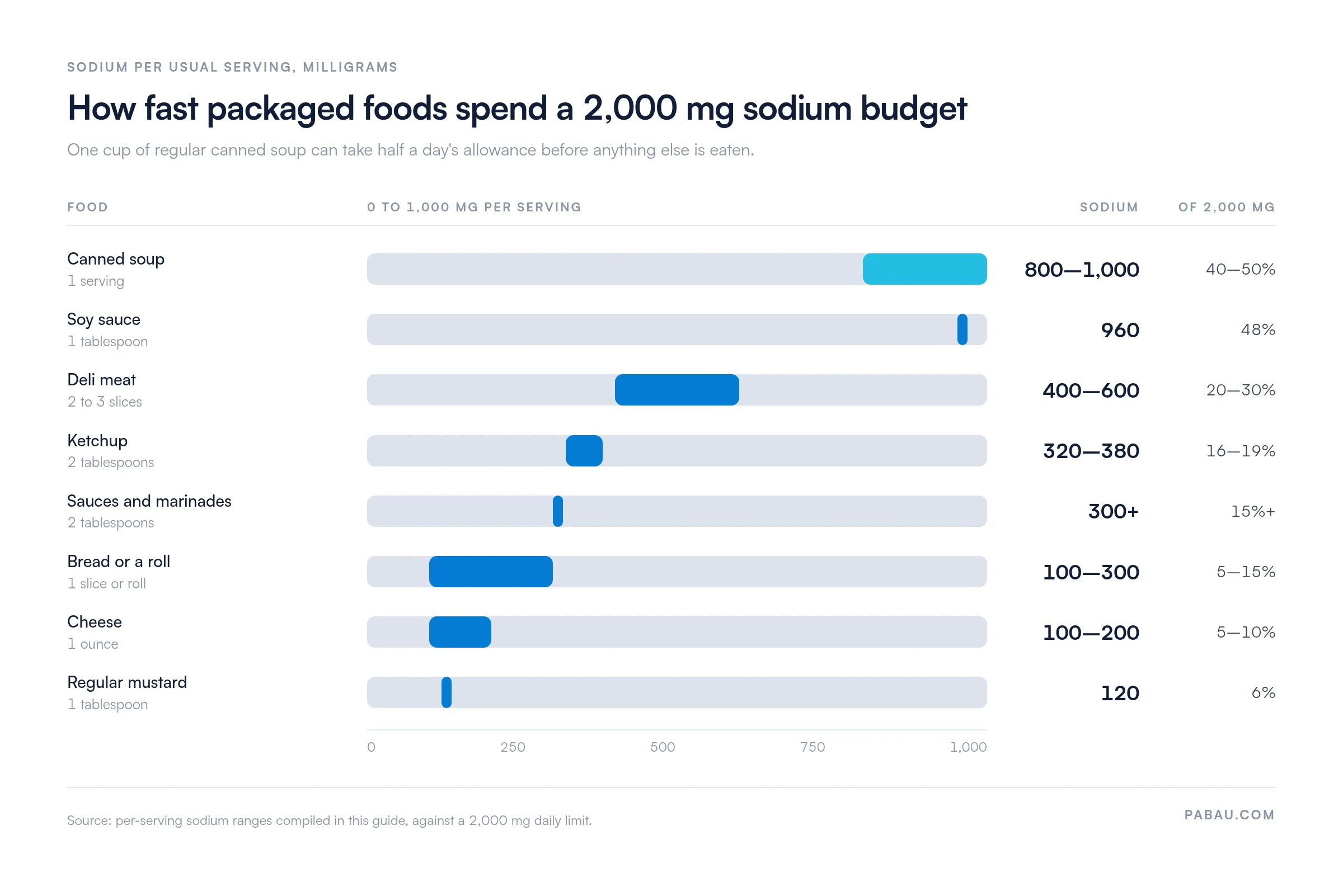
Canned soup, deli meat, bread, and condiments can spend a whole day’s allowance before dinner, so label reading is non-negotiable.
A seven-day menu tells the patient what to eat and when, which cuts confusion and shortens follow-up calls.
Pabau stores the plan on the patient record, shares it through the patient’s account, and tracks adherence with follow-up forms.
Sodium balances fluid and supports nerve function, but too much of it makes the body hold water. That raises blood pressure and increases the work the heart has to do. The U.S. Dietary Guidelines set a ceiling of 2,300 mg a day for adults. Therapeutic limits run well below that for hypertension, heart failure, and kidney disease.
Most Americans take in more than 3,400 mg a day, roughly 50% above the guideline. A written plan gives patients the structure that willpower alone rarely sustains.
Key point: Prescribe the target from the patient’s own condition and comorbidities. One number applied to every patient will be wrong for some of them.
The salt shaker accounts for a small share of what a patient takes in. Up to 75% of dietary sodium is already inside processed and packaged foods before anyone reaches for salt. Ranked against a 2,000 mg daily limit, a handful of everyday items do most of the damage.
The Nutrition Facts label gives sodium in milligrams and as a percentage of a 2,300 mg daily value. Teach patients one rule. A product carrying more milligrams of sodium than calories per serving is a high-sodium choice.
Label reading steps:
The week below sets breakfast, lunch, dinner, and snacks for seven days, with each day totaling under 2,000 mg. It suits hypertension, heart failure, and early-stage CKD patients, and every meal uses food a patient can buy locally.
Patient tip: Every day lands between 1,640 and 1,910 mg. That leaves room for a restaurant meal or a swapped ingredient without crossing 2,000 mg.
Use this list alongside the seven-day menu to guide patient shopping. Print it or share it through the patient portal, so the whole household works from one reference at the store.
Patients often expect low-sodium cooking to taste flat. Herbs, spices, and acid carry most of the work salt used to do, and the list below is where to start.
The seven-day menu suits most patients, but clinical nuance matters. Heart failure patients often need a stricter target than hypertension-only patients. CKD adds potassium and phosphorus to the picture, not sodium alone.
Hypertension: Target 2,000 mg a day. The menu above fits as written. Emphasize label reading and cutting processed meats.
Heart failure: Target 2,000 mg a day or less, per HFSA guidance. The menu fits. Ask patients to weigh themselves daily and report a gain over 3 lb in a day or 5 lb in a week. Sudden fluid retention means the sodium restriction is not holding.
Chronic kidney disease (CKD): The sodium target runs 1,500-2,000 mg depending on stage. Advanced CKD, stage 4 or 5, usually needs potassium and phosphorus restriction as well. Refer those patients to a renal dietitian, because a generalist plan risks hyperkalemia.
DASH and low-sodium eating: The DASH diet plan is validated for blood pressure reduction and already limits sodium. Standard DASH sits at 2,300 mg and the lower-sodium version at 1,500 mg. A patient already following DASH can use this menu without conflict.
A restaurant entree averages more than 1,000 mg of sodium. Patients will still eat out, so send them with tactics rather than a ban.
Handing over a PDF is a start, but patients lose paper and forget instructions on the drive home. Practice management software like Pabau keeps the counseling itself on the record. Pabau Scribe, our AI scribe, captures what was discussed and files it against the patient. At the next visit the plan, the target, and the patient’s own words sit in one place.
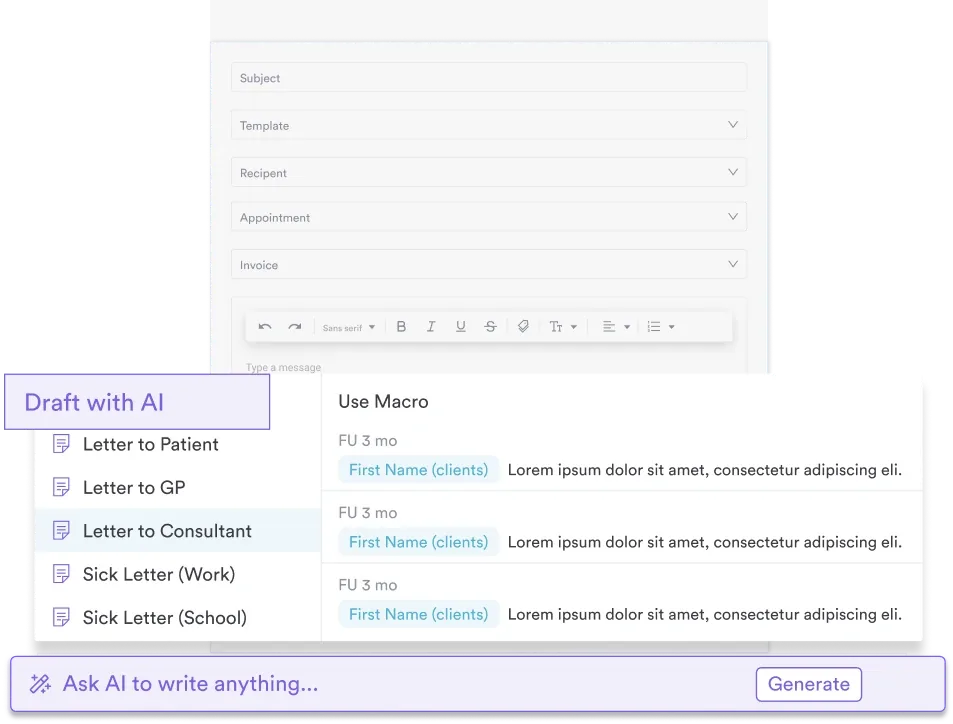
Two weeks after the counseling visit, automated workflows can send a short follow-up form. Ask patients to log what they ate on three random days and name any obstacle they hit. Those answers show whether the plan is working or whether the barrier sits in the kitchen.


Pabau’s patient management system helps practices deliver meal plans, track adherence, and document outcomes in one workflow.

A meal plan turns “eat less salt” into a week the patient can actually follow. Sodium restriction lowers blood pressure, eases fluid retention in heart failure, and slows CKD progression alongside medication. None of that follows from the handout on its own.
What decides the outcome is follow-up. Share the plan through the patient’s secure account, ask about barriers at two weeks, then adjust the target. Book a demo to see how Pabau keeps dietary counseling, follow-up, and outcomes on one patient record.

Treating a patient whose kidneys set the limit? Renal diet meal plan adds the potassium and phosphorus targets that a sodium-only plan leaves out.
Managing lipids alongside blood pressure? Low cholesterol diet plan covers the saturated fat and fiber swaps that sit comfortably beside a low-sodium week.
Counseling a patient with type 2 diabetes? Low carb diabetic diet meal plan sets the carbohydrate load per meal and keeps the same seven-day structure.
Need a plan for a patient recovering from GI surgery? Bland diet meal plan gives a low-irritant week you can hand over while the gut settles.
A low-sodium diet limits sodium to 1,500-2,300 mg per day depending on clinical indication. The U.S. Dietary Guidelines recommend 2,300 mg for the general population, but hypertension, heart failure, and kidney disease patients require stricter limits (1,500-2,000 mg). Unlike a “no-salt” diet, low-sodium eating allows iodized salt in cooking while emphasizing fresh foods and avoiding processed items.
Not primarily from sodium restriction alone. Low-sodium diets reduce fluid retention (patients may lose 2-5 lbs of water weight acutely), but sustained weight loss requires calorie deficit. Low-sodium eating often reduces processed food intake, which may secondarily lower calories and support weight loss. Counsel patients that sodium restriction is about managing blood pressure and fluid retention, not fat loss.
The biggest culprits are canned soups at 800-1,000 mg per serving and deli meats at 400-600 mg for 2-3 slices. Bread adds 100-300 mg per slice, soy sauce 960 mg per tablespoon, and cheese 100-200 mg per ounce. Patients often underestimate sodium in condiments, sauces, and packaged items because they do not taste salty. Label reading catches these hidden sources.
Fresh herbs like basil, oregano, cilantro, and parsley carry most of the flavor. Dried spices such as cumin, paprika, black pepper, and garlic powder add depth. Acids like lemon juice, vinegar, and lime juice brighten a dish without any salt. Avoid salt substitutes containing potassium chloride unless a physician has prescribed them. They are contraindicated in advanced CKD and some cardiac conditions because of hyperkalemia risk.