Despina Petrushevska
Head to toe assessment cheat sheet: Printable nursing guide
A head to toe assessment cheat sheet gives you one fixed order at the bedside, s...

5
Last Updated: Oct 23, 2026
Free PDF 1 page, print-ready Clinician-reviewed
Foods carrying less than 200 mg of potassium per serving count as low potassium choices. In practice, patients with chronic kidney disease (CKD), hyperkalemia, or end-stage renal disease on dialysis use that threshold to build a plate. Specifically, most of them work to a daily total of 2,000 to 3,000 mg.
The table below groups safe foods by category and gives approximate milligrams per serving. Practices usually hand the list out with a renal diet meal plan, so patients see the numbers in the context of actual meals.
A one-page patient handout with two plain food lists, low potassium and high potassium, grouped by everyday food category. It also carries intake fields, so you can record the patient’s details before the form goes home.
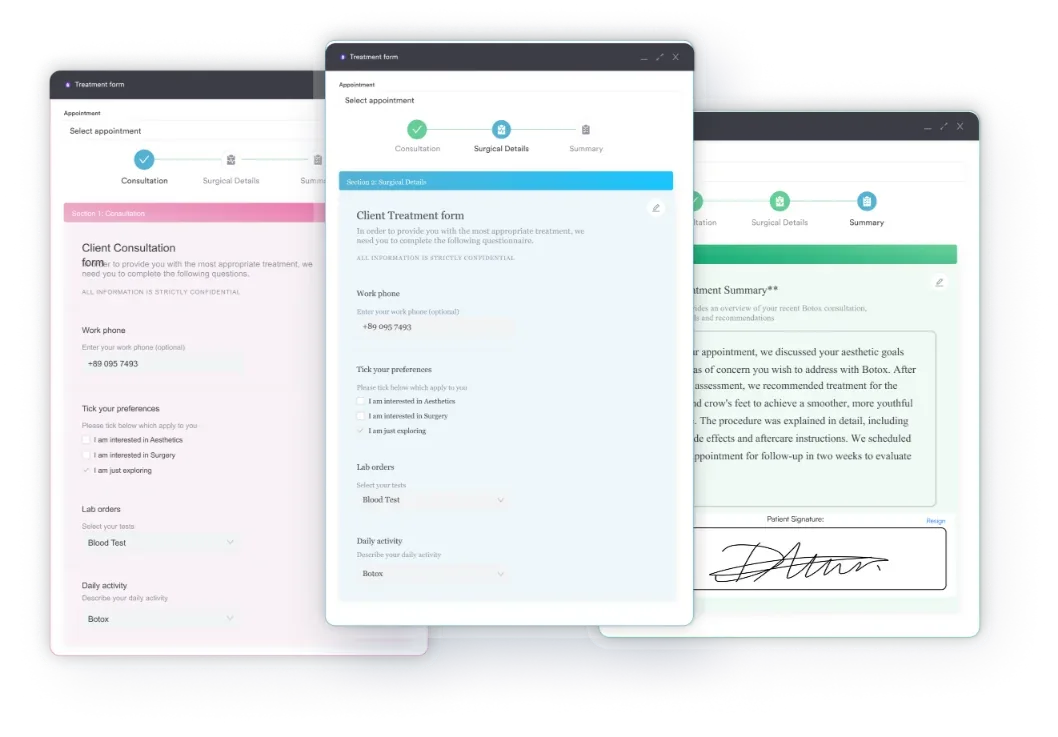
Upload this PDF, or any form you already use, and Pabau's AI Form rebuilds it with tick boxes, text fields and a signature. Attach it to the treatment once, and every patient gets it on time.
AI Form rebuilds the consent, history and aftercare forms you already use. You review each one, then publish.
Patients complete forms on their phone before they arrive, so the front desk stops retyping paper.
Every signed form is versioned and attached to the treatment record, ready when you need it.
Set how long a consent stays valid. Returning patients skip forms they have already signed.
Supports HIPAA and GDPR compliance AES-256 encryption 4.8 on G2 4.7 on Capterra Trusted by 4,000+ practices worldwide

This free handout sorts foods into two lists, low potassium and high potassium, and leaves room for the patient’s intake details.
Low potassium means under 200 mg per serving, and daily targets of 2,000 to 3,000 mg are typical in CKD and dialysis.
Apple juice and white grape juice carry roughly 200 to 300 mg per cup, so they count as moderate rather than low.
Leaching, which means soaking then double-boiling vegetables, cuts their potassium by 30% to 50%.
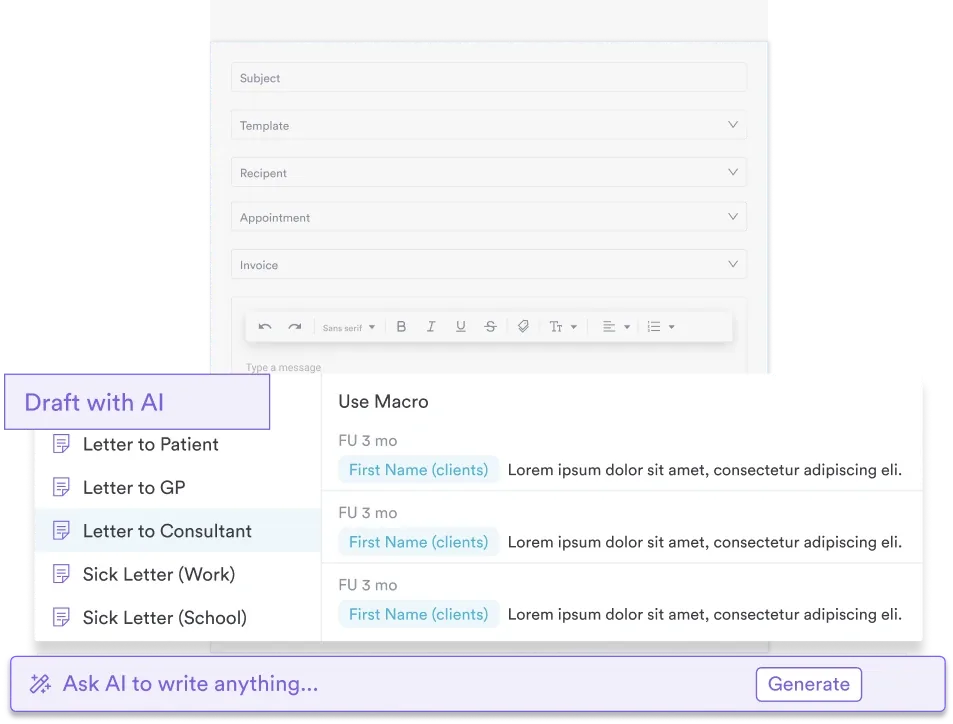
Practice management software like Pabau shares the handout through a patient portal and records who received it.
A low potassium food list is a patient handout that sorts foods by how much potassium a standard serving carries. Anyone whose kidneys cannot clear potassium needs one, which in practice means CKD stages 3 to 5, dialysis, and repeat hyperkalemia.
Potassium keeps the heart and muscles working, so the body guards its blood level closely. When the kidneys stop excreting it efficiently, blood potassium climbs and hyperkalemia sets in. As a result, that can trigger irregular heartbeats, muscle weakness, and cardiac emergencies.
The threshold most lists use is 200 mg per serving. Specifically, the National Kidney Foundation and most renal dietitians work to a daily ceiling of 2,000 to 3,000 mg. However, kidney function, dialysis type, and medications all move that number.
Who uses this list: nephrologists, renal dietitians, primary care clinicians, and dialysis centers all hand it out as standard patient education. Patients on ACE inhibitors or potassium-sparing diuretics also need to watch intake, as do those with heart failure.
Three things decide whether the list works. In particular, the milligram value, the serving size behind it, and the cooking method all change what ends up in the patient’s blood.
The table groups low potassium options by food category, with approximate potassium per standard serving.
Two drinks trip patients up. For example, apple juice and white grape juice appear on plenty of kidney-friendly lists. A cup of either carries roughly 200 to 300 mg of potassium, which makes them moderate choices. Instead, count them against the daily budget like any other food.
Beyond that, patients can mix and match servings across categories to hit the daily target without living on white rice and butter. Patients who have never thought about food groups before can start from a food pyramid guide, then layer the potassium limits on top.
Anything above 300 mg per serving comes off the plate or shrinks to a token portion. Among the usual culprits are bananas, potatoes, tomatoes, oranges, avocados, dried fruit, nuts, seeds, and whole grains.
One warning worth repeating: salt substitutes are usually potassium chloride, which makes them dangerous for renal patients. Instead, regular salt, in the amount the physician allows, is the safer option.
Soaking and double-boiling vegetables strips 30% to 50% of their potassium. As a result, that brings potatoes, carrots, beets, and winter squash back into range for many patients.
Most renal dietitians reserve the double boil for potatoes, carrots, beets, and winter squash. Texture holds up well, which matters when the alternative is a plate the patient will not eat. In practice, Metabolic health practices often send the instructions home inside a patient education packet.
Targets differ between non-dialysis CKD and dialysis, because residual kidney function and dialysate composition change how much potassium leaves the body.
Confirm every target with the nephrologist. Medications like ACE inhibitors and NSAIDs, residual urine output, and comorbidities such as heart disease and diabetes all shift what is safe.
Here is a one-day menu that lands near 1,300 mg of potassium, comfortably inside a 2,000 mg target.
Patients can swap inside a food category and keep the daily total roughly level. Likewise.
Most practices still hand the list over on paper at the end of the appointment. Nobody knows afterwards whether the patient read it, lost it, or passed it to the family member who does the cooking.
Practice management software like Pabau moves that loop into the patient record. Specifically, Digital forms capture dietary history, restrictions. As a result, the dietitian starts the appointment with the current diet already in front of them. A practice offering weight management alongside renal nutrition support can run both through the same weight loss clinic software system. Teams covering both often keep a separate plan for midlife weight change, such as the menopause diet 5-day plan.
Patient portals carry the handout, the meal plan. In turn, everything stays available at home, including to the person doing the shopping.
Ultimately, you end up with one version of the guidance and a record of who received it.

Digital forms, care plans, and patient portals let your team send renal diet handouts and see who opened them. Book a demo to walk through the workflow with your own patient list.

Most patients grasp the rule quickly, then get caught by the details. In fact, the second helping, the salt substitute in the cupboard, and the juice that looked harmless do more damage than any single banana.
So hand over the list with the patient’s own daily number written on it. Then revisit it whenever the medication or the dialysis schedule changes. In short, a handout that matches the current prescription beats a perfect list that was accurate a year ago.
Tracking who got which version is where software earns its place. Book a demo to see how Pabau shares renal diet handouts, logs what each patient received, and keeps the follow-up on the calendar.

Want a full weekly meal plan too? 7-day keto meal plan provides seven days of meals with net carb and macro targets, plus a printable grocery list.
Need a full kidney-friendly meal plan? 7-day meal plan for kidney disease covers seven days of low-sodium, low-potassium meals for stages 1-4 chronic kidney disease patients.
Want the wider nutrition numbers in one place? Nutrition cheat sheet collects the reference values dietitians reach for during a consult.
Working in a long-term care setting? Long-term care dietitian cheat sheet covers the screening and documentation a facility expects.
Need to record the baseline before any diet change? Nursing nutrition assessment gives you a structured intake to work from.
Foods containing less than 200 mg potassium per serving are classified as low potassium. Specifically, safe choices include apples, berries, grapes, green beans, cabbage, cauliflower, white rice, white bread, chicken, fish (tilapia, cod), eggs, and unsalted butter. Always check nutrition labels, as potassium content varies by preparation method and portion size.
Most CKD and dialysis patients work to 2,000 to 3,000 mg a day. In practice, the nephrologist sets the exact figure from kidney function, dialysis type, medications, and other conditions. Ultimately, there is no universal limit.
Yes, white bread and refined grain bread are low in potassium, at 50 to 100 mg per slice. Whole grain and whole wheat breads carry significantly more potassium and should be limited or avoided. Still, always check the nutrition label to confirm the potassium content per serving.
Peel the vegetable and cut it into small pieces, then soak it in cold water for at least two hours. Next, boil it in fresh water for five minutes and drain completely. Repeat the boil once more. As a result, the double cook removes 30% to 50% of the potassium, which brings potatoes back onto the plate.
Low potassium snacks include popcorn, rice cakes, unsalted crackers, apple or pear slices, graham crackers with cream cheese, and hard candy. By contrast, avoid nuts, seeds, dried fruits, bananas, and yogurt. Always check portions, since a snack above 200 mg per serving is no longer a low potassium choice.
Hyperkalemia is abnormally high potassium in the blood. When the kidneys cannot excrete potassium efficiently it accumulates, which can cause irregular heartbeats, muscle weakness, and cardiac emergencies. Accordingly, a low potassium diet prevents hyperkalemia and is critical for CKD and dialysis patients.