Printable values cards: What they are and how to use them in therapy
Printable values cards are a reflection tool that helps a patient work out which...

14
Last Updated: Sep 30, 2026

A life plan worksheet is a one-page form that records six life areas, your priorities, values, strengths, obstacles, and support.
This template uses written boxes rather than scores, so you describe where each area stands in your own words.
The obstacles and solutions boxes carry the most weight, because an if-then plan is what turns an intention into a habit.
Practice management software like Pabau can send the worksheet as an intake form and file the completed copy in the client record.
A printable form with boxes for six life areas, priorities, values, strengths, weaknesses, obstacles, solutions, and your support system. It closes with a reflection section you complete at review time. Email it to a client, or print it for yourself.
Download templateMost people can name what they want from the next few years. Ask for the specifics, though, and the answer gets vague fast. Vague plans are hard to act on, and harder still for a therapist or coach to work with.
A life plan worksheet fixes that by making you write things down. It gives you one page and six life areas. The boxes turn “I should sort out my finances” into something dated and specific. The template above is the one this walkthrough follows.
A life plan worksheet is a structured form for your values, your priorities, and where each life area stands today. It covers several areas at once, so career notes and family notes sit on the same sheet. That is the point. Plans made one area at a time tend to collide.
Therapists, coaches, and functional medicine practitioners hand it out for the same reason. In a psychology practice, a completed sheet tells you what a client cares about before you have to ask. It also shows the distance between what someone says matters and how they spend their week. Therapists often pair it with an active listening skills worksheet, which sharpens how they hear what a client says.
Written plans get acted on more often than unwritten ones, because writing forces you to be specific about when and how. Psychologist Peter Gollwitzer’s work on implementation intentions explains part of that.
An implementation intention is an if-then plan. You tie a specific situation to a specific action. For example, “If it is Tuesday at 7pm, then I go to the class.” Naming the goal is only half of it. The trigger does the work.
That last point is why worksheets show up in care plans so often. Someone who has written their own priorities down is easier to hold to them.
The template covers six areas, and every one of them is a written box rather than a score. Put a few honest lines in each. If an area is fine as it is, say so and move on.
Notice there is no rating column. Some people want one, and a score gives you something to argue with. A life balance wheel handles that.
Running this form inside a GP practice system keeps clinical documentation in one place.
Set aside about an hour. Work down the page in order, because each section feeds the one below it.
Practitioners usually send the sheet ahead of the first appointment rather than spending session time on it.
Most sheets come unstuck at the obstacles box, because people write the problem and leave the response vague. Pair every obstacle with a trigger and an action instead. That takes about a minute a line, and it is the difference between a plan and a wish list. When the obstacle is self-doubt, a self-esteem worksheet for adults offers CBT-based prompts to challenge the negative self-talk behind it.
Some obstacles need evidence before a solution makes sense. If poor sleep is the barrier, two weeks of a sleep diary will tell you more than guessing will.
Here is a partial example for a coaching client in her mid-thirties. It shows how plain the wording can be and still work.
Nothing there is polished, and that is why it gets used. Six months on, she has something concrete to compare against, written in her words rather than her coach’s.
The same page works as a five-year plan once you change the question. Rather than asking what needs attention now, ask where you want each area to be in five years.
Five years leaves room for changes a twelve-month plan cannot hold, like a career switch or a move abroad. It also exposes conflicts early. Someone planning to scale a business and be home every evening has one scheduling problem to solve. Better to find that out now than in year three.
Asking a client to map five years also shows you how they think about time. Clinicians should take that long view themselves, too. A plan with room for rest and a change of direction is a practical defense against therapist burnout.
Four habits account for most abandoned sheets.
If you are handing the worksheet to a client, run through four things first:
Coaches running this at any scale keep the whole cycle in one place. A coaching client management system holds the sheet, the review date, and the session notes together.
Most practices email the worksheet as an attachment. It comes back as a scan or a phone photo, gets dropped into a shared drive, and is never opened again. The review date lives in somebody’s head until it quietly expires.
Practice management software like Pabau handles the whole loop instead. You send the worksheet as a digital intake form before the first appointment. The answers then file themselves against the client record. Nothing gets rekeyed, and nothing sits in an inbox.
Then you set the review once and forget about it. The reflection section then gets filled in rather than forgotten. You stop chasing, and clients stop drifting.
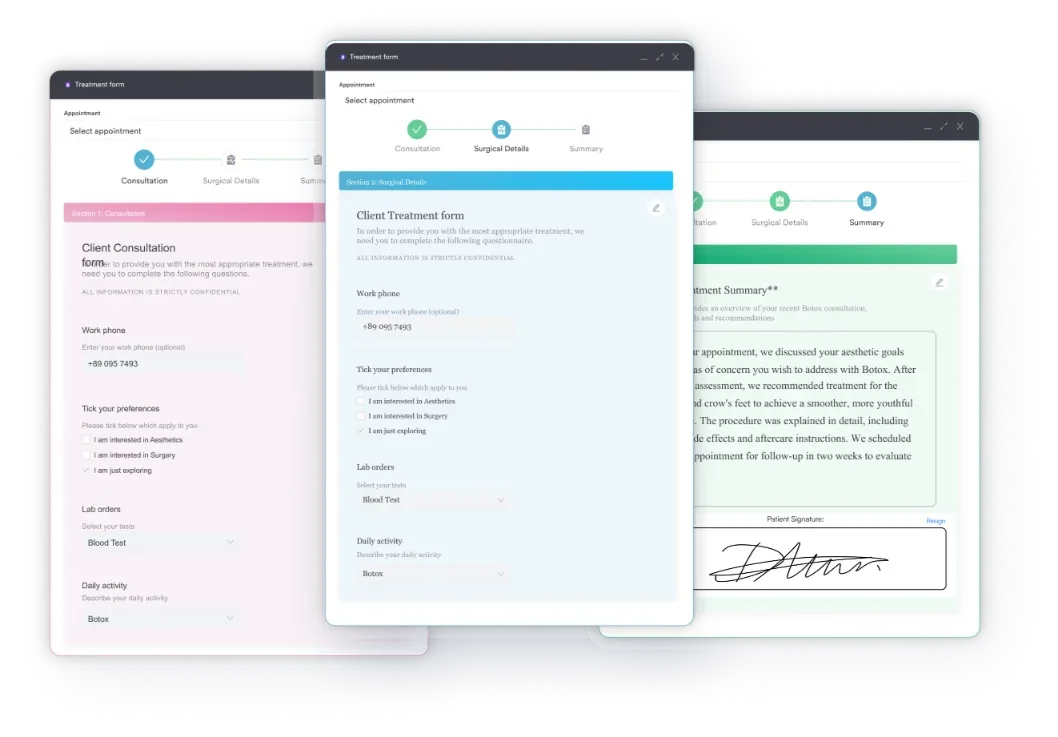

Send the life plan worksheet as a digital form, then store the completed copy in the client record. Automated reminders bring the review date around on time, so your team starts the session already informed.

The hour you spend on this page is worth it, provided the review date goes in the calendar the same day. Without that date, you have a snapshot. With it, you have a plan that gets corrected as life moves around.
For practitioners, the sheet earns its place by changing the first ten minutes of a session. You stop asking what matters to this person. You start asking what has changed since they wrote it down.
Want the sending, storing, and chasing handled for you? Book a demo to see how Pabau keeps client worksheets and their review dates in one place.

Curious about your own biases? Am I homophobic quiz scores your attitudes toward LGBTQ+ people across three dimensions.
Wondering how to record what happens between reviews? Case management note gives you a repeatable format for progress notes, referrals, and follow-up actions.
Looking for a lighter exercise to open a session? Kindness worksheet works well with clients who find the values section of a life plan hard to start.
Got a client whose obstacle is a difficult conversation? Non-violent communication worksheet turns that into a script they can rehearse before they need it.
Suspect an underlying personality disorder? Antisocial personality disorder test helps you evaluate behavioral patterns and interpersonal functioning tied to ASPD.
No. Two areas done honestly are worth more than six done in a hurry. Leave a box blank and come back to it at your review date.
Treat it as part of the client record rather than a loose file. Keep it in your practice management system, under the same access controls as clinical notes. Shared drive folders are where these go missing.
Yes, with two changes. Swap finance and wealth for pocket money or a first job, and shorten the review cycle to about six weeks. Teenagers lose interest in a twelve-month horizon quickly.
Ask what got in the way the last time they tried. People rarely name obstacles unprompted, but most will describe a failed attempt in detail. Write the solution together from what they tell you.
Fill in separate sheets first, then compare the priorities and values boxes. Working from one sheet at the start usually produces one person’s plan with two names on it.
The download is a printable form, so it is built to be printed and written on by hand. If you need typed answers back, send the same sections as a digital intake form instead.