Blood type O food list
A blood type O food list sorts foods into what people with type O should eat, li...

1
Last Updated: Oct 6, 2026
A high protein grocery list is a shopping guide that groups protein-rich foods by category, with the serving size and grams of protein for each. Practices hand it to patients to support muscle maintenance, weight loss and metabolic health. The printable template below covers every aisle, from poultry and fish to plant-based proteins and supplements.
Protein preserves lean muscle during weight loss and keeps patients full for longer. Most adults need at least 0.8 g per kilogram of body weight daily, and active patients need more. This guide sets those targets, lists the foods that meet them, and shows which proteins cost the least per gram.
A two-page shopping list with amount lines for meats, seafood, dairy and eggs, legumes, nuts and seeds, whole grains, and protein supplements. It ends with space for extra items and reminders, so you can tailor it to each patient.
Download template
A high protein grocery list organizes protein-rich foods by category, from meat and fish to dairy and plant-based staples, with grams of protein per serving.
Daily protein needs range from 0.8 g per kg of body weight for sedentary adults to 1.2-2.0 g per kg for athletes.
Lentils and chickpeas are incomplete proteins that need a grain to complete their amino acid profile, while tofu is a complete protein on its own.
Eggs, dried legumes and canned fish are the cheapest staples on the list, at about 2-12 cents per gram of protein.
Compare foods by protein per 100 g rather than per serving, and look for at least 1 g of protein per 10 calories.
Protein builds muscle, supports immune function, helps regulate blood sugar, and keeps you full for longer. Most adults need at least 0.8 grams of protein per kilogram of body weight daily. Athletes and patients in an active weight loss phase often need double that or more.
A printed list takes the guesswork out of the store. Patients no longer have to wonder which yogurt has enough protein or whether canned tuna counts. The list sorts foods by protein content, flags the cheapest sources, and shows which plant-based combinations supply every essential amino acid.
Protein requirements vary by goal, activity level and age. The table below shows daily targets for common scenarios in grams per kilogram of body weight, the standard unit clinicians and nutritionists use.
The 70 kg column is a reference point, so adjust it for each patient’s body weight. A 60 kg patient aiming to lose weight needs 60-72 g of protein daily. An 85 kg athlete needs 102-170 g. Calculate the target first, then use the grocery list to plan meals that hit it.
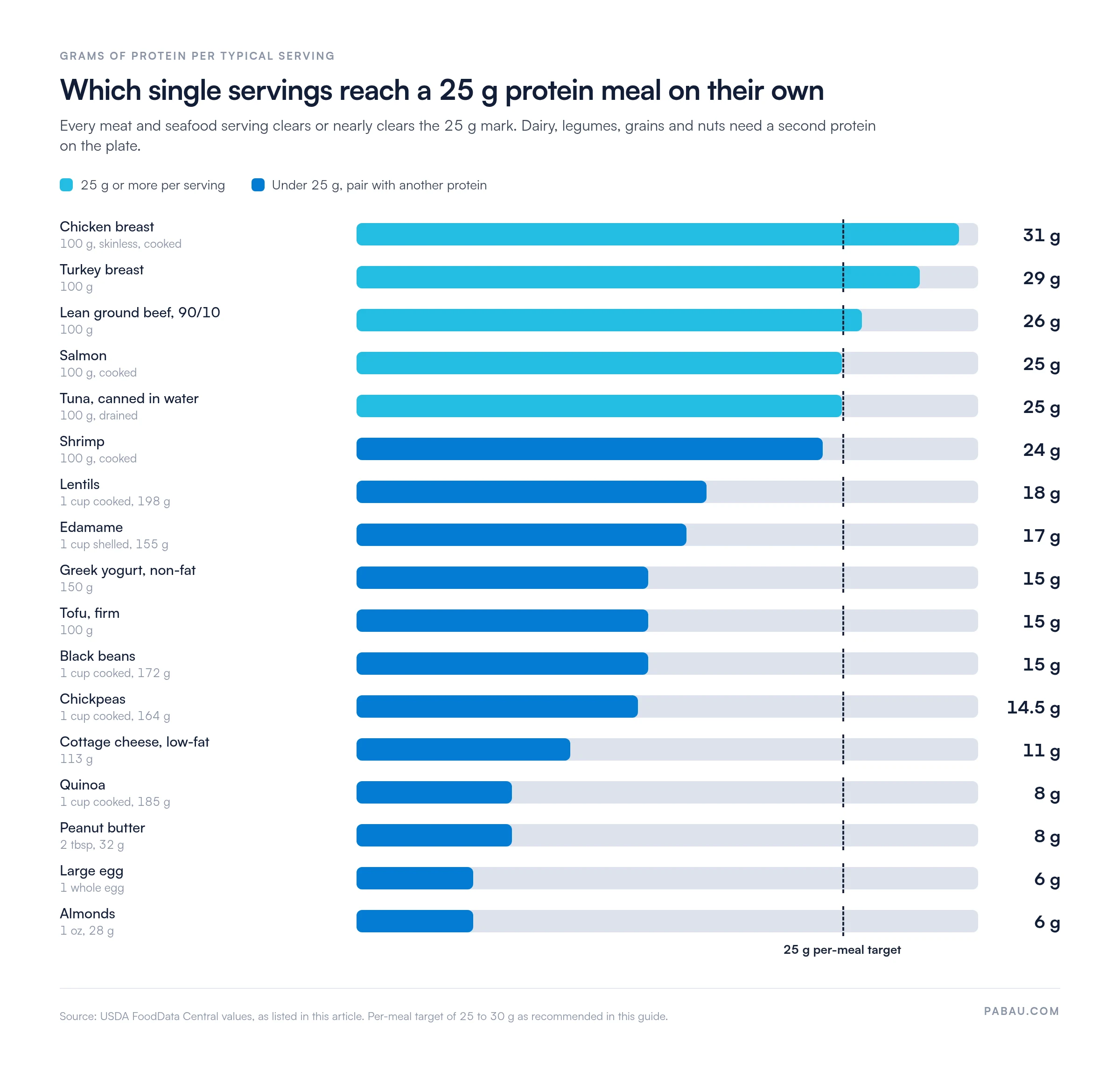
Each food below shows typical protein per serving, based on values from USDA FoodData Central. Fresh, frozen and canned versions carry similar amounts of protein, so patients can buy whichever form they’ll cook.
Ranked side by side, only meat and seafood servings reach or come close to a 25 g protein meal on their own. Dairy, legumes and grains need a second protein on the plate.
Snacks between meals help patients reach their daily protein target without extra cooking.
Weight loss requires a calorie deficit, and protein preserves lean muscle during that deficit. It also increases satiety, so patients feel fuller for longer. Prioritize lean, lower-calorie protein sources.
Aim for 1.0-1.2 g protein per kg of body weight daily during weight loss, and include protein at every meal to prevent mid-afternoon hunger crashes. For a list built around calorie control rather than protein, our weight loss grocery list adds portion cues for each food category.
Protein doesn’t have to be expensive. Dried legumes, frozen poultry, canned fish and bulk eggs deliver protein at a fraction of the cost of fresh steak or salmon.
Buy generic brands, shop sales, and stock your freezer. Built from dried goods, eggs and canned or frozen staples, a budget protein list costs about 2-12 cents per gram of protein. Weight loss clinics often recommend these strategies, because patients stick with a plan they can afford.
The list works best when patients batch cook from it, so they still hit their protein target on busy days. Pair it with a high-protein meal plan to map those servings onto a full week.
Share meal prep tips with patients during nutrition consultations. A patient who preps once a week can hit their protein target without cooking every day.
A “high protein” claim on the front of a pack tells patients very little. The nutrition label on the back shows whether the food is a dense protein source or just well marketed.
What to look for:
When advising patients, teach them to calculate the protein-to-calorie ratio themselves. It’s the single best way to tell a high-protein food from marketing noise.
Vegetarian and athletic patients shop from the same list, but they lean on different parts of it.
Vegetarian and vegan proteins: Tofu, tempeh, edamame and quinoa are complete proteins. Lentils, chickpeas and most nuts are incomplete, so they lack enough of one or more essential amino acids. Combining legumes with whole grains (rice and beans, lentils and oats) completes the profile. For patients who are also losing weight, a vegetarian meal plan turns these foods into daily menus.
Performance and muscle gain: Athletes need more total daily protein (1.6-2.0 g per kg), spread evenly across four or five meals of 25-30 g each. Whey protein powder helps on days when food falls short. Creatine and beta-alanine are evidence-supported supplements for performance.
In many practices, nutrition advice leaves the consultation on paper. The patient takes a printout home, the protein target lives in the clinician’s memory, and nobody follows up until the next visit.
Pabau, the practice management platform we build, keeps that advice in the patient record instead. You log the protein target in the treatment note and attach the grocery list to the patient’s file. With AI-assisted clinical documentation from Pabau Scribe, our AI scribe, the nutrition discussion is written up while you talk.
After the visit, AI-drafted patient letters and automated follow-ups remind patients to shop from the list. The next review starts from the target you set, not from what anyone remembers.
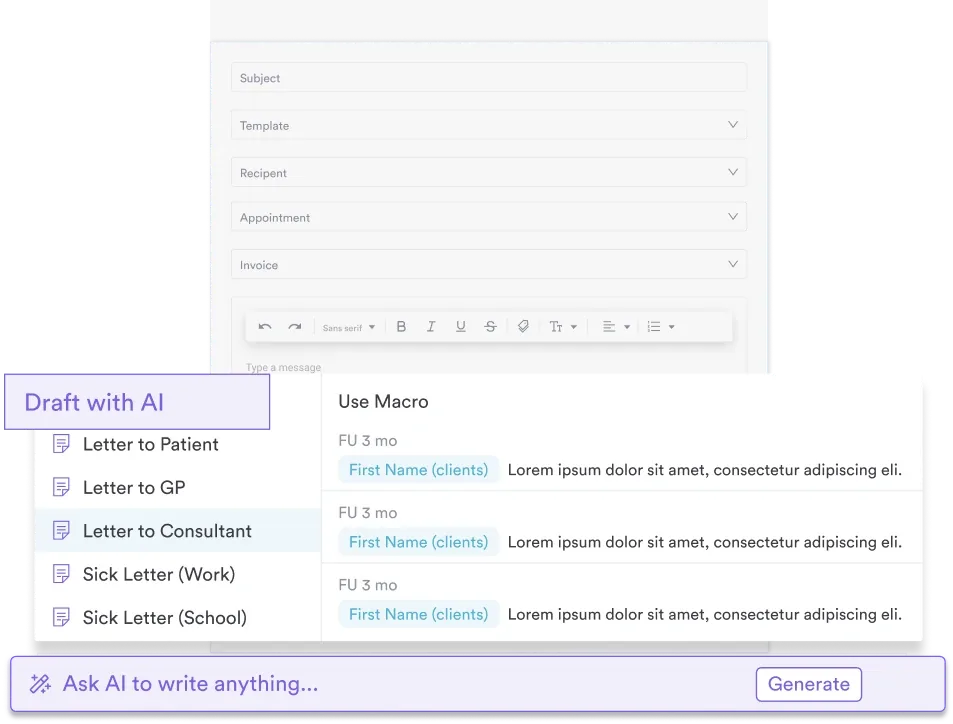

Document dietary recommendations, protein targets, and meal prep plans in one place. Automated follow-up reminders keep patients accountable between visits.

A protein target only helps once a patient can turn it into a shopping basket. Hand over the list with the number already worked out in grams, and the next trip to the store gets much easier.
Lead budget-conscious patients toward eggs, dried legumes and canned fish. Steer plant-based patients toward legume and grain pairings, so each meal covers every essential amino acid.
The trade-off is that a printed list can’t adjust itself. Recheck the target whenever a patient’s weight or goal changes. Book a demo to see how Pabau keeps protein targets and nutrition handouts in the patient record between visits.

Setting protein as a share of daily calories? High protein diet plan explains the 25-35% protein target, with food sources and a patient intake template.
Working with patients who are cutting carbs too? High protein low carb diet plan lays out a 7-day clinical template for lower-carb, higher-protein eating.
Planning for vegan patients? Vegan meal plan for weight loss adds calorie targets, macros and a plant-based grocery list.
Prefer a fixed macro split? 30/30/40 diet plan splits calories into 30% protein, 30% fat and 40% carbs for muscle retention during weight loss.
Buy lean meats (chicken, turkey, beef), fish (salmon, tuna, shrimp), dairy (Greek yogurt, cottage cheese) and eggs. Add legumes such as lentils and chickpeas, plus plant proteins like tofu, tempeh and nuts. The downloadable list above gives serving sizes and protein content for each. Start with three or four protein sources you enjoy and build meals around them.
The recommended dietary allowance (RDA) is 0.8 grams per kilogram of body weight for sedentary adults. A 70 kg person needs approximately 56 grams daily. If you’re active, losing weight, or building muscle, increase to 1.0-2.0 g per kg depending on your goal. The table in this guide shows targets by activity level.
Yes. Legumes, tofu, tempeh, edamame, nuts, seeds and whole grains all provide substantial protein. Many plant proteins are incomplete, meaning they lack enough of one or more essential amino acids. Combining legumes with grains, or nuts with seeds, completes the profile. Many vegetarians and vegans meet or exceed their protein targets.
Chicken and turkey breast lead per serving (29-31 g per 3.5 oz), followed by lean beef (26 g) and tuna and salmon (25 g). Protein powder (20-30 g per scoop) and Greek yogurt (15 g per serving) follow. Check the nutrition label to verify serving sizes, because “high protein” marketing often hides small portions.
Buy eggs, dried lentils and beans, canned tuna or salmon, frozen chicken thighs, ground turkey, and cottage cheese. These sources cost about 2-12 cents per gram of protein. Batch cook large portions and freeze individual meals. Avoid specialty brands and processed “protein” products, which cost more for the same nutritional value.
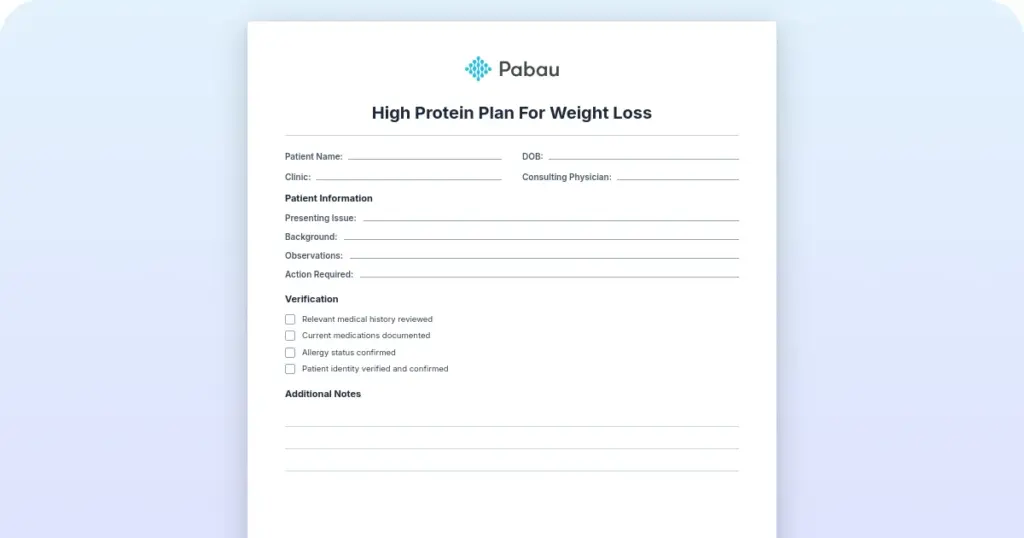
Record each patient’s protein target in their clinical notes during the consultation. Use digital forms to capture dietary goals, then send automated follow-ups that remind patients to check their progress. A downloadable high protein grocery list removes friction, because patients can reference it on every shopping trip and during meal prep.