Receptive one word picture vocabulary test: What it measures and how to interpret scores
The receptive one word picture vocabulary test is a norm-referenced assessment o...

Last Updated: Sep 23, 2026

Flashcards for speech therapy are prompt cards speech-language pathologists use to target articulation, vocabulary, word retrieval, and functional communication.
This free printable pack covers early and later developing sounds, picture vocabulary, aphasia naming tasks, autism communication cards, and language goal prompts.
Format matters as much as content, so the table below matches photo, illustrated, line art, and digital decks to client types.
Card drill suits clients who already imitate words on request, while pre-verbal toddlers need play and joint attention first.
Logging which target words a client got right in practice management software like Pabau turns a paper tally into tracked progress.
Inside the PDF you get articulation cards for early and later developing sounds, in initial, medial, and final position. It also carries picture vocabulary, aphasia naming, autism communication, and language goal cards, print-ready and with no watermark.
Download templateFlashcards for speech therapy earn their place when the card matches the goal, the client, and the format of the session. The pack below is free, and it is sorted by population rather than by theme.
Each set maps to the speech and language goals you have already written on a treatment plan. Articulation, expressive language, aphasia, and autism supports sit in one file, so you print once. Pair them with speech therapy software and the scoring stays with the client record.
Two sections go beyond a card list. A format table matches card styles to client types, from adult aphasia to teletherapy. A clinical note sets out when card drill is the wrong tool for a client’s speech therapy goals.
Flashcards for speech therapy are prompt cards a speech-language pathologist (SLP) shows to elicit a target sound, word, sentence, or communication act. The card carries the stimulus, so your attention stays on the response instead of on what to ask next.
That makes them different from the vocabulary cards sold for classroom use. A clinical deck is sorted by target, not by theme. You pull /s/ in final position, or high-frequency verbs, and leave the rest in the box.
Format follows setting. Printed cards suit a table-top session where you can fan them out and control the pace. A screen-shared PDF does the same job in teletherapy without losing the visual structure.
The professional case for them is unglamorous. The American Speech-Language-Hearing Association (ASHA) frames intervention around measurable goals. A card deck is a cheap way to count attempts, and a 20-card set gives you 20 scored trials you can write down.
The printable flashcards for speech therapy in this pack come as five sets, each sorted by therapy target. Print only the set you need for tomorrow’s caseload.
Two things sit outside this pack, and it is worth knowing before you print. It has no picture scenes, because scene work needs a full sheet and a different print size. It also has no blank cue card template, so keep index cards on hand for client-specific targets.
Print at 100% scale on letter or A4 so card sizes stay consistent between sets. Cut, laminate at 3 mil, and the speech flashcards survive a full caseload of handling.
Match the format to how the client processes an image, not to what looks nicest in your folder. Photographs suit adult clients. Clean illustrations suit young articulation clients. Line art suits clients who need a low visual load, and digital decks suit teletherapy.
| Format | Best for | Why it works | Watch out for |
|---|---|---|---|
| Photo cards | Aphasia and other adult clients | A photograph is a concrete referent, which supports word retrieval | Busy backgrounds compete with the target object |
| Illustrated color cards | Young articulation clients | The target object is drawn large and unambiguous | Cartoon style can invite chatting instead of production |
| Black-and-white line art | Clients who need a low visual load, including some autistic clients | Less color and detail means less sensory competition | Some clients read line art as unfinished |
| Digital or virtual decks | Teletherapy sessions | Shuffles instantly and screen-shares without a print run | No tactile sorting, so movement activities are harder |
One format decision carries over to every deck. If a client uses a communication device, keep the card art in the same visual style as their symbol set. Two competing symbol styles slow recognition down.
Therapists using therapy practice management software can send resources like this to clients between sessions.
The articulation flashcards cover eight early sounds, seven later sounds, and the common blends. Early sounds are m, n, b, p, t, d, g, and k. Later sounds are s, z, r, l, sh, ch, and j.
Each sound appears in initial, medial, and final position, because a client rarely masters all three at once. A child who nails /s/ in “sun” can still lose it in “bus”.
That ordering is why articulation cards beat a generic word list. You can pull one position, run 20 trials, and score them without hunting through the deck.
Write the target sound on the client’s record, not on a sticky note. Caregiver concerns collected on a new patient questionnaire often point to the first sound worth targeting.
Practice management software like Pabau stores that target on the digital intake form. A covering clinician then opens the same target you left off on.
Picture cards carry language goals that articulation cards cannot touch. Word meaning, utterance length, and grammar all sit on the language side. The target is what the client says about the picture, not how cleanly they say it.
The pack includes free picture cards in separate noun and verb sets. Keep them apart, because a verb card asks for a sentence and a noun card asks for a label.
Five tasks that run off the same deck:
Picture flashcards work hardest with clients who have a language delay, autism, or acquired language loss. A mixed receptive-expressive profile. A shared image gives you both something to point at when the words will not come.
Adult clients need concrete, high-frequency images, which is why the aphasia set uses everyday objects rather than cartoons. Anomia is a retrieval problem, so the picture has to be unmistakable. Aphasia itself is coded R47.01 when the session goes on a claim.
Free aphasia card downloads often fail on that one point. A drawing that needs interpreting adds a visual puzzle on top of the word-finding task.
Run a naming block the same way every time. Present the card and wait five seconds. Then move down a cuing hierarchy, starting with a semantic cue and ending with the written first letter.
Score the level of cue, not just right or wrong. Cue level is what shows movement when the raw accuracy figure sits still for three weeks. At review points.
Cueing is what separates a practice block from a test. The Western Aphasia Battery allows no cues when it scores naming, so your cued card tally sits beside its Aphasia Quotient, never replacing it.
The same deck covers memory work with adult clients. Lay six cards face down, name them, then ask the client to recall the set. Delayed recall supports the cognitive goals a plan sets alongside language work. It also gives you an activity adults do not find childish.
Group the cards by what the child wants to do with them, not by topic. Requesting, protesting, commenting, and answering are separate skills. Most speech therapy goals for autism name one of them, so split the deck the same way.
Augmentative and alternative communication (AAC) systems come first. The nonverbal communication cards in this pack work as a reference set beside the child’s device, never as a replacement. Introduce them in the device’s own symbol order, so the child is not learning two layouts.
Speech patterns in autism vary far more than any single card set can anticipate. A child with echolalia will repeat your model rather than retrieve the word. With a scripted child the job is breaking the script, so drop the verbal prompt and point instead.
Three activities for autistic clients that use these cards:
Selective mutism communication cards belong in the same folder, for a different reason. A child who speaks at home and not at school needs a way to answer without voicing, and a card gives them one. Start there and add voice later.
Keep the text on autism cards minimal. A picture the child reads in under a second beats a labeled card they have to decode first. Carry the same visual style across to a visual schedule, so the child meets one symbol set.
Pull the cards that match one goal on the speech treatment plan, run them in a tight block, and score every trial. Six well-chosen cards beat 40 shuffled ones.
One caution before you start drilling. Card drill assumes the client can already imitate a word on request. For a pre-verbal toddler that assumption does not hold, and drill turns into a compliance task with no communication in it.
A better fit at that stage is play with a running commentary. Follow what the child picks up, name it once, and wait. Bring the cards in when the child starts imitating words without being asked.
Show the caregiver the same routine at home.
Cards also stretch further than single-word drill. Two cards side by side support social language goals. The client has to take a turn and comment on someone else’s choice.
For wh-question goals, hold one card and ask who, what, where, and why in sequence. That gets four question types out of a single card.
Teletherapy needs one change. Share the PDF in presenter mode and give the client control of the pointer, so they choose the next card instead of watching you scroll.
The expressive language goals a plan tracks most often are vocabulary size, utterance length, grammar, and question answering. A card deck can move all four, one at a time.
Map the set before the session, not during it. Category-sorted picture cards grow vocabulary. Action cards paired with a carrier phrase grow utterance length. Past-and-present pairs work on tense.
Our speech therapy goal bank gives you the wording for those targets if you are writing the plan from scratch.
Record four numbers after each block. Cards presented, correct responses, cue level needed, and average utterance length tell you whether the goal is moving.
Over four to six weeks, the shape of the data matters more than any single session. Rising accuracy with falling cue dependence is the pattern worth writing into a progress note.
Click the download button at the top of this page, then follow the five steps below before the cards reach a client.
Print a second copy of the target cards for home practice.
A paper tally sheet works until someone asks whether /r/ in final position has improved since March. That answer lives across 12 sessions, not one.
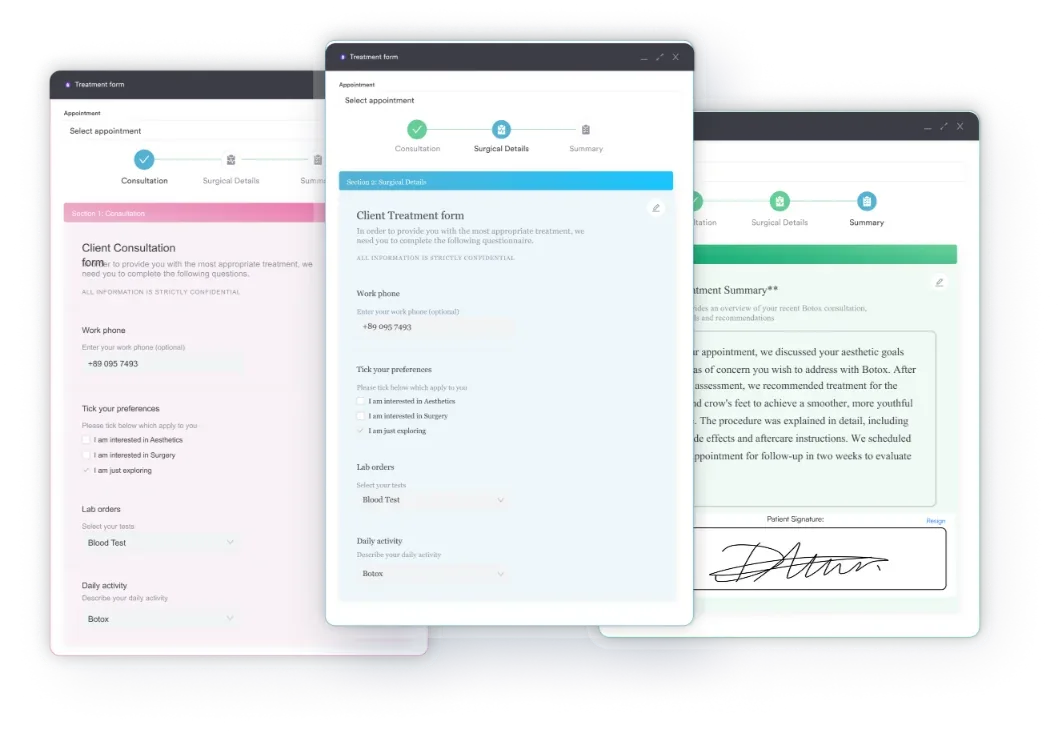
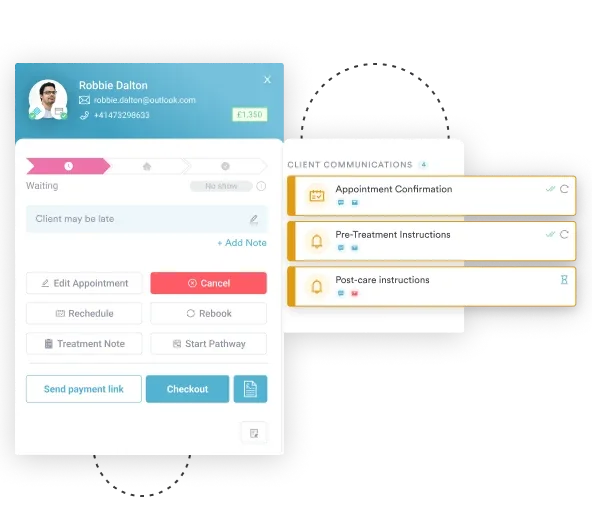
Pabau keeps the card-level detail inside the treatment note itself. You log the target, the cards presented, the accuracy, and the cue level before the client has left the room.
Next session, the note opens with last week’s numbers already on screen. You can see that /s/ in initial position has held at 90% for three sessions, so the target moves to medial.
Pediatric caseloads are often shared with an occupational therapist. The same notes stand behind a claim for G0153 when a payer asks for evidence.
The same record feeds the parts of the job that are not the session. Progress notes, caregiver updates, and the home-practice message all pull from one place, so nothing gets retyped. Caregivers see the same target list in the client portal, so home practice matches what happened in the room.

Pabau keeps treatment notes, goal tracking, and caregiver messaging in one client record. Your flashcard scores turn into progress you can show a parent, a school, or a funder.

The card is the cheapest part of the session. What decides whether it works is whether the format fits the client and the target fits the plan.
So print the two or three sets your current caseload needs and leave the rest in the file. A deck you actually score beats a complete library you shuffle.
One trade-off is worth remembering. Drill buys repetition, and repetition is not the same thing as communication. Keep checking that the word shows up somewhere other than across the table from you.
Book a demo to see how Pabau turns per-card scores into a progress record you can hand to a parent.

Need goal wording you can paste straight into a plan? Speech therapy goal bank collects ready-written targets by domain and age.
Not sure which sounds to target first? Articulation test walks through administering, scoring, and reading the results.
Working with an adult after a stroke? Aphasia worksheet adds structured language tasks that go past naming practice.
Is it a speech delay or autism? Autism and speech delay separates the two profiles and what changes in therapy.
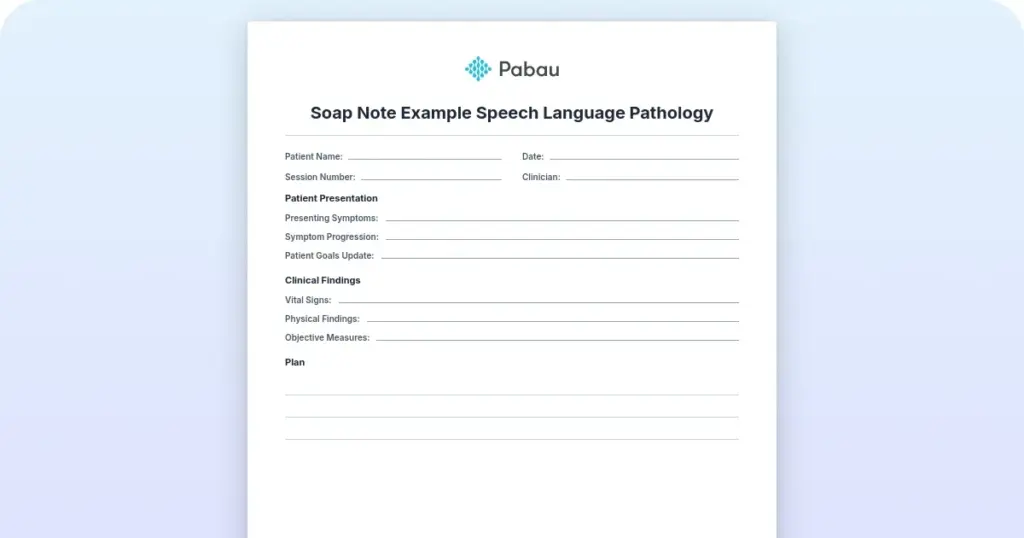
Need to write the session up faster? Our SOAP notes template for speech therapy gives you a reusable note structure.
The best set is the one that matches the goal on the plan and the client in front of you. Articulation cards target sound production. Picture cards target vocabulary and sentence length. Aphasia cards target word retrieval, and autism cards target functional communication. Format counts too, so use photographs with adult clients and clean illustrations with young children.
Yes. The pack on this page is free to download and print, with articulation, vocabulary, aphasia, and autism sets in one PDF. There is no watermark and no subscription. Print at 100% scale on letter or A4 so card sizes stay consistent when you mix sets in a session.
SLPs use cards that present one target sound at a time, in initial, medial, and final word position. That layout lets you run a block of 20 trials on a single position and score it cleanly. Progression is usually initial position first, then medial and final, with blends held back until the single sound is stable.
Yes, once the child can imitate a word on request. Cards give you repetition, a visual anchor, and immediate feedback, which is what builds a new sound pattern. Before that stage, play with a running commentary does more than drill. A pre-verbal toddler needs joint attention and imitation first, and the deck can wait.
Articulation cards score how a word is produced, and language cards score what the client says about the picture. A child might use articulation cards for /s/ in final position, then use picture cards to build a five-word sentence. Keep the two scored separately, because a clear sentence with a distorted /s/ is progress on one goal only.
Pick one task per block and stay in it. Naming asks the client to retrieve the word with no cue. Category sorting asks them to group cards by meaning. Description asks for a full sentence, and wh-questions ask them to answer who, what, and where about the same image. Mixing all four in one block makes the data unreadable.
Aphasia work uses high-frequency nouns and verbs shown as photographs rather than drawings. A concrete image reduces the visual guessing that gets in the way of word retrieval. Start with the most useful everyday items, then move to lower-frequency vocabulary. Score the level of cue each time, because cue level shifts before raw accuracy does.
They help when they are grouped by communication function rather than by topic. Cards for requesting, commenting, and answering each do a different job in a session. Keep the art low in detail and in the same visual style as the child’s communication device. The cards support that device and never replace it.
Easy onset, light articulatory contact, and a slowed speech rate are the three strategies most sessions start with. Flashcards work here as the carrier. The client says the card word using the target strategy instead of racing through the deck. Keep fluency work separate from language goals in the same session, because monitoring rate and building sentence length compete for attention.
Only indirectly, and only if the card is a shared object rather than a test. Joint attention goals are met when the child looks at the card, then at you, and back again. Hold the card near your face, wait for that look, and name the picture only after it happens. If the gaze shift never comes, put the deck away and work with toys.
A prompt tells the client what to do, and a cue gives them information that helps them get there themselves. “Say sun” is a prompt. “It starts with /s/” is a cue. That distinction matters for scoring, because a response after a prompt is not independent. Note which one you used on every card, or your accuracy figures will look better than the client’s skill.
Yes, mostly in pacing and in what you target first. Speech and language activities for Down syndrome usually lean on visual supports and short, high-frequency vocabulary. Hearing loss and low oral-motor tone are common, so keep card sets small and repeat them for longer. Signing alongside the card is standard practice rather than a fallback.