Getting along with siblings worksheet
A getting along with siblings worksheet is a printable that helps children and t...

2
Last Updated: Oct 23, 2026

The fact or opinion worksheet in this download is a blank 10-statement frame, so you choose the statements yourself.
That one design choice lets the same sheet run a kindergarten reading lesson and an adult CBT session on automatic thoughts.
The instructions cover what to do when a learner disagrees with your answer key, which is where most of the teaching happens.
This page supplies statement banks for kindergarten through high school, a worked answer key, and KS2 mapping for UK teachers.
Practice management software like Pabau can send the worksheet as a digital form before a session and file responses in the client record.
The PDF gives you 10 statement slots with fact or opinion checkboxes, plus name and date fields. It closes with two reflection prompts and a notes box for the teacher or parent. No signup, no watermark.
Download templateA fact or opinion worksheet usually arrives pre-filled with someone else’s statements, pitched at one grade band. This one arrives blank. Download the PDF and you get 10 statement slots you fill in yourself.
That one design choice is why the same sheet covers a kindergarten reading lesson, a Grade 5 comprehension task, and an adult CBT session. Below are statement banks for each age band, plus a worked answer key. There is also guidance for the hardest moment, when a learner disagrees with your answer.
A fact-or-opinion worksheet is a short classification exercise. The learner reads a set of statements and marks each one as a provable fact or a personal opinion. Our version leaves the statements blank, so whoever runs the session supplies them.
Two minutes of prep buys statements pitched at the reading level in front of you. It also lets a therapist use sentences drawn from the client’s own week. A pre-printed sheet locked to Grade 3 can do neither.
In a classroom, the sheet strengthens reading comprehension and analytical thinking. In therapy, it helps clients notice when their own thoughts are opinions dressed up as facts. That noticing is the mechanism behind cognitive behavioral therapy, or CBT.
Four groups get the most out of it, and each one uses it differently. The blank slots are what let one file serve all four without a rewrite.
A fact can be checked against outside evidence. An opinion reports a preference or a judgment, so two reasonable people can disagree and both stay right. That single test carries most of the load in both psychology practice and classroom instruction.
That last row is the one therapists care about. Plenty of worksheets stop at Paris and ice cream, and the borderline statements are where the work happens. A statement like “Most people find this therapy helpful” sounds factual and still hinges on interpretation.
Work through two or three borderline examples before the sheet goes out. A quick sort with index cards helps here, with the learner dropping each card into one of two piles. Anything that ends up between the piles is worth writing into a slot.
Storing this resource in an EMR designed for behavioral health keeps client progress visible across sessions.
Budget about 20 minutes and run it in five steps. Model two statements aloud, let the learner work alone, then review together. The whole activity fits inside a single session or lesson.
The sheet also works in group therapy or classroom group work. Peer disagreement does the job of step four for you, and it normalizes getting an answer wrong.
In CBT. Clients present thoughts as facts, such as “I’m a failure” or “Nobody likes me.” Those are interpretations shaped by mood, past experience.
Here is where the blank slots earn their keep. Print the sheet and fill three or four slots with sentences the client used last session. Mix them in with neutral statements so the exercise stays low-pressure.
Once a client can sort statements on paper, the skill transfers to their internal dialogue. A therapist can then say: “Remember how we sorted those statements? Let’s try that with the thought you just described.”
Therapists working with anxiety, depression, and trauma use the exercise to surface three distortions in particular. Catastrophizing treats a feared outcome as a fact. Overgeneralization reads one bad event as proof that all of them will be bad. Mind-reading assumes you know what someone thinks without asking.
The download ships blank, so the fact or opinion worksheet answer key lives on this page instead. Copy any of these statements into a slot and you have a worksheet with answers ready to review.
Print two copies before you start. One goes to the learner and the other becomes your marked key, annotated with the reasoning above.
Having the reasoning written down changes how a disagreement goes. Instead of dismissing an answer, you can show the test you applied and let the learner argue with the test.
The frame never changes, only the statements you write into it. Complexity scales with reading level, so pick sentences a learner can decode before asking them to judge one.
In the UK, this skill sits inside Key Stage 2 reading and comprehension. The National Curriculum expects pupils to understand author intent, separate factual recount from persuasive text, and judge the quality of information.
KS2 teachers mapping to those outcomes should pull statements from authentic texts. Newspaper extracts, adverts, and opinion columns all work, and they mirror how the skill appears in SATs reading tasks. The blank slots make that swap a two-minute job.
A facts vs feelings worksheet uses the same frame, turned on the client’s own emotional experience. “I feel anxious” describes an observable internal state, so it holds up as a fact. “I am anxious” folds the feeling into identity, which is a judgment.
That distinction does a lot of work in trauma and anxiety sessions, where clients fuse a temporary state with who they are. Layer the two exercises. Run the neutral practice first, then the personal application. A client who cannot name the state yet can start with a Gottman Feelings Wheel.
The same precision about language pays off in a psychiatric evaluation. A quoted symptom and a clinician’s inference need to stay visibly separate in the record. The colleague who covers your next session reads that record cold, which is why a SIRP note labels observation and reasoning as separate sections.
Have a new client complete the sheet silently first, then talk through their answers. The written pass engages analytical thinking and the conversation engages processing, so the skill lands faster than with either one alone.
Most therapy practices handle this on paper. Someone photocopies the sheet, the client fills it in during the session, and it goes into a folder. Six weeks later nobody can find the first attempt to compare it against.
Practice management software like Pabau turns the worksheet into a digital form instead. You build the statements once. Nothing gets rekeyed, and nothing sits in a folder.
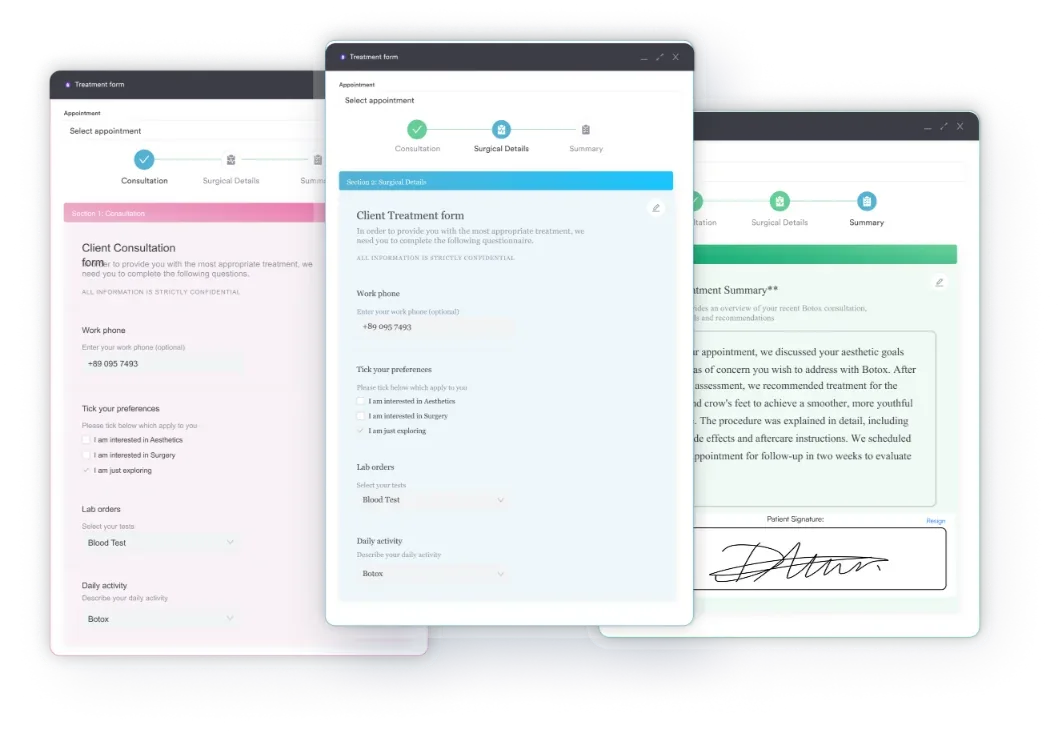
Because every response is stored against the client, you can put session one next to session six and see whether the sorting has improved. Automated follow-ups do the rest, prompting a client to log any thought they caught themselves treating as fact that week.
Schools and coaching programs get the same benefit in a smaller form. Each completed sheet sits in one secure place, organized by learner, so there is no filing cabinet to search before a parent-teacher conference.

Pabau’s digital forms and client portal let you administer worksheets like this electronically, track client progress, and maintain secure records in one integrated system.

The sheet is only the container. What decides whether a session lands is the two minutes you spend picking statements that mean something to the learner in front of you.
So plan for disagreement rather than trying to avoid it. A learner who argues with your answer key is already doing the thinking the exercise was built to provoke. Hand them the reasoning and let them test it.
Download the free PDF today. Book a demo to see how Pabau sends worksheets like this before a session and files the answers in the client record.

Working on how a client sees themselves? Identity worksheet template helps separate a passing feeling from a settled sense of self.
Need the distortion behind treating a feeling as proof? Emotional reasoning worksheet walks clients through that pattern step by step.
Running this with a coaching group? Coaching intake form collects the goals and context you need before the first session.
Looking for a lighter activity to follow this one? Gratitude jar worksheet works at the kitchen table or in a group session.
A fact is a statement that can be proven true or false using objective evidence, such as “It is raining.” An opinion is a personal belief or judgment that reflects feelings or values and cannot be universally proven, such as “Rain is depressing.” Facts are verifiable, while opinions vary from person to person.
Start with concrete examples kids meet every day, such as “Ice cream is cold” for fact and “Ice cream tastes good” for opinion. Use a worksheet with guided practice, discuss the answers together, then introduce statements that blur the line. Pairing the written sort with spoken discussion makes the idea stick.
In CBT, the worksheet helps clients notice when they are treating an opinion as a fact. Therapists use it to challenge cognitive distortions, the automatic negative thoughts that fuel depression and anxiety. The question it trains is simple: can you prove that, or do you believe it?
Yes. This page gives you a free PDF plus a worked answer key in the section above, and no signup is required. The download leaves the statement slots blank, so you can copy the answers from this page or write statements of your own.
Fact vs opinion is usually introduced in grades 2 to 3 in the US. In the UK it appears in Key Stage 2, for ages 7 to 11. More demanding versions run through grades 4 to 6 and into high school, where students apply the skill to persuasive texts and media analysis.
Yes. The two-column table on this page works as a graphic organizer, and you can copy its structure onto a whiteboard or into a notebook. Each row pairs a fact with a matching opinion, so the learner sees the contrast side by side instead of reading two separate lists.
One sorts claims and the other sorts genres. Fact or opinion asks whether a single statement can be checked against evidence. Genre sorting asks about a whole text, and whether the events in it were invented or reported. Both build critical reading, but they train different judgments.