Trauma response test: Free template for clinicians
A trauma response test is a structured screening questionnaire that helps clinic...

2
Last Updated: Oct 15, 2026

An empathy test is a validated questionnaire that scores how well you understand and share another person’s feelings.
Three scales carry most clinical use: the Empathy Quotient, the Interpersonal Reactivity Index, and the Jefferson Scale of Empathy.
Empathy splits into three measurable parts: cognitive perspective-taking, affective emotional resonance, and compassionate concern that motivates action.
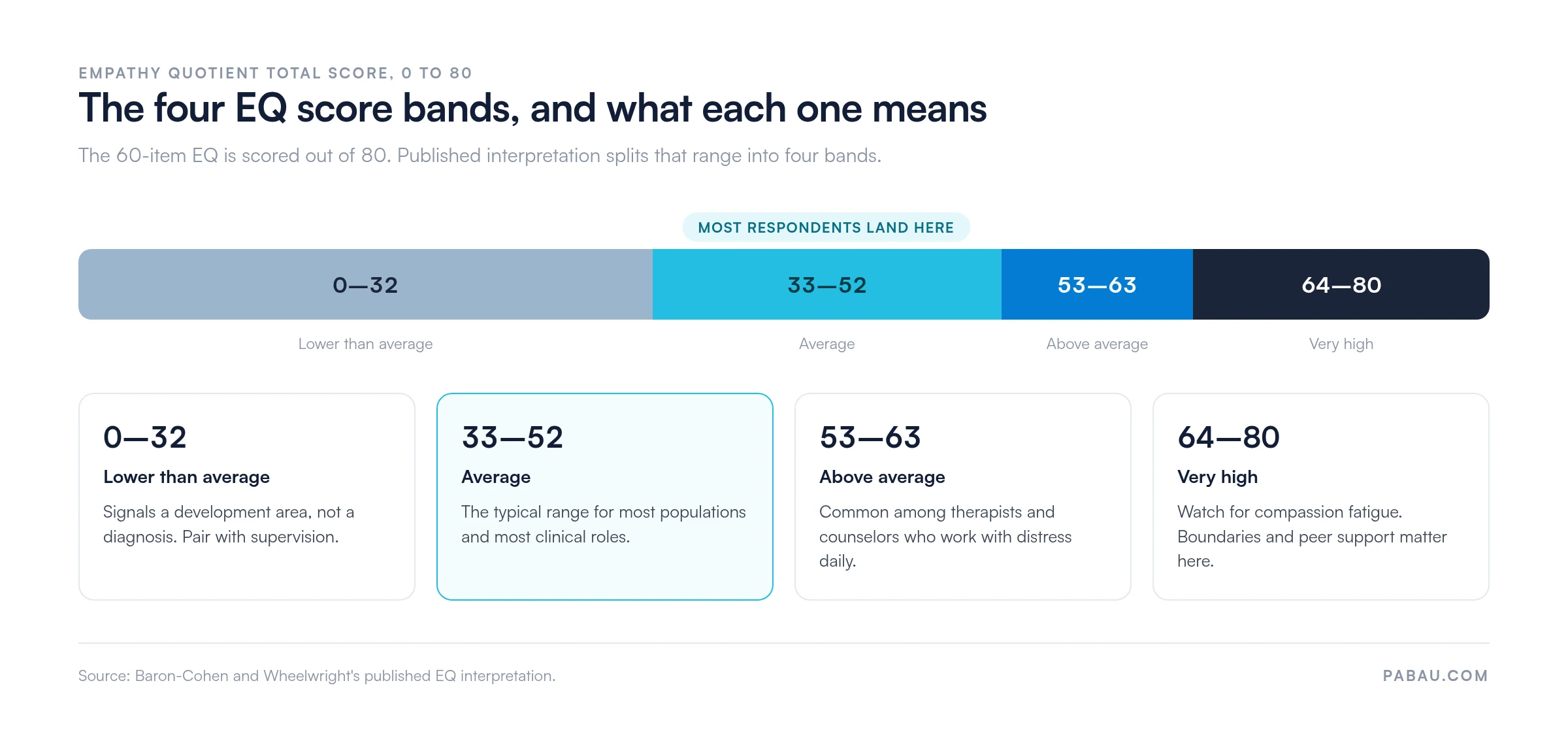
On the Empathy Quotient, 33 to 52 is the average band, and anything above 63 counts as very high.
Practice management software like Pabau files assessment results in the staff record, so training decisions rest on documented scores.
An empathy test is a validated questionnaire that measures how accurately you understand another person’s feelings, and how strongly you share them.
Three scales carry most of the clinical work. They are the Empathy Quotient (EQ), the Interpersonal Reactivity Index (IRI), and the Jefferson Scale of Empathy (JSE).
You can download a free printable version below and score it in about 15 minutes. This guide explains what each scale measures, how to run one across a team, and how to read the result without over-reading it.
A printable assessment covering cognitive, affective, and compassionate empathy, with a scoring key and interpretation notes. Built for staff development, clinical supervision, and training cohorts.
Download templatePrint it for a supervision session, or share it digitally with the whole team. The scoring key sits with the questions, so a supervisor can total the responses without a separate manual.
An empathy test is a standardized self-report questionnaire that scores empathetic capacity across several dimensions. Most use a Likert format, where the respondent rates agreement with each statement on a four to seven-point scale. The responses are totaled into an overall score, and usually into subscale scores as well.
These scales have been validated in peer-reviewed research across clinicians, students in training, and the general public. They work as screening and development tools, never as diagnoses. A score belongs in context with supervision notes, patient feedback, and the clinician’s own account of their work.
Psychological research treats empathy as a multidimensional construct with three measurable parts:
Validated tests score these dimensions separately, and the profiles vary. Plenty of clinicians score high on cognitive empathy and lower on affective empathy, or the reverse. Knowing which part is weaker turns a vague development goal into a specific one. The same split shows up on a broader emotional intelligence test, which sets empathy beside self-regulation and social skill.
Three instruments do most of the work in healthcare settings:
The Empathy Quotient (EQ) was developed by Simon Baron-Cohen and Sally Wheelwright at the University of Cambridge Autism Research Centre. It measures cognitive and affective empathy together, and it is the most widely used empathy test outside research settings. The same team built the autism spectrum quotient, which is often administered alongside it.
The Interpersonal Reactivity Index (IRI), published by Mark Davis in 1983, is the standard instrument in empathy research. It separates perspective-taking from personal distress across four subscales. That separation makes it useful for training programs and for studies that track empathy over time.
The Jefferson Scale of Empathy (JSE) was built for healthcare settings. It has been validated with physicians, nurses, physician assistants, and occupational therapists. Research links higher JSE scores to better patient satisfaction and stronger treatment adherence.
Empathy drives measurable clinical outcomes, not just the tone of a session. Practitioners with high empathy scores hold stronger therapeutic alliances, see better treatment compliance, and lose fewer clients to early dropout. A practice that measures empathy across the team can spot who needs support before a patient complaint does it for them.
For practice managers, a periodic assessment turns an impression into data. Scores inform hiring, training budgets, and which clinician is paired with which caseload. Empathy data also feeds the everyday work of running a therapy practice, from supervision rotas to how the most demanding cases get allocated.
Running the assessment in a clinical setting takes five steps:
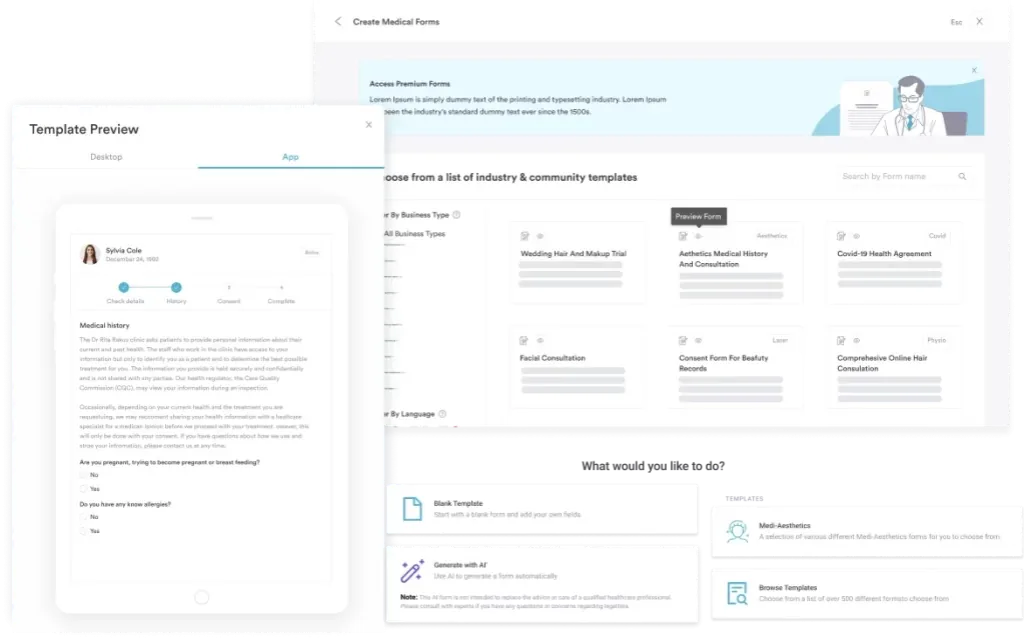
Store results confidentially alongside the rest of the staff file. A mental health EMR keeps assessment scores, supervision notes, and training records in one place per team member. Many practices fold the assessment into annual development reviews and read the trend rather than a single score.
Each scale publishes its own ranges and interpretive guidance. For the Empathy Quotient (EQ), scores fall into four bands:
The bands are not equal in width. The lower-than-average band alone covers about 40% of the scale, so a score in the low 30s sits closer to typical than it sounds.
For the Jefferson Scale of Empathy (JSE), scores above 100 indicate strong empathic concern and perspective-taking. Scores below 80 suggest a healthcare cohort that would benefit from empathy-focused training.
A low score is not a moral verdict. It marks a developable skill, and the retest is what tells you whether the development worked. A very high score deserves the same attention. Pair it with a compassion fatigue test before a clinician quietly burns out.
Yes. Neuroscience and clinical training research both show that empathy responds to deliberate practice. Four approaches carry the most evidence:
Retesting after three to six months of that work usually shows measurable movement, most of it in the affective and compassionate subscales. Burnout pulls in the other direction. A clinician running on empty scores lower than the same clinician did a year earlier, so workload belongs in the reading.
Some practices run a baseline assessment during onboarding and repeat it annually. That gives an objective measure of interpersonal capability next to the clinical competencies already tracked. Pair each score with mentoring, supervision, or peer learning, and the number stops working as a label.
Transparency decides whether this works at all. Where scores are shared inside a culture of psychological safety, teams use them to divide caseloads sensibly and to decide who shadows whom. Where they are used punitively, people answer the questionnaire strategically and the data stops being useful.
Most practices run this on paper. Someone prints the questionnaire, a supervisor totals it by hand, and the sheet ends up in a drawer or an email thread. A year later, nobody can find the baseline to compare against.
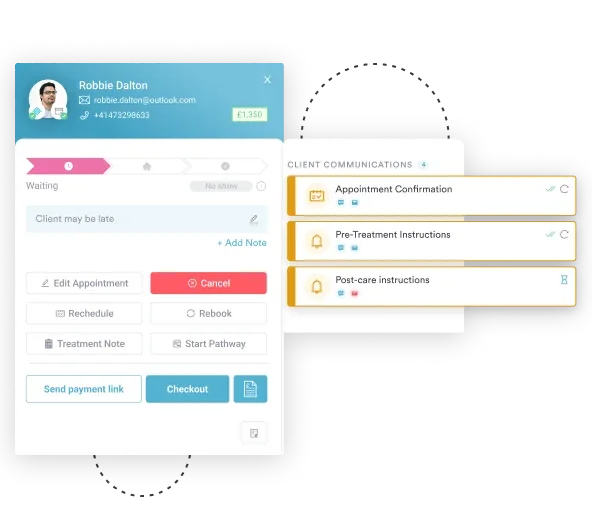
Practice management software like Pabau closes that loop. Digital forms carry the questionnaire, responses arrive already attached to the staff member’s record, and automated messages chase whoever has not completed it. Supervision notes and training history sit in the same file.
The result is a trend instead of a snapshot. When a clinician retests after six months of supervision, the comparison takes seconds. The training decision then rests on documented scores rather than an impression formed in a corridor.

Pabau’s digital forms collect empathy test responses and file them against each team member. Automated messages chase the outstanding ones, and supervision notes stay in the same place.

Measuring empathy is only worth the effort if the result changes something. Pick one scale, run it across the team, and decide in advance what a low band will trigger. Supervision, a training block, or a change in caseload are the usual answers.
The trade-off worth remembering is that a self-report scale measures what people believe about themselves. Read the score next to patient feedback and supervision notes, and retest before you draw conclusions about a clinician.
Download the template above and get the first round done this quarter. Book a demo to see how Pabau stores staff assessments, chases the stragglers, and keeps the scores next to the supervision notes.

Want to build the skill, not just score it? Emotional intelligence worksheet turns a low subscale into exercises a supervisor can work through.
Working with a client who cannot name their feelings? Alexithymia test screens for difficulty identifying and describing emotion, which often sits behind a flat affective score.
Need a group activity for empathy training? Empathy bingo gives a team something to practice on, rather than a score and no follow-up.
Building a fuller clinical picture at intake? Biopsychosocial assessment explains how to gather biological, psychological, and social context in one structured interview.
Tracking how clients manage their own emotions? Emotion regulation questionnaire measures reappraisal and suppression, the two strategies most therapy plans target first.
Cognitive empathy is the intellectual ability to understand another person’s perspective and thoughts without necessarily feeling their emotions. Affective empathy is the capacity to feel or resonate emotionally with what someone else is experiencing. A clinician can have high cognitive empathy and lower affective empathy, or the reverse.
No. An empathy test measures one specific capacity: understanding and sharing the feelings of others. Personality tests, such as the Myers-Briggs Type Indicator, measure broader trait patterns. The empathy scales are narrower and sit closer to clinical effectiveness.
Yes. Clinicians with very high scores, particularly on affective empathy, can develop vicarious trauma, compassion fatigue, or burnout without firm professional boundaries. High-empathy practitioners benefit from clinical supervision, peer support, and structured breaks that prevent emotional exhaustion.
Yes. The EQ has been validated across diverse populations in peer-reviewed research and is used in academic, clinical, and organizational settings. Like every self-report measure, it reflects how the respondent sees themselves, so read it alongside other clinical data rather than in isolation.
A low score on its own diagnoses nothing. It can reflect neurodiversity such as autism spectrum traits, personality style, emotional numbing from burnout, or temporary distress. Diagnosis requires a comprehensive clinical assessment by a qualified mental health professional, not a single questionnaire.