CRM for chiropractors: how to manage patients, bookings and marketing
A CRM for chiropractors is a patient relationship management system built around...

Last Updated: Oct 13, 2026
A diuretic medication list groups the “water pills” by class, with each drug’s site of action, main uses, and the labs to monitor. The five classes are loop diuretics (furosemide), thiazides (hydrochlorothiazide), potassium-sparing agents (spironolactone), osmotic diuretics (mannitol), and carbonic anhydrase inhibitors (acetazolamide).
Prescribers and pharmacists use it to check a diuretic choice quickly in hypertension, heart failure, or edema. It also shows which electrolyte checks each class needs, which makes medication reconciliation faster.
This page carries the reference itself: the five diuretic classes, their prototype drugs, and their monitoring needs. The free download is a blank checklist for gathering the items a medication review needs, and it lists no drugs or doses.
A blank, printable two-page checklist with patient details, three short tick-box sections, and a notes page. Its Anything else rows log each item, quantity, who is bringing it, and confirmation.
Download template
A diuretic medication list organizes five drug classes: loop, thiazide, potassium-sparing, osmotic, and carbonic anhydrase inhibitors.
Each class acts at a different kidney site and carries distinct side effects, contraindications, and monitoring needs.
The free PDF is a blank checklist with patient details, item rows, and a notes page. The drug reference sits on this page, not in the download.
Pabau, the practice software we build, keeps medication notes, completed forms, and weight trends in one patient record.
It is a quick-lookup reference that sorts diuretics by where they act in the kidney and what they are used for. Clinicians, pharmacists, and practice staff reach for it during patient assessment, medication reconciliation, and prescribing.
The list is both educational and practical. It shows how the classes differ in mechanism, therapeutic use, and adverse-event profile. It also names the prototype drugs and the labs each class needs, which feeds directly into drug-interaction screening.
Diuretics are classified by their site of action within the renal tubule and their mechanism of effect.
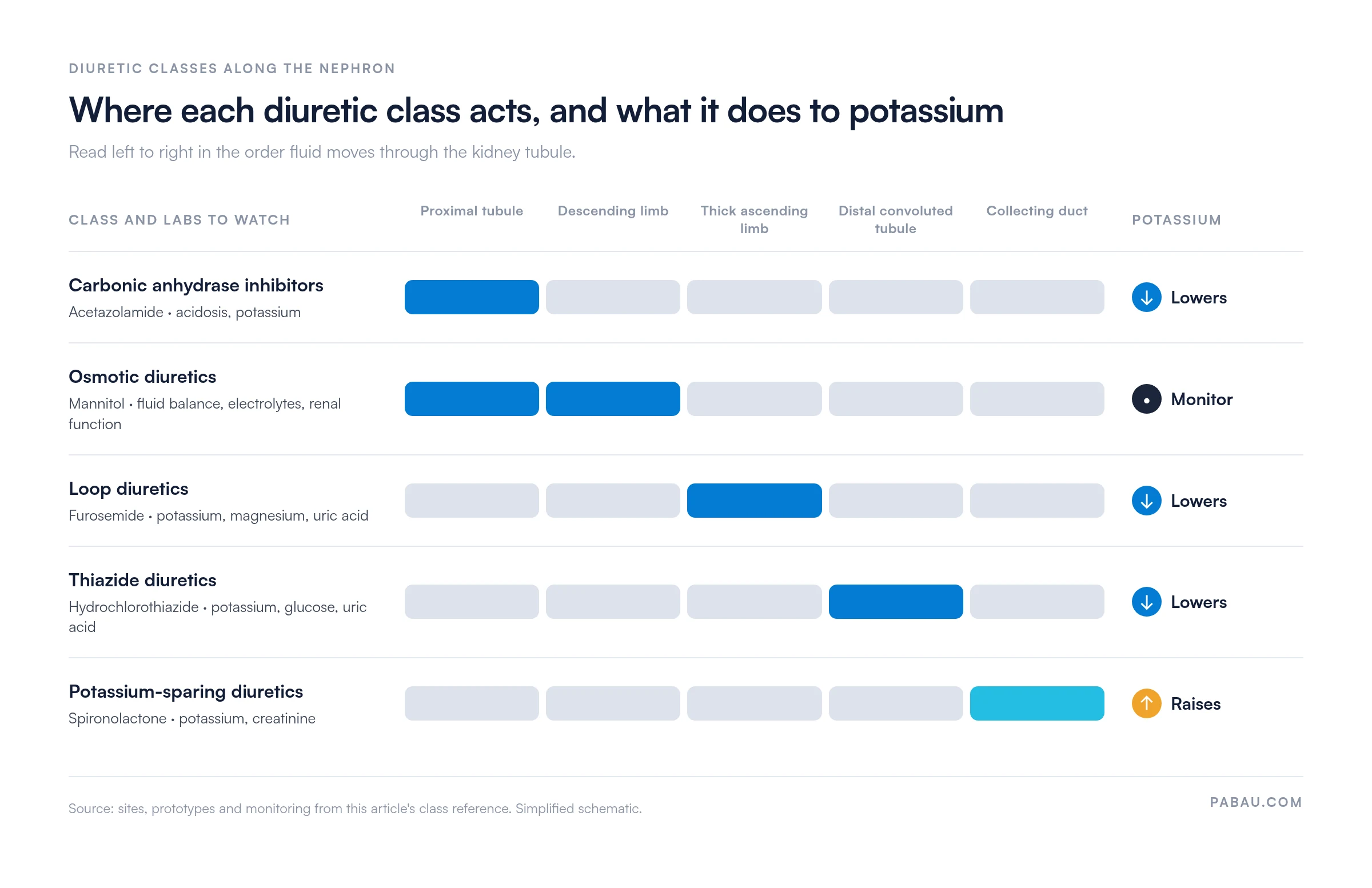
The diagram below places each class along the nephron, from the proximal tubule to the collecting duct, with its effect on potassium.
These are the generic names you will meet most often in US prescribing, with common brand names in brackets:
Combination pills pair two classes in one tablet. Triamterene with hydrochlorothiazide (Maxzide, Dyazide) and spironolactone with hydrochlorothiazide (Aldactazide) are the most familiar. List each component separately during reconciliation, so the potassium-sparing part is not missed.
Loop diuretics act on the thick ascending limb of the loop of Henle and inhibit the Na-K-2Cl cotransporter, making them the most potent diuretics available. Furosemide, bumetanide, and torsemide are used for acute pulmonary edema, severe CHF exacerbations, and renal impairment when rapid diuresis is required.
Common side effects include hypokalemia, hypomagnesemia, hyperuricemia, and ototoxicity at high IV doses. Loop diuretics require careful electrolyte monitoring and dose titration based on renal function and clinical response.
Thiazide diuretics act on the distal convoluted tubule and block the Na/Cl cotransporter, reducing sodium reabsorption and lowering blood pressure gradually. Hydrochlorothiazide and chlorthalidone are first-line for hypertension and chronic peripheral edema in stable outpatient settings.
Urinary sodium loss reduces plasma volume at first. Over weeks, blood pressure stays lower through both diuretic and direct vasodilatory effects. Chlorthalidone lowers blood pressure somewhat more than hydrochlorothiazide. But the largest head-to-head trial found no difference in cardiovascular outcomes, and chlorthalidone caused more hypokalemia. Guidelines recommend both as first-line.
Potassium-sparing diuretics include aldosterone antagonists (spironolactone, eplerenone) and epithelial sodium channel blockers (amiloride, triamterene). These agents work in the collecting duct and preserve potassium while promoting sodium excretion. That makes them useful for CHF and hypertension patients at risk of hypokalemia from loop or thiazide use.
The major risk is hyperkalemia, especially in renal impairment, diabetes, or concurrent ACE inhibitor or ARB therapy. Baseline potassium, creatinine, and regular monitoring are essential before and during treatment.
Mannitol, the main osmotic diuretic, is given intravenously to reduce raised intracranial or intraocular pressure. It draws water into the tubule, so fluid balance, electrolytes, and renal function need close watching during treatment.
Acetazolamide, the prototype carbonic anhydrase inhibitor, is a weak diuretic used mainly for glaucoma and acute mountain sickness. Watch for metabolic acidosis, low potassium, and paresthesia, and avoid it in severe kidney or liver disease.
Use the class table and sections above as the prescribing reference. The downloadable PDF is a separate, blank checklist that you fill in yourself. It contains no drug names, doses, indications, or monitoring notes.
The two-page form has these parts:
A practical use is preparing for a medication review. Before the visit, list what the patient should bring and who brings it:
For practices with many hypertension and heart failure patients, this routine fits into the annual medication review.
Over-the-counter diuretics (e.g. Diurex, pamabrom-based products) are FDA-approved only for premenstrual water-weight relief and are not appropriate for chronic hypertension, heart failure, or edema treatment. Counsel patients that OTC diuretics cause temporary fluid loss, not fat loss. Sustained use without medical supervision can lead to electrolyte imbalance and dehydration.
Weight loss practices hear the water-pill question often. Teams on weight loss clinic software can add it to the intake form, so the counseling happens at the first visit.
Refer patients with persistent swelling or high blood pressure to a provider for prescription diuretic evaluation and ongoing monitoring. Never recommend OTC diuretics for weight loss or chronic conditions.
All diuretic classes carry the risk of electrolyte disturbance. Hypokalemia (low potassium) is common with loop and thiazide agents and can trigger arrhythmias or muscle weakness. Hyperkalemia (high potassium) is the main risk with potassium-sparing drugs, especially in renal disease.
Metabolic effects include hyperglycemia and hyperuricemia with thiazides, and rising creatinine with overdiuresis. Check baseline potassium, creatinine, and glucose, then repeat them within 1-4 weeks of starting or changing a dose, per local protocol. For stable chronic use, recheck at least yearly, and more often in heart failure or kidney disease.
A basic metabolic panel covers all three values in one blood draw. Pabau’s digital forms capture lab order dates and results in the patient record.

Peripheral edema (swollen feet and legs) responds well to thiazide diuretics in mild-to-moderate cases, especially when combined with leg elevation, compression, and a low-sodium diet. Acute pulmonary edema or severe CHF exacerbations demand loop diuretics for rapid symptom relief. Ascites in cirrhosis is usually treated with spironolactone, often with furosemide added.
Document the edema location, severity, and response to treatment in structured notes, so you can adjust dose and class as clinical need evolves. Pabau’s measurements tracking software lets you record leg circumference or weight trends over time, giving you objective data to guide therapy intensity.
Many practices track diuretic patients on paper: a printed checklist, a lab result in the inbox, and a weight log the patient brings in. Each piece lives somewhere different, so a missed potassium check is easy to overlook.
Pabau brings those pieces into one record. Digital forms capture the medication review before the visit, and clinical notes record why a diuretic was chosen. Measurement tracking charts weight and swelling over time.
The result is a history any clinician can read at the next appointment, without hunting through paper or separate systems.

Pabau’s digital forms, clinical notes, and measurement tracking keep each patient’s diuretic history and follow-up results together. Your team can see the latest results before the next review.

Use the class table on this page when you choose or review a diuretic. Treat the PDF as a preparation checklist, not a drug reference. Match every diuretic to its monitoring plan, especially potassium for loop, thiazide, and potassium-sparing agents.
Keeping those results in one record makes a falling potassium easier to spot at the next review. Book a demo to see how Pabau keeps diuretic reviews, notes, and follow-up labs together for your practice.

Weighing an ARB alongside a diuretic? ARB medication list covers the angiotensin receptor blockers often paired with thiazides for blood pressure.
Prescribing an ACE inhibitor too? Medication list of ACE inhibitors explains the class that raises hyperkalemia risk with potassium-sparing diuretics.
Managing wider heart and blood pressure therapy? Cardiovascular medication list groups the cardiovascular drug classes in one reference.
Potassium creeping up on spironolactone? Low potassium food list gives patients foods that keep dietary potassium down.
Pairing a thiazide with diet changes? DASH diet plan lays out a seven-day eating plan for patients with hypertension.
Thiazide diuretics (hydrochlorothiazide, chlorthalidone) are guideline-recommended first-line agents for hypertension. Some studies suggest chlorthalidone lowers blood pressure more than HCTZ. Outcome trials show no clear difference in cardiovascular events. Both work well when dosed appropriately and monitored for electrolytes.
Patients on diuretics should drink sufficient fluids to stay hydrated but avoid excessive intake that undermines the diuretic effect. General guidance: drink when thirsty and maintain pale urine color. Specific recommendations depend on the diuretic type, underlying condition, and renal function. Counsel patients to check with their prescriber rather than self-adjust fluid intake.
Weight lost on diuretics is temporary fluid, not fat. The amount depends on baseline fluid retention. People without edema may lose a few pounds of water, while patients with heart failure or edema can lose more under supervision. Weight returns when fluid intake normalizes. Diuretics do not cause lasting weight loss. In heart failure, edema control depends on the right diuretic class used consistently alongside sodium restriction.
Common diuretic side effects include electrolyte imbalances, dehydration, dizziness, and orthostatic hypotension. Loop and thiazide agents tend to lower potassium, potassium-sparing agents raise it, and thiazides can raise glucose and uric acid. Loop diuretics at high IV doses carry an additional risk of ototoxicity. All side effects are monitored through baseline and periodic lab testing.