Newborn assessment
A newborn assessment is a structured head-to-toe check of a baby’s health,...

4
Last Updated: Oct 9, 2026
A diet meal plan for gestational diabetes is a structured eating framework that holds blood glucose inside pregnancy targets.
It sets a carbohydrate allowance for every meal and snack. Breakfast is capped at 15 to 30 grams, lunch and dinner run 45 to 60 grams, and snacks sit at 15 to 20 grams.
Those numbers come from the American Diabetes Association (ADA) and the American College of Obstetricians and Gynecologists (ACOG). Diet is the first-line treatment, and 70% to 80% of patients reach target glucose without medication. Gestational diabetes mellitus (GDM) affects 2% to 10% of pregnancies in the US.
This guide gives you the plan to hand a patient at diagnosis. It covers a 7-day sample week, food lists, meal timing, glucose targets, and the adjustments that cultural preference and the third trimester call for.
A printable three-page care plan with space for patient and record details, the reason the plan is needed, and the goals you agree together. It also carries the actions behind each goal, a support checklist, warning signs, and a review record for every follow-up visit.
Download template
A diet meal plan for gestational diabetes sets a carbohydrate allowance for every meal and snack, then pairs those carbs with protein and fiber.
Breakfast carries the tightest limit at 15 to 30 grams, because insulin resistance peaks in the morning.
ACOG targets are fasting below 95 mg/dL, 1-hour postmeal below 140 mg/dL, and 2-hour postmeal below 120 mg/dL.
Diet alone controls 70% to 80% of cases, so two weeks of readings decide whether medication is added.
Practice management software like Pabau stores the plan, shares it with the patient, and keeps glucose logs on the patient record.
A gestational diabetes diet meal plan is a written eating framework that holds blood glucose inside safe pregnancy ranges. Pregnancy hormones raise insulin resistance, most sharply in the third trimester. When the pancreas cannot keep up, blood glucose climbs, and that is gestational diabetes. The American Diabetes Association treats diet as the first intervention, before any medication.
The plan does that job in three ways. It spreads carbohydrate across the day instead of letting it land in one meal. It puts protein and fiber alongside every carbohydrate serving. And it fixes portion sizes, so the patient is not estimating at every meal.
Diet carries more weight here than it does outside pregnancy. Maternal hyperglycemia raises fetal blood glucose, and the fetus responds by making more insulin. That drives fat deposition and a heavier birth weight. The risks that follow include birth injury, neonatal hypoglycemia, and metabolic problems later in childhood. The CDC’s gestational diabetes guidance sets out the same list.
Five steps take a patient from diagnosis to delivery on the same plan. Start at the visit where the glucose tolerance result comes back.
GDM is diagnosed in one clinic and managed across several, so the plan travels between teams:
Spoken dietary advice leaves the room with the patient and rarely survives the week. A printed plan does not:
Flag any patient who has not reached target glucose after two weeks of strict adherence. They are candidates for metformin or insulin, agreed with the patient and the obstetric team. Do not delay medication when diet alone falls short, because timely treatment protects both mother and baby.
A food table lets a patient decide in the supermarket aisle without doing the reasoning again. The categories below follow the same principles as the plan: low glycemic index, high fiber, and balanced macronutrients.
Five principles sit underneath every food choice in the plan:
Timing moves the readings as much as the food does. The day runs on three meals and two to three snacks. That spacing keeps the patient from fasting long enough to produce ketones, and from eating a meal big enough to spike.
Added up, the carbohydrate allowance lands somewhere between 150 and 210 grams across the day. The split matters more than the total, as the distribution below shows.
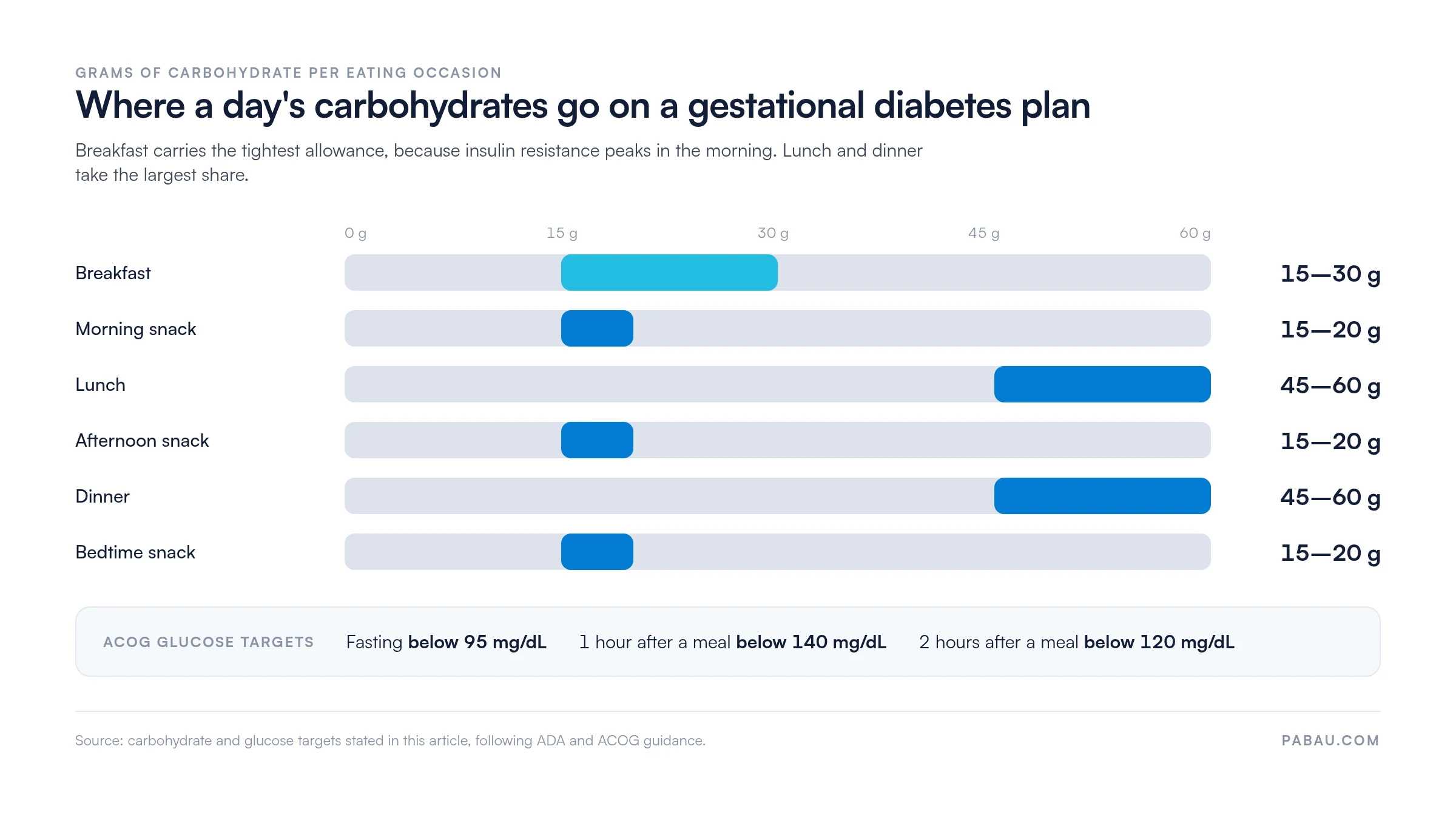
Breakfast, within an hour of waking. Hold it to 15 to 30 grams of carbohydrate and pair them with protein. A scrambled egg with one slice of whole wheat toast works, as does Greek yogurt with berries and nuts.
Morning snack, two to three hours later. 15 to 20 grams plus protein. Cheese and an apple, or a few nuts with a whole grain cracker.
Lunch, two to three hours after the snack. 45 to 60 grams on a balanced plate: non-starchy vegetables, lean protein, and one complex carbohydrate. Grilled chicken breast, steamed broccoli, and a third of a cup of brown rice is a typical build.
Afternoon snack, two to three hours after lunch. 15 to 20 grams plus protein, such as hummus with vegetables or a small whole grain sandwich.
Dinner, two to three hours after the afternoon snack. Built like lunch, at 45 to 60 grams. Warn patients off skipping it or going to bed hungry, which risks a nocturnal low.
Bedtime snack, one to two hours after dinner, where it is wanted. 15 to 20 grams with protein and fat to hold glucose overnight. Whole grain crackers with almond butter, or a small apple with cheese.
The table below fills a week at the carbohydrate targets above. Patients can pick the days they like and swap similar foods in. The counts are approximate, and a registered dietitian can tighten them once a few weeks of readings exist.
The plan only works if the readings come with it. ACOG sets three targets in pregnancy. Fasting sits below 95 mg/dL, 1 hour after a meal below 140 mg/dL, and 2 hours after below 120 mg/dL. When readings stay above those numbers after two weeks of strict adherence, medication usually starts.
Ask patients to test fasting, then one to two hours after meals, at least twice a day. The reading matters far more next to the meal that produced it, so both go in the same log. Blood pressure is worth tracking on the same schedule, and a blood pressure pregnancy chart gives you somewhere to put it.
The sample week above is built from Western foods, and plenty of patients do not eat that way. ACOG recommends adapting meal plans to cultural preference rather than restricting patients to an approved list. Indian, Latin American, and East Asian cooking all offer low-glycemic, nutrient-dense options. Keep the carbohydrate targets and let the patient choose the foods that meet them.
Energy needs also rise in the third trimester, by roughly 300 calories a day. Add that to snack portions or meal sizes rather than to the carbohydrate allowance at breakfast.
The plan should not stop at delivery. GDM resolves for most patients within weeks, but 40% to 60% go on to develop type 2 diabetes within 10 years. Booking the postpartum glucose check and handing over a postpartum diet plan keeps the habit going once the pregnancy ends.
In most practices the meal plan is a PDF that gets printed, handed over, and then forgotten. The glucose log lives in the patient’s notebook. Nobody can see, between visits, whether the plan was followed or whether the readings drifted. The next clinician starts the conversation from scratch.
Practice management software like Pabau keeps that work in one place. We build for reproductive-health practices, so obstetrics, gynecology, and fertility clinic software run off the same patient list. Digital forms turn the meal plan into something the patient completes and signs from home, and their answers land on the patient record.
Glucose readings come in the same way, through the patient portal, so you open the chart with the numbers already there. Automated reminders prompt the weekly log. Treatment notes, the signed plan, and the readings sit in one file. A midwife picking up the case at 32 weeks can see what was agreed and what changed since.

Pabau’s digital forms and patient portal let you send a personalized GDM meal plan and collect blood glucose logs back. Both stay on the patient record. Your team opens one chart instead of chasing paper between visits.

Most patients diagnosed with GDM will never need insulin, and the difference is usually whether they left the first appointment with something written down. Hand over the plan at diagnosis, not at the follow-up. Two weeks of readings will tell you whether diet is doing the job.
The trade-off worth remembering is rigidity. A plan the patient cannot cook from gets abandoned quietly, and you only find out when the readings come in high. Hold the carbohydrate targets firmly and the food choices loosely.
Keeping the plan, the glucose log, and the prenatal notes in one record is what makes the next visit quick. Book a demo to see how Pabau shares meal plans with pregnant patients and brings their readings back to you.

Tracking more than glucose in this pregnancy? Blood pressure pregnancy chart gives you a printable log for the readings that sit alongside GDM monitoring.
Need a plan for after delivery? Postpartum diet plan carries the dietary structure through the months when type 2 risk is highest.
Managing a higher-risk pregnancy? Nonstress test explains the fetal monitoring that often runs alongside a GDM diagnosis.
Setting up the postpartum handover? Postpartum care plan covers the checks and follow-ups to book before the patient leaves your care.
Breakfast should be held to 15-30g of carbohydrate paired with protein, because insulin resistance peaks in the morning. Two eggs with one slice of whole wheat toast and avocado works, as does Greek yogurt with berries and nuts. Avoid sugary cereals and white bread.
Aim for 15-30g at breakfast, 45-60g at lunch and dinner, and 15-20g at each of two to three daily snacks. Pair every carbohydrate serving with protein and fiber to slow glucose absorption.
Yes, but choose lower-glycemic fruits in controlled portions. Berries, grapefruit, oranges, and peaches are safe choices. Limit dried fruit, fruit juice, and ripe bananas, and count the fruit toward your carbohydrate target for that meal.
ACOG targets are: fasting below 95 mg/dL, 1-hour postmeal below 140 mg/dL, and 2-hour postmeal below 120 mg/dL. Readings that stay above those numbers after two weeks of strict dietary adherence usually mean medication is added.
Yes, gestational diabetes usually resolves within weeks of delivery, once placental hormones clear. However, 40-60% of women who had GDM develop type 2 diabetes within 10 years, so postpartum glucose testing and continued dietary changes matter.
Diet is the first-line treatment, and 70-80% of GDM cases respond to it alone. If the targets are not met after two weeks of strict dietary adherence, metformin or insulin is added. Diet and medication together control glucose safely in almost every case.