Detox diet plan
A detox diet plan is a structured eating protocol that cuts processed foods, add...

3
Last Updated: Oct 9, 2026
An alkaline diet eating plan is a structured way of eating built around vegetables, fruits, nuts, and legumes. It limits meat, dairy, grains, and processed food. The usual target is roughly 70% to 80% of intake from alkaline-forming foods.
The plan will not change your blood pH, because the lungs and kidneys hold it between 7.35 and 7.45. Below you can download the free 7-day plan. The sections after it cover the food lists, the evidence behind each claimed benefit, and who should not be given it.
A 7-day meal plan covering breakfast, lunch, dinner, and snacks, built entirely on alkaline-forming foods. It also carries the alkaline and acidic food reference lists and a short counseling note for practitioners.
Download template
Foods are sorted by the residue they leave after metabolism, so the plan favors vegetables, fruits, nuts, and legumes over meat and dairy.
Urine pH may shift slightly on an alkaline diet, but blood pH stays between 7.35 and 7.45 whatever the patient eats.
Weight loss on this plan comes from eating more whole food and fewer calories, not from any change in pH.
Screen for kidney disease first, and plan for the protein, calcium, vitamin D, and B12 the plan cuts out.
The alkaline diet eating plan rests on the idea that food leaves an alkaline or an acidic residue once the body has broken it down. Swapping acid-forming food for alkaline-forming food is meant to lower the body’s acid load.
Most versions of the plan aim for 70% to 80% alkaline-forming foods and cut meat, grains, refined sugar, and dairy. The mechanism behind it does not hold up. Blood pH sits between 7.35 and 7.45 whatever you eat, because the lungs and kidneys buffer it continuously.
The food swap still counts. Patients who follow it eat more vegetables and fewer processed items, and that shift carries most of the benefit people notice. Recording what patients eat on digital intake forms lets you check adherence and adjust the plan at the next visit.

Meal planning starts with knowing which foods are alkaline-forming and which are acid-forming. The sorting surprises people. Lemon juice tastes sharply acidic but leaves an alkaline residue once it is metabolized.
The plan prioritizes the left column and keeps the right column small. Legumes are the one entry lists disagree on. The 7-day plan treats beans and lentils as an acceptable protein source, so they appear in its dinners. Use the table when you review a patient’s meals and suggest swaps.
A structured week gives patients something concrete to follow. Every day in the template runs the same shape: Alkaline-rich breakfast, lunch, and dinner, with plant-forward snacks in between.
A typical day looks like this:
The downloadable template sets out all seven days with the specific meals and portion guidance. Tracking energy, digestion, and sleep quality alongside the meals tells you more than pH theory does. Those notes are what you review at the follow-up appointment.
Patients new to the plan often stall in the first week. A staged start prevents that and improves adherence.
Written adherence notes in the patient record turn the next appointment into a review rather than a guess.
Three claims come up most: Weight loss, bone health, and cancer prevention. The evidence behind them differs sharply.
Weight loss: Likely, but indirect. Patients on the plan eat more vegetables and whole foods and fewer processed items, which lowers calorie intake. Any weight loss traces back to that, not to pH.
Bone health: Mixed. Some research suggests a lower dietary acid load helps preserve bone mineral density. Clinical consensus still treats the evidence as too thin to recommend the diet as a bone-protection strategy.
Cancer prevention or treatment: Unsubstantiated. No credible clinical evidence supports the alkaline diet preventing or treating cancer. MD Anderson Cancer Center states plainly that the science behind the claim is limited. Say so when a patient raises it.
The plan rests on one central claim: Diet alters blood pH. It does not.
Respiratory and renal buffering hold arterial blood between 7.35 and 7.45, whatever a patient eats. A reading outside that window points to illness rather than to the previous evening’s dinner.
Urine pH is a different matter. It does move with the diet, across a much wider band than blood pH ever covers. The chart below puts the two ranges on the same scale.
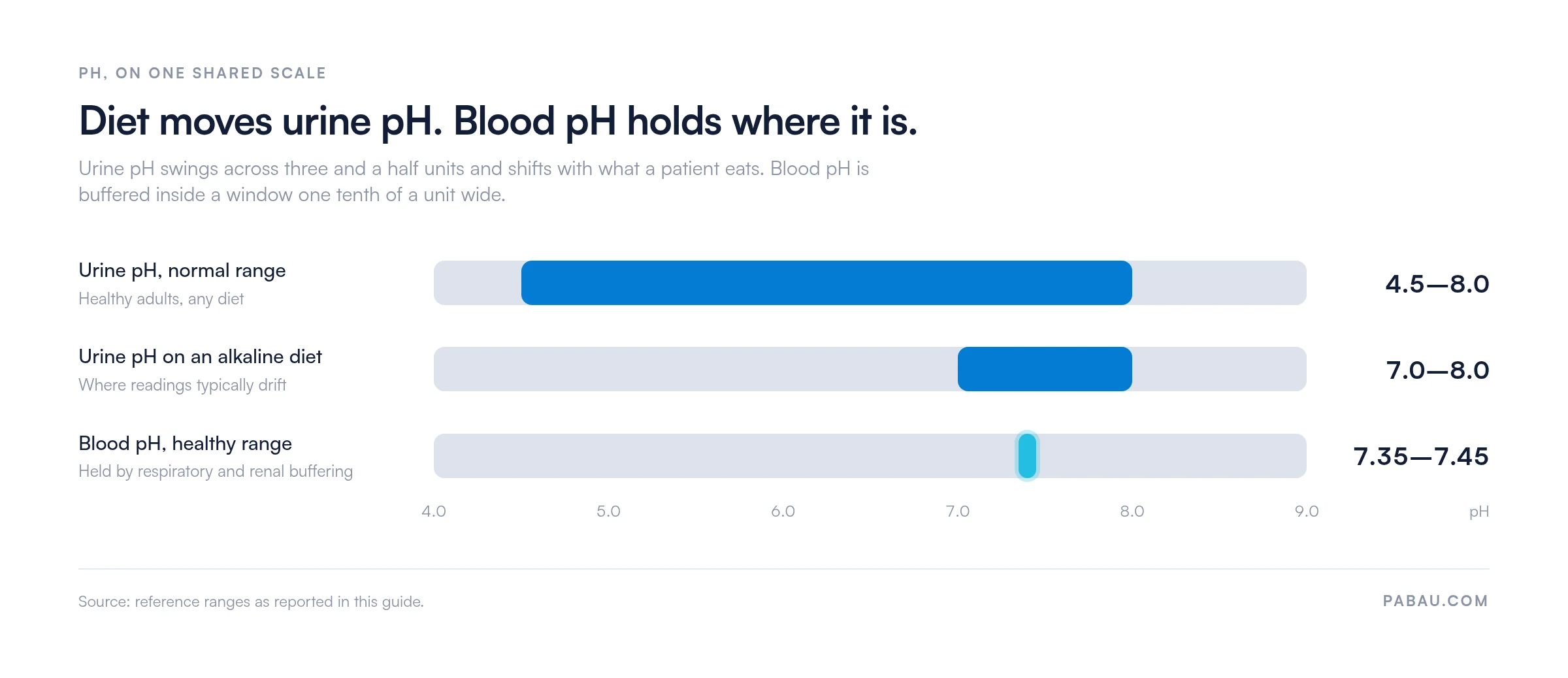
That contrast is the honest version to give a patient. The food pattern is worth trying. The pH explanation attached to it is not the reason it works.
Urine pH is the one measurement the plan makes available to patients at home. It shifts with the diet while blood pH holds steady. Treat it as an adherence marker, not a health outcome.
The plan carries several nutritional risks worth raising before a patient commits to it long-term.
Protein shortfall. Cutting meat, fish, and eggs drops protein intake unless plant proteins are combined carefully. Low protein shows up in muscle mass, immune function, and recovery.
Calcium, vitamin D, and B12. Dropping dairy removes a major calcium source. Vitamin D and B12 come mainly from animal products, so fortified foods or supplements need planning in.
Kidney disease. High-potassium alkaline staples such as leafy greens, bananas, and nuts are dangerous for patients with renal impairment. Screen for it before you hand over the plan. A renal diet meal plan is the safer template for those patients.
The PDF is built for a practitioner and a patient to work through together. Six steps fit it into the visit.
Storing the template, the adjustments, and the follow-up notes in one patient record keeps the next appointment short.
Long-term adherence is where the plan usually fails. Moving away from bread, meat, and dairy triggers cravings and awkward moments at other people’s tables.
Frame it as a trial rather than permanent elimination. Seven to 14 days is enough to see whether the patient feels different. Improvements in energy, digestion, or sleep persuade people far better than the theory does.
Build flexibility in from the start. An 80/20 split, with 80% of intake from alkaline-forming foods, is realistic and holds up. Strict adherence tends to end in frustration and abandonment.
Issuing the plan takes a minute. Knowing three weeks later whether the patient followed it is the harder part. The intake notes, the emailed PDF, and the follow-up observations often end up in three separate places.
Practice management software like Pabau keeps them together. You attach the 7-day plan to the patient record and send it through the patient portal. Each week’s urine pH reading and symptom note is logged against the same file.
A practice running on software for weight-loss practices keeps the intake form, the plan, the follow-up notes, and the next appointment on one screen. Your team stops hunting through email threads to answer a simple question about adherence.

Pabau stores the plan against the patient record, shares it through the patient portal, and logs every follow-up note beside it. Your team stops chasing paperwork between appointments.

The alkaline diet eating plan earns its place as a whole-food framework, not as a way to move blood pH. Diet cannot shift blood pH in a healthy person. The extra vegetables, fruits, and legumes it brings can still help with weight management and general health.
Screen for kidney disease before you recommend it. Plan for the protein, calcium, and B12 that drop out when meat and dairy go.
Use the 7-day template above as a starting point, then track adherence and symptoms through the first week. Pabau keeps that follow-up in the same record as the original intake, so the plan stays visible next to how the patient responded.
Book a demo to see how a nutrition-led consultation, its template, and its follow-up notes sit in one patient record.

List Item #1
List Item #2
The alkaline diet eating plan works for weight loss and general health improvement, but not through the mechanism of altering body pH. Weight loss occurs because the diet increases whole-food intake and reduces processed calories. Health improvements stem from eating more vegetables, not from pH changes.
No credible clinical evidence supports the alkaline diet eating plan preventing or treating cancer. MD Anderson Cancer Center states the science is limited. Do not recommend this diet to cancer patients as a therapeutic strategy without explicit medical supervision.
The alkaline diet eating plan is safe for most people over four to 12 weeks. Longer adherence carries nutritional risks: Potential protein deficiency, low calcium and B12, and inadequate iron. Supplementation or careful food pairing is needed beyond that. Patients with kidney disease should avoid it entirely.
Yes, indirectly. The alkaline diet eating plan promotes weight loss through increased vegetable intake and reduced processed foods, not through pH mechanisms. Calorie reduction is the operative factor. A patient could achieve the same weight loss eating similar-calorie meals outside the alkaline framework.
The alkaline diet eating plan restricts meat, poultry, fish, dairy, eggs, grains, refined sugar, and processed foods. In practice, patients following 80/20 adherence (80% alkaline-forming foods) can include small amounts of these foods occasionally while maintaining the plan’s intent.