HIPAA compliant texting: What you can send patients & how to communicate securely
HIPAA compliant texting is possible when a text holds no protected health inform...

Last Updated: Oct 16, 2026
A dental savings plan for seniors is a membership program that gives older adults a fixed discount on dental care for one annual fee. Most in-house plans run $100 to $200 a year and cut 15% to 40% off the treatment price. There is no waiting period, no deductible, and no annual maximum.
That last part matters. Original Medicare pays for almost no routine dentistry, so a cleaning or a crown comes straight out of a fixed income.
For a practice, the design work comes down to three tiers, a discount schedule, and a state-board check. The template below handles the enrollment paperwork.
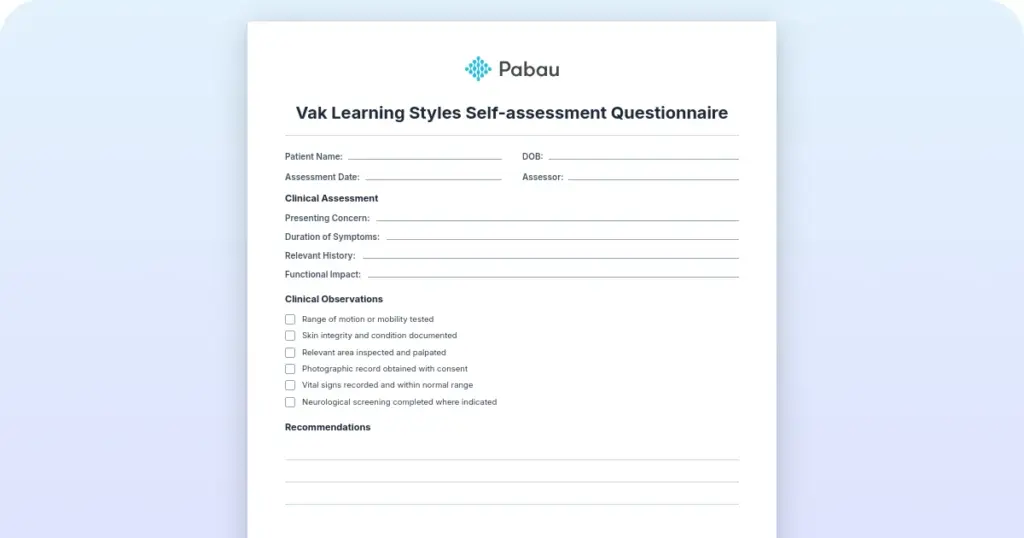
A two-page membership enrollment form with member details, tier selection at $100, $150, and $200 a year, and HIPAA consent language. Page two carries the discount schedule by procedure category, the plan terms, and the disclaimer that this is a discount program, not insurance.
Download template
A dental savings plan for seniors charges one annual fee, usually $100 to $200, and applies the discount at the visit.
Original Medicare covers no routine dentistry, and Medicare Advantage dental benefits carry annual caps that rarely reach the price of a crown.
Three tiers work well: preventive at $100, comprehensive at $150, and advanced at $200 for dentures, implants, and bridges.
Discounts of 15% to 40% keep the plan affordable for the patient and sustainable for the practice.
State dental boards regulate membership plans differently, so confirm your local rules before you enroll the first senior.
One annual fee buys a fixed discount on every visit for the next 12 months. There are no claims to file, no waiting period, no deductible, and no annual maximum. The senior joins on Monday and can have a cleaning discounted on Tuesday.
At the visit, the front desk checks the membership status and applies the tier discount to the treatment plan. The senior pays the reduced amount at the desk, and integrated payment processing records it against the membership. No claim goes to a payer, so no payment comes back denied.
The word to avoid is coverage. A membership plan is a discount arrangement, so calling it insurance invites a complaint to your state board. Keep the disclaimer on the enrollment form and on any flyer that goes in the waiting room.
Five steps take a senior from the front desk to a discounted visit.
A prepaid member has already paid for the year, so the barrier to booking a checkup is gone. Give them self-service online booking and the extra visits stay off the phone line.
Original Medicare pays for almost no routine dentistry. Parts A and B cover no cleanings, no fillings, no exams, and no routine X-rays. A senior on Original Medicare alone pays the full fee for every visit.
Medicare Advantage looks better on paper. Nearly all individual Medicare Advantage plans offered some dental benefit in 2025, at 97% or more, according to KFF. The scope is where it thins out. Annual dollar caps are common, and KFF put the average limit at about $1,300. One crown and a bridge can use that up.
Cost keeps seniors out of the chair. An AARP oral health survey found that 45% of older adults delayed or went without needed dental care. That was over a two-year window. Untreated decay then turns into extractions, dentures, and the visits nobody wanted to pay for in the first place.
A membership plan changes the arithmetic for that senior. The cost of the year is known on day one, and preventive visits stop being a decision they have to make twice a year.
The two look similar on a waiting-room poster and work very differently at the desk. The table below is the comparison worth handing a senior who asks which one to buy.
Savings plans are not insurance and cannot be sold as insurance. Your enrollment form has to say so in plain words. The template above carries that wording already.
Design the tiers, price them, write the enrollment form, load it into your software, and set the renewal reminders. Most of the work sits in the first two.
Three tiers is the structure most in-house plans land on, and each one carries the tier below it. The chart pairs the annual fee with the discount bands, which is what a senior wants to see side by side.
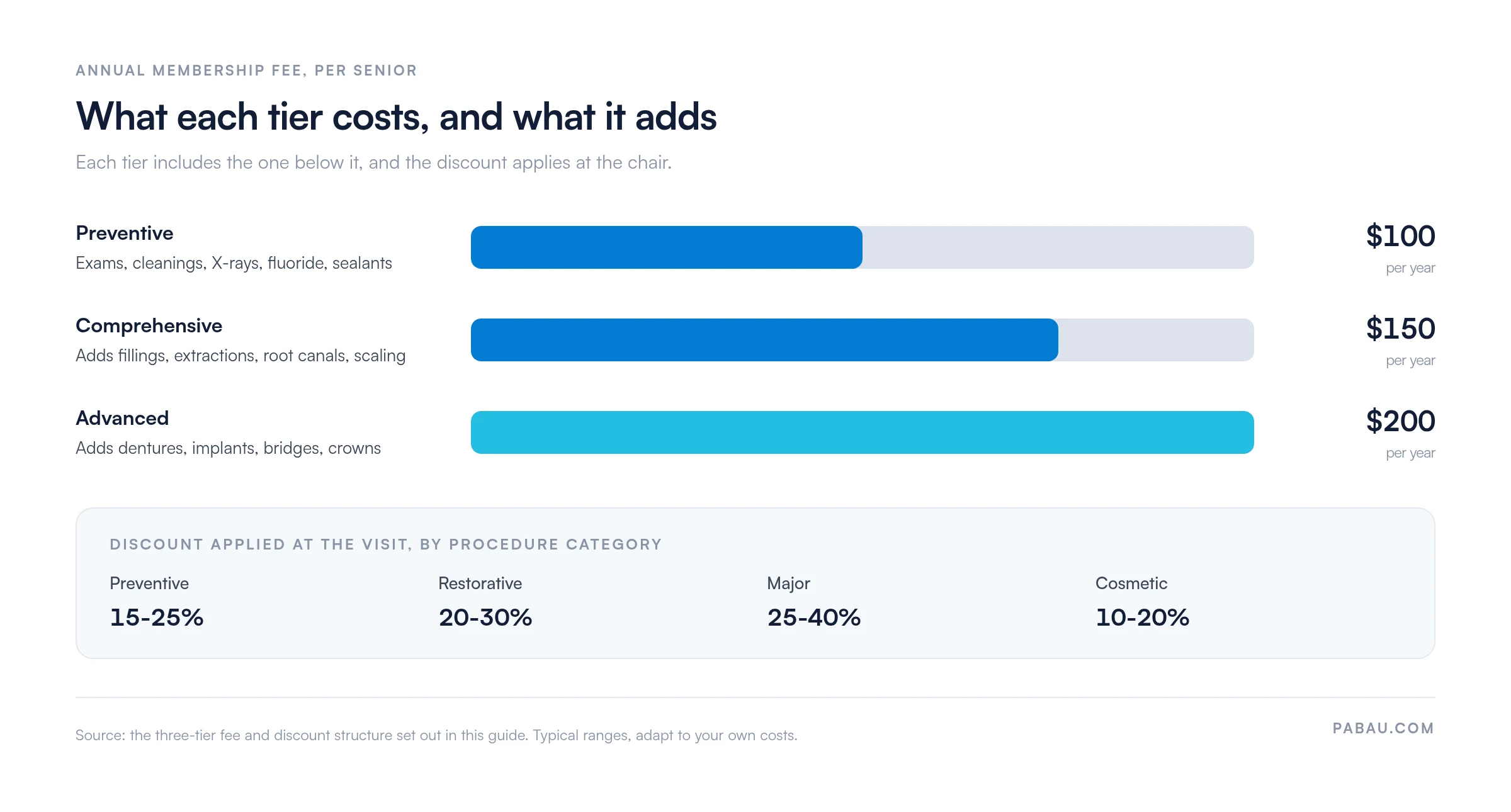
Almost every plan sorts procedures into four categories: preventive, restorative, major, and cosmetic. Preventive and restorative belong in every tier. Major work is what makes the top tier worth buying, and cosmetic is optional.
List the specific procedure codes on your own form, using ADA CDT nomenclature, so the front desk and the clinician read the same list.
One rule saves arguments later. A procedure sits in one category only, and the member’s tier decides whether it is discounted at all.
State rules on in-house membership plans vary, so confirm yours before you enroll anyone. Some states treat the plan as an ordinary business arrangement. Others classify it as a discount plan and ask you to register or file.
Call your state dental board and ask two questions. Does an in-house discount plan need registration here, and what language has to appear on the enrollment form? Write the answers down, because the person who launches the plan is rarely the person who renews it three years later.
The disclaimer itself is short. “This membership program is a discount program, not dental insurance. It is not regulated as insurance and carries no insurance protections.” Put it on the form, on the receipt, and on any printed flyer.
Four problems are worth watching for once the plan has been running a year.
The strengths are easy to state. Seniors get care the day they join, with no waiting period and no deductible. The annual fee is one predictable number on a fixed income. The practice gets paid up front, and members book preventive visits they used to skip.
The trade-offs are just as clear. The member pays the whole fee in advance, which is a hurdle in January. A discount on an implant still leaves a large balance to find. The plan also depends on staff applying it at every visit.
A membership plan sits alongside other patient retention strategies, and it works best when the recall system is already running. Without recalls, you have sold a discount that the member forgets to use.
Most practices run the plan on a spreadsheet for the first year. One tab lists the members, another holds the renewal dates, and the discount lives in the front desk’s memory. It holds up until the third member asks why their crown was quoted at full price.
Practice management software like Pabau keeps the plan on the patient record instead. The tier, the start date, and the renewal date sit next to the appointment history. When the member books, staff see the membership before the treatment plan is priced.
Renewal reminders go out on a schedule you set once. Payments are taken at the desk and recorded against the membership, so the annual fee and the discounted balance sit on the same ledger. Your reports then show how many seniors renewed. That number tells you whether the plan is working.

Pabau stores each member’s tier, renewal date, and discount on the patient record. The front desk then applies the right price at every visit, and renewal reminders run from the same system.

An in-house savings plan is the cheapest way to make dental care affordable for a senior with no coverage at all. It asks for one decision a year instead of one decision per visit.
The plan lives or dies on administration. Price the tiers against your own costs, and get the state board answer in writing. Then make sure the discount applies without anyone having to remember it. A plan nobody has to think about is one seniors keep renewing.
Download the template above to start, then load the tiers into the system that already holds your patient records. Book a demo to see how Pabau keeps senior memberships, renewals, and discounts in one place.

Wondering how to bring lapsed seniors back? Patient recall software explains how automated recalls fill the visits a membership plan has already paid for.
Need to keep members past year one? Patient retention software covers the tools that flag who is drifting away before they cancel.
Have a list of seniors who stopped coming? Patient reactivation software shows how to win back patients who have not booked in over a year.
Building something broader than a discount? Patient engagement program sets out how to structure a program seniors want to stay in.
Yes, but not on the same procedure. Apply the Medicare Advantage dental benefit first, then use the membership discount once that plan’s annual cap runs out. Tell staff to pick one or the other per service, and note which on the ledger.
There is no minimum. Price each tier above your delivery cost and the plan breaks even on the first member. Volume decides whether it is worth the admin time, so track enrollments monthly for the first year.
Only if you write it in. Most in-house plans sell one membership per person, because the discount is tied to the patient record. If you offer a household rate, set the fee and the covered members in writing before enrollment.
The fee is normally non-refundable once care has been given at the member rate. Some practices refund a pro-rata share when no visit has happened. Put your rule on the enrollment form so nobody argues about it later.
Yes, when the treatment falls in a category the member’s tier covers. An emergency exam and X-ray sit under preventive, and an extraction sits under restorative. Emergency care given by an outside provider is not discounted.