Medicare charting cheat sheet
A Medicare charting cheat sheet is a one-page reference that lists what Medicare...

6
Last Updated: Oct 21, 2026

Patient recall software automates outreach to lapsed or overdue patients, recovering appointments and revenue without manual staff effort.
Software covered: 1. Pabau, 2. NexHealth, 3. Solutionreach, 4. Doctible, 5. Adit, 6. Brevium, 7. RecallMax
Most recall tools on the market target dental practices; Pabau is the standout option for aesthetic, wellness, and multi-specialty clinics.
Look for two-way SMS, online booking integration, and HIPAA/GDPR compliance when evaluating any patient recall software.
Patient recall software is one of the highest-ROI tools a clinic can deploy. Every lapsed patient who does not receive a timely nudge represents lost revenue, a lapse in their care, and a booking that goes to a competitor. Even so, most practices still rely on manual calls or generic email blasts to bring patients back.
Good patient recall software changes that equation entirely. Sometimes called patient recall messaging software, it identifies who is overdue, sends personalized messages across SMS and email, and converts those messages into booked appointments without anyone picking up the phone. Automated patient recall software means fuller schedules, better patient care management, and measurable revenue recovery. Recall also feeds a wider automated patient engagement strategy that keeps patients active between visits.
With that in mind, this guide evaluates seven leading platforms across the criteria that matter most to clinic owners: automation depth, multi-channel outreach, booking integration, compliance, and pricing. Whether you run a med spa, an aesthetic clinic, or a multi-specialty practice, you will find the right fit here, including specialty clinics that most dental-focused recall tools overlook.
Use this matrix to orient yourself before reading the full deep dives. Pricing is based on publicly available information and vendor websites as of 2026.
Pabau is all-in-one practice management software built for aesthetic, wellness, and multi-specialty private healthcare practices. Unlike standalone recall tools, Pabau embeds patient recall directly within its scheduling, clinical records, and communication systems. As a result, there is no separate tool to license, no integration to maintain, and no data to sync manually between platforms. The same platform doubles as full patient scheduling software, so recovered patients land straight in the calendar.
For clinic owners running med spas, cosmetic clinics, IV therapy practices, or multi-location health businesses, this native approach fundamentally changes how recall works in day-to-day operations. In practice, staff see overdue patients inside the same dashboard they use for bookings and clinical notes. Furthermore, recall messages go out through the same automated recall workflows that handle appointment reminders and post-treatment follow-ups, creating a consistent patient communication experience from first booking through long-term retention.
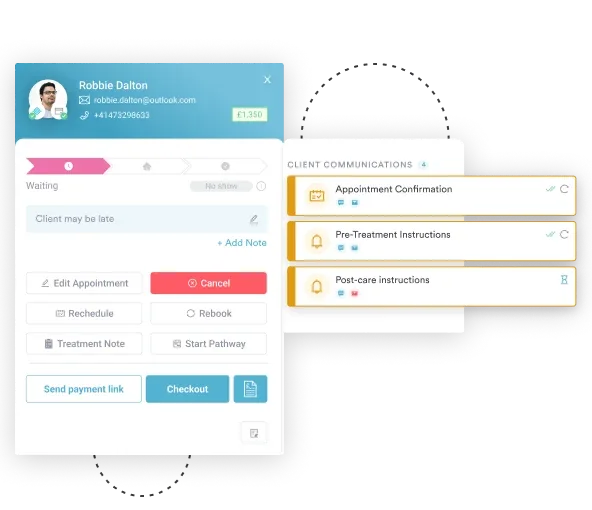
Pabau pricing scales by location and user count. Plans start from $104/month. Full pricing is available at pabau.com/pricing. No feature gating: every plan includes the full feature set, including recall automation.
| Plan / Tier | Price | Details |
|---|---|---|
| Starter | From $65/month | Per practitioner; billed monthly |
| Team / Group | Scales by location and user count | Volume-based pricing |
| Enterprise | Custom pricing | Contact sales for a quote |
According to Capterra reviewers, Pabau earns consistent praise for consolidating clinic operations into a single system. One reviewer noted: “The automation for recalls and reminders has genuinely changed how our team operates. We no longer chase patients manually.” Pabau holds a 4.7/5 rating from over 600 verified reviews. On G2, reviewers highlight strong support for aesthetic clinic workflows and the all-in-one approach as a core differentiator.

Pabau’s automated workflows bring lapsed patients back without manual staff effort. Book a demo to see the full recall system in action.

NexHealth is a patient engagement platform with a strong dental focus. Its recall capabilities center on Appointment Journeys, a feature that reads continuing care codes and previous appointment types from a patient’s file to trigger type-specific recall sequences automatically. For dental offices managing complex hygiene schedules, this is a meaningful differentiator. That said, practices outside dentistry will find limited practical value in the platform. In short, NexHealth is a specialist tool that excels in a narrow context.
NexHealth does not publish pricing publicly. Contact their sales team for a quote. Based on review platform data, pricing requires a direct sales conversation.
According to Capterra reviewers, NexHealth earns strong marks for its one-click recall functionality and integration depth with dental systems. Rating: 4.6/5. Reviewers consistently note that the platform works best for dental teams already using compatible practice management software.
Solutionreach is a widely recognized name in patient communication. Its recall system automatically identifies patients who are due or overdue and sends personalized messages to prompt them to book, according to information on their product pages. Beyond that, the platform supports customizable recall criteria, multi-channel outreach, and recall sequences that can be configured by practice type. As a result, it suits practices that need flexibility across different service lines and patient segments. Canadian practices pairing it with an existing record system can start with our guide to EHR systems in Canada.
Solutionreach pricing is not publicly listed. Reviewers on Capterra note a higher price point that can be difficult for smaller practices to absorb. Contract commitments have also been flagged as a concern by some users.
Solutionreach holds a 4.3/5 rating on Capterra. Reviewers note multi-channel automation as a strength while flagging contract terms and cost as the most common friction points for smaller practices.
Doctible is a patient communication platform serving both dental and general medical practices. Its recall system lets practices set up automated recall sequences based on service timelines, with patients able to book directly from the recall message. Importantly, setup is consistently described as straightforward, making it accessible for practices that do not have dedicated IT support. Even so, its narrower feature set means it works best alongside a separate scheduling or EHR system rather than as a standalone solution. Mental health teams comparing similar lightweight tools should also review these SimplePractice competitors before deciding.
Doctible pricing is not publicly listed. Contact the Doctible sales team for a quote specific to your practice size and configuration.
According to Capterra reviewers, Doctible earns praise for easy recall setup and responsive customer support. Rating: 4.8/5. Users appreciate the direct booking link in recall messages as a practical feature that drives conversions without extra steps.
Adit is a dental practice communication and growth platform. Its recall system automatically sends reminders before appointments are due and when patients become overdue for care, according to their product pages. Consequently, the platform is designed to reduce the time staff spend making manual recall calls, with automation handling the outreach sequence entirely. In practice, that means once the sequences are configured, very little ongoing staff involvement is required.
Adit pricing is not published publicly. Contact their team for pricing based on practice size and feature requirements.
According to Capterra reviewers, Adit’s recall automation is consistently praised for reducing manual call time and simplifying the overdue patient outreach process. Rating: 4.9/5.
Brevium is a patient reactivation and recall platform targeting healthcare practices that want to reach lapsed patients across multiple channels, including traditional options like postcards and voice calls alongside digital messaging. In addition, its demographic tracking capability lets the system identify which outreach method works best for specific patient groups. That said, the platform’s interface is older than most digital-first alternatives, which can affect day-to-day usability.
Brevium pricing is not publicly available. Contact their team for details.
Brevium does not have publicly available ratings on Capterra, G2, or Trustpilot at the time of writing. Thematic feedback from the market suggests the postcard and voice channel options are valued by practices with older patient demographics, while newer digital-first clinics may find the UX less intuitive.
RecallMax is a dental-specific recall platform built around hygiene appointment management. Specifically, it automates recall campaigns through text, email, voice calls, and postcards, with a focus on keeping dental hygiene schedules full and reducing the administrative burden of managing continuing care outreach manually. As a result, it is a strong fit for dental hygiene coordinators, though its narrow scope means it has little relevance outside dentistry.
RecallMax pricing is not publicly listed. Contact their team for practice-specific pricing.
RecallMax does not have publicly available ratings on major review platforms at the time of writing. Thematic feedback indicates the platform is valued by dental hygiene coordinators for its campaign management capabilities, though its narrow focus limits its appeal outside dentistry.
The right choice depends on your clinic type, existing systems, and compliance needs. These five questions will narrow the field before you speak to a sales team. Ask, too, whether recall replies land in one patient inbox rather than a personal phone. Specialty also decides which form travels with the recall message, from a bloodwork request to a sex frequency self-report before a hormone review.
Most patient recall software on the market was designed for dental practices. That works well if you run a dental office. However, for aesthetic clinics, med spas, wellness practices, and multi-specialty private healthcare groups, most of those tools are either irrelevant or require significant workarounds.
Pabau solves the problem differently. Recall automation sits inside the same platform used for SMS and email campaigns, appointment scheduling, clinical documentation, and reporting. As a result, there is no separate tool to license and no integration overhead to manage. Patients receive a recall message and book directly, without calling the clinic. If, therefore, you run a clinic that needs recall to actually convert into appointments, rather than just send messages, Pabau is built for that. Book a demo to see the full recall workflow in action.

Want recall to fit a full engagement plan? Patient engagement program guide outlines how a structured program improves outcomes, adherence, and retention, backed by Johns Hopkins research.
Want to see how automation connects recall to the full patient journey? Automated workflow tools in Pabau link recall sequences to pre-care, post-care, and review requests.
Want retention tools that read your clinical data? Best patient retention software compares tools by whether recall reads from the clinical record or a separate system.
Patient recall software is an automated system that identifies patients who are overdue for an appointment and sends personalized messages via SMS, email, or other channels to prompt them to re-book, recovering appointments and revenue without manual staff effort.
Automated recall sends timely reminders before appointments become overdue, reducing the window in which patients disengage. Direct booking links in recall messages let patients confirm without a phone call, cutting the drop-off that occurs when re-booking requires extra steps.
Recall targets patients who are due or slightly overdue for a specific appointment type. Patient reactivation software targets patients who have lapsed entirely and need a different message and offer to re-engage.
For small aesthetic and wellness practices, Pabau includes recall within its clinic management platform from $104/month. For small dental practices, Doctible is a strong option for ease of setup and user satisfaction (4.8/5 on Capterra).
For dental practices, NexHealth and Adit lead on continuing care code recall and hygiene scheduling, while RecallMax runs dedicated dental hygiene campaigns. Aesthetic, wellness, and multi-specialty clinics are better served by Pabau, which triggers recall by treatment type rather than dental care codes.
Yes. Any software handling protected health information in the US must be HIPAA compliant, including recall tools. UK and EU clinics must also confirm UK GDPR alignment.
It is a tool that automatically texts or emails patients who are due or overdue and prompts them to rebook. Standalone options like Solutionreach and Relatient send the messages but rely on a separate booking system, while all-in-one automated patient recall software such as Pabau turns each message into a booked appointment inside the same platform.
It is the engine that flags patients overdue for a visit and triggers outreach automatically, so staff no longer run reports by hand. The strongest patient recall services pair that detection with direct booking, letting a flagged patient confirm a slot straight from the message instead of calling the front desk.