Getting along with siblings worksheet
A getting along with siblings worksheet is a printable that helps children and t...

2
Last Updated: Oct 23, 2026
A counselor intake form is the structured questionnaire a client completes before the first session. It gathers demographics, the reason they are seeking counseling, mental health and medical history, substance use, trauma, and emergency contacts. It also carries the signed informed consent and privacy notice that HIPAA requires before treatment begins.
Done well, the form gives you three things in one document. You get a clinical baseline to measure progress against, documented consent, and an early view of any safety risk. Download the free template below, then use this guide to decide what each section of your own version needs to ask.

A counselor intake form collects demographics, presenting concerns, mental health history, medications, trauma, and risk screening before the first session.
HIPAA compliance is not optional. The form must carry informed consent, a privacy notice per 45 CFR § 164.520, and secure storage.
Nine sections cover most practices: demographics, presenting problem, mental health and medical history, substance use, trauma, risk screening, consent, and emergency contacts.
Retention rules come from your state board, and commonly run 5 to 10 years after termination for adult clients.
Practice management software like Pabau collects intake digitally, so completed forms reach the client record before the appointment starts.
A two-page printable intake form with fields for contact and emergency details, the reason for the visit, and relevant history. It also covers current medications, supplements and allergies, plus a privacy-notice confirmation. Add your own risk-screening and consent language before you hand it to a client.
Download templateA counselor intake form is a structured document clients complete before or at the first session. It captures demographics, the reason for seeking counseling, mental health history, current medications, trauma background, substance use, and emergency contacts. That record lets you deliver informed, culturally competent care and spot immediate safety risks.
Intake forms serve three core functions. First, they establish informed consent and HIPAA compliance. The form documents that the client understands the limits of confidentiality, has reviewed the privacy notice per 45 CFR § 164.520, and authorizes treatment.
Second, they create a clinical baseline. Recording presenting concerns and past treatment lets you track progress and skip assessments the client has already been through. Third, they surface warning signs such as suicidality, self-harm, or abuse that need clinical attention straight away.
The form is also the client’s first impression of how you work. A well-organized set of questions signals that you are thoughtful and clinically rigorous before you have said a word.
A comprehensive form organizes information into logical sections, and each one is there for a different reason. Some are required by law, such as consent and the privacy notice. Others are standard of care, such as risk screening. The rest support continuity of care.
Read the nine sections in the order a client meets them and the pattern is clearer. Only one section exists because the law demands it, while three exist to keep somebody safe.
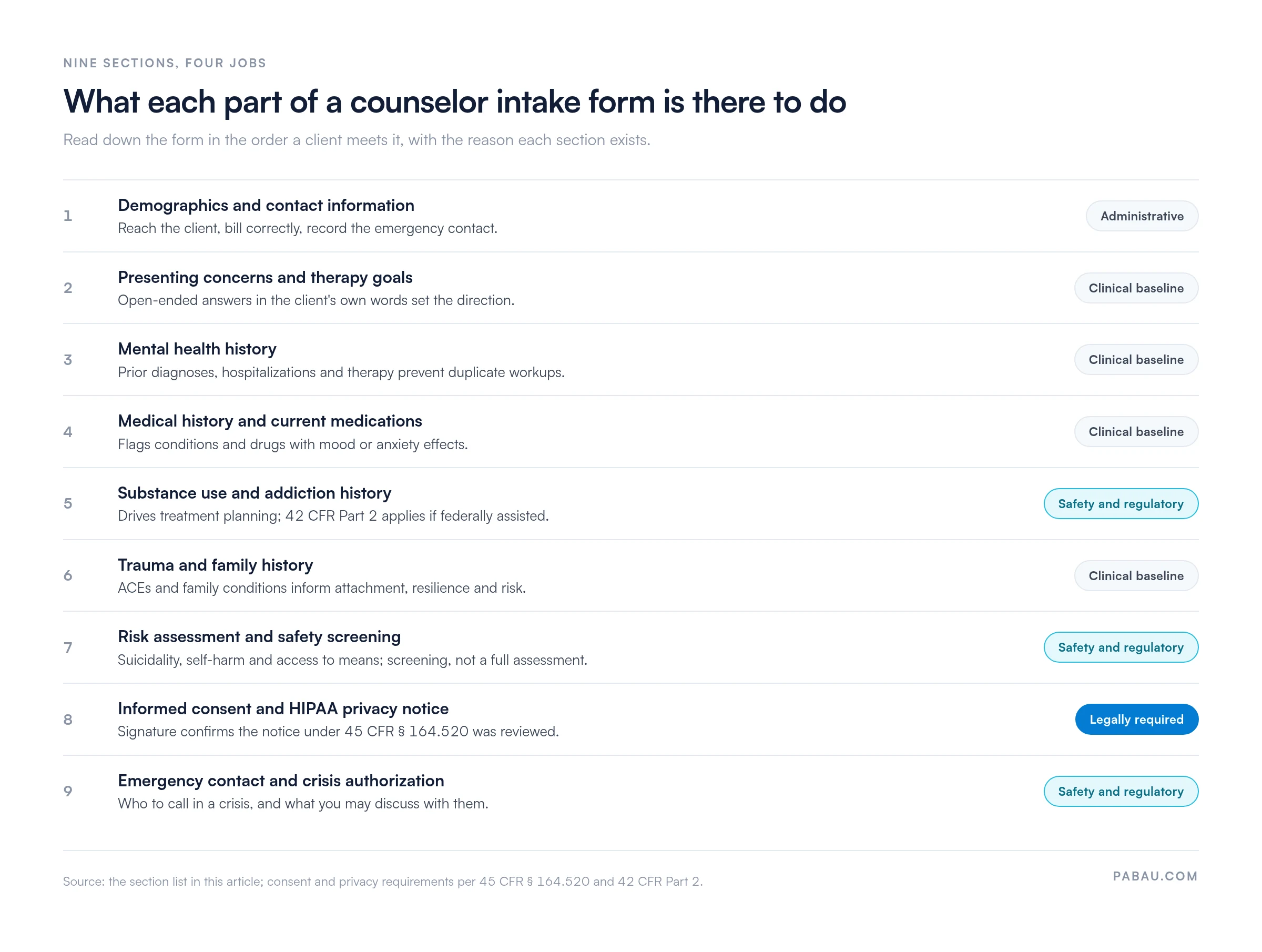
Capture legal name, date of birth, current address, phone, email, and insurance carrier and policy number. Include a field for preferred pronouns, plus cultural or religious background where it bears on the presenting concern. Collect the emergency contact’s name, relationship, and phone number.
Ask open-ended questions such as “What brings you to counseling today?” and “What would you like to work on together?” Treat goal-setting as collaborative. The form sets the direction, and the first session is where you refine it into specific, measurable outcomes.
Document prior mental health diagnoses, hospitalizations, emergency psychiatric care, and previous therapy, including therapist names, dates, and outcomes. List current medications by name, dose, and indication, both psychiatric and medical. Note allergies and reactions. This section prevents duplication and flags possible interactions.
Include direct questions on suicidal thoughts, plans, or attempts, on self-harm, and on homicidal ideation. Document frequency, recency, and access to means. This matters clinically and legally, since crisis intervention strategies are standard of care and the documentation protects client and counselor alike.
State that the client has received and reviewed the Notice of Privacy Practices per 45 CFR § 164.520, understands the limits of confidentiality, and authorizes treatment. Name the exceptions plainly: danger to self or others, abuse reporting, and court order. The form must be signed and dated.
Minors need a separate parental consent and minor assent section, and the rules vary by state, so check your licensing board. A standalone counseling informed consent form is often easier to maintain than consent language buried inside the intake packet.
The questions you ask shape the information you get back. Structured questions keep intake consistent, reduce interviewer bias, and leave a documented trail. Below are sample questions by section, each with the reason it earns its place on the page.
Paper and PDF forms have run counseling intake for decades. The client fills one out in the waiting room, you retype the answers into your notes, and the original goes in a cabinet. Digital intake sends a link before the appointment, the client completes it on their own device, and the answers land in your system.
Paper needs no technology, feels familiar to clients, and travels anywhere. The costs show up later. Retyping is slow and error-prone, handwriting is often illegible, and forms get lost or damaged.
There is also no audit trail for a regulatory review. Clients have to arrive early to fill the form in, which pushes the session start back. Every sheet of paper in circulation is also one more chance at a privacy breach.
The client completes the form before arrival, so the session starts on time and the answers sync straight to the clinical record. Conditional logic helps too: a “yes” on suicidal ideation can surface crisis resources immediately. Transmission is encrypted, backups are automatic, and you can see who has completed the form.
The trade-offs are worth naming. Digital intake needs an internet connection, some older clients still prefer paper, and setting the first form up takes an afternoon.
One form cannot fit every specialty. Individual therapy, couples counseling, adolescent work, and substance use treatment each need adapted sections. The core framework stays the same, and the emphasis and depth change.
Use the standard form described above. Give the most space to presenting concerns, prior therapy, current stressors, and the coping strengths the client already has.
Add relationship history, including how long the couple has been together, marriage date, and children. Cover conflict patterns, any previous couples therapy, and individual mental health history for both partners. Screen for domestic violence, infidelity, and trust violations. Whether each partner completes a separate form is a clinical judgment.
Require parental consent and minor assent on separate forms. The teen completes an age-appropriate version with simplified language and less clinical jargon. The parent covers developmental history, school performance, behavioral concerns, and family dynamics. Add school contact details and any existing support services, such as an IEP or school counselor.
Expand the substance use section to cover substance type, age of first use, duration, and frequency. Add route of administration, prior treatment, relapse history, and recovery support such as a sponsor or a 12-step group. Trauma history matters here, given the strong correlation between ACEs and addiction. Federally assisted programs also carry the extra documentation duties in 42 CFR Part 2.
Getting value from the form is a five-step process that runs from sending it out to filing the signed copy.
Intake forms are essential for licensed professional counselors (LPC) and licensed mental health counselors (LMHC). The same goes for clinical social workers (LCSW), marriage and family therapists (LMFT), and clinical psychologists. They earn their place in private practice, community mental health centers, schools, hospitals, substance use treatment programs, and employee assistance programs.
Any practice seeing new clients benefits from a standardized intake. That holds for a solo counselor with five clients a week, and for a group practice with 20 clinicians. The form matters most in team settings, where several clinicians need the same baseline documentation to work from.
Whatever the setting, intake is the first record in a longer chain. It feeds the same client file your therapy practice management system uses for notes, scheduling, and billing.
A structured intake saves time, reduces error, and protects client and counselor. It establishes informed consent before treatment starts, which most state boards require. It also creates a consistent clinical record, flags safety risks early, and demonstrates professional standards if your practice faces an audit or a complaint.
The client experience improves too. Answers get documented and referred back to, so people feel heard. They also learn the scope and limits of treatment from the start, which heads off disputes later.
Treat your first month of intake forms as a pilot. Run the form with 5 to 10 clients, ask them what was confusing, and refine it. Keep the sections that change your clinical decisions and cut the ones that do not. A 20-page form discourages completion, while a tight four or five pages with a clear rationale gets high completion rates and better answers.
Your form must include informed consent and HIPAA privacy notice language. Informed consent documents that the client understands what counseling involves, along with the potential risks and benefits. It also records that they know the limits of confidentiality and the right to refuse or withdraw treatment.
The privacy notice covers the other half. It tells clients their HIPAA rights, including access, amendment, and an accounting of disclosures. It also sets out your duties on breach notification and secure storage.
Spell out the limits of confidentiality, meaning the exceptions where you must or may disclose without consent. These include imminent danger to self or others, abuse of a child, elder, or dependent adult, a court order, and a law enforcement emergency. For substance use treatment, 42 CFR Part 2 adds stricter rules, with its own consent forms and limits on redisclosure.
Have an attorney review your consent and privacy language against your state’s counseling laws and the federal rules. State licensing boards and the ACA ethics resources publish templates, but customizing them to your practice is the part that matters.
Handling intake by hand costs real time: filing paper, retyping answers, and chasing signatures. See how Pabau automates counselor intake forms, so clients complete them online before the first appointment. The answers arrive in the clinical record, already filed.
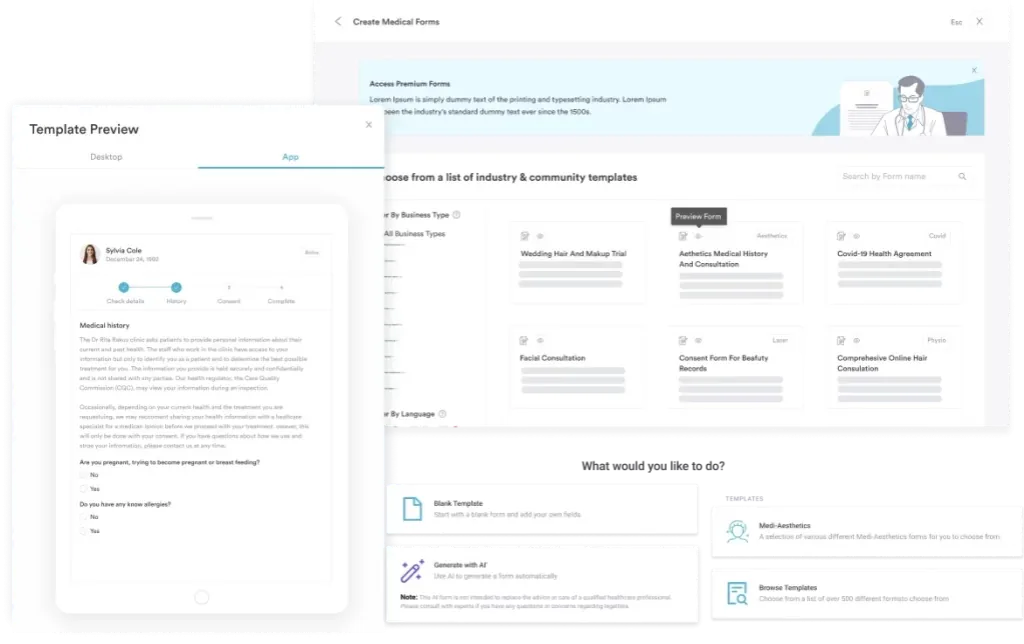
Most counseling practices rebuild intake by hand for every new client. They print or email a PDF, wait for it to come back, then retype the answers into the record. Pabau, our practice management software, replaces that loop with a digital intake form builder. You compose the form once and it sends itself after booking.
Responses sync into the client record before the first session starts, so nobody retypes anything. Start from our free counselor intake template, as many practices already do, or build your own with conditional logic that branches on the answers.
That branching is where intake gets clinically useful. Answer “yes” to suicidal ideation and the form can show crisis resources at once, then alert you before the client arrives. Select “couples counseling” and it opens the relationship questions instead.
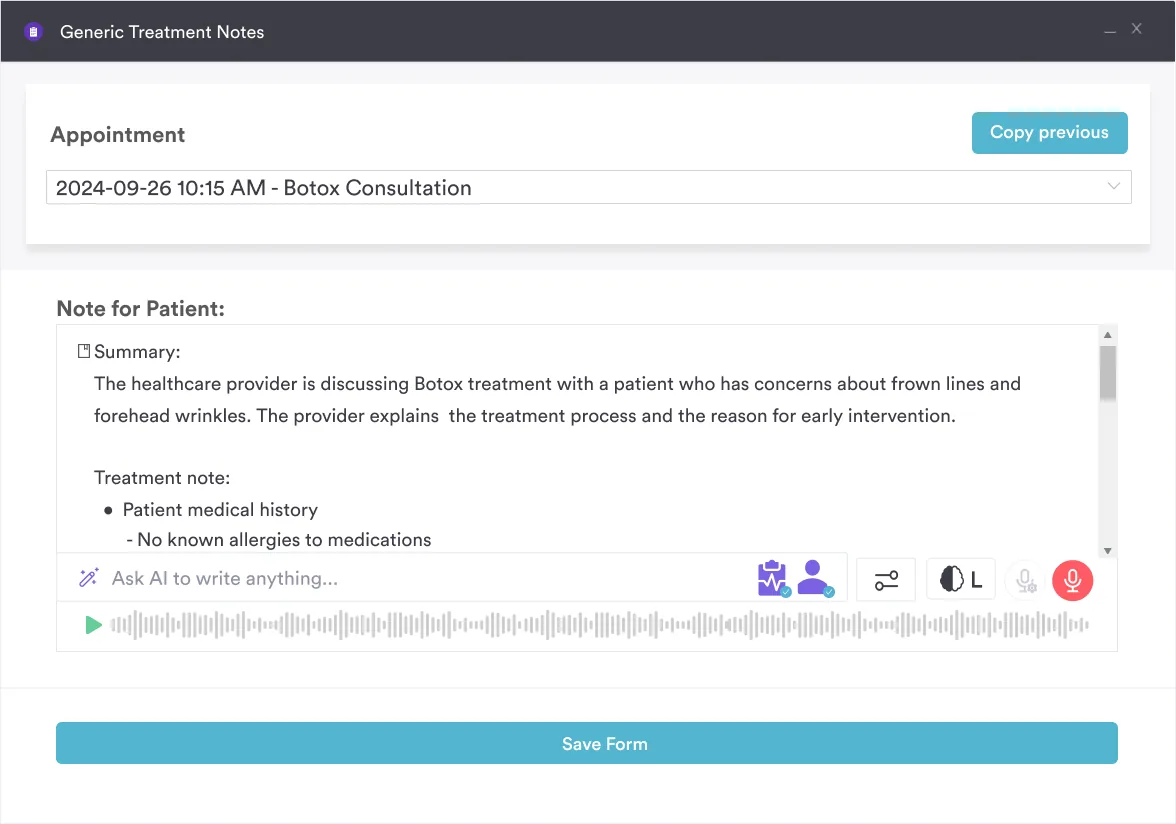
After the session, Pabau Scribe, our AI scribe, can summarize the intake and the conversation into your clinical note. You review and sign it, rather than writing it from scratch.

Pabau sends your intake form automatically after booking, branches the questions on the client’s answers, and files the completed form in the clinical record. Sessions start on time, and consent is documented before anyone sits down.

The intake form is the cheapest clinical safeguard a counseling practice owns. It documents consent, sets a baseline you can measure progress against, and surfaces risk while there is still time to act on it.
The trade-off worth remembering is length. Every section you add lowers the completion rate, so keep only the questions that change what you do in the room. Download the template above, adapt it to your specialty and your state’s rules, and pilot it before you standardize.
Once the wording settles, the remaining work is administrative, and software can absorb it. Book a demo to see how digital intake gets forms completed, signed, and filed before your next new client walks in.

Looking for clinical assessment guidance? Psychiatric evaluation template provides a structured framework for diagnostic assessment and mental status examination.
Need informed consent examples? Group therapy informed consent covers consent essentials for multi-client settings and the confidentiality problems that come with them.
Working with teenagers? Adolescent intake questionnaire adapts the intake questions for minors, with parental consent and school context built in.
Starting a broader intake packet? Mental health intake form covers the wider behavioral health assessment your counseling intake sits inside.
It should cover demographics and contact details, presenting concerns and therapy goals, mental health history, and medical history with current medications. Add substance use and family history, trauma assessment, risk and safety screening, and emergency contacts. Close with informed consent, a HIPAA privacy notice, and a signature.
Most state counseling boards require documented informed consent before treatment begins, and HIPAA mandates a signed privacy notice. The specific content varies by state and by your client population. Check your state licensing board rules, and ask an attorney to confirm your form meets the legal standard.
Include a privacy notice covering client rights under HIPAA and your confidentiality practices. Add the exceptions to confidentiality, breach notification procedures, and how records are stored and transmitted. Paper forms need locked filing. Digital forms need encryption and a HIPAA-compliant platform such as Pabau.
A core form works for most clients, though specialty practices benefit from adapted versions. Couples counseling, substance use treatment, and adolescent work each need additional or modified sections. Form builders with conditional logic let you keep one flexible template that branches by client type or by response.
An intake form screens for baseline information and risk flags. An assessment, such as a depression inventory or a trauma scale, measures specific constructs with scoring and interpretation. Many practices use both. The intake form comes first, then a formal assessment at a later session where it is indicated.