Bear hug test: Procedure, interpretation and free template
The bear hug test is a quick shoulder special test that screens for subscapulari...

3
Last Updated: Oct 23, 2026

A controlled substance agreement (CSA) is a formal document setting expectations between provider and patient when prescribing opioids, benzodiazepines, or stimulants long term.
CDC opioid prescribing guidelines recommend CSAs to document informed consent and set monitoring protocols, such as urine drug screens and a single-provider policy.
Every CSA needs patient responsibilities, provider obligations, drug testing consent, refill rules, consequences of non-compliance, and signature blocks. State law decides whether one is mandatory.
Practice management software like Pabau stores signed CSAs in the patient record, flags annual renewals, and keeps monitoring results alongside the agreement.
A ready-to-use agreement form covering patient details, responsibilities, drug testing consent, single-provider policy, refill rules, and monitoring requirements. Signature blocks for both the patient and the prescriber are included.
Download templateA controlled substance agreement (CSA) is a written document that sets the terms under which a provider prescribes controlled medications. It records what the patient agrees to in return, from drug screens to using a single prescriber.
This guide covers what belongs in each section of the form and the ICD-10 code practices use to record a signed copy. It also covers the telehealth rules that catch providers out, where state law makes an agreement mandatory, and how to keep one current.
A controlled substance agreement is a written document covering the terms of prescribing and the patient’s obligations during treatment. You will also see it called a pain contract, a narcotic agreement, or a drug contract.
It applies to Schedule II-IV prescriptions. That covers opioids such as morphine and oxycodone, benzodiazepines such as alprazolam and lorazepam, and stimulants such as methylphenidate and amphetamine. Practices use the same form across chronic pain, mental health, and ADHD care.
The agreement does three jobs:
In psychiatry the agreement usually follows the first assessment, so it pairs naturally with a psychiatric evaluation template at intake.
The Drug Enforcement Administration (DEA) does not universally mandate CSAs. But CDC opioid prescribing guidelines recommend them as a best practice, and providers use them for four reasons:
A compliant agreement covers eight core sections:
This section lists what the patient commits to. Keep the wording specific, and follow the same clinical documentation standards you would apply to a treatment note.
Most templates carry a reciprocal section. It sets out what the practice commits to in return:
The monitoring section is the provider’s authority to verify. Spell out what the patient is consenting to:
Counseling time spent walking a patient through their medication plan may be billable under H0034.
This is the enforcement clause. Name the violations that end the agreement and stop the prescription:
Termination is rarely the whole answer. Some states require a tapering plan rather than an abrupt stop, and the Americans with Disabilities Act may apply too. Sound patient compliance policy balances accountability with clinical judgment.
The usual code for a signed agreement is ICD-10 code Z79.899, for long-term current use of other medication. The code tells coders and auditors that the patient sits inside a formal monitoring protocol.
Z79.899 is a convention rather than a requirement, so confirm it with your coding team and your payers. Record the signature date in the note as well as the code. That habit is basic medical billing compliance, and it is what makes the claim defensible in an audit.
The Ryan Haight Act generally requires an in-person evaluation before a provider prescribes Schedule II substances by telehealth. A patient already established with the prescriber is one exception. Special DEA registration for certain programs is another.
The 24-month window that gets quoted belongs to a different exception. It applies to a covering practitioner, who prescribes at the request of a provider that examined the patient in person within the previous 24 months.
If you run virtual visits for controlled substance therapy, say so in the agreement. Confirm in writing that an in-person visit has happened or is scheduled, and name the exception you rely on. A mental health EMR can hold the agreement, the consent, and the visit note on one record.
Requirements vary by state, and the differences are sharper than they look. Michigan requires signed CSAs annually. Washington requires a written agreement for higher-risk chronic opioid patients. California recommends one but does not mandate it.
Check your state medical board site and your DEA state liaison’s guidance before you adopt a form. Some states also dictate the wording, such as mandatory PDMP checks or set consent language.
Getting the form signed is the easy part. Keeping it current is where practices slip, so store it in your patient record management system and let automated workflows chase the renewal.
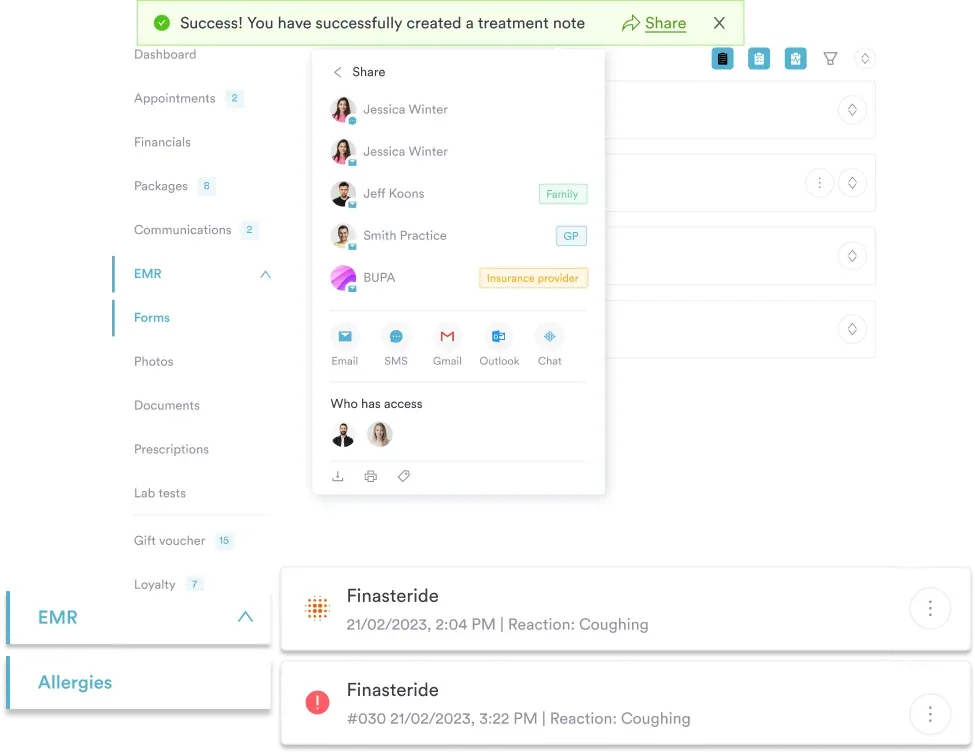
Practices on psychiatry practice management software can automate tracking, renewals, and monitoring, which takes the admin off the front desk.
Plenty of practices still run the agreement on paper. It gets printed, signed at the desk, scanned, and dropped into the patient’s file. The renewal date lives in a spreadsheet, or in the prescriber’s memory.
Practice management software like Pabau replaces that loop with a digital form. The patient signs on screen, and the agreement files itself against their record with the date attached. Drug screen results, PDMP notes, and pill counts sit on the same timeline.
Renewal reminders run automatically, so an agreement approaching 12 months old arrives as a task rather than a surprise. When a board or a payer asks for proof of monitoring, it is one record, not four folders. Every Pabau subscription includes these tools, so there is no tier to upgrade to first. GP clinic software keeps consultations, results and recalls against one patient record rather than three systems.

Store, track, and renew CSAs automatically. Manage patient signatures, monitoring data, and compliance alerts in one integrated system.

A controlled substance agreement earns its place through the conversation it forces. The patient hears the risks, the monitoring plan, and the consequences before the first prescription, and you hold the record that they did.
Download the form, edit it against your state’s rules, and decide who owns the renewal before the first copy goes out. An agreement that quietly expires does very little for you in an audit.
Book a demo to see how Pabau tracks CSA signatures, renewals, and monitoring inside one patient record.

Can a private GP refer to NHS care? The private GP referral process explains what a private GP needs to know before referring a patient to an NHS specialist.
Preparing a patient for an echocardiogram? An echocardiogram test guide covers prep, the step-by-step scan, and what the results mean.
Documenting the exam that led to this agreement? A head and neck assessment guide walks through documenting lymph nodes, tracheal position, and thyroid findings in order.
A controlled substance agreement is a written document that sets mutual expectations between a provider and a patient prescribed controlled medications. It records informed consent, the monitoring protocol such as urine drug screens and PDMP checks, and the single-provider rule.
Any patient on ongoing Schedule II-IV prescriptions should sign one. That includes opioid therapy for chronic pain, benzodiazepines for anxiety, and stimulants for ADHD. Some practices require an agreement for every long-term prescription. Others use them selectively for higher-risk patients.
Federal DEA regulations do not universally mandate CSAs, but CDC opioid prescribing guidelines recommend them. Michigan requires signed agreements annually, and Washington requires one for higher-risk chronic opioid patients. California recommends but does not mandate one. Check your state medical board and DEA liaison guidance.
Practices commonly use ICD-10 code Z79.899, for long-term current use of other medication. It is a convention rather than a rule, so confirm the code with your coding team before you rely on it.
The Ryan Haight Act generally requires an in-person evaluation before Schedule II prescriptions by telehealth. Exceptions cover patients already established with the prescriber, and providers holding special DEA registration. Record the telehealth modality in the agreement, and note which exception applies.
Common breaches include a failed drug screen, collecting prescriptions elsewhere, sharing medication, or missing appointments. Most agreements let the provider stop treatment at that point. State law and the Americans with Disabilities Act may still require a taper or a fuller clinical review first.